




Second Connector Needed for Tractor-Trailer Communications?
Increasing need for electronic communications between tractors and trailers could require use of a second electrical line, say brake-performance specialists.

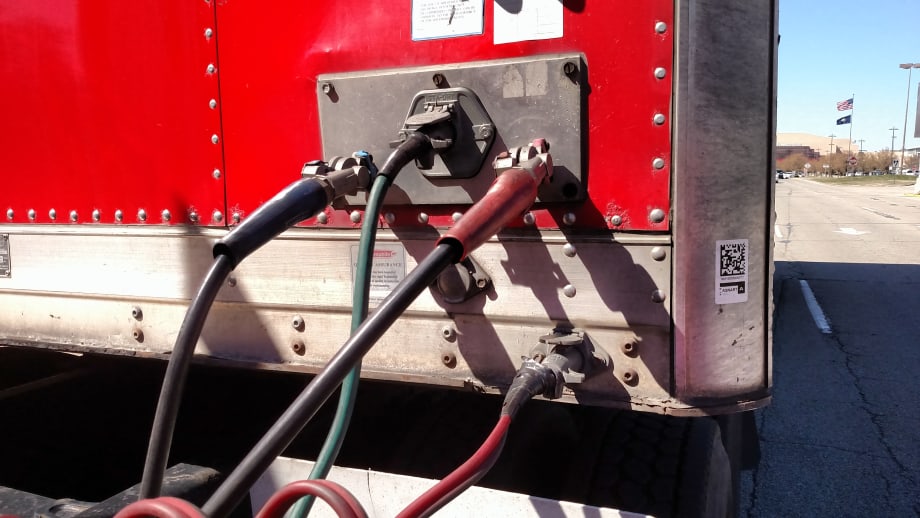
Second electrical cable (lower right) on this beverage trailer carries power to charge its liftgate batteries. It coud also carry signals to a high-performance braking system.
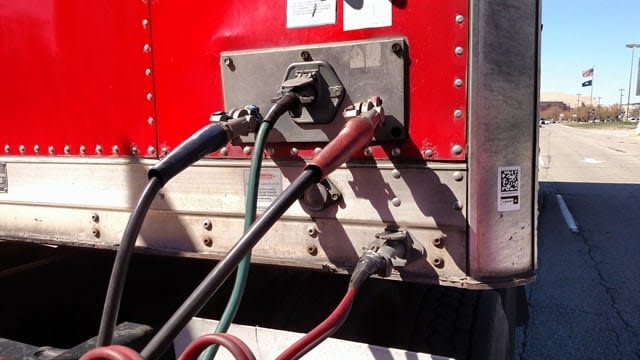
Second electrical cable (lower right) on this beverage trailer carries power to charge its liftgate batteries. It coud also carry signals to a high-performance braking system.
Increasing need for electronic communications between tractors and trailers could require the use of a second electrical line, says brake-performance specialists. The second wire would carry signals that ensure optimum timing and balance among the brakes and shorten stopping distances in the future.
That’s the view of Fred Andersky, of Bendix Commercial Vehicle Systems, and Keith McComsey, of Dana Spicer Foundation Brake, who briefed reporters on Wednesday, the eve of the opening of the Mid-America Trucking Show in Louisville, Ky.,
They were discussing the superior stopping power of air disc brakes and how the slow but steady adoption of ADBs among North American fleets would enable greater highway safety through shorter stopping distances. A federal mandate for stability control systems on certain heavy vehicles this August adds to the communications burden.
Stopping distances could be even shorter and stability better with more precise signaling between tractors and trailers, Andersky said. But the current seven-way power cord is about tapped out in capability, and the second cord could increase signaling capacity.
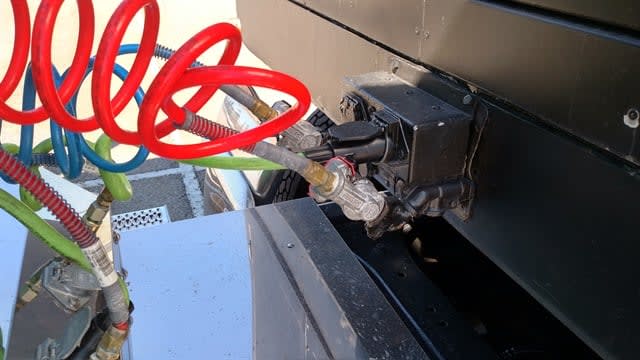
The standard seven-way connector cable (between the red and blue air lines) is almost at capacity for carrying signals, except perhaps through power line carrier (PLC) technology.
Alternatives are greater use of power line carrier technology, where multiplexing allows the current cable's seventh circuit to carry electrical power and signaling over the same piece of wire, or a wireless local area network, or LAN.
“It’s got to happen if a trailer is to become an integrated part of a combination vehicle,” which federal safety authorities are talking about, he said. “But retrofitting the extra cable on existing trailers could be a problem.”
Using a LAN would be easier; communications boxes could be installed on each vehicle, then talk to each other wirelessly. But wireless signals are subject to interference and hacking, “and you don’t want someone hacking into your braking system.” Andersky said.
An extra cable could securely perform the signaling function until LANs are protected against outside interference, perhaps through encryption, to the same level as a wire.
Air disc brakes are now on 27% of tractors and 20% of trailers, McComsey said. ADBs not only help combination vehicles stop quicker, but also are better balanced side-to-side. That aids stability.
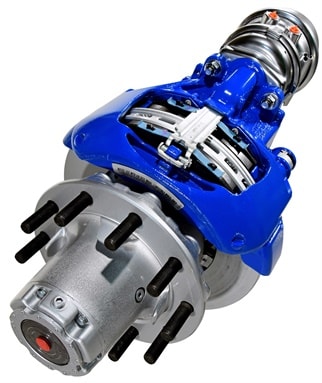
Bendix makes drum and disc brakes, but its specialsts believe discs are a wiser choice for greater safety and lower maintenance costs. .
Meanwhile, fleets now using air disc brakes have found they make an excellent business case in maintenance alone, he said. Pads wear longer than the drum-brake linings, and are much easier and quicker to change, saving labor costs.
“The return on investment with cumulative maintenance steadily increases with time,” he said. “And that doesn’t include (greater) safety and reduction in fines and CSA scores” for out-of-adjustment drum brakes. ADBs are inherently self-adjusting, and inspectors seldom know how to check them for adjustment anyway.
Bendix is “bundling” disc and drum brake packages for use on tractors – discs on steer axles and drums on drive axles – which seems to be the way the industry is heading toward further adoption of discs, Andersky said. But he and others would like to see more use of ADBs on trailers.
More Blog Posts
Pulsing Back-of-Trailer Lamps Aim to Prevent Crashes
Can the addition of a pulsing brake lamp on the back of a trailer prevent rear-end collisions? FMCSA seems to think so, if its exemptions are any indication.
Read More →
Designing a 14-Foot Trailer
Trailers are 13 feet, 6 inches high, right? Not for Hub Group, which developed a special 14-foot-high trailer spec for a dedicated customer based in California. Learn more in the Trailer Talk blog.
Read More →
CARB Comes for Reefer Trailers
A new round of emissions control regulations decreed by the California Air Resource Board will begin affecting refrigerated trailer and TRU design and operations next year.
Read More →
5 Ways Data Analysis Maximizes the Value of Trailer Telematics
Are you getting the most out of your trailer telematics investment?
Read More →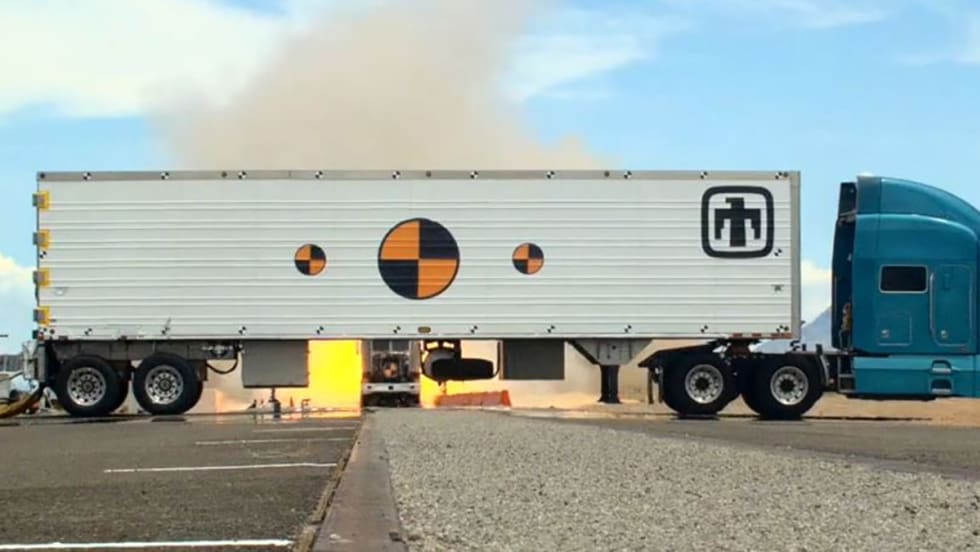
Can You Guess What's in That Trailer?
You don’t always know what’s in the trailers that pass you on the road. But some of those trailers are carrying something a little more dangerous that frozen food or new bedding…like, maybe, a nuclear weapon. But this isn’t an ordinary trailer; this is a trailer specifically made to not only carry this type of payload, but protect it at all costs.
Read More →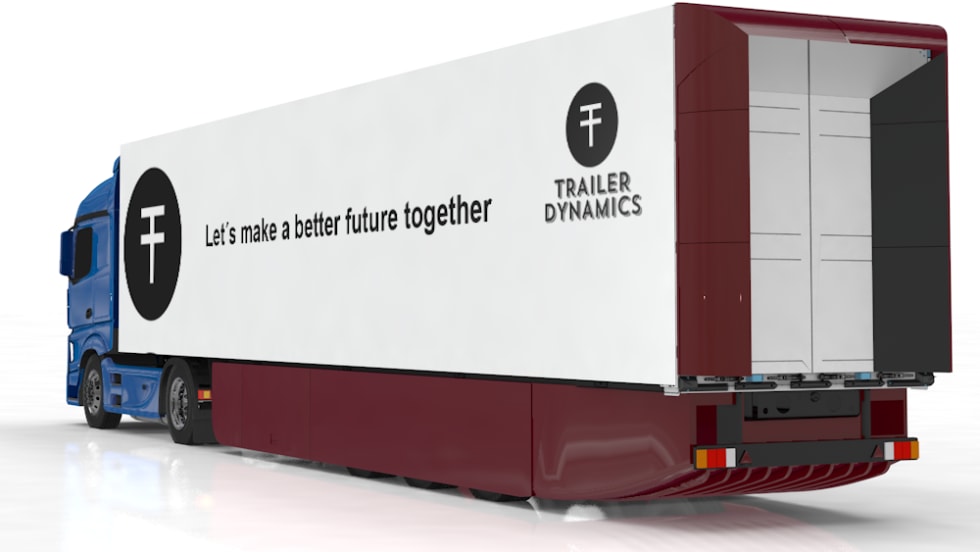
How Trailers Are Harnessing 'Free' Energy
Can trailers play a more active role in sustainable transport beyond aerodynamic add-ons or low-rolling-resistance tires? Some companies think so.
Read More →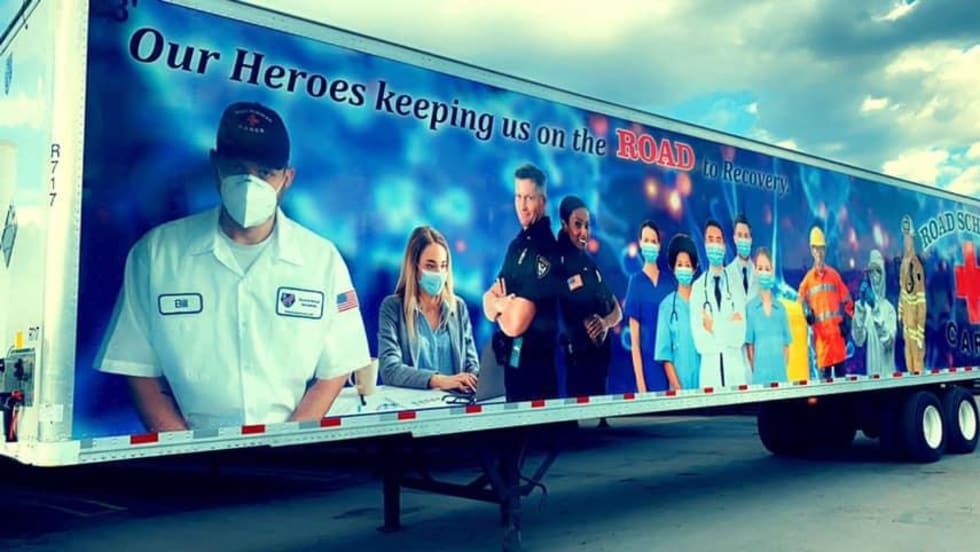
Wrapping a Trailer for COVID’s Everyday Heroes
“We don’t only deliver freight. We deliver awareness.” That’s what Jim Barrett, president and CEO of Road Scholar Transport, likes to say about the Dunmore, Pennsylvania-based carrier’s “awareness fleet.” Its latest trailer wrap honors the everyday heroes of the pandemic.
Read More →
How a Tanker Fleet is Using Unorthodox Trailer Lighting to Fight Rear-End Collisions
Groendyke Transport watched the number of rear-end collisions with its trailers rise steadily until it tried an unorthodox and then unapproved method of alerting following drivers that its trucks were applying brakes and slowing down.
Read More →
The Role Trailers are Playing in COVID-19 Funerals
In places such as New York City and Detroit, overwhelmed hospitals and mortuaries are using refrigerated trailers to store the bodies of people killed by COVID-19.
Read More →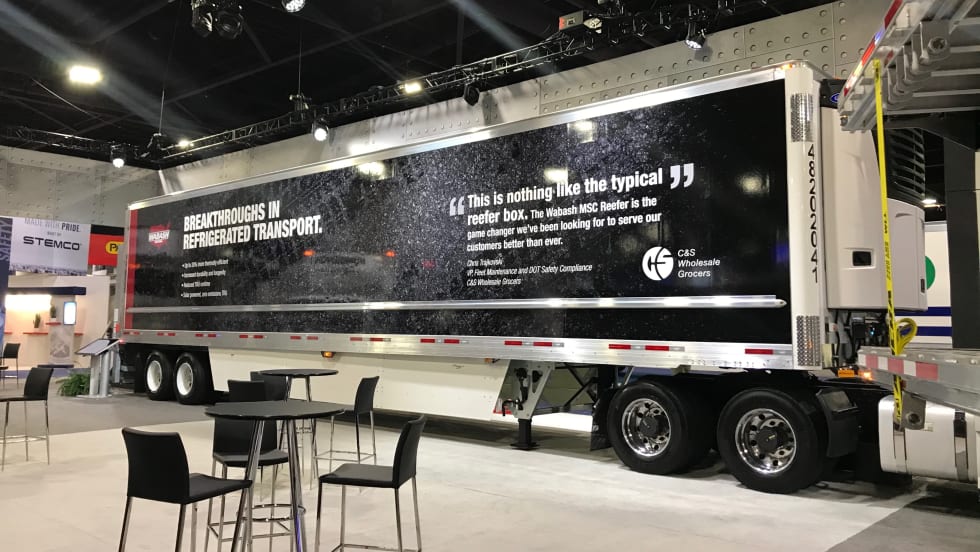
Reefer Trailer Aims to Help Reach Zero Emissions
Wabash National is partnering with C&S Wholesale Grocers to test a new type of zero-emissions refrigerated trailer.
Read More →