





Related: NHTSA Urged to Mandate Truck Crash Avoidance Technology
Samsung System Tells Motorists When It's Safe to Pass
Many traffic accidents in Argentina happen when motorists try to pass slower vehicles on two-lane roads.Here's a fix.
June 22, 2015
2 min to read
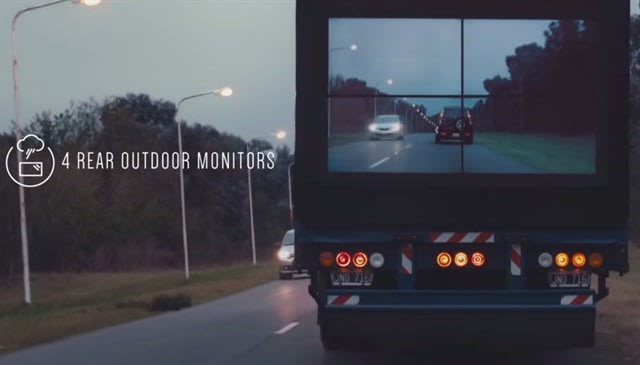
Don't pass yet, says the image on the TV screen. Photos via Samsung and YouTube
Samsung, the world-wide electronics manufacturer, operates its own distribution fleet in Argentina, and notes that nearly one person per hour is killed in traffic accidents. And 80% of those are wrecks where motorists try to pass slower vehicles on two-lane roads.
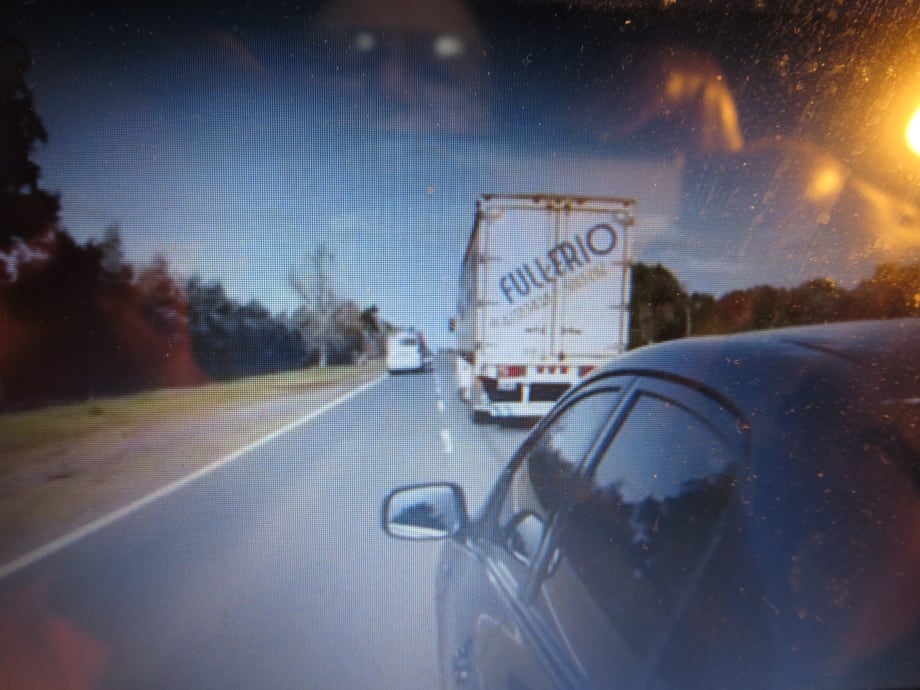
This situation was common in the U.S. before Interstate highways were built, and still is where people live far from multi-lane freeways. It’s especially difficult to pass a big rig because you can’t see around it. Frustration leads to impatience and motorists take chances, and end up in deadly head-on crashes.
Samsung has the technical know-how to do something about this, and has. It installed a system on one of its tractor-trailers which uses a camera in the grille that shoots video of the road ahead, and beams it wirelessly to TV panels on the trailer’s rear. Motorists can look at the large screen and see what’s in front of the rig, and whether or not it’s safe to pass.
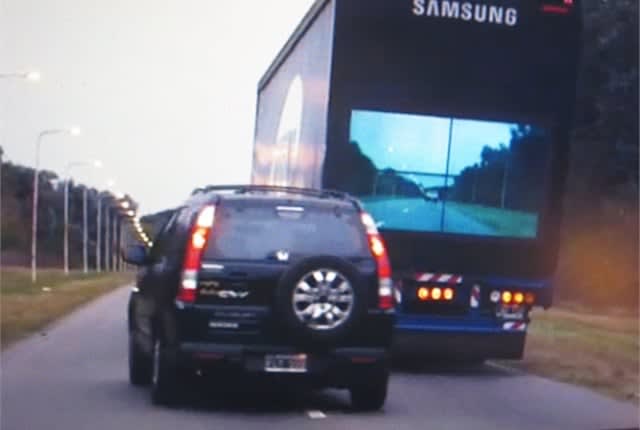
Now it's safe to go. But, would a rear-door TV showing the road ahead be practical? Photos via Samsung and YouTube
The company produced a video now posted on YouTube that shows it in action. We don’t know if this system is on more than one Samsung rig, if it’s available for sale (we doubt it, but are trying to find out), what it would cost for others to buy and install, or how practical it would be in everyday operations. But it’s sure seems like a neat idea.
Note that Argentina’s highways look a lot like ours, even to lane widths, white lines along the pavement edges, and yellow center stripes in no-passing zones. That was also true in Brazil when I was there back in 1986.
One big difference is heavy-truck configurations: The cabover dominates. That’s because most builders who manufacture there are from Europe and Asia, where conventionals are rare.
Of course, languages are different, too – Spanish in Argentina and a New World form of Portugese in Brazil. The Samsung video's labels are in English, but even without them we could deduce what's going on.
Subscribe to Our Newsletter
More Blog Posts
Pulsing Back-of-Trailer Lamps Aim to Prevent Crashes
Can the addition of a pulsing brake lamp on the back of a trailer prevent rear-end collisions? FMCSA seems to think so, if its exemptions are any indication.
Read More →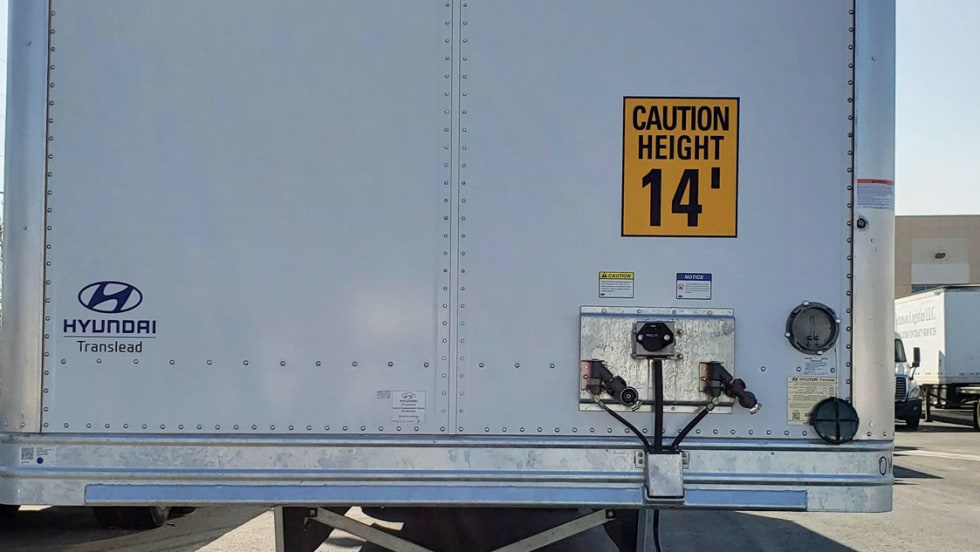
Designing a 14-Foot Trailer
Trailers are 13 feet, 6 inches high, right? Not for Hub Group, which developed a special 14-foot-high trailer spec for a dedicated customer based in California. Learn more in the Trailer Talk blog.
Read More →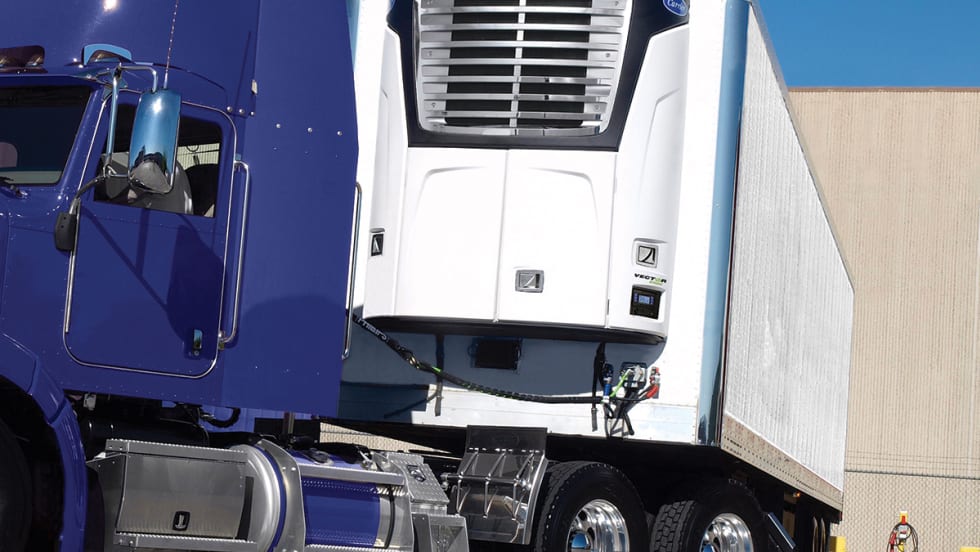
CARB Comes for Reefer Trailers
A new round of emissions control regulations decreed by the California Air Resource Board will begin affecting refrigerated trailer and TRU design and operations next year.
Read More →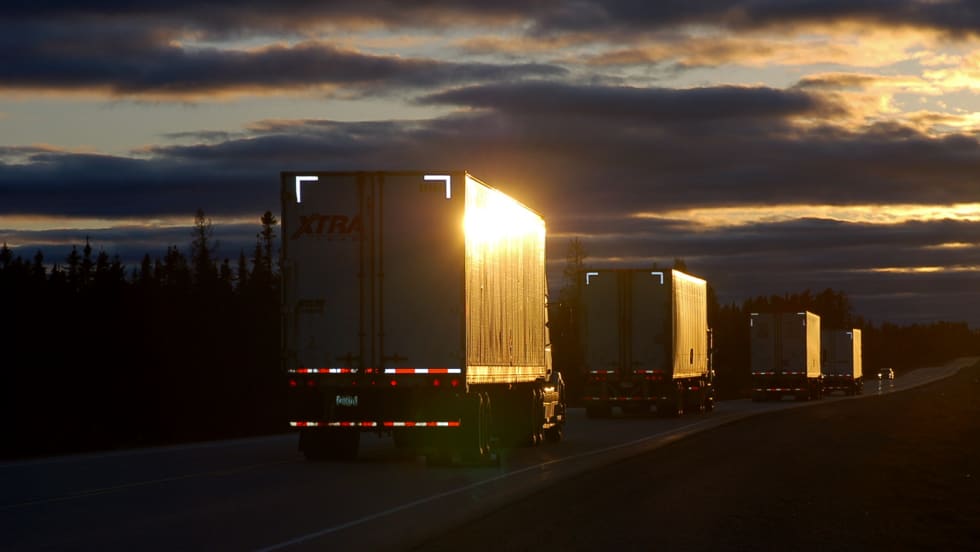
5 Ways Data Analysis Maximizes the Value of Trailer Telematics
Are you getting the most out of your trailer telematics investment?
Read More →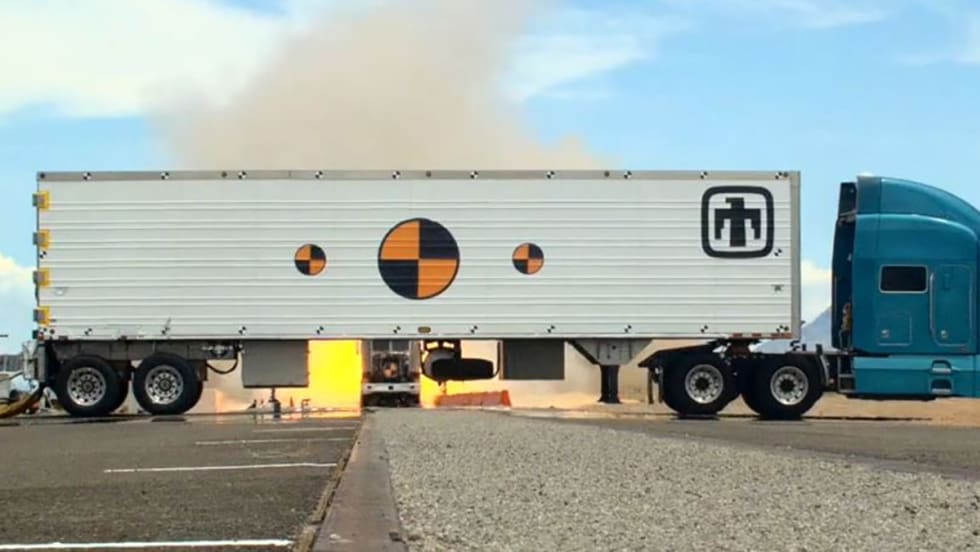
Can You Guess What's in That Trailer?
You don’t always know what’s in the trailers that pass you on the road. But some of those trailers are carrying something a little more dangerous that frozen food or new bedding…like, maybe, a nuclear weapon. But this isn’t an ordinary trailer; this is a trailer specifically made to not only carry this type of payload, but protect it at all costs.
Read More →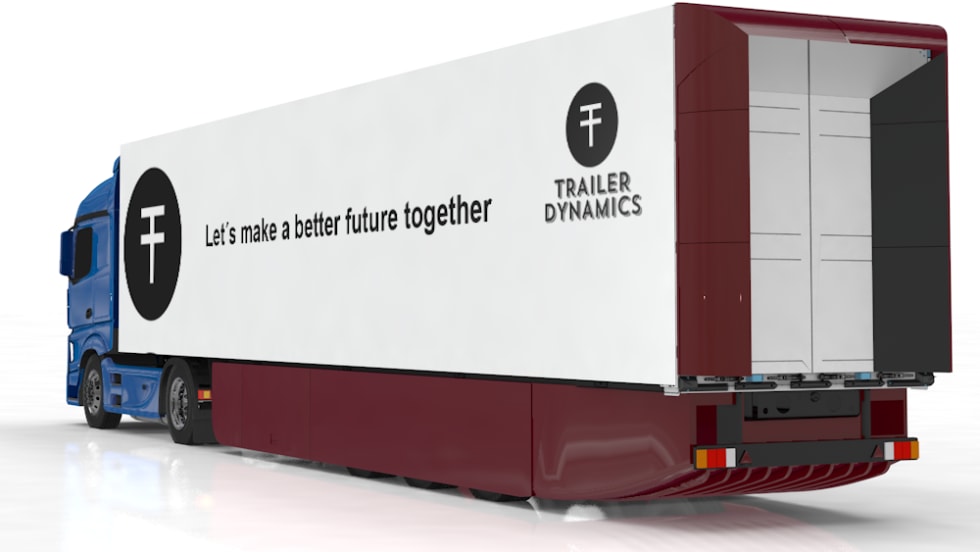
How Trailers Are Harnessing 'Free' Energy
Can trailers play a more active role in sustainable transport beyond aerodynamic add-ons or low-rolling-resistance tires? Some companies think so.
Read More →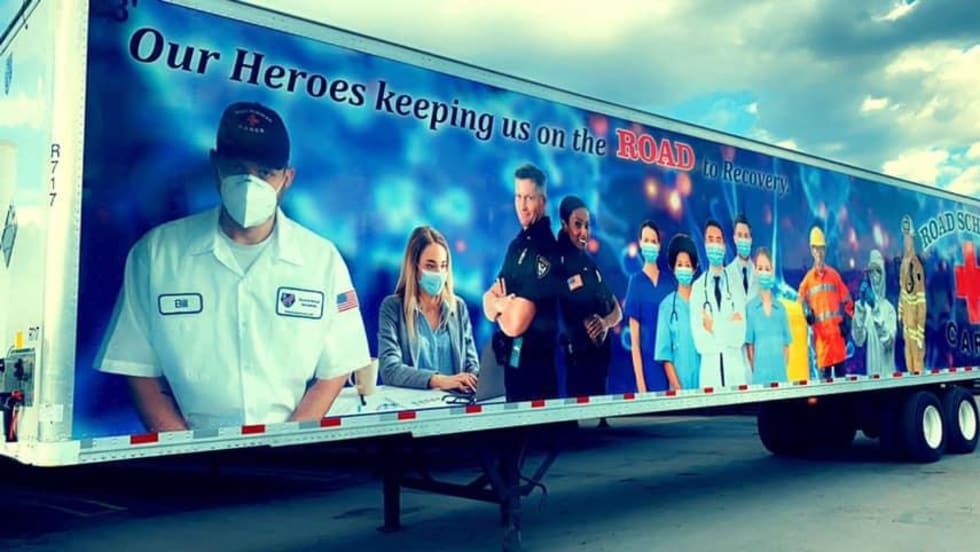
Wrapping a Trailer for COVID’s Everyday Heroes
“We don’t only deliver freight. We deliver awareness.” That’s what Jim Barrett, president and CEO of Road Scholar Transport, likes to say about the Dunmore, Pennsylvania-based carrier’s “awareness fleet.” Its latest trailer wrap honors the everyday heroes of the pandemic.
Read More →
How a Tanker Fleet is Using Unorthodox Trailer Lighting to Fight Rear-End Collisions
Groendyke Transport watched the number of rear-end collisions with its trailers rise steadily until it tried an unorthodox and then unapproved method of alerting following drivers that its trucks were applying brakes and slowing down.
Read More →
The Role Trailers are Playing in COVID-19 Funerals
In places such as New York City and Detroit, overwhelmed hospitals and mortuaries are using refrigerated trailers to store the bodies of people killed by COVID-19.
Read More →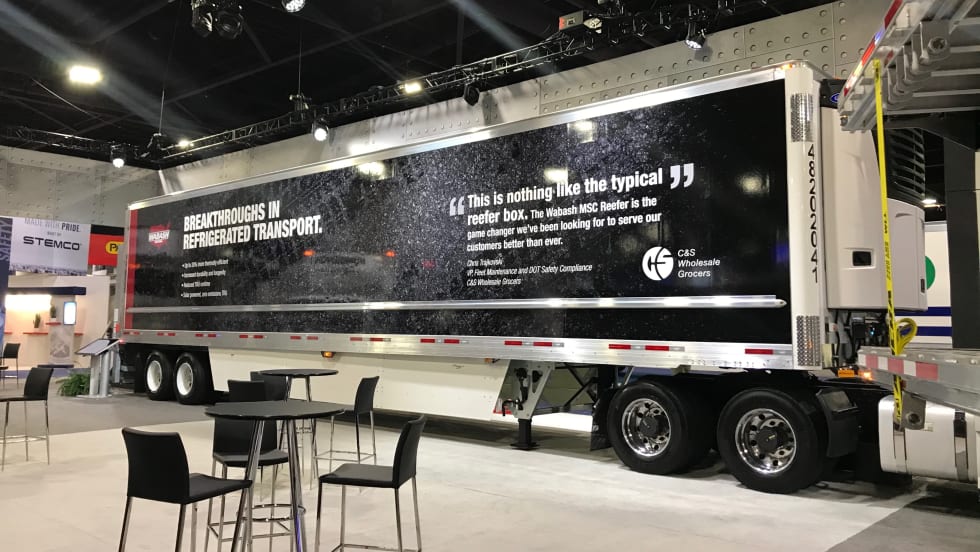
Reefer Trailer Aims to Help Reach Zero Emissions
Wabash National is partnering with C&S Wholesale Grocers to test a new type of zero-emissions refrigerated trailer.
Read More →