





Related: How Fleets Can Implement Gamification into Safety Training
Risky Maneuver Breaks a Two-Rig Blockade
There is little more annoying than two big rigs driving side by side for miles on a freeway or Interstate road, keeping faster-moving cars from passing and oblivious to traffic building up behind them. Blog from Senior Contributing Editor Tom Berg.
April 16, 2018
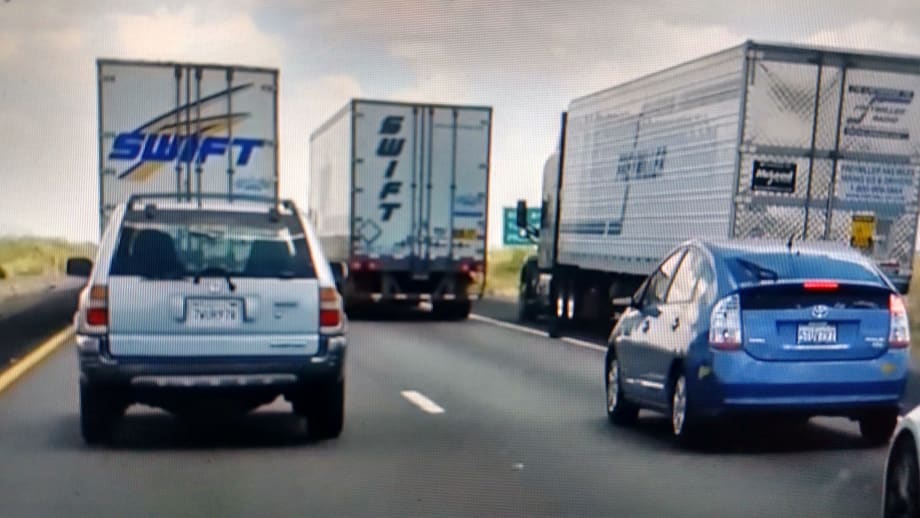
The "mad" trucker's horn and flashing lights got no results, so he made a bold but risky maneuver.
2 min to read
You know what gets my goat? (That's an old expression that means something really irks me.) Two big rigs, driving side by side for miles on a freeway or Interstate road, keeping faster-moving cars from passing, oblivious to traffic building up behind them.
And it’s usually because one trucker wants to go 1 or 2 mph faster than the other, but he can’t build up enough speed to complete a pass, yet he foolishly stays in the left lane. And the slightly slower trucker doesn’t have the consideration – the basic human kindness – to slow down a bit to let the other guy by so the logjam can be broken.
Industry leaders have a Share the Road campaign aimed at motorists who must deal with big trucks. I think it should also apply to truck drivers.
Case in point: Two guys hogging the road on a stretch of Interstate 10 in Arizona and captured on a YouTube video. Two rigs from the same company were the culprits; in spite of the carrier’s name, their tractors are speed limited, so it’s not likely that one could go faster than the other, making the situation even more galling.
The irked parties behind the blockade included motorists, one of whom recorded the incident and uploaded the video to YouTube. And, there was a third trucker who decided to take corrective action. Watch it here.
Now, I certainly don’t encourage anyone to use the shoulder to pass because it’s plainly unsafe. It could’ve resulted in a collision, and the rig could’ve kicked up whatever debris was lying on that paved shoulder. It’s almost certainly illegal, and if a state trooper had seen the indignant trucker’s maneuver, the guy almost certainly would’ve gotten a citation with a fat fine. We can hope that the two inconsiderate drivers would also have gotten tickets.
And I should say that managers of the companies whose rigs and drivers were part of this incident almost certainly wouldn’t condone any of it.

Anyway, the irked third trucker got ahead of the slow guys. He then pulled in front of the trucker who should’ve helped the other guy pass, then slowed him down so his colleague could get ahead and pull into the right lane. This cleared the fast lane so following motorists could get by.
Subscribe to Our Newsletter
More Blog Posts

Pulsing Back-of-Trailer Lamps Aim to Prevent Crashes
Can the addition of a pulsing brake lamp on the back of a trailer prevent rear-end collisions? FMCSA seems to think so, if its exemptions are any indication.
Read More →
Designing a 14-Foot Trailer
Trailers are 13 feet, 6 inches high, right? Not for Hub Group, which developed a special 14-foot-high trailer spec for a dedicated customer based in California. Learn more in the Trailer Talk blog.
Read More →
CARB Comes for Reefer Trailers
A new round of emissions control regulations decreed by the California Air Resource Board will begin affecting refrigerated trailer and TRU design and operations next year.
Read More →
5 Ways Data Analysis Maximizes the Value of Trailer Telematics
Are you getting the most out of your trailer telematics investment?
Read More →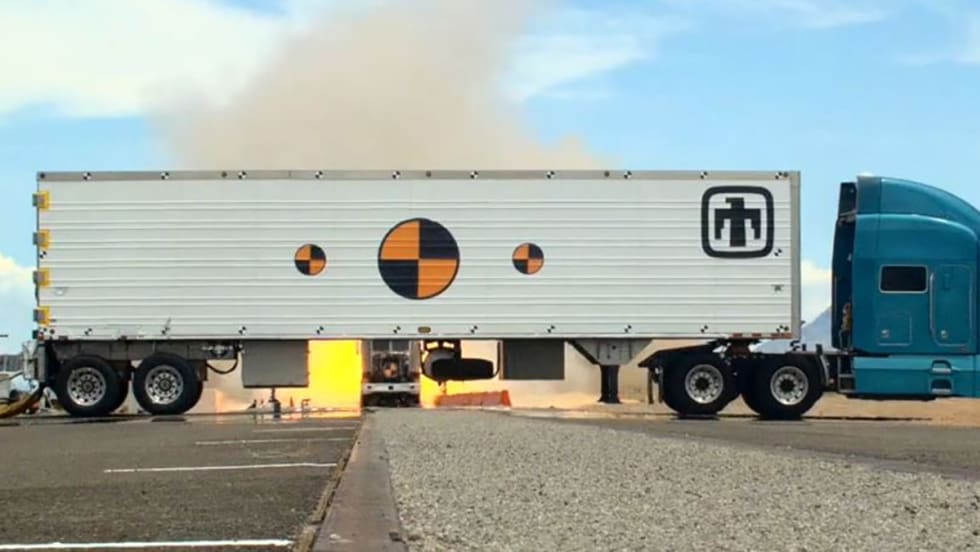
Can You Guess What's in That Trailer?
You don’t always know what’s in the trailers that pass you on the road. But some of those trailers are carrying something a little more dangerous that frozen food or new bedding…like, maybe, a nuclear weapon. But this isn’t an ordinary trailer; this is a trailer specifically made to not only carry this type of payload, but protect it at all costs.
Read More →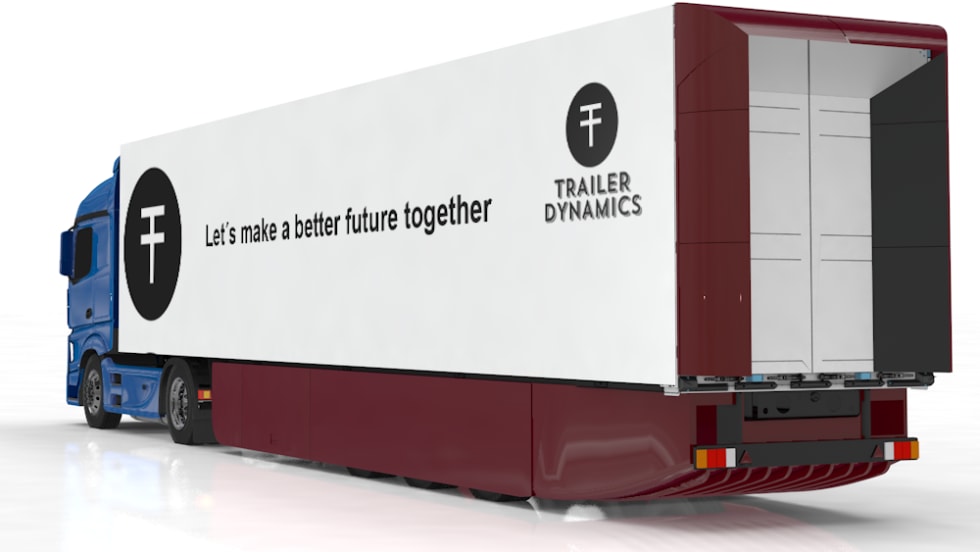
How Trailers Are Harnessing 'Free' Energy
Can trailers play a more active role in sustainable transport beyond aerodynamic add-ons or low-rolling-resistance tires? Some companies think so.
Read More →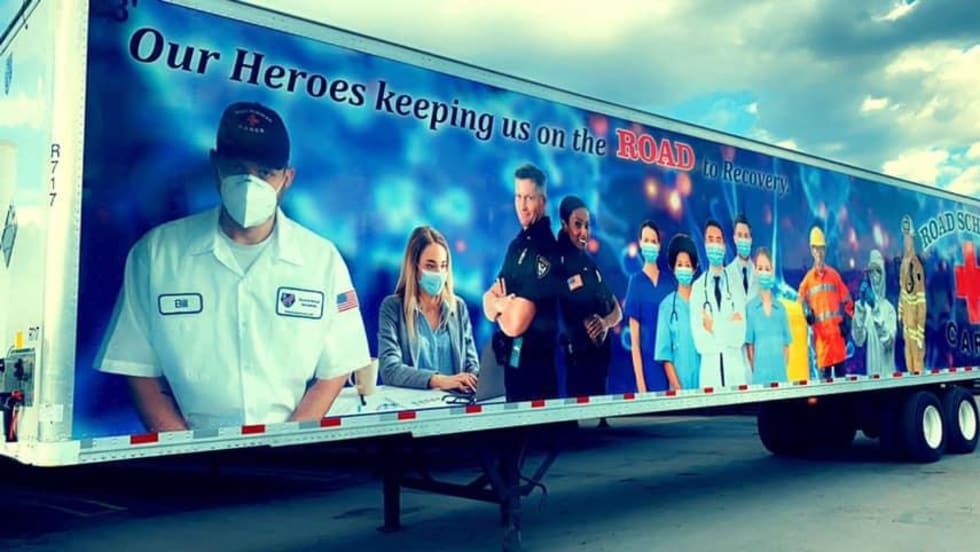
Wrapping a Trailer for COVID’s Everyday Heroes
“We don’t only deliver freight. We deliver awareness.” That’s what Jim Barrett, president and CEO of Road Scholar Transport, likes to say about the Dunmore, Pennsylvania-based carrier’s “awareness fleet.” Its latest trailer wrap honors the everyday heroes of the pandemic.
Read More →
How a Tanker Fleet is Using Unorthodox Trailer Lighting to Fight Rear-End Collisions
Groendyke Transport watched the number of rear-end collisions with its trailers rise steadily until it tried an unorthodox and then unapproved method of alerting following drivers that its trucks were applying brakes and slowing down.
Read More →
The Role Trailers are Playing in COVID-19 Funerals
In places such as New York City and Detroit, overwhelmed hospitals and mortuaries are using refrigerated trailers to store the bodies of people killed by COVID-19.
Read More →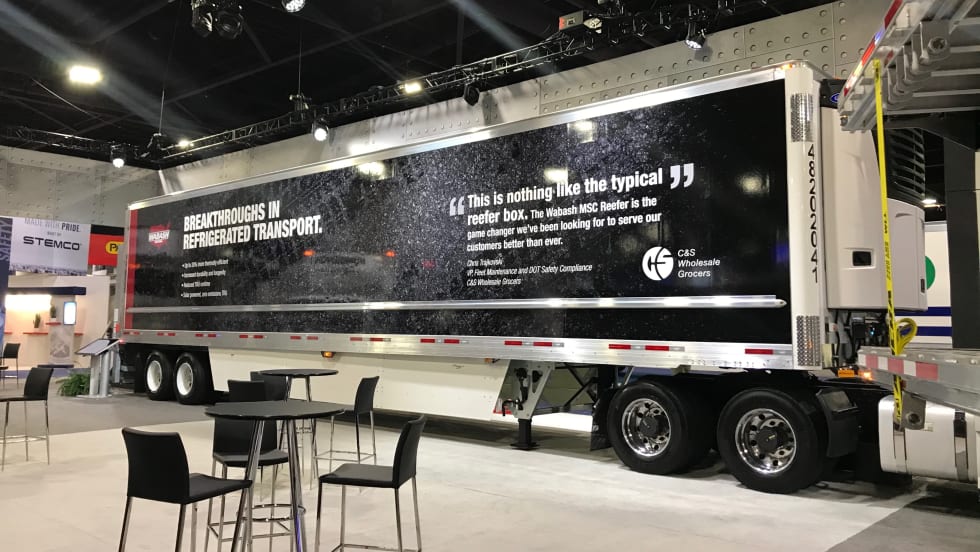
Reefer Trailer Aims to Help Reach Zero Emissions
Wabash National is partnering with C&S Wholesale Grocers to test a new type of zero-emissions refrigerated trailer.
Read More →