




Replacing Rivets with Adhesives Yields Smoother Sides That Could Save Fuel
Lord Corp., which makes bonding adhesives, has done research that indicates eliminating rivets from a trailer’s walls might cut aerodynamic drag by about 1%.

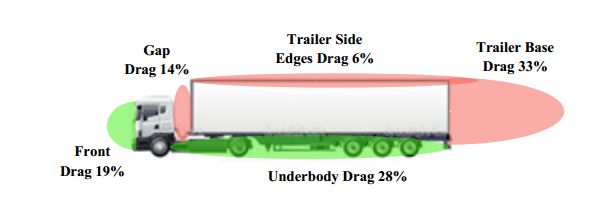
As trailer aerodynamics improve, the small amount caused by air flow over sidewall surfaces will become more important. Art via Lord Corp.
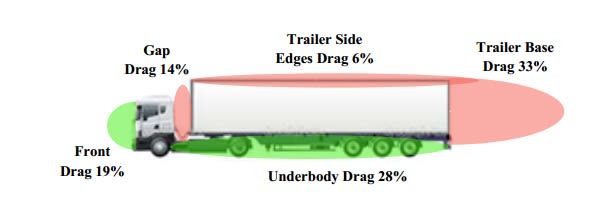
As trailer aerodynamics improve, the small amount caused by air flow over sidewall surfaces will become more important.Art via Lord Corp.
Aerodynamics are becoming more necessary to lower wind drag, cut fuel use and reduce greenhouse gases. Government regulations demand it (as in California) and it also saves money.
The usual ways to do that on trailers is with nose and rear-end treatments, side skirts, and low-rolling-resistance tires. These are all verified by the U.S. Environmental Protection Agency’s SmartWay program.
Here’s another thing that’s not on SmartWay’s list: smooth walls that let air flow by with no interruptions. Lord Corp., which makes bonding adhesives, has done research that indicates eliminating rivets from a trailer’s walls might cut aerodynamic drag by about 1%.
As we know, at highway speeds the resulting increase in fuel economy should be half the drag reduction, or in this case, 0.5% -- not astronomical, but still worth considering, Lord maintains.
Engineer Bob Zweng said in an email that the 1% figure did not come from highway trials, but was extrapolated from wind-tunnel testing of a pair of small sidewall panels, one with rivets and one without. Computational fluid analysis, or CFA, interpreted the air flow over the panels’ surfaces and found some resistance caused by rivet heads measuring 1 inch in diameter by 0.4 inch high.
High-pressure air was measured at a rivet’s leading edge and low pressure air at its trailing edge, he explained. This produces drag.
“An easy way to understand this is to put your hand out the window while driving. When you have your hand flat against the wind you are feeling pressure drag (large blunt object will create a low pressure region behind it and pull your hand backwards). When you turn your hand on end (thin side into the wind) the backwards force is mainly due to skin friction drag.
“You will notice that the pressure drag is much higher than the skin friction, which is usually the case. The longer and more aerodynamic an object, the more that skin friction becomes an issue.”
CFA yielded the numbers.
“From here, a 16% reduction in skin friction drag (which itself only accounts for around 10% of the overall drag) would lead to around a 1% reduction in overall drag for a vehicle. The cleaner the design (more aerodynamic) the more the fuel savings from replacing rivets,” Zweng said.
The small panel size in the test limits the accuracy of the findings, which means the 1% is an estimate, not a solid number, he said. But the testing was extensive, and also showed that bonded metal seams are stronger and more flexible than riveted seams.
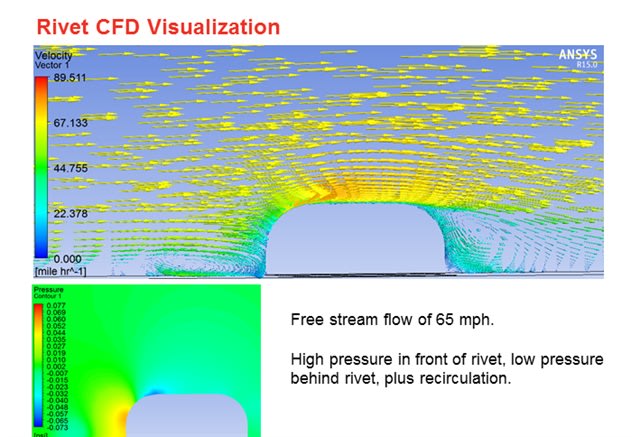
Air flow over the head of a rivet was measured in a wind tunnel. The results indicate that many rivets on a trailer’s sidewall cause drag that requires some fuel to overcome.
Conditions involved “extreme environments, including -40 [to] +80 Centigrade [-40 to 176 degrees Fahrenheit], salt spray, humidity, and water soaks for extended durations,” he said.
“Trailer companies also performed fatigue cycling and severe road course testing to validate designs. Bonded sidewall seams allow for greater deflection, up to three times greater than rivets. Adhesive bonded seams can outperform riveted sidewalls by up to 10 times longer fatigue lifespan.”
Wabash National says adhesive bonding is one of the “innovations” it employs in trailer construction. Adhesives glue together sidewalls, noses and roofs of some of Wabash’s van trailers, and secure D-rings and logistics tracks to walls (http://www.wabash-trailers.com/innovations/adhesive-bonding-technology).
Lord says that 10,000 trailers and 50,000 truck bodies have been made with adhesive bonded seams.
“The important finding,” Zweng concludes, “is that as truck designs become more aerodynamic and move towards cleaner aerodynamic designs, the savings provided by removing rivets and replacing them with structural adhesives will increase.”
More Blog Posts

Pulsing Back-of-Trailer Lamps Aim to Prevent Crashes
Can the addition of a pulsing brake lamp on the back of a trailer prevent rear-end collisions? FMCSA seems to think so, if its exemptions are any indication.
Read More →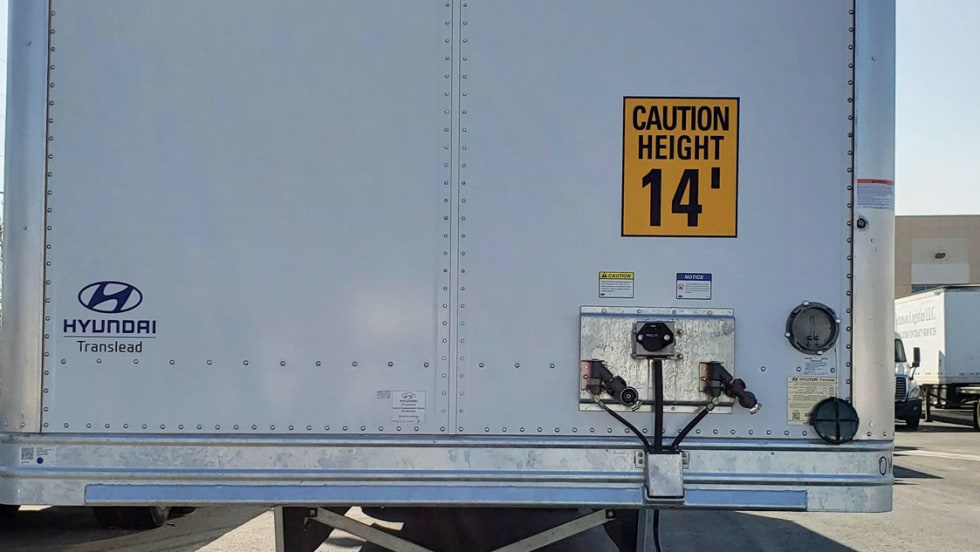
Designing a 14-Foot Trailer
Trailers are 13 feet, 6 inches high, right? Not for Hub Group, which developed a special 14-foot-high trailer spec for a dedicated customer based in California. Learn more in the Trailer Talk blog.
Read More →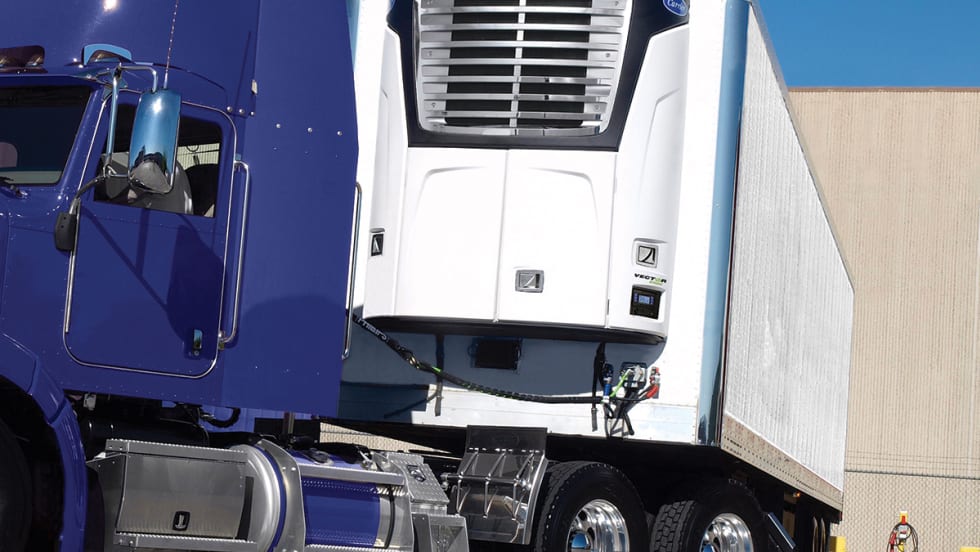
CARB Comes for Reefer Trailers
A new round of emissions control regulations decreed by the California Air Resource Board will begin affecting refrigerated trailer and TRU design and operations next year.
Read More →
5 Ways Data Analysis Maximizes the Value of Trailer Telematics
Are you getting the most out of your trailer telematics investment?
Read More →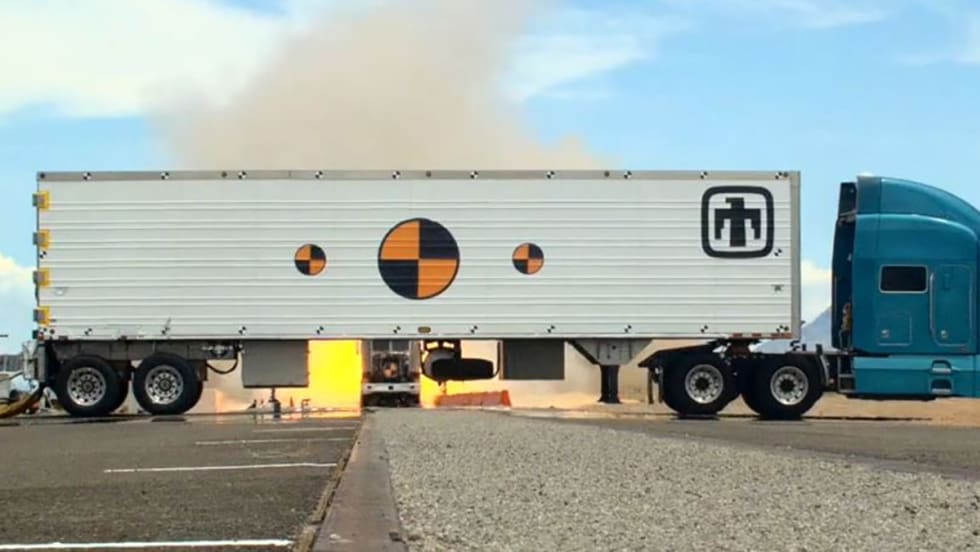
Can You Guess What's in That Trailer?
You don’t always know what’s in the trailers that pass you on the road. But some of those trailers are carrying something a little more dangerous that frozen food or new bedding…like, maybe, a nuclear weapon. But this isn’t an ordinary trailer; this is a trailer specifically made to not only carry this type of payload, but protect it at all costs.
Read More →
How Trailers Are Harnessing 'Free' Energy
Can trailers play a more active role in sustainable transport beyond aerodynamic add-ons or low-rolling-resistance tires? Some companies think so.
Read More →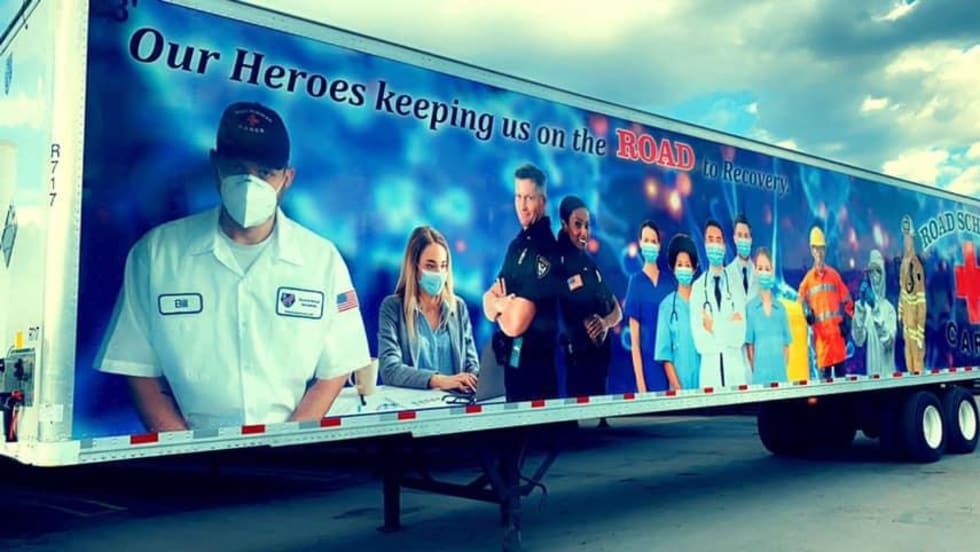
Wrapping a Trailer for COVID’s Everyday Heroes
“We don’t only deliver freight. We deliver awareness.” That’s what Jim Barrett, president and CEO of Road Scholar Transport, likes to say about the Dunmore, Pennsylvania-based carrier’s “awareness fleet.” Its latest trailer wrap honors the everyday heroes of the pandemic.
Read More →
How a Tanker Fleet is Using Unorthodox Trailer Lighting to Fight Rear-End Collisions
Groendyke Transport watched the number of rear-end collisions with its trailers rise steadily until it tried an unorthodox and then unapproved method of alerting following drivers that its trucks were applying brakes and slowing down.
Read More →
The Role Trailers are Playing in COVID-19 Funerals
In places such as New York City and Detroit, overwhelmed hospitals and mortuaries are using refrigerated trailers to store the bodies of people killed by COVID-19.
Read More →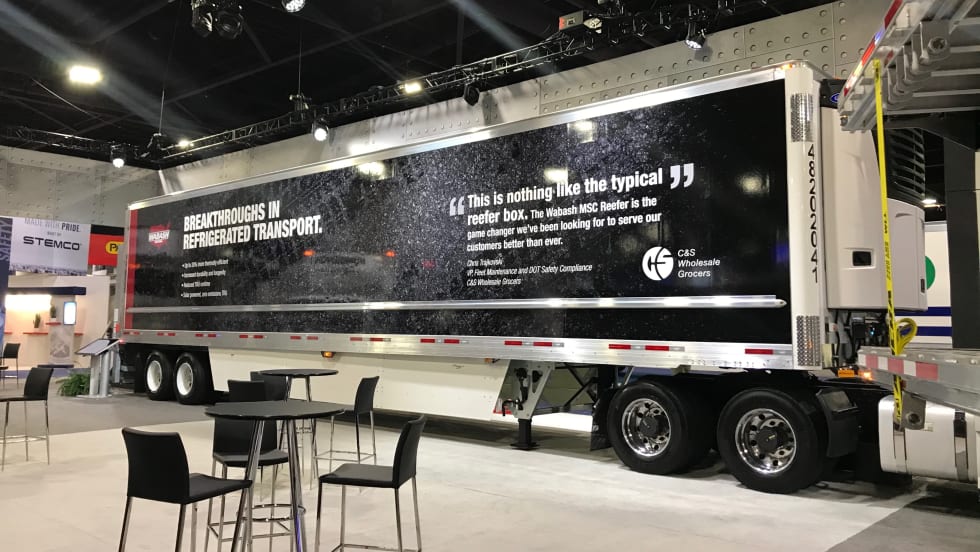
Reefer Trailer Aims to Help Reach Zero Emissions
Wabash National is partnering with C&S Wholesale Grocers to test a new type of zero-emissions refrigerated trailer.
Read More →