





Related: Manac Considering Ways to Increase Shareholder Value
Price and Weight Comparisons: Steel, Combo and Aluminum
Different buyers have different considerations, which is why trailer manufacturers offer the three different types. Manac offered a quick look at the three trailer types in its booth at MATS.
March 31, 2015
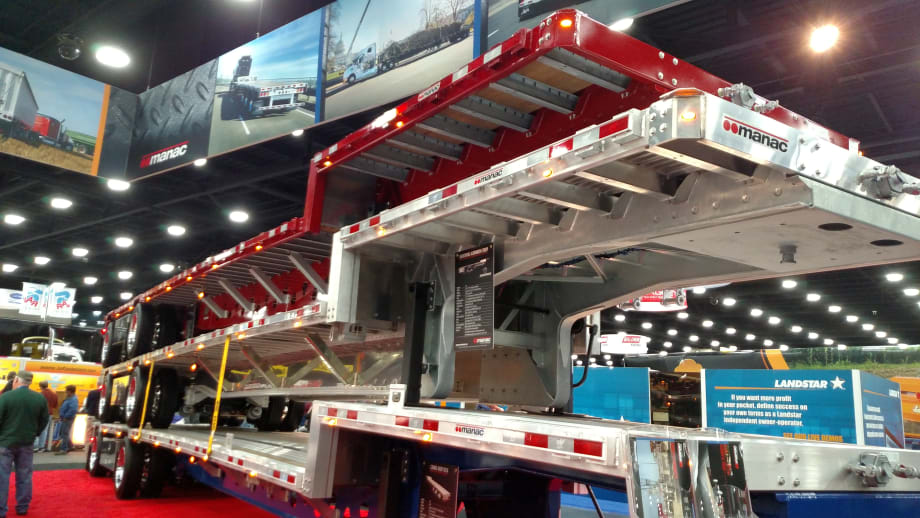
Photo: Tom Berg
1 min to read
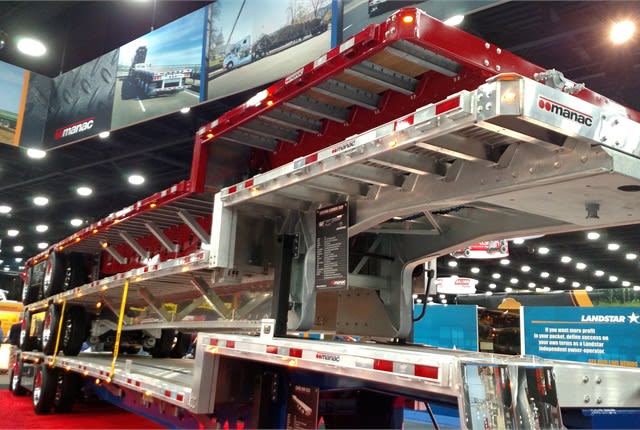
Photo: Tom Berg
“I get the question all the time,” said Keith Limback, Manac Trailer’s general sales manager for the U.S. “‘What’s the difference in weight and cost for different materials?’”
So in the company’s booth at last week’s Mid-America Trucking Show, he included three spread-tandem, drop-deck trailers he dubbed “good, better and best.” Here’s how they stacked up (literally):
On top was a steel trailer, the least costly at about $28,000 but heaviest at 11,700 pounds.
At the bottom, carrying the other two, was a “combo,” a combination of a steel underframe and crossmembers with an aluminum deck, that costs $2,500 more but saves 1,000 pounds.
In the middle was the all-aluminum model, priced at another $3,000 (or $5,000 more than steel) but saving another 1,000 pounds in tare weight.
In corrosion resistance, anticipated life and probably resale value, the best choice would be the all-aluminum (“all” except for running and landing gear, of course). Next is the combo, and finally the steel (though steel surfaces can be treated in a number of ways to resist rust). Different buyers have different considerations, which is why manufacturers offer the three different types.
At the show, visitors to Manac’s booth got to see them all in one parking place.
Topics:Aluminum
Subscribe to Our Newsletter
More Blog Posts
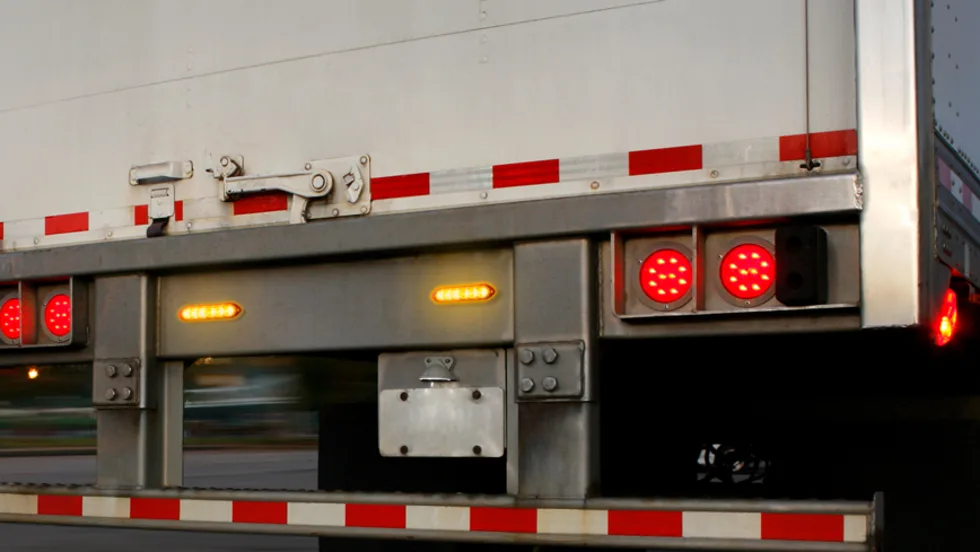
Pulsing Back-of-Trailer Lamps Aim to Prevent Crashes
Can the addition of a pulsing brake lamp on the back of a trailer prevent rear-end collisions? FMCSA seems to think so, if its exemptions are any indication.
Read More →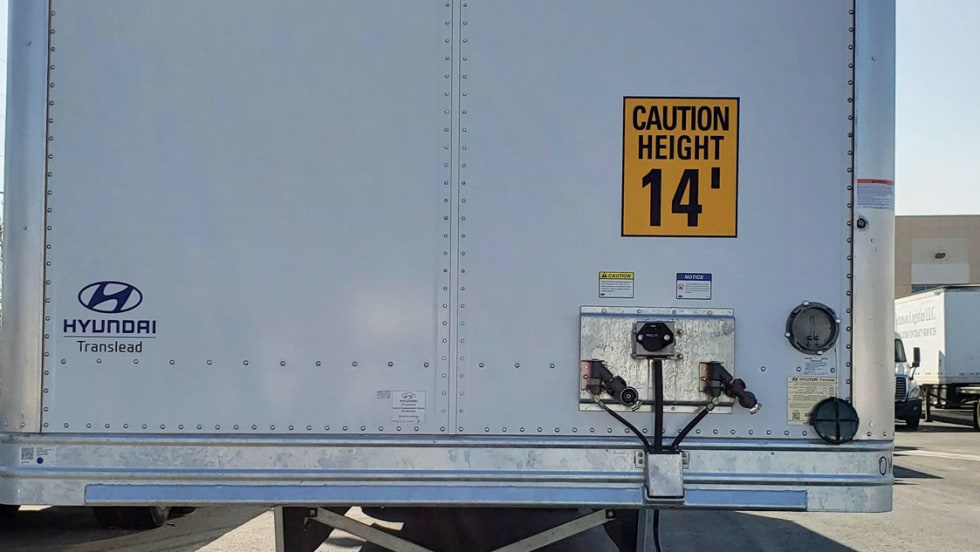
Designing a 14-Foot Trailer
Trailers are 13 feet, 6 inches high, right? Not for Hub Group, which developed a special 14-foot-high trailer spec for a dedicated customer based in California. Learn more in the Trailer Talk blog.
Read More →
CARB Comes for Reefer Trailers
A new round of emissions control regulations decreed by the California Air Resource Board will begin affecting refrigerated trailer and TRU design and operations next year.
Read More →
5 Ways Data Analysis Maximizes the Value of Trailer Telematics
Are you getting the most out of your trailer telematics investment?
Read More →
Can You Guess What's in That Trailer?
You don’t always know what’s in the trailers that pass you on the road. But some of those trailers are carrying something a little more dangerous that frozen food or new bedding…like, maybe, a nuclear weapon. But this isn’t an ordinary trailer; this is a trailer specifically made to not only carry this type of payload, but protect it at all costs.
Read More →
How Trailers Are Harnessing 'Free' Energy
Can trailers play a more active role in sustainable transport beyond aerodynamic add-ons or low-rolling-resistance tires? Some companies think so.
Read More →
Wrapping a Trailer for COVID’s Everyday Heroes
“We don’t only deliver freight. We deliver awareness.” That’s what Jim Barrett, president and CEO of Road Scholar Transport, likes to say about the Dunmore, Pennsylvania-based carrier’s “awareness fleet.” Its latest trailer wrap honors the everyday heroes of the pandemic.
Read More →
How a Tanker Fleet is Using Unorthodox Trailer Lighting to Fight Rear-End Collisions
Groendyke Transport watched the number of rear-end collisions with its trailers rise steadily until it tried an unorthodox and then unapproved method of alerting following drivers that its trucks were applying brakes and slowing down.
Read More →
The Role Trailers are Playing in COVID-19 Funerals
In places such as New York City and Detroit, overwhelmed hospitals and mortuaries are using refrigerated trailers to store the bodies of people killed by COVID-19.
Read More →
Reefer Trailer Aims to Help Reach Zero Emissions
Wabash National is partnering with C&S Wholesale Grocers to test a new type of zero-emissions refrigerated trailer.
Read More →