




President Touts Smart Highways and Vehicles in Infrastructure Push
Tuesday, President Obama took a quick trip across the Potomac to visit the Turner-Fairbank Highway Research Center, a facility in McLean, Virginia, that focuses on highway technologies that help make driving safer and smarter.


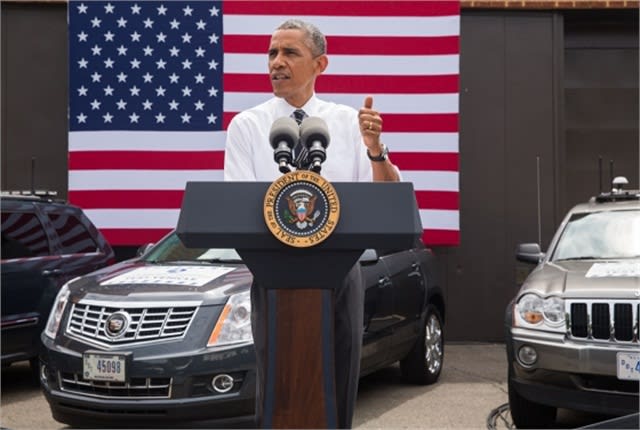
Tuesday, President Obama took a quick trip across the Potomac to visit the Turner-Fairbank Highway Research Center, a facility in McLean, Virginia, that focuses on highway technologies that help make driving safer and smarter.
The main emphasis of his remarks was aimed at Congress's continued inaction on highway and infrastructure funding, but he also talked about nvesting in new infrastructure technologies.
Intelligent Transportation Society of America (ITS America) members and staff joined the president, who toured the research and testing facility and delivered remarks on the importance of vehicle-to-vehicle (V2V) and vehicle-to-infrastructure (V2I) communication technology for improving safety and mobility and reducing wasted time and fuel on our nation’s roads.
Obama described how connected vehicle technology will prevent crashes from happening in the first place.
"I just got a tour of a lab where automakers and government researchers team up to create new technologies that help cars communicate with the world around them and with each other," he said. "They can tell you if an oncoming vehicle is about to run a red light, or if a car is coming around a blind corner, or if a detour would help you save time and gas. And I got to test all this in a simulator. It was sort of like Knight Rider," he said, drawing laughter from the crowd, which continued when he pointed out that he hasn't exactly done much of his own driving the past six years.
"Now, as the father of a daughter who just turned 16, any new technology that makes driving safer is important to me. And new technology that makes driving smarter is good for the economy. One study shows that Americans spend 5.5 billion hours stuck in traffic each year, which costs us $120 billion in wasted time and gas -- that's 800 bucks per commuter. Then you’ve got outdated roads and bridges that mean businesses pay an extra $27 billion in freight costs, which are then passed on to consumers.
"So, all told, transportation eats up more of the typical family’s household budget than anything except the rent or a mortgage -- which means that the cutting-edge research that all of you are doing here helps save lives and save money, and leads to new jobs and new technologies and new industries. And that’s why America has to invest more in the kind of job-creating research and development that you’re doing right here at the Highway Research Center."
ITS America President and CEO Scott Belcher said his group was “thrilled" about the president's visit. “Vehicle-to-vehicle and vehicle-to-infrastructure communication technology represents the next giant leap in automotive safety, providing the ability for cars to ‘talk’ to each other and the world around them to avoid crashes," Belcher said in a statement following the event.
"And we’re not just talking about cars talking to other cars but about cars talking to bikes, trucks talking to motorcycles, buses talking to pedestrians, and even traffic signals communicating with vehicles to help prevent crashes and reduce traffic tie-ups."
Earlier this month in Germany, Daimler Trucks demonstrated commercial truck technologies that would allow a truck to basically drive itself on the highway. It uses a combination of radar sensors at the front and sides of the truck, a stereo camera behind the windshield, three-dimensional maps and V2V/V2I communication (vehicle to vehicle/vehicle to infrastructure), which is the exchange of information between the truck and other vehicles and with the roadway.
And on our own shores in May, Peloton Technology demonstrated a two-truck platooning system, which makes use of a forward collision avoidance system and vehicle-to-vehicle communication to allow two trucks to travel closer together than would normally be safe.
And, of course, you've no doubt heard of Google's driverless car.
These types of technologies are not science fiction. However, seeing wide adoption of them will hinge not on technology, but on factors such as cost, public acceptance, privacy and liability issues. After all, who's responsible when two Google cars get in a crash?
More Blog Posts
Beyond the Central Transport Settlement: Lessons on Hiring and Risk
The $5.5 million discrimination settlement raises broader questions about hiring practices, safety performance, and the hidden risks that can lurk in a fleet's recruiting process.
Read More →
Are Diesel Shortages Something to Worry About Again?
There’s a certain déjà vu when tensions flare in the Middle East and diesel price spikes can give you panic attacks. What parallels are there between the current situation and the 1970s energy crisis?
Read More →
NOx Isn’t Laughing Gas. Let’s Clear That Up.
A recent EPA reference mixed up NOx and nitrous oxide. It’s an easy mistake. Just not one you expect to see in emissions policy. Let’s look at the difference.
Read More →
TMC 2025 Takeaway 2: Buy... or Subscribe?
TaaS. Does that mean trucks as a service, trailers as a service, or tires as a service? HDT's Deborah Lockridge has another takeaway from the Technology & Maintenance Council meeting in her blog.
Read More →
TMC 2025 Takeaway: The Journey Toward Vertical Integration
HDT's Deborah Lockridge on how the trucking industry has moved toward "vertical integration" over the past 25 years.
Read More →
Trucks Are For Girls!
HDT Editor and Associate Publisher Deborah Lockridge is a longtime Girl Scout leader and loves to connect her passion for inspiring girls with her love of the trucking industry.
Read More →
Trucking Advocacy: Impact Beyond the 2024 Elections
No matter who wins the election, trucking continues to work to educate the people who pass the laws and make the rules that affect the industry. HDT's Deborah Lockridge shares insights from two major trucking associations in her All That's Trucking blog.
Read More →
Recharge Your Brain for Better Business
Skimping on vacation may be the worst thing you can do for your business, your career, and your mental health. In her All That's Trucking blog, Deborah Lockridge writes about the importance of giving your brain what it needs to be innovative.
Read More →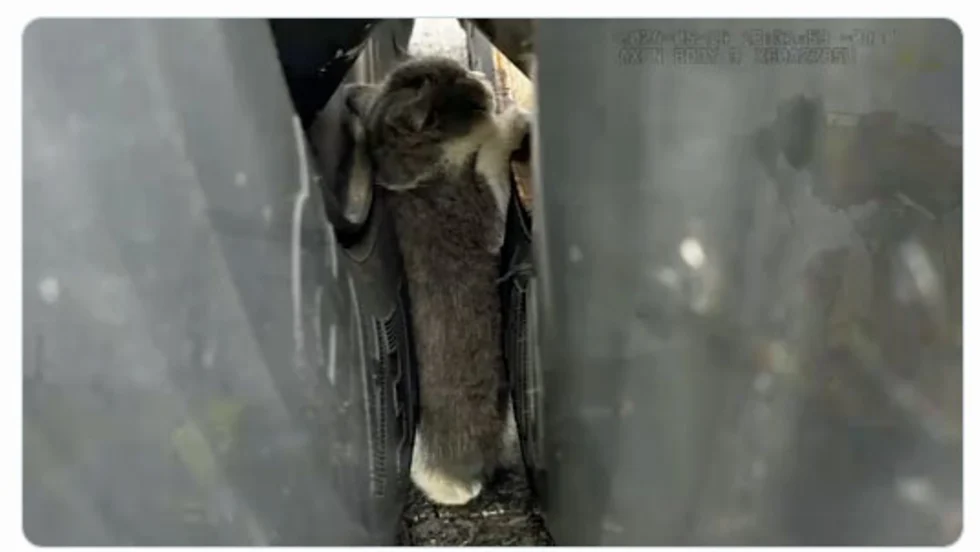
Trucker Pre-Trip Leads to Mission 'Im-paw-sible'
See what happened when a truck driver found an unexpected stowaway during his pre-trip inspection.
Read More →
HDT Editor: 2023's Most Important Trucking Topics
Read Deborah Lockridge's picks for the most significant stories we covered at HDT in 2023: freight recession, zero-emission trucks, drivers and marijuana, and more.
Read More →