




Over the years, from old pull trailers to multi-axle configurations
Heavy-haul equipment has always fascinated me, ever since I was a little boy watching “steam shovels” dig basements in our then-expanding neighborhood in post-World War II Milwaukee. The shovels (which were actually gasoline- and maybe diesel-powered) were carried to job sites on low-slung pull trailers. The trailers were pulled by dump trucks which, after parking the trailers on the street, also carried away some of the dirt from the new holes.

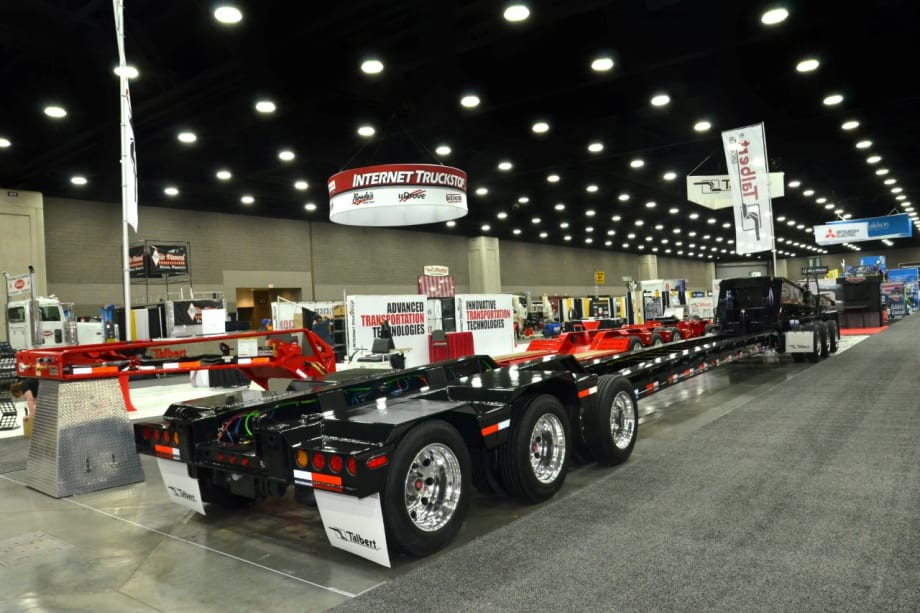
Two of three modules of a “3-3-2” multi-axle configuration were shown by Talbert in its booth at the Louisville show. Missing is the 2-axle “booster” that would be attached to the rear.

Heavy-haul equipment has always fascinated me, ever since I was a little boy watching “steam shovels” dig basements in our then-expanding neighborhood in post-World War II Milwaukee.
The shovels (which were actually gasoline- and maybe diesel-powered) were carried to job sites on low-slung pull trailers. The trailers were pulled by dump trucks which, after parking the trailers on the street, also carried away some of the dirt from the new holes.
Today the equivalent is an equipment trailer with two or three axles and a heavy tongue that rests on the rear of a heavier dump truck. And over the years, the forward-scooping shovel became a large backhoe called an excavator. Everything’s bigger and heavier than in those long-ago days.
For a few months back in 1978 I edited a magazine called Transportation Engineer, and in every issue we ran an article or two about a big haul that used a multi-axle trailer, and I learned a little of the terminology. But I’d forgotten most of it by the time I saw the trailers displayed at the Mid-America Trucking Show in Louisville.
One, in the Talbert Trailers booth, was a lowboy called a “3-3-2,” and I called Greg Smith, the VP of sales & marketing, to ask what that meant.

“To clarify a bit of our conversation, the show trailer was in fact a 3+3+2 configuration, or the ’12-axle’ configuration that is on the sheet sent previously,” he said via email. (Right)
“However, due to space limitations, only the ‘3+3’ portion – the jeep and trailer – were actually in the show. The 2-axle booster with the mechanical axle extension had to be left out, as well as the extra beam deck. We thought about piling them on top of the trailer but didn’t think it would show as well.”
The 65-ton modular trailer was built for Catom Trucking, based in Geneva, Ill., Smith said.
A “jeep,” of course, is the forward booster with two or three axles and its own fifth wheel, on which rests the nose of the main lowboy trailer. Other trailers displayed outside had boosters stacked aboard, as Smith described, and they might’ve confused onlookers who don’t work with them.
The sheet of drawings shows progressively longer and heavier combinations, up to 13 axles (including a tractor). You may notice that there’s no 10-axle version. “They’re hardly ever used” because state weight laws don’t favor them, Smith explained, “so we don’t build many.”
More Blog Posts
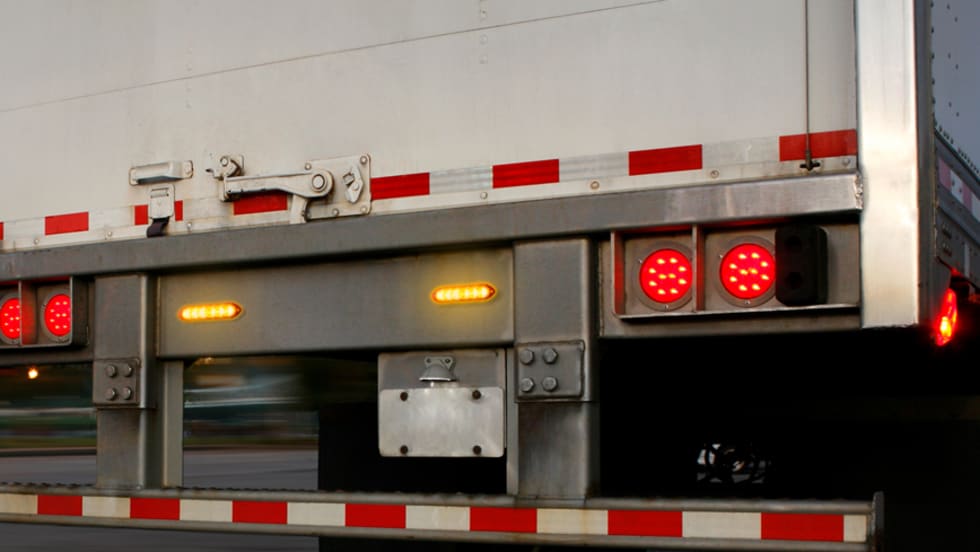
Pulsing Back-of-Trailer Lamps Aim to Prevent Crashes
Can the addition of a pulsing brake lamp on the back of a trailer prevent rear-end collisions? FMCSA seems to think so, if its exemptions are any indication.
Read More →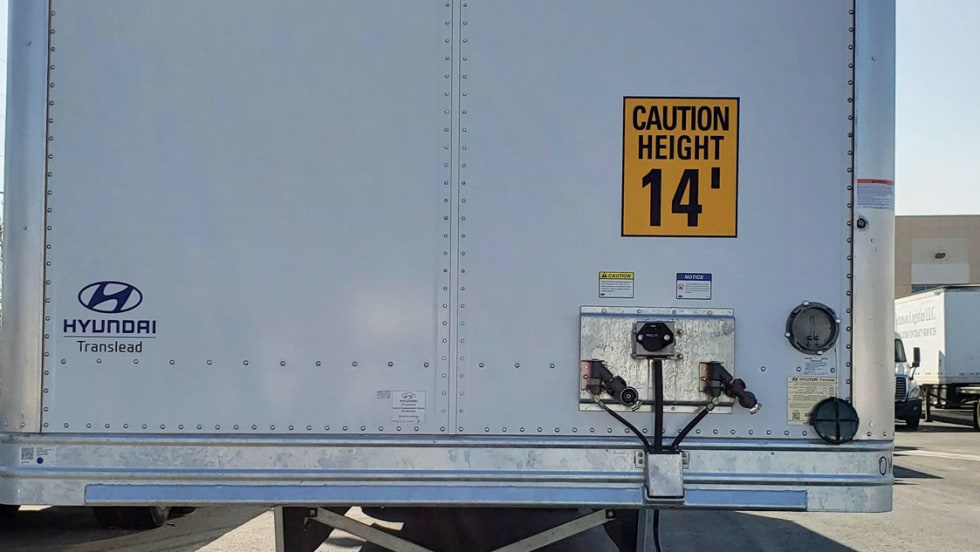
Designing a 14-Foot Trailer
Trailers are 13 feet, 6 inches high, right? Not for Hub Group, which developed a special 14-foot-high trailer spec for a dedicated customer based in California. Learn more in the Trailer Talk blog.
Read More →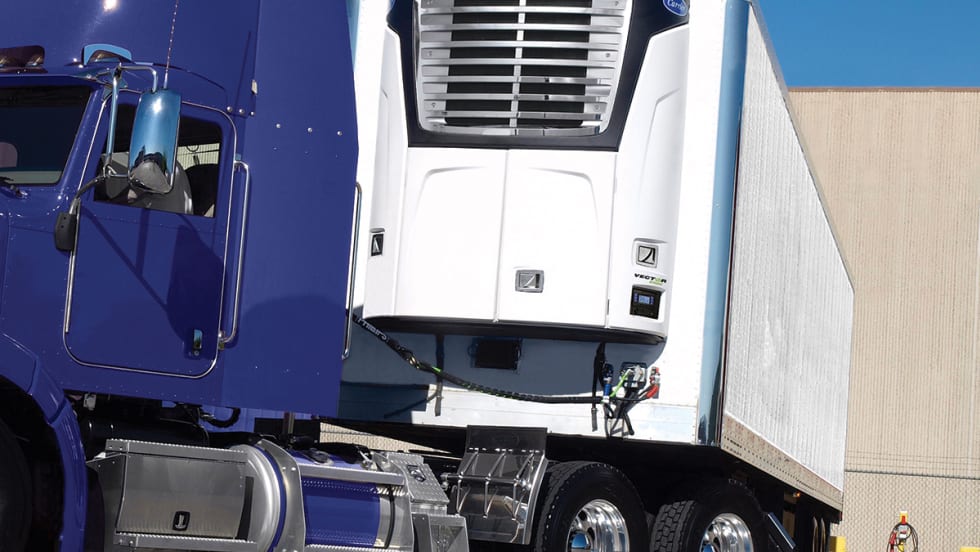
CARB Comes for Reefer Trailers
A new round of emissions control regulations decreed by the California Air Resource Board will begin affecting refrigerated trailer and TRU design and operations next year.
Read More →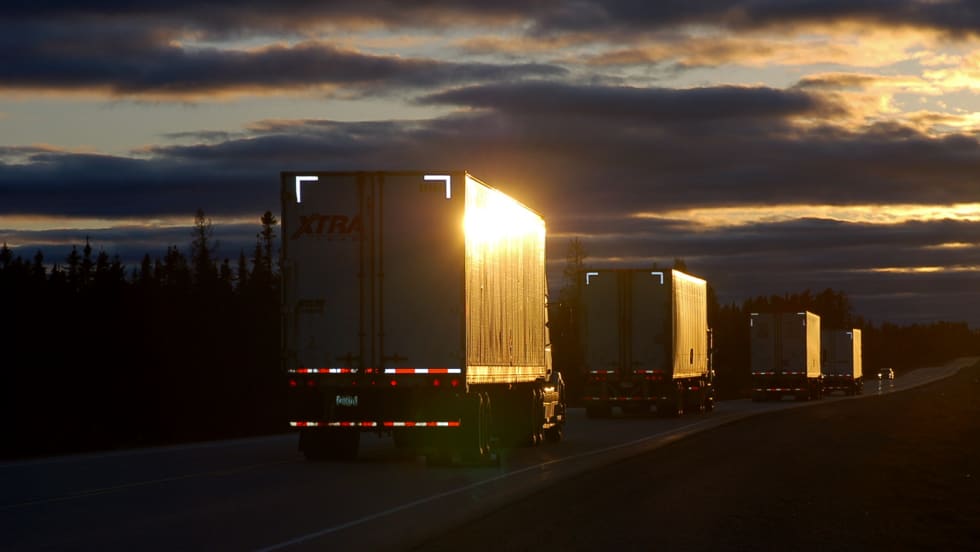
5 Ways Data Analysis Maximizes the Value of Trailer Telematics
Are you getting the most out of your trailer telematics investment?
Read More →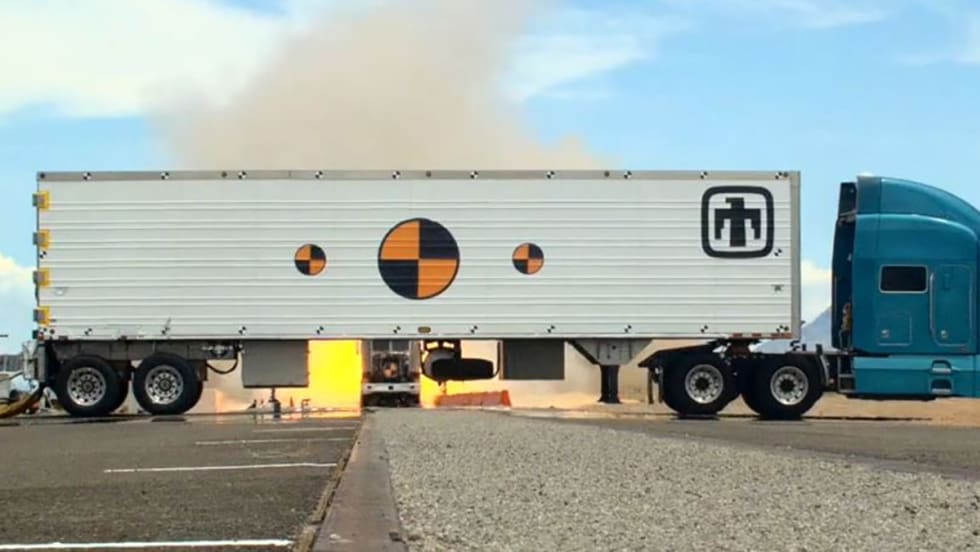
Can You Guess What's in That Trailer?
You don’t always know what’s in the trailers that pass you on the road. But some of those trailers are carrying something a little more dangerous that frozen food or new bedding…like, maybe, a nuclear weapon. But this isn’t an ordinary trailer; this is a trailer specifically made to not only carry this type of payload, but protect it at all costs.
Read More →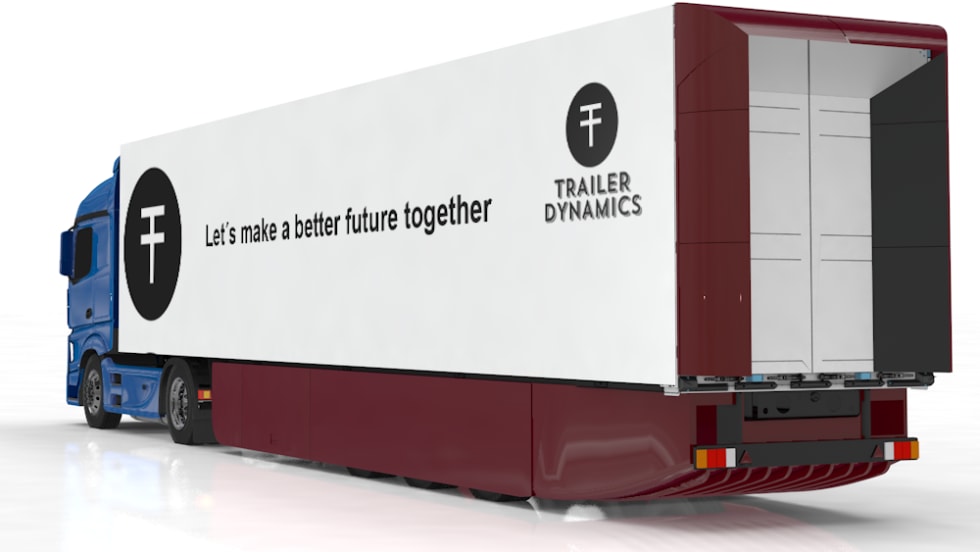
How Trailers Are Harnessing 'Free' Energy
Can trailers play a more active role in sustainable transport beyond aerodynamic add-ons or low-rolling-resistance tires? Some companies think so.
Read More →
Wrapping a Trailer for COVID’s Everyday Heroes
“We don’t only deliver freight. We deliver awareness.” That’s what Jim Barrett, president and CEO of Road Scholar Transport, likes to say about the Dunmore, Pennsylvania-based carrier’s “awareness fleet.” Its latest trailer wrap honors the everyday heroes of the pandemic.
Read More →
How a Tanker Fleet is Using Unorthodox Trailer Lighting to Fight Rear-End Collisions
Groendyke Transport watched the number of rear-end collisions with its trailers rise steadily until it tried an unorthodox and then unapproved method of alerting following drivers that its trucks were applying brakes and slowing down.
Read More →
The Role Trailers are Playing in COVID-19 Funerals
In places such as New York City and Detroit, overwhelmed hospitals and mortuaries are using refrigerated trailers to store the bodies of people killed by COVID-19.
Read More →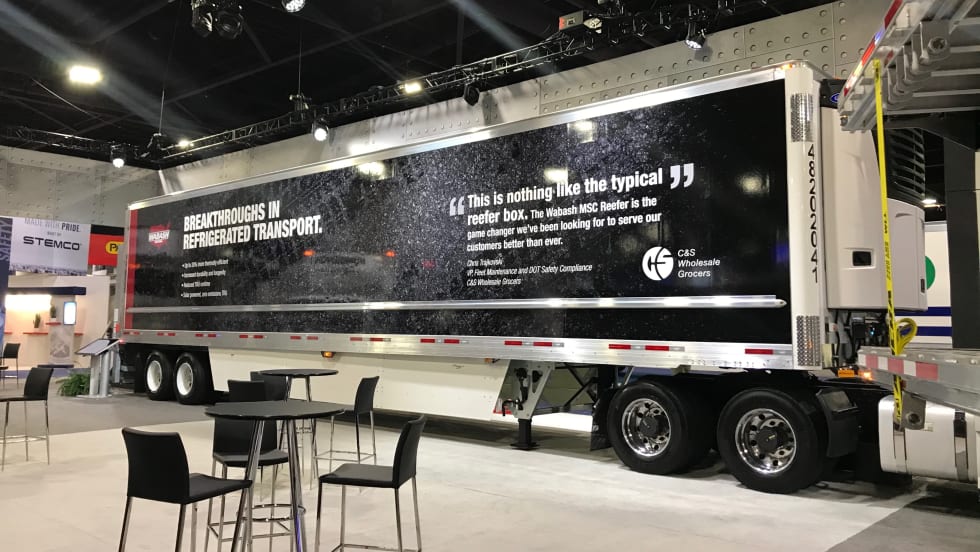
Reefer Trailer Aims to Help Reach Zero Emissions
Wabash National is partnering with C&S Wholesale Grocers to test a new type of zero-emissions refrigerated trailer.
Read More →