




Orphan Earmarks Costing States Billions in Highway Money
As we look to a 2011 where it seems less and less likely we'll see a true rethinking on Capitol Hill of how our country pays for infrastructure, a new report by USA Today uncovers how botched and orphan "earmarks" -- aka pork -- is actually costing states highway money
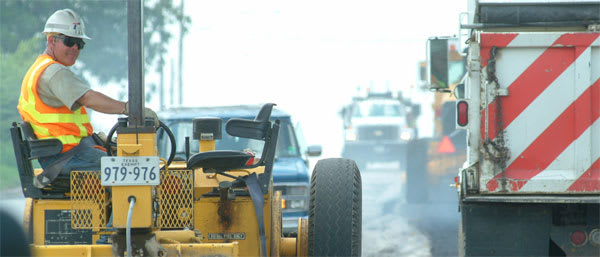
Texas has more than $400 million in unspent earmarks for highway projects.
As we look to a 2011 where it seems less and less likely we'll see a true rethinking on Capitol Hill of how our country pays for infrastructure, a new report by USA Today uncovers how botched and orphan "earmarks" -- aka pork -- is actually costing states highway money.
In "Earmarks to Nowhere: States Losing Billions," Cezary Podkul with the Stabile Center for Investigative Journalism at Columbia University and USA Today reporter Gregory Korte found at least 3,600 earmarks in which not a single dollar has gone towards its intended purpose. There are just as many in which at least some of the money remains unspent.
In fact, USA Today reports, almost 1 in 3 highway dollars earmarked since 1991 - about $13 billion - remains unspent, federal data show. "We call them orphan earmarks," says Michael Covington of the South Carolina Department of Transportation, told the paper. "They don't have a home."
Making things worse, because lawmakers inserted some of the earmarks into particular sections of transportation bills, many of the orphan earmarks also count against a state's share of federal highway funds and have taken billions of dollars away from state transportation departments, the paper says. During the past 20 years, orphan earmarks cut the amount of money that states would have received in federal highway funding by about $7.5 billion.
USA Today also has a video about how this problem affects Pennsylvania, which is fourth in the list of states with the most unspent earmarks:
How it Happens
Sometimes it's because of basic typographical and procedural errors. As an example, the story points to $375,000 earmarked to "improve State Road 31" in Columbus, Ind. Only problem is, there is no State Road 31 in Columbus -- only U.S. 31. The typo has wrapped the earmark in red tape and the money remains unspent 13 years later.
Other orphaned earmarks get lost because they're meant for projects that later get shelved. Some orphan earmarks are leftovers from long-completed projects -- like $2.7 million that never got spent by Atlanta for transportation improvements needed for the 1996 Olympics.
"With state budgets squeezed and the economy in slow recovery, states are increasingly vocal about having money tied up in projects that many never wanted in the first place," the authors note. "They say the money could be better used for shovel-ready projects that would create jobs, replace crumbling bridges and roads, and make highways safer."
On Capitol Hill
The orphan earmark issue seems to add insult to injury as the company wrestles with the question of how to pay for its infrastructure. The fuel tax, which has not gone up since 1993, does not produce enough revenue to fund ongoing highway needs, and will generate declining amounts of revenue going forward as cars and trucks get more efficient. The landslide Republican victory in November changed the transportation players on the House side, but there is no clear signal that even with this new leadership Congress has the political will to solve the key problem of funding the federal highway program.
However, the USA Today story explains that it's tough to fix these orphan earmarks, or cancel them to free up the money for other projects.
Rep. James Oberstar,D-Minn., who was chairman of the House Transportation and Infrastructure Committee, was supporting a bill that would have canceled more than $700 million in orphan earmarks from 1987 on. The bill, sponsored by Rep. Betsy Markey, D-Colo., passed the House, 394-23, and died in the Senate. The lawmakers who championed it, Oberstar and Markey, lost their seats in the November elections.
To learn more, be sure to check out the story at USA Today. There's lots more detail, including an interactive map showing which states have the most unspent funds.
More Blog Posts
The Diesel Price Crisis Has No Easy Fix
Washington is trying everything from oil-reserve releases to longer driving hours for fuel haulers. None addresses all the forces keeping diesel prices high.
Read More →
Beyond the Central Transport Settlement: Lessons on Hiring and Risk
The $5.5 million discrimination settlement raises broader questions about hiring practices, safety performance, and the hidden risks that can lurk in a fleet's recruiting process.
Read More →
Are Diesel Shortages Something to Worry About Again?
There’s a certain déjà vu when tensions flare in the Middle East and diesel price spikes can give you panic attacks. What parallels are there between the current situation and the 1970s energy crisis?
Read More →
NOx Isn’t Laughing Gas. Let’s Clear That Up.
A recent EPA reference mixed up NOx and nitrous oxide. It’s an easy mistake. Just not one you expect to see in emissions policy. Let’s look at the difference.
Read More →
TMC 2025 Takeaway 2: Buy... or Subscribe?
TaaS. Does that mean trucks as a service, trailers as a service, or tires as a service? HDT's Deborah Lockridge has another takeaway from the Technology & Maintenance Council meeting in her blog.
Read More →
TMC 2025 Takeaway: The Journey Toward Vertical Integration
HDT's Deborah Lockridge on how the trucking industry has moved toward "vertical integration" over the past 25 years.
Read More →
Trucks Are For Girls!
HDT Editor and Associate Publisher Deborah Lockridge is a longtime Girl Scout leader and loves to connect her passion for inspiring girls with her love of the trucking industry.
Read More →
Trucking Advocacy: Impact Beyond the 2024 Elections
No matter who wins the election, trucking continues to work to educate the people who pass the laws and make the rules that affect the industry. HDT's Deborah Lockridge shares insights from two major trucking associations in her All That's Trucking blog.
Read More →
Recharge Your Brain for Better Business
Skimping on vacation may be the worst thing you can do for your business, your career, and your mental health. In her All That's Trucking blog, Deborah Lockridge writes about the importance of giving your brain what it needs to be innovative.
Read More →
Trucker Pre-Trip Leads to Mission 'Im-paw-sible'
See what happened when a truck driver found an unexpected stowaway during his pre-trip inspection.
Read More →