




‘Oh, Shift!’ What Slamming On The Brakes Will Do
What do you do when the load on the trailer shifts, ramming your sleeper just behind you? Thank the Lord that the stack of steel didn’t stab you in the back. Then call for a wrecker. Tom Berg muses on the topic in his latest Trailer Talk blog.

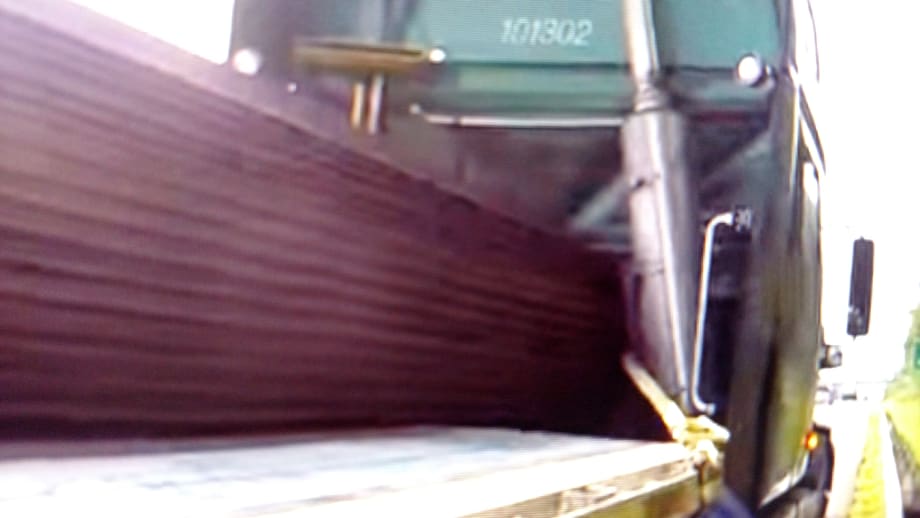
Stack of steel members slipped forward and rammed the tractor's sleeper. It could've been worse. Images: Tom Berg, from YouTube
Stack of steel members slipped forward and rammed the tractor's sleeper. It could've been worse. Images: Tom Berg, from YouTube
What do you do when the load on the trailer shifts, ramming your sleeper just behind you? Thank the Lord that the stack of steel didn’t go farther, stabbing you in the back. Then call for a wrecker, one with a strong crane that can move the load back where it belongs and whose crew will tie down the load more securely.
That’s the story in this YouTube clip that I found this morning. It was posted by a regular contributor, Ron Pratt, who operates a heavy tow truck for Midwest Truck Sales & Service in Scott City, Missouri. Ron wears a camera on his cap (or helmet) and began shooting this episode on the way to the place where the semi’s driver had parked along Interstate 55.
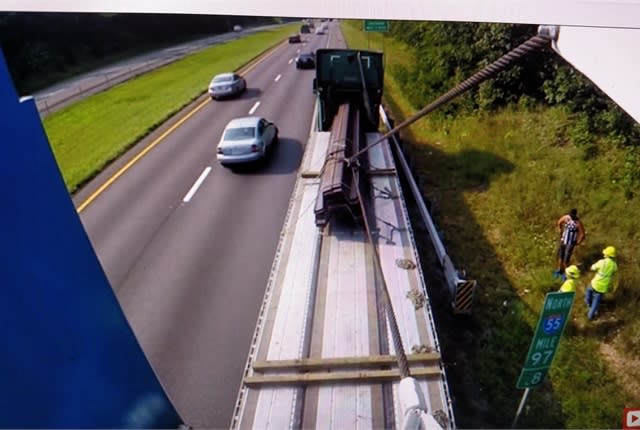
Wrecker's crane boom reaches forward so its cables can be attached to the shifted load.
The clip runs an hour and 12 minutes – kinda long, unless you imagine you’re right on the scene, admiring the work. An intro said the driver had slammed on his brakes to avoid an accident ahead. In this situation, a shifting load was the lesser of two bad outcomes. You can save time by picking up the video about 30 minutes in, where the actual work begins.
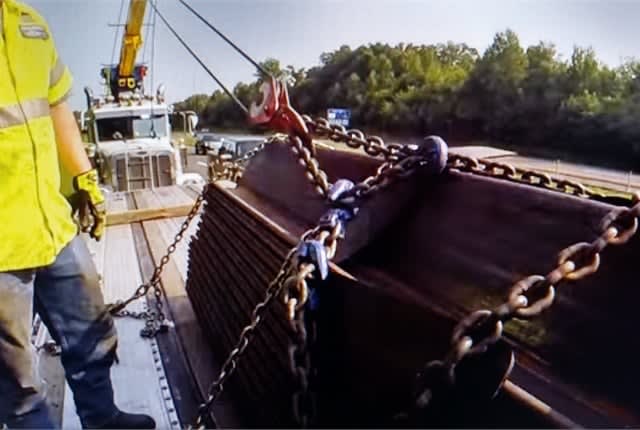
Crew has hooked onto a tie-down chain to begin repositioning of the load. This is a tricky, time- and money consuming process.
This reminds me of a story I heard many years ago, about a rookie trucker on his very first run, dispatched with a load of steel pipe on the flatbed behind. He slammed on the brakes for some reason and the load slid forward, piercing the back of the cab and skewering his back and head – a bloody end to a very short career.
I had that tale in mind about 1980 when I was test-driving a White Road Boss conventional in central Texas. I had borrowed a flatbed trailer loaded with steel I-beams that had been chained down, but the trailer had no bulkhead and the tractor lacked a headache rack.
I was coasting down a long, shallow grade on a wide two-lane country highway, and at the bottom of the hill was an intersection with a traffic signal. It was green, but as I approached to within a few hundred feet, it went to yellow. Should I stop short? Heh heh, no sir! I quickly checked that there was no traffic on the crossroad, then let ‘er roll, sailing through the now-red signal at about 50 mph. No harm done, but whew!
I am amazed that most flatbedders are sufficiently skilled in their tie-down abilities and conscientious in their driving that they almost always avoid such experiences. Bless ‘em!
More Blog Posts
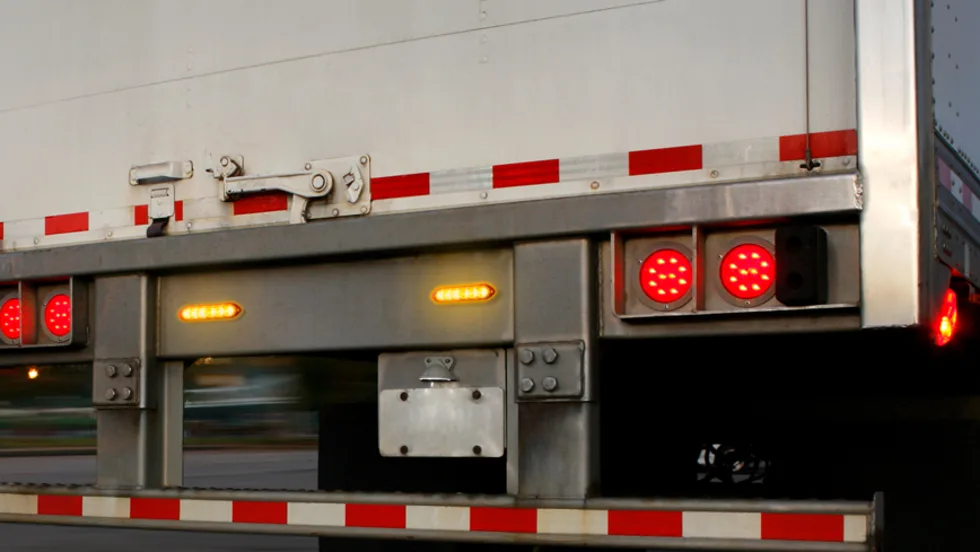
Pulsing Back-of-Trailer Lamps Aim to Prevent Crashes
Can the addition of a pulsing brake lamp on the back of a trailer prevent rear-end collisions? FMCSA seems to think so, if its exemptions are any indication.
Read More →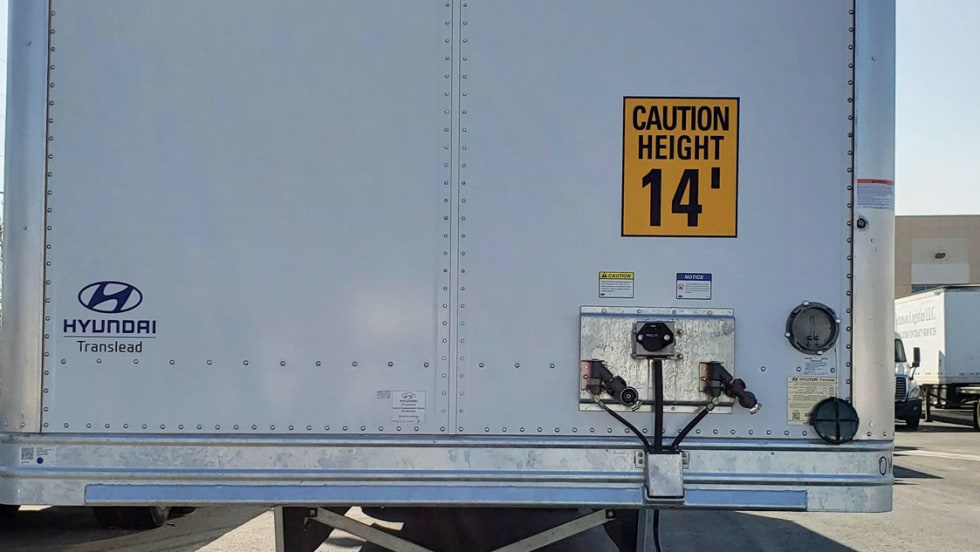
Designing a 14-Foot Trailer
Trailers are 13 feet, 6 inches high, right? Not for Hub Group, which developed a special 14-foot-high trailer spec for a dedicated customer based in California. Learn more in the Trailer Talk blog.
Read More →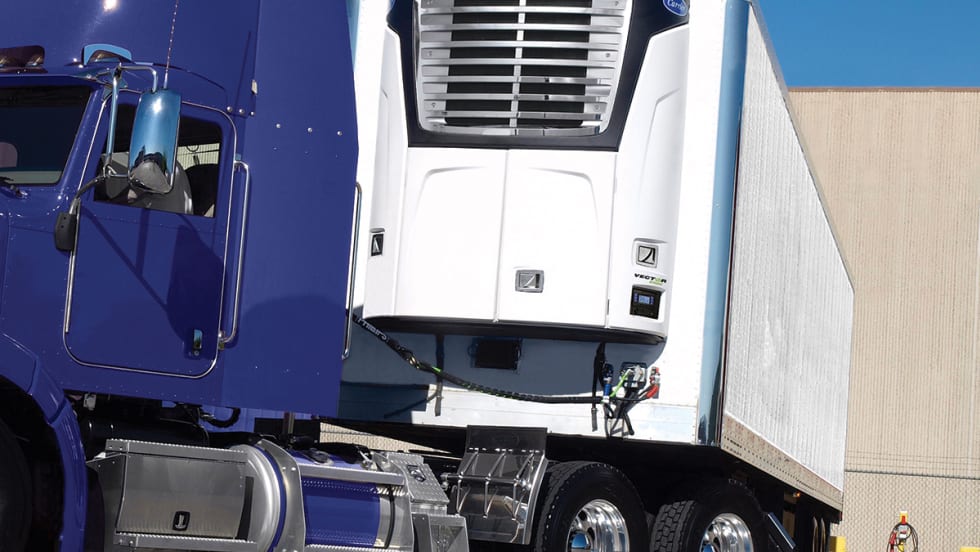
CARB Comes for Reefer Trailers
A new round of emissions control regulations decreed by the California Air Resource Board will begin affecting refrigerated trailer and TRU design and operations next year.
Read More →
5 Ways Data Analysis Maximizes the Value of Trailer Telematics
Are you getting the most out of your trailer telematics investment?
Read More →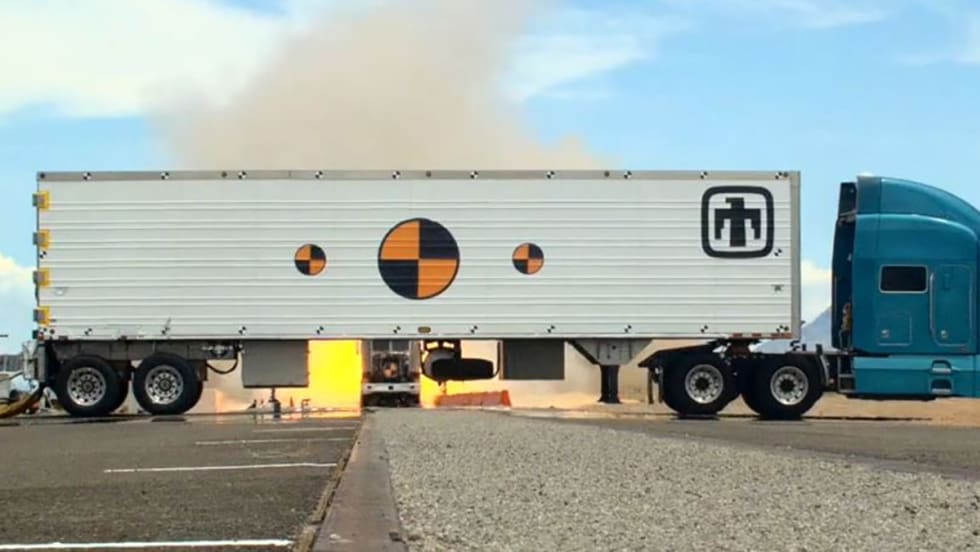
Can You Guess What's in That Trailer?
You don’t always know what’s in the trailers that pass you on the road. But some of those trailers are carrying something a little more dangerous that frozen food or new bedding…like, maybe, a nuclear weapon. But this isn’t an ordinary trailer; this is a trailer specifically made to not only carry this type of payload, but protect it at all costs.
Read More →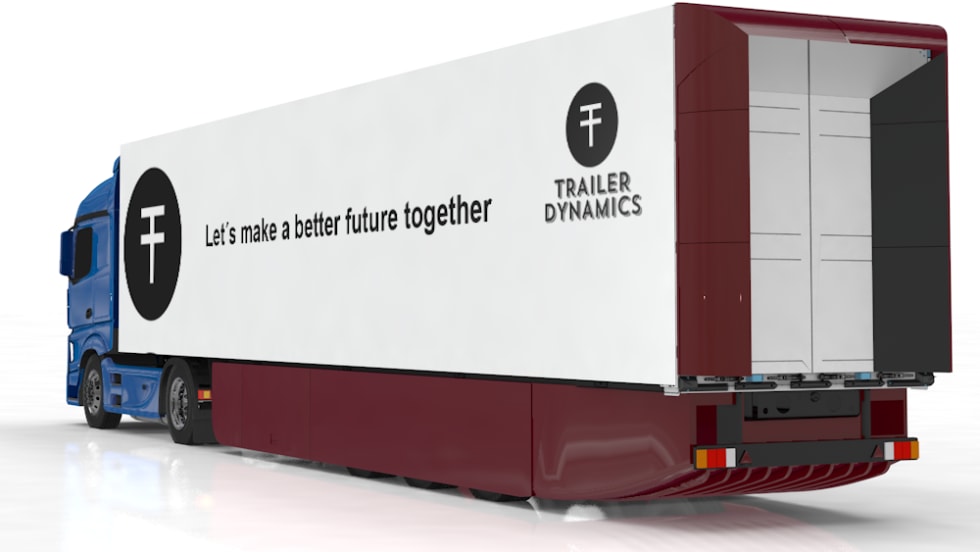
How Trailers Are Harnessing 'Free' Energy
Can trailers play a more active role in sustainable transport beyond aerodynamic add-ons or low-rolling-resistance tires? Some companies think so.
Read More →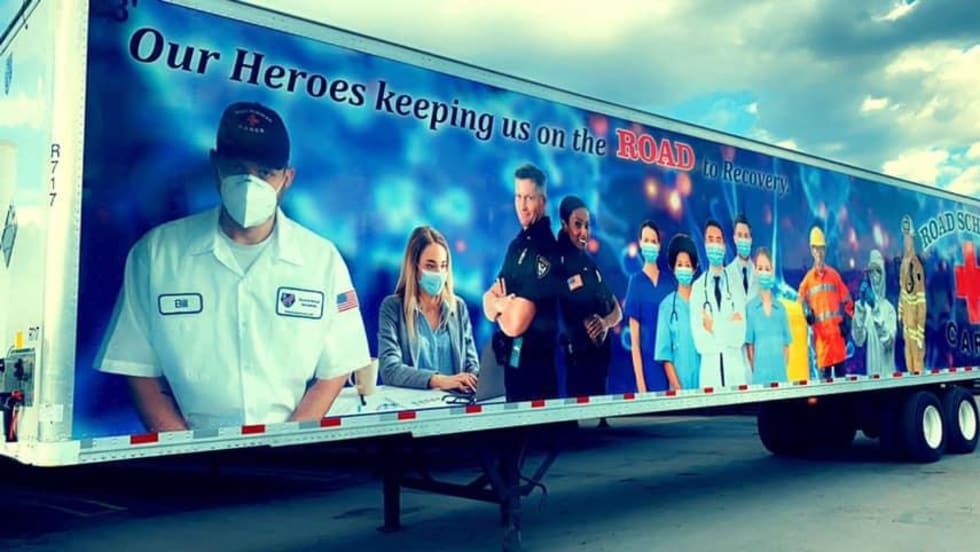
Wrapping a Trailer for COVID’s Everyday Heroes
“We don’t only deliver freight. We deliver awareness.” That’s what Jim Barrett, president and CEO of Road Scholar Transport, likes to say about the Dunmore, Pennsylvania-based carrier’s “awareness fleet.” Its latest trailer wrap honors the everyday heroes of the pandemic.
Read More →
How a Tanker Fleet is Using Unorthodox Trailer Lighting to Fight Rear-End Collisions
Groendyke Transport watched the number of rear-end collisions with its trailers rise steadily until it tried an unorthodox and then unapproved method of alerting following drivers that its trucks were applying brakes and slowing down.
Read More →
The Role Trailers are Playing in COVID-19 Funerals
In places such as New York City and Detroit, overwhelmed hospitals and mortuaries are using refrigerated trailers to store the bodies of people killed by COVID-19.
Read More →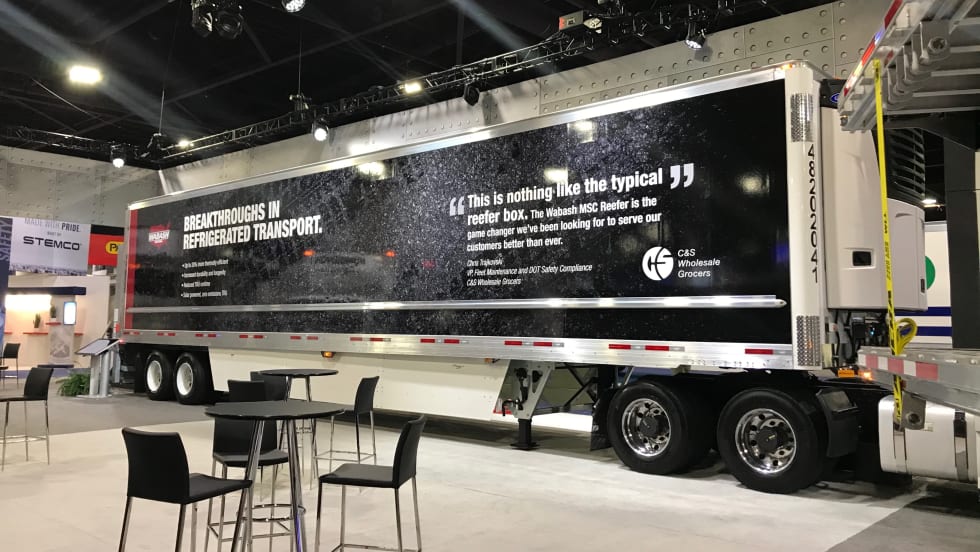
Reefer Trailer Aims to Help Reach Zero Emissions
Wabash National is partnering with C&S Wholesale Grocers to test a new type of zero-emissions refrigerated trailer.
Read More →