




Nothing Blocks a Highway Like a Semi Whose Skidding Wheels Led It Astray
Recent news photos remind senior editor Tom Berg of some anti-jackknifing training he had a while ago.

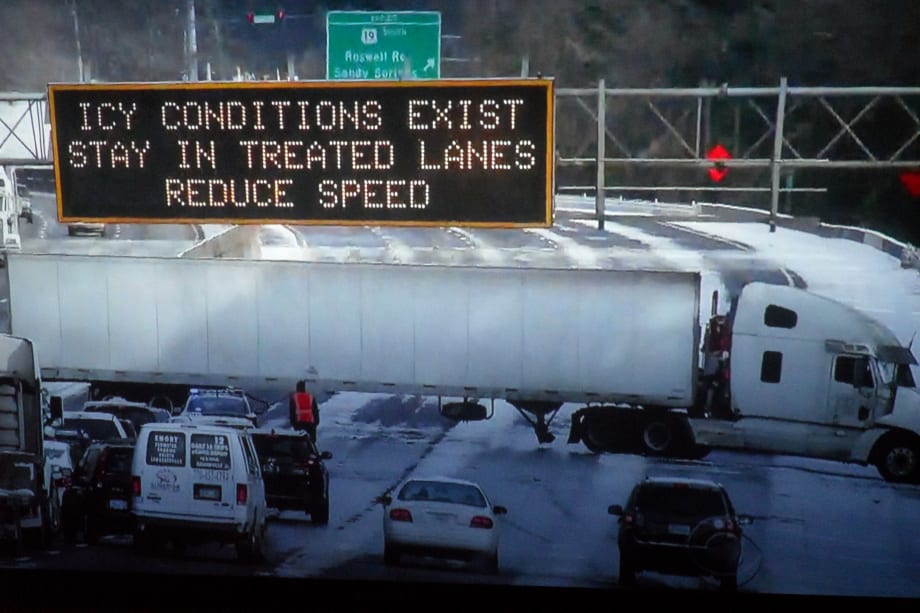
The “snomageddon” in and around Atlanta earlier this week has us northerners wondering what southerners would do in a real snow storm. A mere 1 to 2 inches of freezing moisture shut down the entire metropolitan area, trapping and stranding thousands of motorists on area freeways.
But wait – ice was a major part of it, and if pavement is black-ice slick there’s not much anyone can do.
What’s worse is that some truckers came to grief in it, too. Many were stranded but some were among the more than 1,200 traffic accidents reported in the hours after the snow began falling early Tuesday afternoon. And nothing quite blocks a highway like a semi that’s come to rest at right angles to the travel lanes.
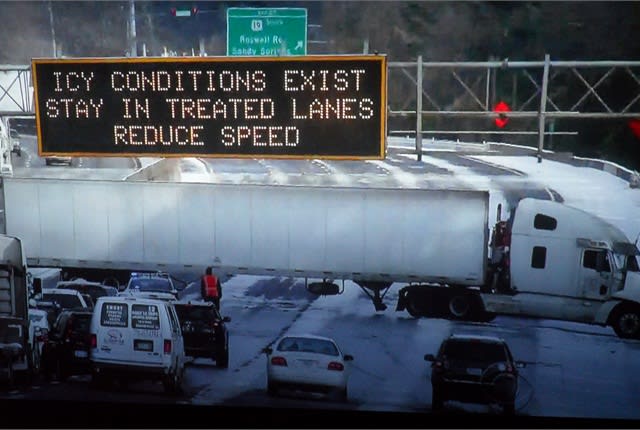
Check that tractor-trailer completely blocking all five lanes on this expressway, in a scene from the CBS Evening News. Faint skid marks under the trailer suggest it came over the median after skidding, luckily not hitting anything else.
Was the driver standing on his brakes during the slide, hoping the ABS would help him control the vehicle? Or did he stay off the pedal, praying that rolling wheels would help him recover?
Either way, it didn’t work. On serious ice, there’s not much a driver can do but slow down and drift to a stop until conditions improve.
Through the tractor-trailer gap we can catch a glimpse of a wrecker, whose operator is likely preparing to pull or winch the tractor so it faces down road and it can get moving again, and out of the way of all those cars and small trucks.
This rig didn’t jackknife, but in recent weeks, many others in mishaps elsewhere in the country did, twisting into right angles before they came to rest, sometimes colliding with other tractor-trailers.
All this reminds me of some anti-jackknife training I got about 25 years ago, at Fox Valley Technical College in Appleton, Wis. With grant money, instructors at the school’s truck driver training program set up a large concrete skid pad that could be easily wetted down. Then students, who were instructed beforehand on what to do, ventured out and literally tried their hands at it. I was one of ‘em.
“A skidding wheel wants to lead,” the chief instructor had told us in a classroom, demonstrating with toy tractor-trailers whose tiny wheels were taped and the rigs sent down an inclined wooden chute. First the trailer wheels were secured to show how the trailer swings out to either side, sometimes widely, its rear end trying to pass the tractor.
Then the tractor’s drive wheels were taped, and its axle slid to the left or right, pulling the trailer’s nose with it, again trying to get around to the front because skidding wheels want to lead. That type of jackknife is more common.
Did the toy demo really represent what happens with a full-size rig? Yes.
Out on the skid pad, the instructor in the passenger seat used special controls to first lock the trailer’s brakes, and sure enough, when the tractor was slowing, the trailer’s rear end began swinging out. Releasing its brakes straightened the rig. Then he locked the brakes on the drive axle, and yup, it swung to the side with only light braking applied to the steer axle.
The key to controlling those two types of jackknifes, he said, was to avoid braking so wheels keep rolling and the rig remains controllable. With the drive-axle event, we were also taught to "steer the tractor into the skid."
That was not news to anyone who’s originally learned to drive up North, where we had “steer in the direction of the skid” beaten into our young heads. What was surprising is that it works with a tractor-trailer just as it does with a car.
It worked on a skid pad, that is, but in a real emergency when things happen in a few seconds, a driver might not be able to remember what he’s supposed to do or to react quickly enough to do it.
Over the years, by instinct I’ve pumped the brake pedal when stopping became difficult in snow, ice or rain – and now hold down the pedal and let the anti-lock braking system pump the brakes for me – but steering just-so can become impossible.
A few years ago I ran a car into a country ditch when I went around a curve too fast and the car’s rear end began fishtailing. I couldn’t spin the wheel fast enough to keep up, and the front end plowed right into the abyss, which fortunately wasn’t bottomless.
I was glad I wasn’t pulling a trailer. But if I had been, I’d have been going slower and the skid wouldn’t have started in the first place.
The subsequent thaw got everyone in Atlanta rolling, and now we can hope that authorities – and motorists and truck drivers – will prepare better for the next snow-and-ice storm.
More Blog Posts
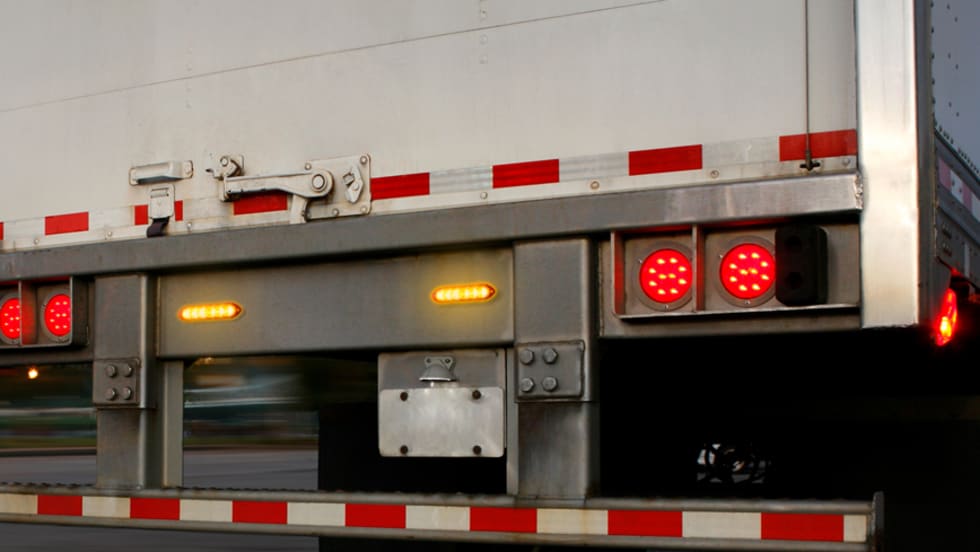
Pulsing Back-of-Trailer Lamps Aim to Prevent Crashes
Can the addition of a pulsing brake lamp on the back of a trailer prevent rear-end collisions? FMCSA seems to think so, if its exemptions are any indication.
Read More →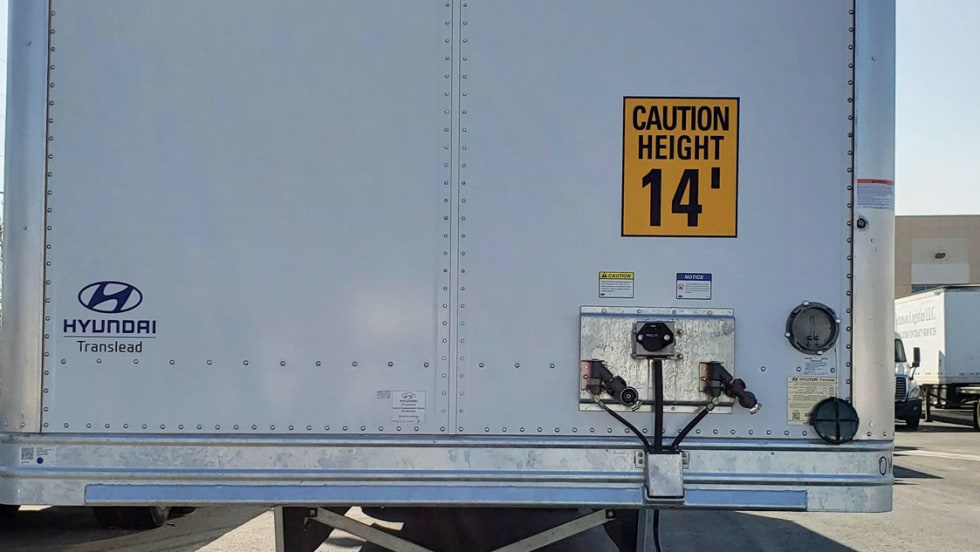
Designing a 14-Foot Trailer
Trailers are 13 feet, 6 inches high, right? Not for Hub Group, which developed a special 14-foot-high trailer spec for a dedicated customer based in California. Learn more in the Trailer Talk blog.
Read More →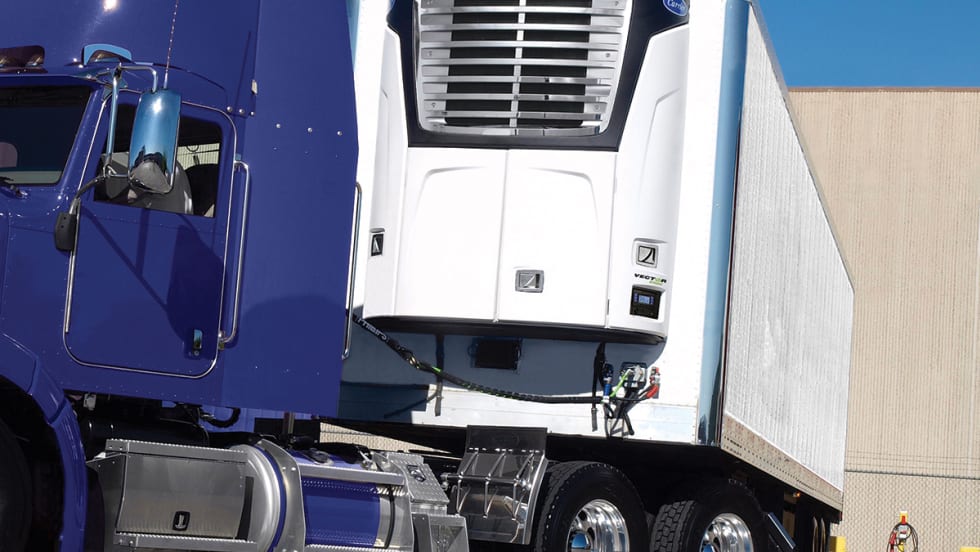
CARB Comes for Reefer Trailers
A new round of emissions control regulations decreed by the California Air Resource Board will begin affecting refrigerated trailer and TRU design and operations next year.
Read More →
5 Ways Data Analysis Maximizes the Value of Trailer Telematics
Are you getting the most out of your trailer telematics investment?
Read More →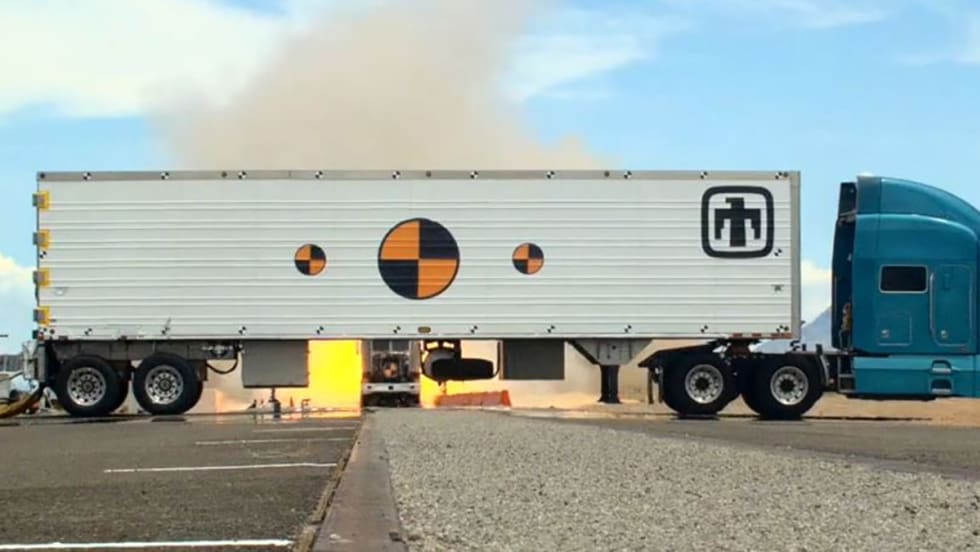
Can You Guess What's in That Trailer?
You don’t always know what’s in the trailers that pass you on the road. But some of those trailers are carrying something a little more dangerous that frozen food or new bedding…like, maybe, a nuclear weapon. But this isn’t an ordinary trailer; this is a trailer specifically made to not only carry this type of payload, but protect it at all costs.
Read More →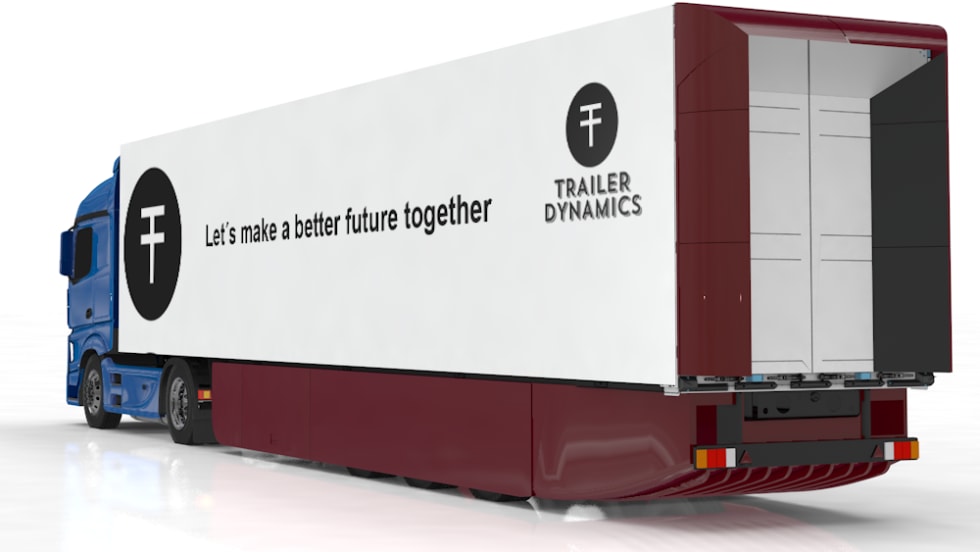
How Trailers Are Harnessing 'Free' Energy
Can trailers play a more active role in sustainable transport beyond aerodynamic add-ons or low-rolling-resistance tires? Some companies think so.
Read More →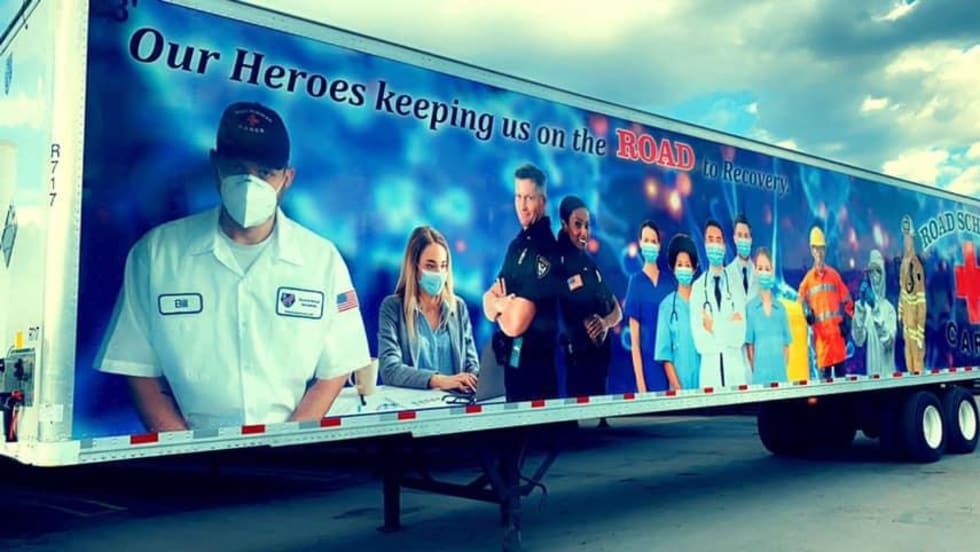
Wrapping a Trailer for COVID’s Everyday Heroes
“We don’t only deliver freight. We deliver awareness.” That’s what Jim Barrett, president and CEO of Road Scholar Transport, likes to say about the Dunmore, Pennsylvania-based carrier’s “awareness fleet.” Its latest trailer wrap honors the everyday heroes of the pandemic.
Read More →
How a Tanker Fleet is Using Unorthodox Trailer Lighting to Fight Rear-End Collisions
Groendyke Transport watched the number of rear-end collisions with its trailers rise steadily until it tried an unorthodox and then unapproved method of alerting following drivers that its trucks were applying brakes and slowing down.
Read More →
The Role Trailers are Playing in COVID-19 Funerals
In places such as New York City and Detroit, overwhelmed hospitals and mortuaries are using refrigerated trailers to store the bodies of people killed by COVID-19.
Read More →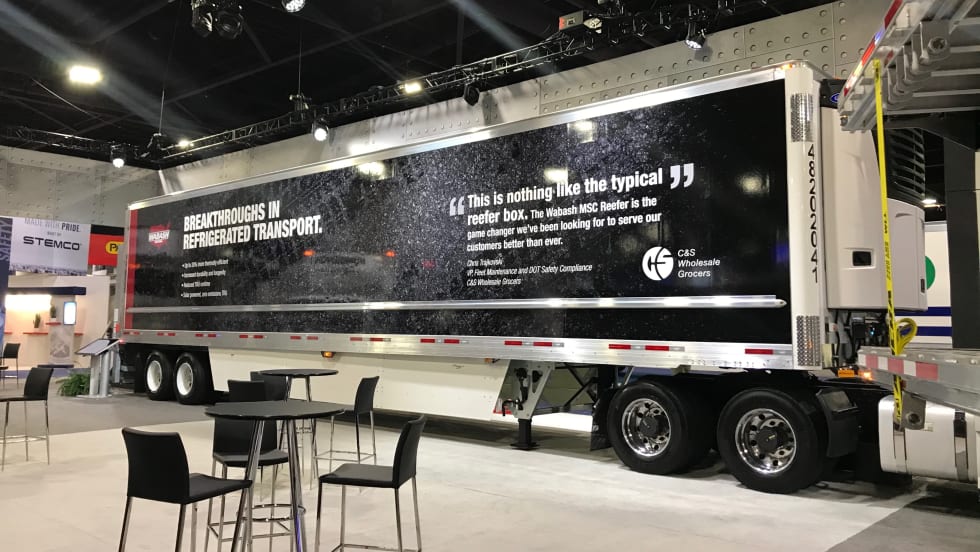
Reefer Trailer Aims to Help Reach Zero Emissions
Wabash National is partnering with C&S Wholesale Grocers to test a new type of zero-emissions refrigerated trailer.
Read More →