




Non-profit Firm Hires Vets to Make Trailer Skirts
Here’s a novel approach to making trailer skirts: Use reclaimed materials, consult with a veteran fleet executive to be sure you get the design right, and employ U.S. military veterans to assemble them while they attend school.

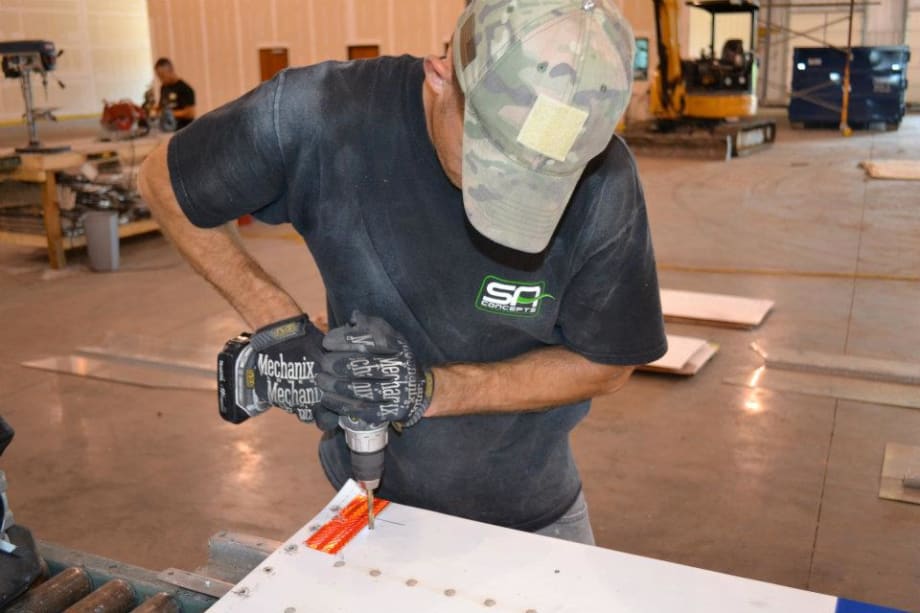
Military vets build and install the Aerosmart aluminum skirts at SA Concepts’ plant in Springdale, Ark.
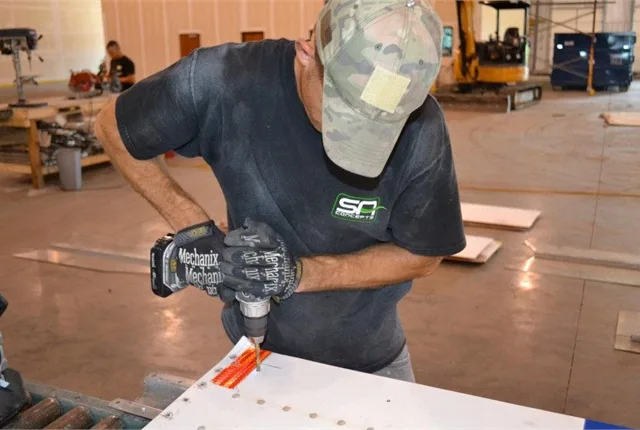
Military vets build and install the Aerosmart aluminum skirts at SA Concepts’ plant in Springdale, Ark.
Here’s a novel approach to making trailer skirts: Use reclaimed materials, consult with a veteran fleet executive to be sure you get the design right, and employ U.S. military veterans to assemble them while they attend school.
That’s what Sustainable Aerodynamic Concepts is doing in northwest Arkansas. Using sheet-and-post sides from retired trailers, it makes aluminum skirts for long dry vans and reefers. Each Aerosmart skirt consists of three panels that are individually replaceable if damaged. The skirts have 6-inch-deep flexible bottom edging made of rubber from old conveyor belts.
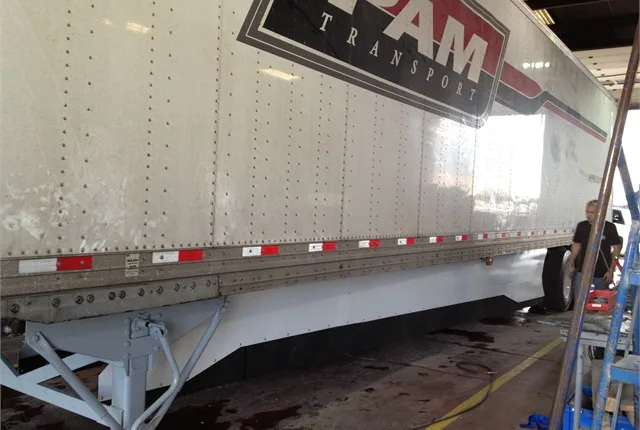
Sheet-and-post sides from donated trailers become Aerosmart aluminum skirts at SA Concepts’ plant in Springdale, Ark. Rubber edging comes from old conveyor belts.
Last spring the Aerosmart skirts were tested for effectiveness, and in January the company received EPA SmartWay verification, according to vice president of sales and marketing, Drake Vanhooser. They’re further described at www.saconcepts.org.
Vanhooser says he got advice from Carl Tapp, recently retired as maintenance vice president at PAM Transport in Tonytown, Ark., on the product’s design and how to deal with fleet managers. PAM is near SA Concept’s headquarters in Springdale, Ark.
"Carl has been a huge help to us at SA Concepts,” Vanhoosen says. “His experience in the trucking industry gives him a perspective that few people have. He knew the tough questions that buyers would ask, and has helped us prepare to answer those questions and meet those challenges."
A non-profit company, SA Concepts so far has hired six vets of the Army, Navy, Marines and Coast Guard to assemble the skirts. It pays each veteran $40,000 a year for 25 hours a week, while they draw GI Bill benefits to attend college.
"The GI Bill has done a lot to help soldiers get an education once they leave the military,” he says. “Unfortunately, the GI Bill doesn't cover all of life's expenses, especially for soldiers with families to support. We wanted to create a program that would help these veterans stay in school, finish their degrees, and reach their career ambitions."
Each can stay on with the company for up to three months after graduation. The work-your-way-through-school program is approaching its one-year anniversary.
As a non-profit organization, SA Concepts relies on donated materials. The first batch of 150 trailers was a gift from Walmart Transportation, also headquartered in Arkansas. One 53-foot trailer supplies enough material for 10 sets of skirts. Rubber for the flexible bottom edging is from Goodyear in Akron, Ohio.
“They’re more susceptible to damage than others, but you’re getting the benefit of a completely sustainable product,” Vanhooser says of the skirts’ recycled aluminum. He is about to sign a deal with a composites manufacturer to supply flexible post-type brackets, which will replace the current metal bracketry.
The trailers’ wood floors are also recycled. Drake’s father, Don Vanhooser, turns them into industrial and home furniture. His specialty is long conference tables, but he’s also crafted cabinets, desks, shelves and end tables (www.facebook.com/saconceptsNWA).
The Vanhoosters have business backgrounds and manage other ventures, most involving facilities maintenance. A third man, Jon Hamlin, acts as legal counsel and handles administrative tasks.
They are not military vets themselves, but started the veterans-hiring program because “we always wanted to help people,” Drake says. “We had a lot of friends who are veterans.”
They got into trailer skirting after seeing fairing-equipped trailers on highways, and hit on the idea of using material from trailers that would otherwise be scrapped. Tapp suggested that they expand their offerings from the current long-trailer product to skirts for pup trailers, which less-than-truckload fleets have begun using. That’ll be their next project, Vanhooser says.
Product and sales questions should be directed to Drake Vanhooser at 765-760-3763 or dcvanhooser@saconcepts.org.
More Blog Posts

Pulsing Back-of-Trailer Lamps Aim to Prevent Crashes
Can the addition of a pulsing brake lamp on the back of a trailer prevent rear-end collisions? FMCSA seems to think so, if its exemptions are any indication.
Read More →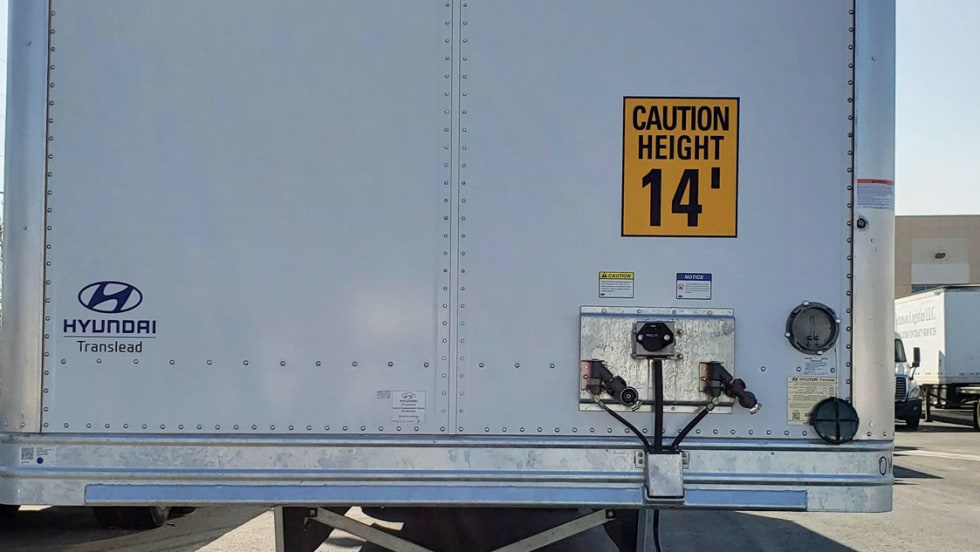
Designing a 14-Foot Trailer
Trailers are 13 feet, 6 inches high, right? Not for Hub Group, which developed a special 14-foot-high trailer spec for a dedicated customer based in California. Learn more in the Trailer Talk blog.
Read More →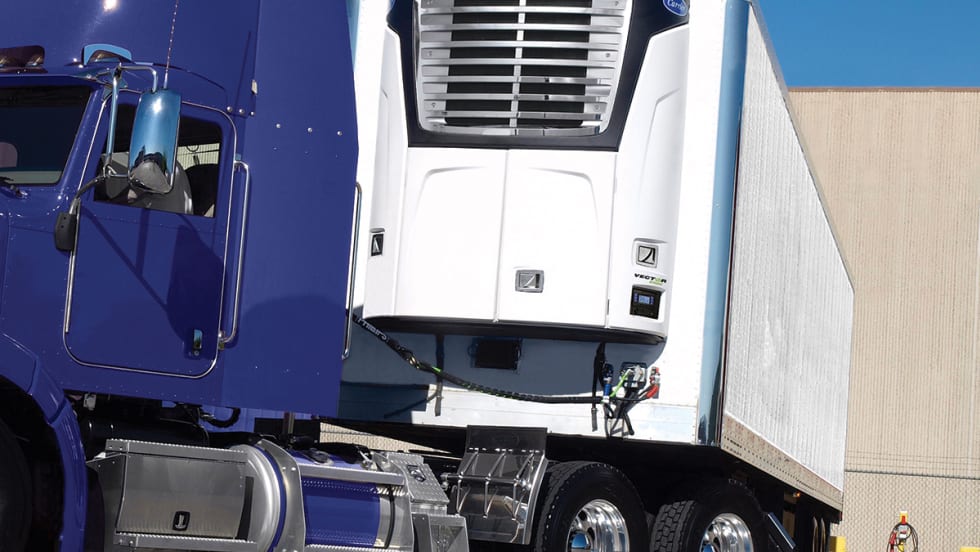
CARB Comes for Reefer Trailers
A new round of emissions control regulations decreed by the California Air Resource Board will begin affecting refrigerated trailer and TRU design and operations next year.
Read More →
5 Ways Data Analysis Maximizes the Value of Trailer Telematics
Are you getting the most out of your trailer telematics investment?
Read More →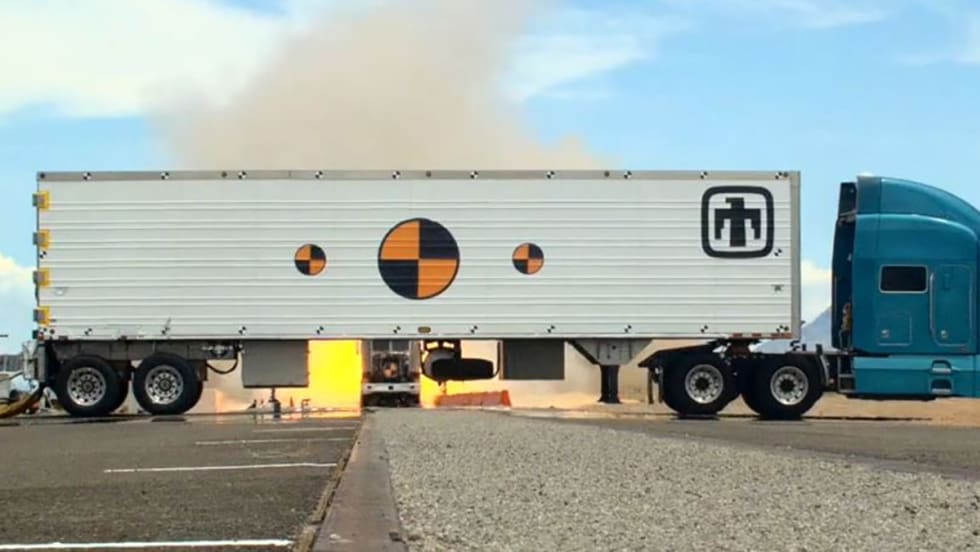
Can You Guess What's in That Trailer?
You don’t always know what’s in the trailers that pass you on the road. But some of those trailers are carrying something a little more dangerous that frozen food or new bedding…like, maybe, a nuclear weapon. But this isn’t an ordinary trailer; this is a trailer specifically made to not only carry this type of payload, but protect it at all costs.
Read More →
How Trailers Are Harnessing 'Free' Energy
Can trailers play a more active role in sustainable transport beyond aerodynamic add-ons or low-rolling-resistance tires? Some companies think so.
Read More →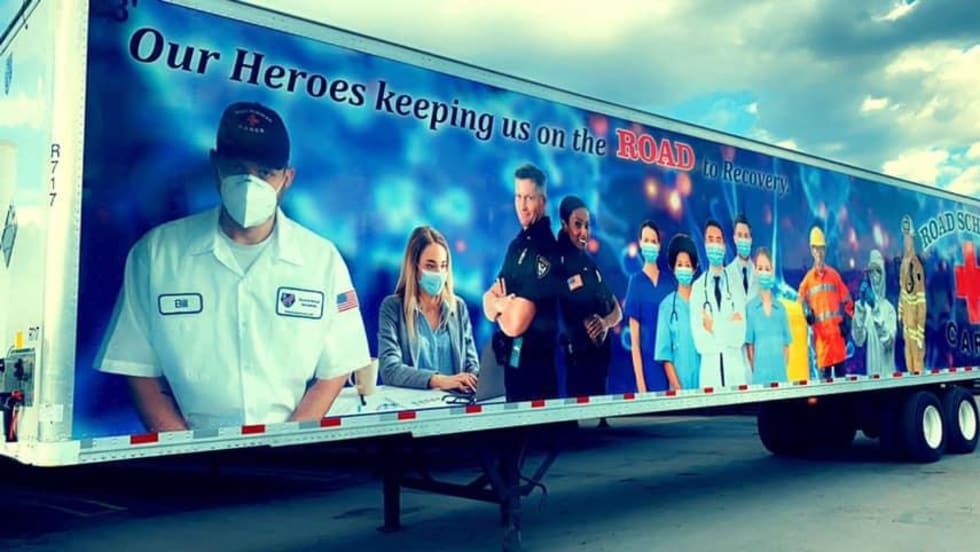
Wrapping a Trailer for COVID’s Everyday Heroes
“We don’t only deliver freight. We deliver awareness.” That’s what Jim Barrett, president and CEO of Road Scholar Transport, likes to say about the Dunmore, Pennsylvania-based carrier’s “awareness fleet.” Its latest trailer wrap honors the everyday heroes of the pandemic.
Read More →
How a Tanker Fleet is Using Unorthodox Trailer Lighting to Fight Rear-End Collisions
Groendyke Transport watched the number of rear-end collisions with its trailers rise steadily until it tried an unorthodox and then unapproved method of alerting following drivers that its trucks were applying brakes and slowing down.
Read More →
The Role Trailers are Playing in COVID-19 Funerals
In places such as New York City and Detroit, overwhelmed hospitals and mortuaries are using refrigerated trailers to store the bodies of people killed by COVID-19.
Read More →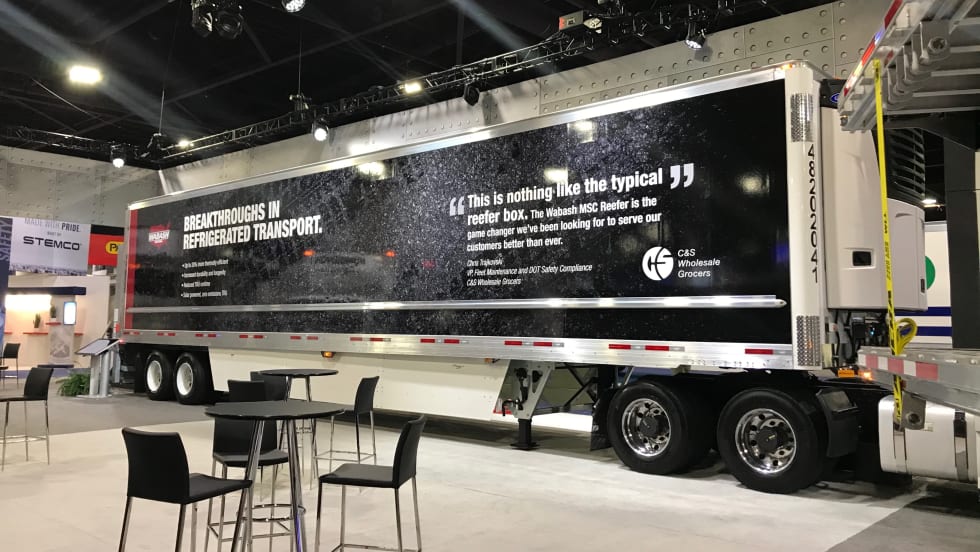
Reefer Trailer Aims to Help Reach Zero Emissions
Wabash National is partnering with C&S Wholesale Grocers to test a new type of zero-emissions refrigerated trailer.
Read More →