





Related: Quick Feet Help in Parking Trailers with this Machine
No CDL Needed to Operate This Trailer Spotter
TrailerCaddy is battery-electric powered and can move empty and loaded semitrailers weighing up to 70,000 pounds, its maker says. Blog commentary by Tom Berg, Senior Contributing Editor.
October 30, 2017
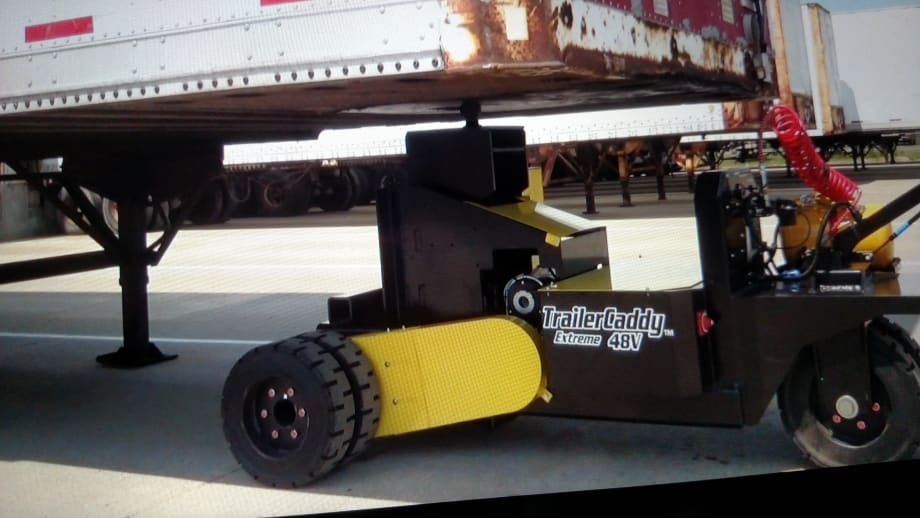
Compact walk-behind machine slips under a trailer's nose, lifts it, and pulls it away. Optional air system hooks up to brakes to release them. Photos: Screen capture from DJ Products video
2 min to read
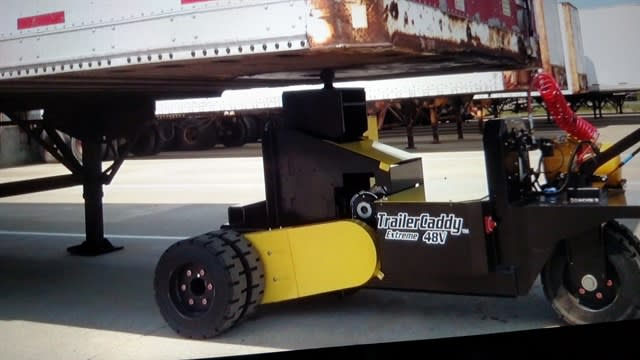
Compact walk-behind machine slips under a trailer's nose, lifts it, and pulls it away. Optional air system hooks up to brakes to release them. Photos: Screen capture from DJ Products video
A while ago I wrote about a walk-behind trailer-spotting device available in Europe. Now here’s one from Minnesota, USA – the TrailerCaddy Trailer Terminal Tractor from DJ Products, a family-owned company that makes several other types of pallet jack-like machines to move stuff around in and around factories and warehouses.
Like them, TrailerCaddy is battery-electric powered. It can move empty and loaded semitrailers weighing up to 70,000 pounds, the company says. The operator is not required to have a commercial driver’s license or a medical card, so with a little training, any employee can move trailers into and out of loading docks.
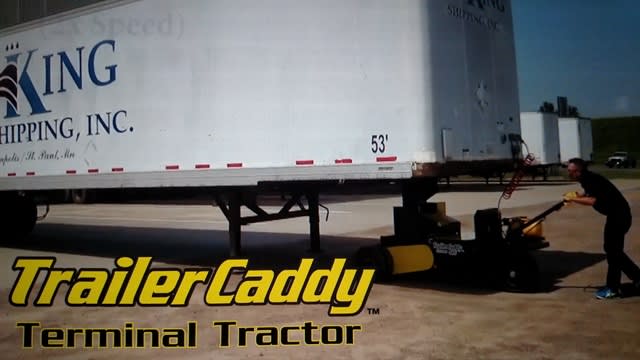
Caddy backs this trailer into a dock. Operator faces forward during the maneuver rather than peering through mirrors.
It's priced at one-quarter the cost of a new diesel-powered yard tractor, according to Jeff Berg, the company’s president. Demonstration videos are here and here.
“Customer feedback during the development process tells us that the TrailerCaddy provides significant cost and efficiency advantages compared to conventional trailer moving methods using semi-tractors or shunt trucks,” he says in a press release.
“Because any employee can be trained to move trailers, this yard dog is always available, which means that trailers can get moved ‘just in time,’ ensuring dock operations won’t grind to a halt waiting for a driver with a CDL to become available.”
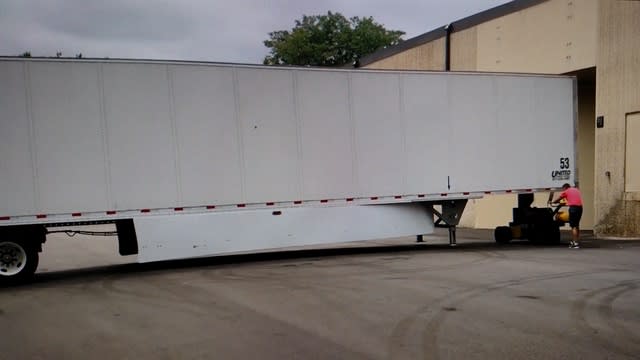
Caddy's small size allows easy maneuvering in tight spaces. Operator would have to really run to keep up with a yard tractor, though.
The purpose-built unit’s short turning radius allows quick maneuverability in tight spaces. With wagon-wheel steering, the operator faces forward, looking toward the dock when backing the trailer in, Berg says. This results in better sight lines, reduced risk of damage to docks, buildings, and trailers, as well as fewer incidents of employee injury.
More information about DJ Products and the TrailerCaddy can be found at www.djproducts.com or by calling (800) 686-2651. The company will be demonstrating the TrailerCaddy at the Mid-America Trucking Show in Louisville, Ky., March 22-24, 2018.
Full disclosure department: While Jeff Berg’s got a good name, he and I are not related, at least as far as I know.
Subscribe to Our Newsletter
More Blog Posts
Pulsing Back-of-Trailer Lamps Aim to Prevent Crashes
Can the addition of a pulsing brake lamp on the back of a trailer prevent rear-end collisions? FMCSA seems to think so, if its exemptions are any indication.
Read More →
Designing a 14-Foot Trailer
Trailers are 13 feet, 6 inches high, right? Not for Hub Group, which developed a special 14-foot-high trailer spec for a dedicated customer based in California. Learn more in the Trailer Talk blog.
Read More →
CARB Comes for Reefer Trailers
A new round of emissions control regulations decreed by the California Air Resource Board will begin affecting refrigerated trailer and TRU design and operations next year.
Read More →
5 Ways Data Analysis Maximizes the Value of Trailer Telematics
Are you getting the most out of your trailer telematics investment?
Read More →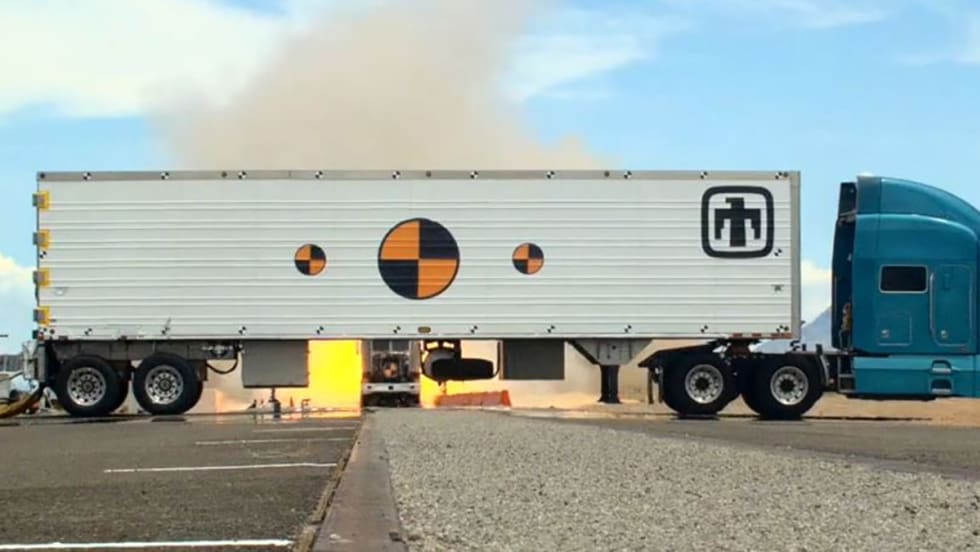
Can You Guess What's in That Trailer?
You don’t always know what’s in the trailers that pass you on the road. But some of those trailers are carrying something a little more dangerous that frozen food or new bedding…like, maybe, a nuclear weapon. But this isn’t an ordinary trailer; this is a trailer specifically made to not only carry this type of payload, but protect it at all costs.
Read More →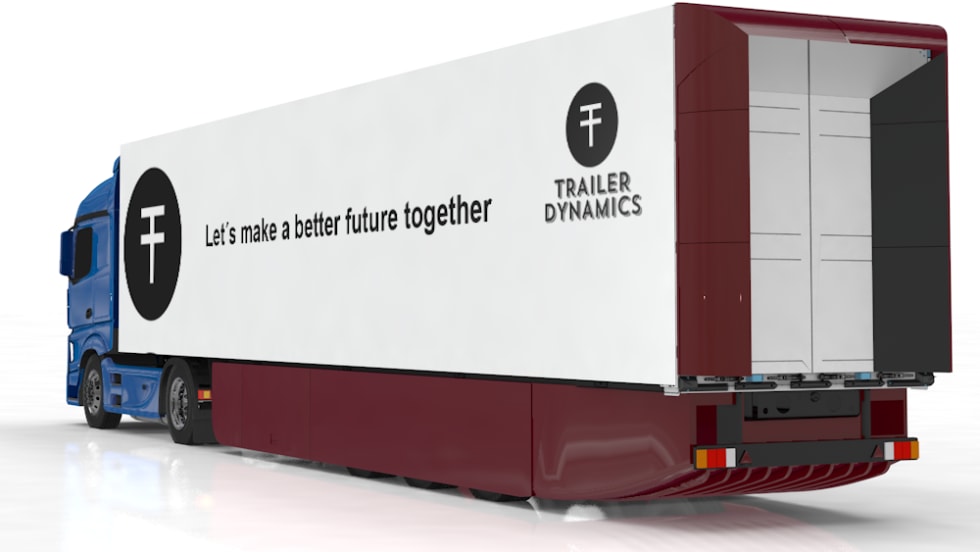
How Trailers Are Harnessing 'Free' Energy
Can trailers play a more active role in sustainable transport beyond aerodynamic add-ons or low-rolling-resistance tires? Some companies think so.
Read More →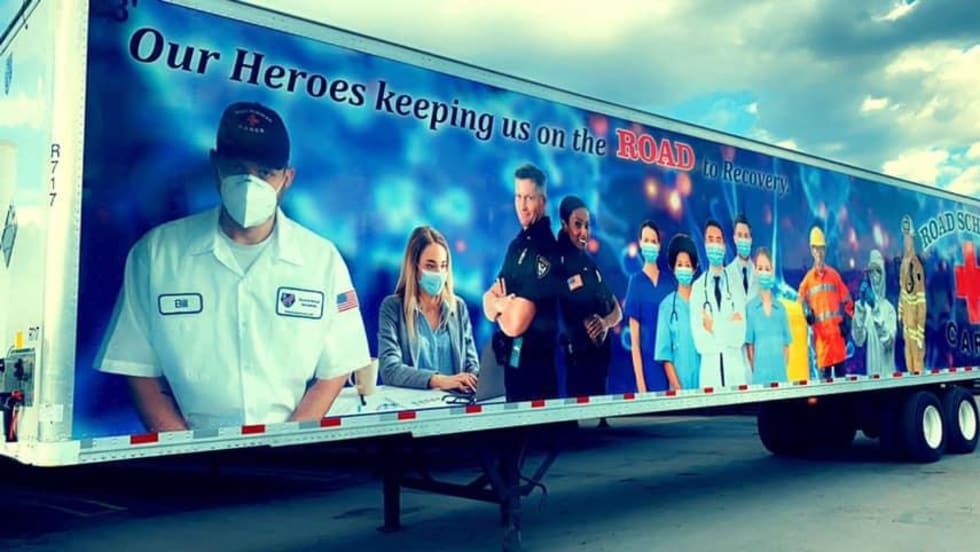
Wrapping a Trailer for COVID’s Everyday Heroes
“We don’t only deliver freight. We deliver awareness.” That’s what Jim Barrett, president and CEO of Road Scholar Transport, likes to say about the Dunmore, Pennsylvania-based carrier’s “awareness fleet.” Its latest trailer wrap honors the everyday heroes of the pandemic.
Read More →
How a Tanker Fleet is Using Unorthodox Trailer Lighting to Fight Rear-End Collisions
Groendyke Transport watched the number of rear-end collisions with its trailers rise steadily until it tried an unorthodox and then unapproved method of alerting following drivers that its trucks were applying brakes and slowing down.
Read More →
The Role Trailers are Playing in COVID-19 Funerals
In places such as New York City and Detroit, overwhelmed hospitals and mortuaries are using refrigerated trailers to store the bodies of people killed by COVID-19.
Read More →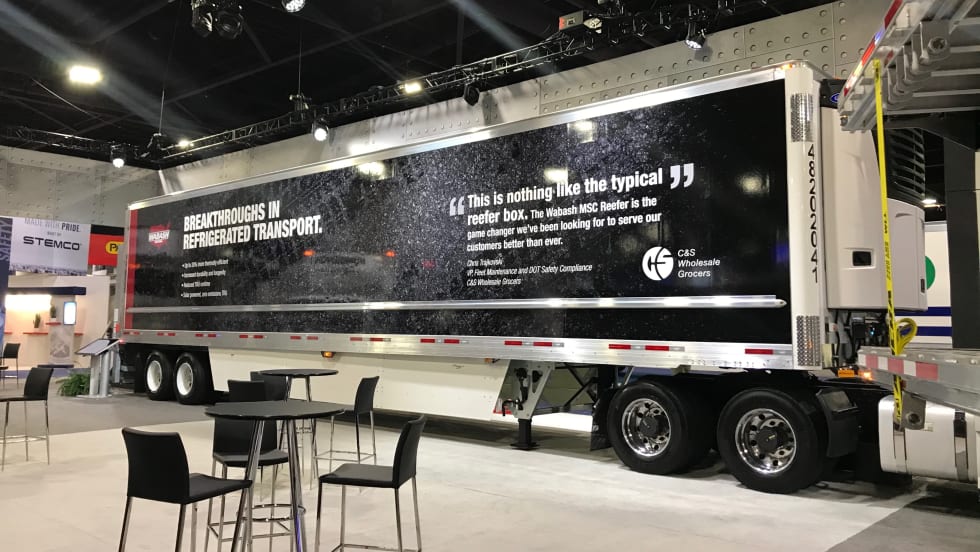
Reefer Trailer Aims to Help Reach Zero Emissions
Wabash National is partnering with C&S Wholesale Grocers to test a new type of zero-emissions refrigerated trailer.
Read More →