




'Monocoque' lightweight flatbed will carry more, maybe more safely
"Monocoque" is a French word that usually describes the construction of an airliner's fuselage (also a French word), whose outer skin adds strength to the inner frame. Remove some of the aluminum panels and the fuselage loses both aerodynamics and strength, and would probably collapse if stressed
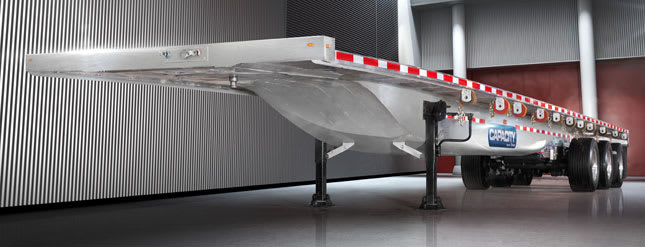
Capacity's
"Monocoque" is a French word that usually describes the construction of an airliner's fuselage (also a French word), whose outer skin adds strength to the inner frame. Remove some of the aluminum panels and the fuselage loses both aerodynamics and strength, and would probably collapse if stressed.
Van and reefer truck-trailers are also of monocoque design, so the sides, roof, and ends strengthen the body and, with the underframe, bear the payload's weight. Leave the rear doors open and the sides will begin to wobble. Damage the roof panels and the trailer will be weakened, just like a shoe box whose lid is torn or missing.
Those examples are easy to visualize, but how can someone make a monocoque flatbed trailer, which is essentially a platform on wheels? He can dream about it, as did Julien Nadeau, the president of Alutrec Inc., in French-speaking Quebec.
Alutrec has been making conventional aluminum flatbeds for 20 years, but about five years ago Nadeau was trying to figure out how to cut more kilos from the already lightweight vehicles.
"In the middle of the night he thought of that" -- the monocoque design -- relates Stephane Labillois, the company's vice president of business development. Nadeau saw that a flatbed could be made to resemble a tube, similar to a fuselage, albeit a flattened one.
He quickly consulted with engineering departments at nearby universities, whose professors and students validated the idea. Some students based their master's degree work on the project, Labillois says. Their labors and that of Alutrec's own engineers consumed nearly five years.
"The result is, from our point of view, very, very interesting," Labillois says. It's the Capacity flatbed that the company showed at the recent ATA Management Conference and equipment expo near Dallas-Fort Worth.
Alutrec's monocoque flatbed marries a stamped aluminum underskin with a series of flat, 9-inch-long extruded aluminum tubes with interior webbing that form the floor. Winch tracks and rub rails run along each side, and nail strips on the floor's surface are optional.
The underskin is shaped like a smooth boat hull, and "hull" is what it's called. It's not just an aerodynamic covering, but a structural component. "Thickness and alloy are part of the secret recipe," he says.
Electrical and air lines are inside and protected from damage. They are high-quality components to avoid problems, but a hatch in the hull will allow mechanics to reach them.
Assembled and welded together, the structure is so strong that the trailer needs no frame rails or crossmembers. Those together account for about 2,000 pounds of a conventional aluminum flatbed's weight, Labillois explains.
Thus a Capacity's tare weight starts at 6,950 pounds for a 48-foot-long by 102.3-inch-wide version with two axles. It goes to 7,550 pounds for a 53-by-102. A Capacity's 2,000-pound savings can be converted directly to extra payload, whose additional revenue will help pay off its 10% price premium in about 18 months, Labillois says.
Fuel savings from the smooth underside might also contribute. SAE fuel economy tests show promising improvements, and another will be done to verify savings.
At the ATA show, Alutrec displayed a 53-footer with three axles because that's a common configuration in Canada and a few northeastern states. Each axle slides independently so spread can be adjusted to suit laws in various jurisdictions, and a third axle can be quickly slid out to make a tandem. A Capacity can also be built with fixed axles and in any length between 48 and 53 feet.
Without frame rails and crossmembers, the deck of a Capacity sits 7.5 inches lower than a conventional flatbed, which means taller cargo can be handled without resorting to a drop-deck trailer. That and the sliding axles make it a rather flexible trailer, operationally speaking. Structural behavior is quite another thing.
"It's very rigid and difficult to twist, and resists vertical forces," Labillois says. "It takes nine times more energy to twist this compared to a regular trailer" in Alutrec's tests. Vertical resistance and rigidity mean the trailer can take 50,000 pounds of load concentrated at its center - ideal for haulers of coiled steel and other heavy cargoes.
Rigidity also means any movement by the trailer is transferred to the tractor's fifth wheel, where the driver will feel it during sudden maneuvers. If a driver senses trailer movement caused by centrifugal forces, as when he enters a tight cloverleaf ramp too fast, he can react and perhaps keep it from rolling over. (In such a circumstance, conventional trailers twist and begin going over before drivers realize what's happening, safety engineers say.)
So safety is also part of the recipe - another French word?
More Blog Posts
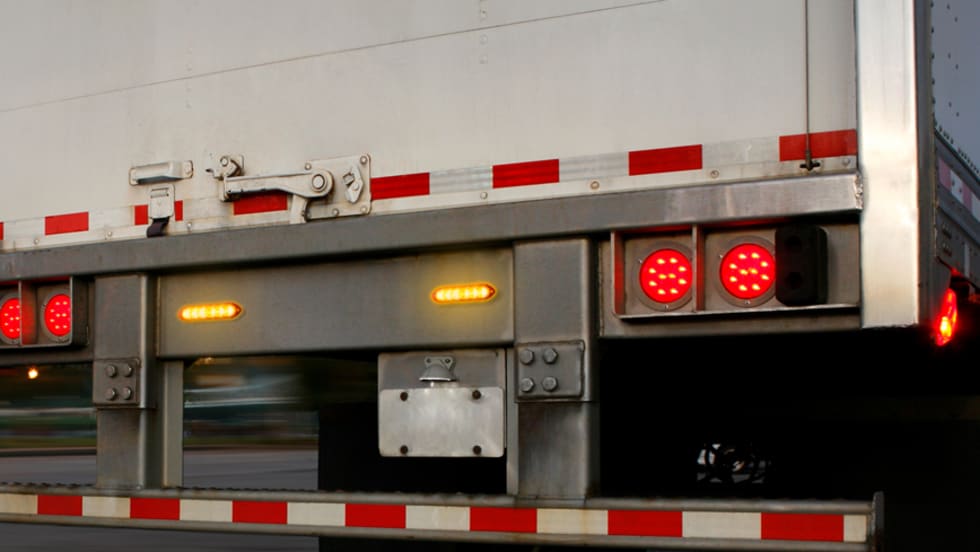
Pulsing Back-of-Trailer Lamps Aim to Prevent Crashes
Can the addition of a pulsing brake lamp on the back of a trailer prevent rear-end collisions? FMCSA seems to think so, if its exemptions are any indication.
Read More →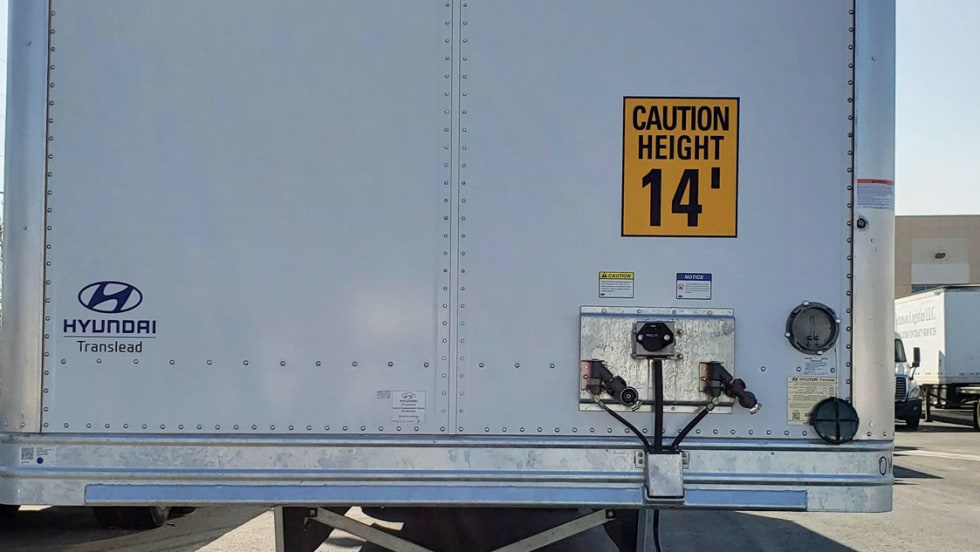
Designing a 14-Foot Trailer
Trailers are 13 feet, 6 inches high, right? Not for Hub Group, which developed a special 14-foot-high trailer spec for a dedicated customer based in California. Learn more in the Trailer Talk blog.
Read More →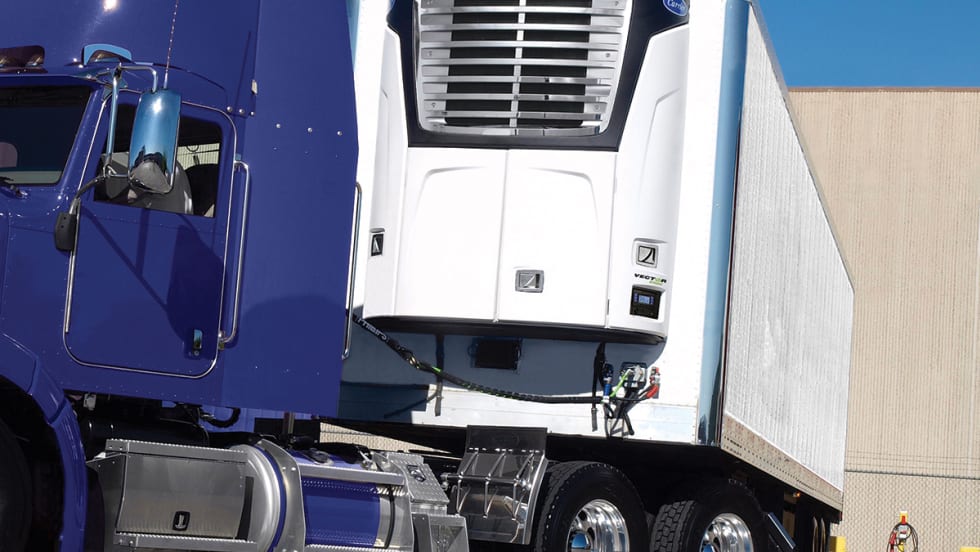
CARB Comes for Reefer Trailers
A new round of emissions control regulations decreed by the California Air Resource Board will begin affecting refrigerated trailer and TRU design and operations next year.
Read More →
5 Ways Data Analysis Maximizes the Value of Trailer Telematics
Are you getting the most out of your trailer telematics investment?
Read More →
Can You Guess What's in That Trailer?
You don’t always know what’s in the trailers that pass you on the road. But some of those trailers are carrying something a little more dangerous that frozen food or new bedding…like, maybe, a nuclear weapon. But this isn’t an ordinary trailer; this is a trailer specifically made to not only carry this type of payload, but protect it at all costs.
Read More →
How Trailers Are Harnessing 'Free' Energy
Can trailers play a more active role in sustainable transport beyond aerodynamic add-ons or low-rolling-resistance tires? Some companies think so.
Read More →
Wrapping a Trailer for COVID’s Everyday Heroes
“We don’t only deliver freight. We deliver awareness.” That’s what Jim Barrett, president and CEO of Road Scholar Transport, likes to say about the Dunmore, Pennsylvania-based carrier’s “awareness fleet.” Its latest trailer wrap honors the everyday heroes of the pandemic.
Read More →
How a Tanker Fleet is Using Unorthodox Trailer Lighting to Fight Rear-End Collisions
Groendyke Transport watched the number of rear-end collisions with its trailers rise steadily until it tried an unorthodox and then unapproved method of alerting following drivers that its trucks were applying brakes and slowing down.
Read More →
The Role Trailers are Playing in COVID-19 Funerals
In places such as New York City and Detroit, overwhelmed hospitals and mortuaries are using refrigerated trailers to store the bodies of people killed by COVID-19.
Read More →
Reefer Trailer Aims to Help Reach Zero Emissions
Wabash National is partnering with C&S Wholesale Grocers to test a new type of zero-emissions refrigerated trailer.
Read More →