




Just an Old Trailer? No – It’s Part of Intermodal History
This Strick trailer is part of intermodal history going back more than 50 years. It was one of a large group bought by the Atchison Topeka and Santa Fe Railway for coast-to-coast Flexi-Van service it ran with the New York Central System. This particular trailer was spotted in 2004 in Omaha, Neb., after it was retired from piggyback service.

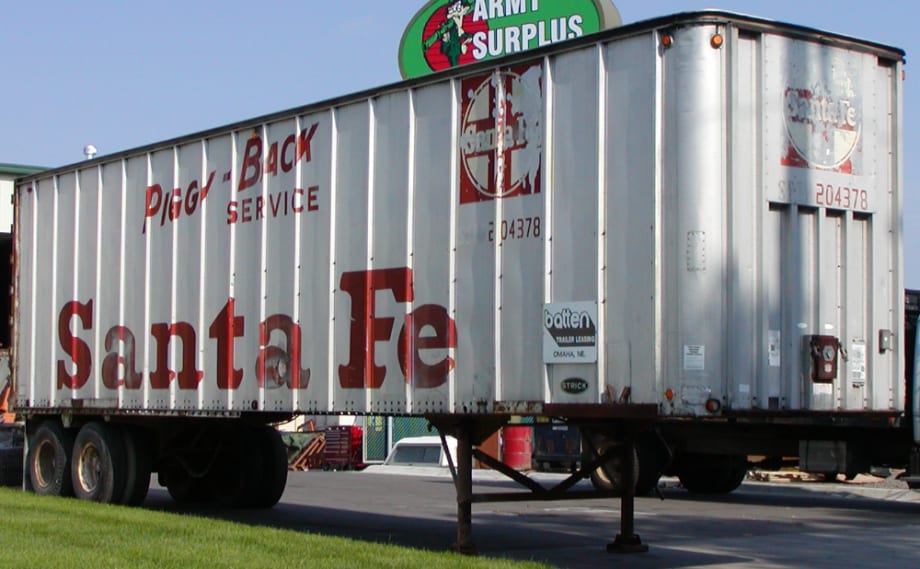
Well used trailer is a former Flexi-Van bought about 1968 by the Santa Fe Railway. It was for sale at a rental and leasing company in Omaha in 2004.
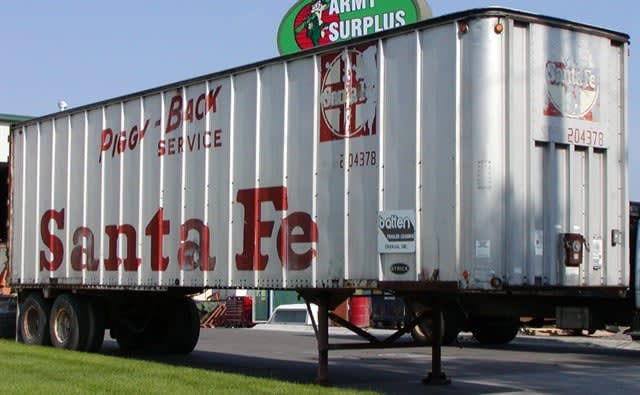
Well used trailer is a former Flexi-Van bought about 1968 by the Santa Fe Railway. It was for sale at a rental and leasing company in Omaha in 2004.
This Strick trailer is part of intermodal history going back more than 50 years. It was one of a large group bought by the Atchison Topeka and Santa Fe Railway for coast-to-coast Flexi-Van service it ran with the New York Central System. This particular trailer was spotted in 2004 in Omaha, Neb., after it was retired from piggyback service.
New York Central had sought an alternative to standard piggybacking, where the entire trailer is driven or lifted onto a special flatbed car. The railroad’s planners reasoned that carrying only the trailer’s body eliminated tare weight and reduced the load’s height, which cut wind resistance to save fuel burned by locomotives – an aerodynamic improvement without streamlining.
Planners reviewed several concepts, according to a passage in Piggyback and Containers, a book by Davd J. DeBoer, and quoted in an article on www.qstation.org. They chose Flexi-Van, designed by Strick Trailer in 1957. Engineers converted an old 42-foot flatcar with a hydraulically-operated turntable powered by a motor-driven pump, along with a road-going but uniquely outfitted semitrailer.
It worked like this: A specially equipped yard tractor backed the Strick van at right angles to the flatcar until its bottom rails lined up with the car's turntable mechanism. The driver then unlocked a pin in the demountable tandem, and resumed backing the van off its wheels and into slots on the turntable. When the van was fully engaged on the turntable, another pin locked it in place.
Using a pushrod mounted on the Commando “hostler” tractor, the driver engaged one end of the van and pushed it 90 degrees until it pivoted on the turntable so it paralleled the flatcar, then locked it into place on the car. (Copyrighted photographs of the operation are at http://www.flickr.com/photos/jnos363/5082152589/.)
Production railcars had twin turntables, capable of handling two 40-foot vans with or without nose-mounted reefer equipment. The “skeletonized” cars were stripped of their heavy wooden decks, and without its tandem, the trailer became a lighter container. Together this saved almost a quarter of the car-and-van tare weight compared to a standard piggyback flat with trailer.
The lower center of gravity and reduced wind resistance paid dividends in the fast Flexi-Van trains, the book said. In a joint test with Santa Fe in October 1966, it was found that depending upon speed, the Flexi-Vans offered 5 to 10% less rolling resistance than standard piggyback trains.
Santa Fe ran 87-foot, 3-inch skeletal flatcars with Rockwell high-speed wheel assemblies in its high-priority Super C trains between Chicago and Los Angeles. Each carried two 40-foot vans like the one pictured, without its tandems, of course.
Eventually wheel-less containers were found to be more workable, so the railcars were modified for container loading in 1972, and have since been retired. Santa Fe then used its Flexi-Vans in regular trailer-on-flatcar service, with the bogies attached, well into the early 1980s.
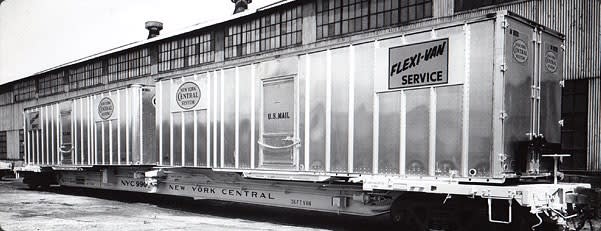
Brand-new Strick Flexi-Vans aboard New York Central skeletal railcars saved weight and lowered load height to cut wind resistance. Rolling resistance was thus reduced by 5 to 10%, according to a test run in 1966.
Corporate epilogue: Santa Fe later merged with Burlington Northern to become BNSF (now famously owned by Warren Buffet’s Berkshire Hathaway). New York Central merged with an arch-rival, the Pennsylvania Railroad, to form Penn Central, which went bankrupt. Some of PC and other railroads in the Northeast formed the federally owned Conrail, which flourished under rail deregulation and was sold to CSX and Norfolk & Western (now Norfolk Southern).
Finally, Strick is still in the trailer and container business (http://www.stricktrailers.com). And Flexi-Van is now a name used by a leasing company that owns 150,000 container chassis and 3,200 portable generator sets (http://www.flexi-van.com).
More Blog Posts
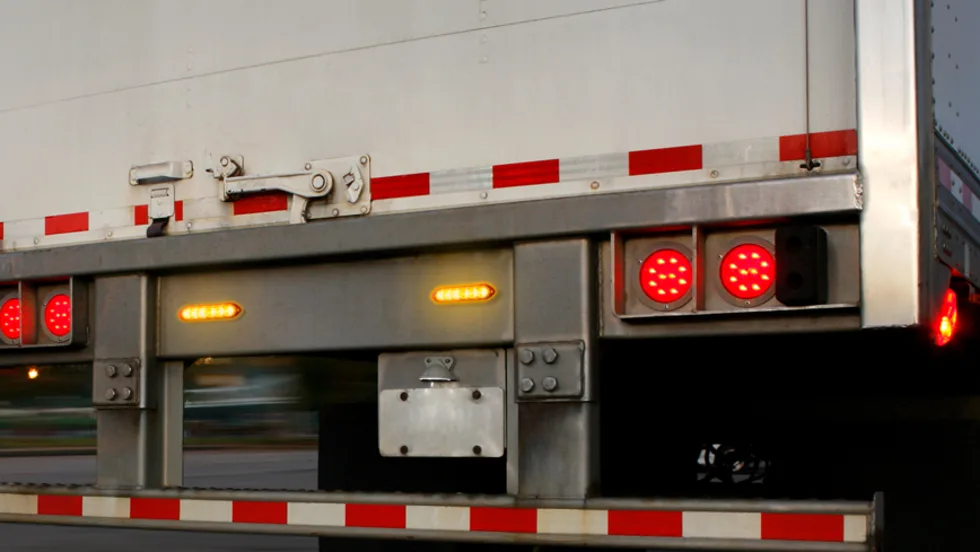
Pulsing Back-of-Trailer Lamps Aim to Prevent Crashes
Can the addition of a pulsing brake lamp on the back of a trailer prevent rear-end collisions? FMCSA seems to think so, if its exemptions are any indication.
Read More →
Designing a 14-Foot Trailer
Trailers are 13 feet, 6 inches high, right? Not for Hub Group, which developed a special 14-foot-high trailer spec for a dedicated customer based in California. Learn more in the Trailer Talk blog.
Read More →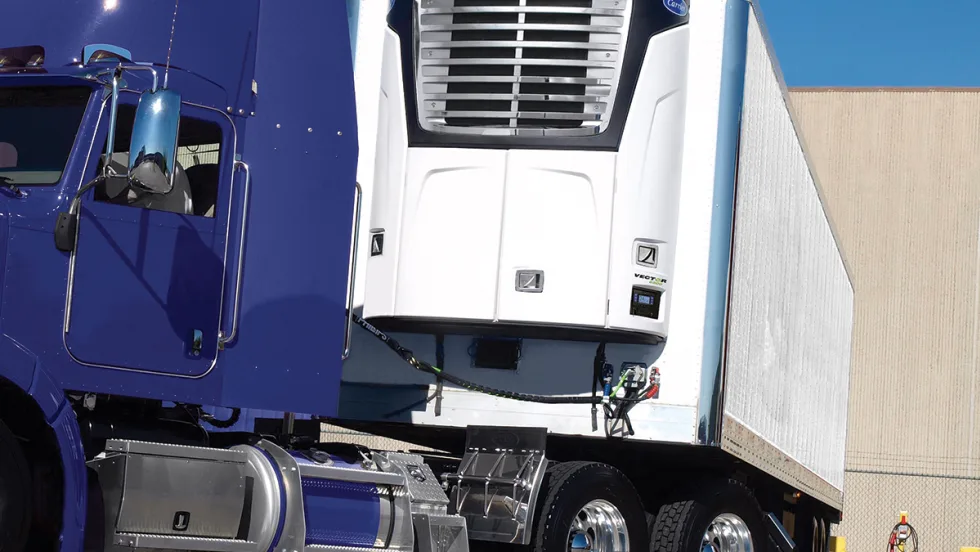
CARB Comes for Reefer Trailers
A new round of emissions control regulations decreed by the California Air Resource Board will begin affecting refrigerated trailer and TRU design and operations next year.
Read More →
5 Ways Data Analysis Maximizes the Value of Trailer Telematics
Are you getting the most out of your trailer telematics investment?
Read More →
Can You Guess What's in That Trailer?
You don’t always know what’s in the trailers that pass you on the road. But some of those trailers are carrying something a little more dangerous that frozen food or new bedding…like, maybe, a nuclear weapon. But this isn’t an ordinary trailer; this is a trailer specifically made to not only carry this type of payload, but protect it at all costs.
Read More →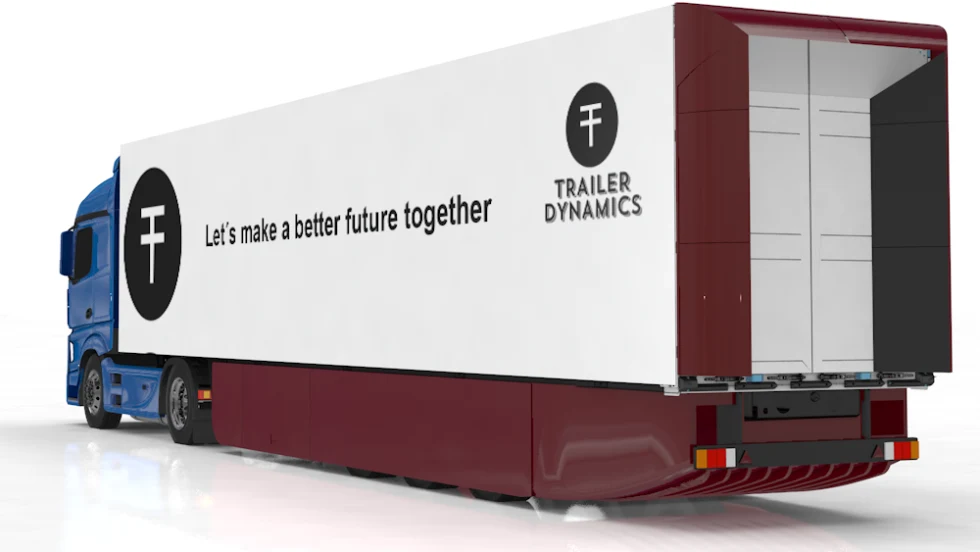
How Trailers Are Harnessing 'Free' Energy
Can trailers play a more active role in sustainable transport beyond aerodynamic add-ons or low-rolling-resistance tires? Some companies think so.
Read More →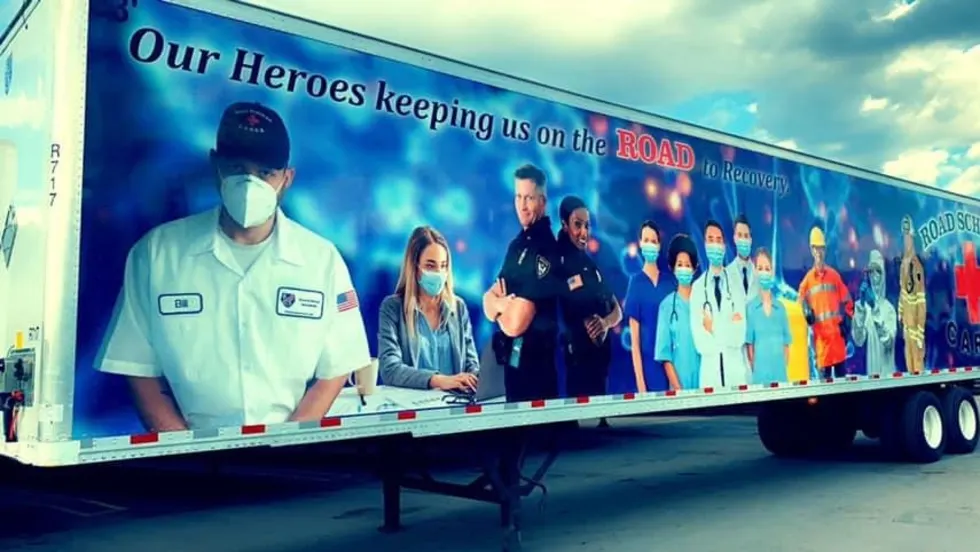
Wrapping a Trailer for COVID’s Everyday Heroes
“We don’t only deliver freight. We deliver awareness.” That’s what Jim Barrett, president and CEO of Road Scholar Transport, likes to say about the Dunmore, Pennsylvania-based carrier’s “awareness fleet.” Its latest trailer wrap honors the everyday heroes of the pandemic.
Read More →
How a Tanker Fleet is Using Unorthodox Trailer Lighting to Fight Rear-End Collisions
Groendyke Transport watched the number of rear-end collisions with its trailers rise steadily until it tried an unorthodox and then unapproved method of alerting following drivers that its trucks were applying brakes and slowing down.
Read More →
The Role Trailers are Playing in COVID-19 Funerals
In places such as New York City and Detroit, overwhelmed hospitals and mortuaries are using refrigerated trailers to store the bodies of people killed by COVID-19.
Read More →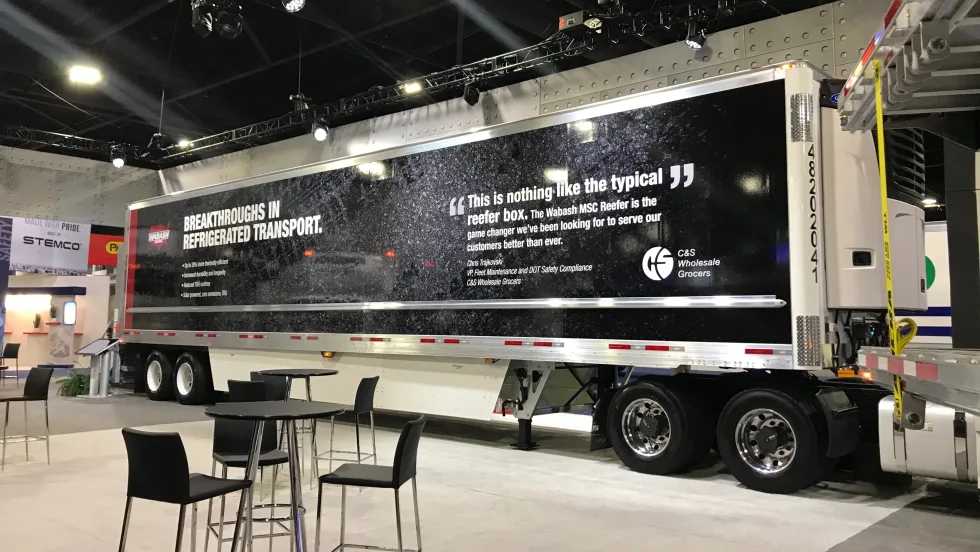
Reefer Trailer Aims to Help Reach Zero Emissions
Wabash National is partnering with C&S Wholesale Grocers to test a new type of zero-emissions refrigerated trailer.
Read More →