





Related: On Slick Pavement, ‘The Sliding Wheel Wants to Lead’
Jackknifes Happen Often on Dry Roads, Too
Anti-lock braking systems are supposed to keep brakes from locking, but this time didn’t. Why might that be?
March 13, 2017
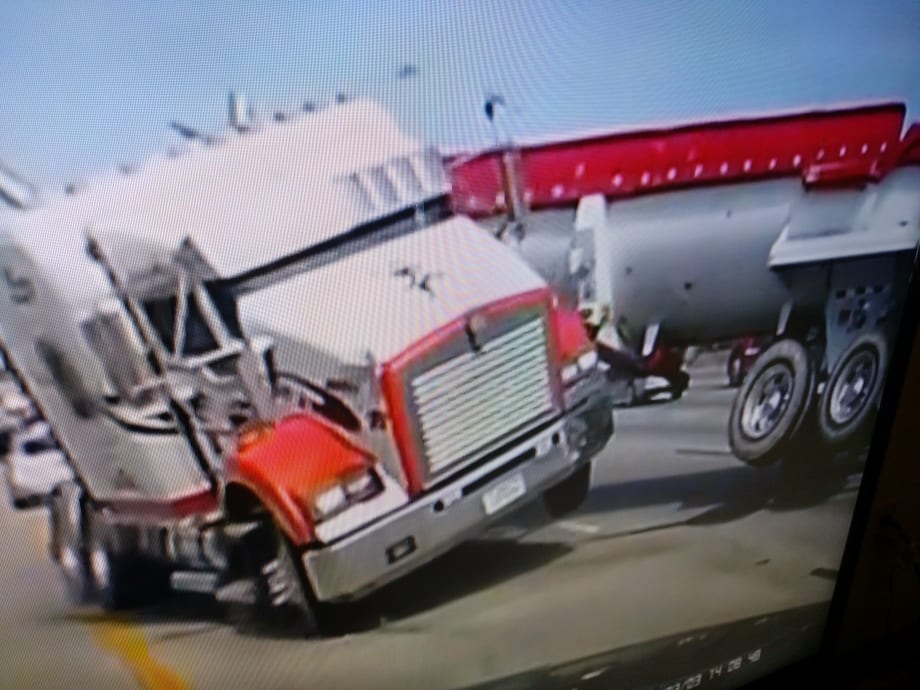
The rig lurches to a stop with probable damage to the tractor's sleeper and who knows what else. No word of any injuries.
2 min to read
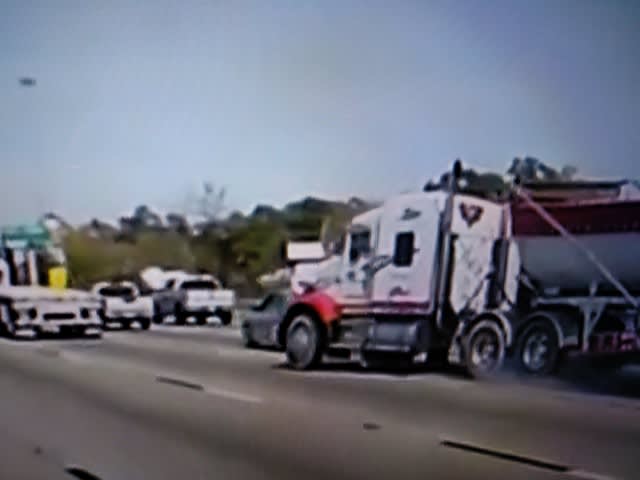
It appears the driver hit the binders and the tractor's brakes seem to be sticking, pulling the rig to the left. Screenshots from ABC newscast.
Forgive me if I devote too many of these blogs to jackknifing, but ‘tis the season of slick pavement when a lot of such accidents occur. They are dangerous to the errant rig’s driver and to other truck drivers and motorists nearby and can cause a lot of expensive damage.
But how about a jackknife on dry pavement? Here are some images from a TV newscast of a tractor and dump trailer suddenly going out of control, bending to port (as a sailor might say), and skidding across several lanes on a freeway and blocking them as it comes to a jarring halt. What the blazes could cause that?
The very short news report didn’t include the accident’s whereabouts, and I searched on Google and YouTube but couldn’t find it. What I did find in short order were a lot of recent jackknifing incidents, almost from coast-to-coast. Quite a few were on dry pavement, some resulted in injuries, and all caused traffic tie-ups that teed off a lot of people.
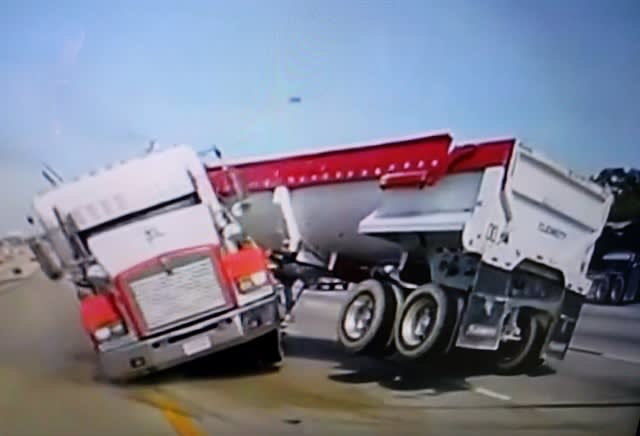
Now at an acute angle, the rig continues skidding across several lanes on this freeway, location unknown.
I studied the short video and these pics several times and determined that the driver apparently hit the binders hard when he saw traffic ahead slow down. It appears that the brakes on his rig grabbed, the wheels locked, and the tires began skating across the asphalt.
Anti-lock braking systems are supposed to keep brakes from locking, but this time didn’t. Why might that be? I invite experts and experienced drivers to offer opinions in the comment section below. Meanwhile, here’s what I think:
The tractor's brakes were out of adjustment, and/or air valves were sticking, so the brakes didn’t release when told to by the ABS. It’s also possible that the tractor was built before ABS was required (March 1, 1997) and simply didn’t have it. As I said in a previous blog, a skidding wheel wants to lead, and they did in this case, dragging the tractor to the left. The trailer followed along.
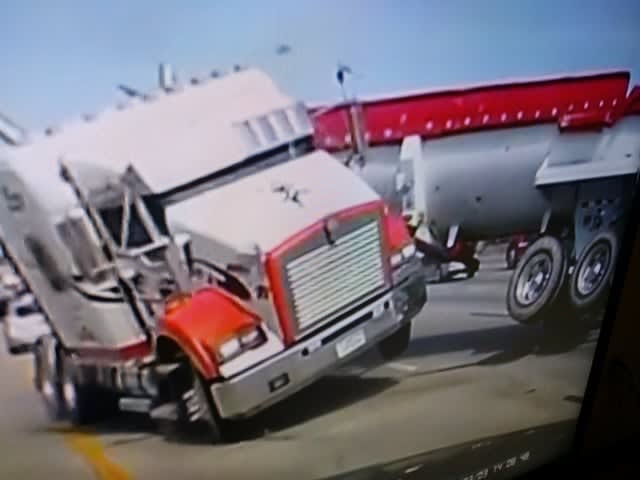
The rig lurches to a stop with probable damage to the tractor's sleeper and who knows what else. No word of any injuries.
This all occurred in just a few seconds, from the spinout until the rig stopped, the trailer jamming against a corner of the tractor’s sleeper. As victims of accidents always say, “It happened so fast….” It sure does. When’s the last time you had your brake system checked?
Subscribe to Our Newsletter
More Blog Posts
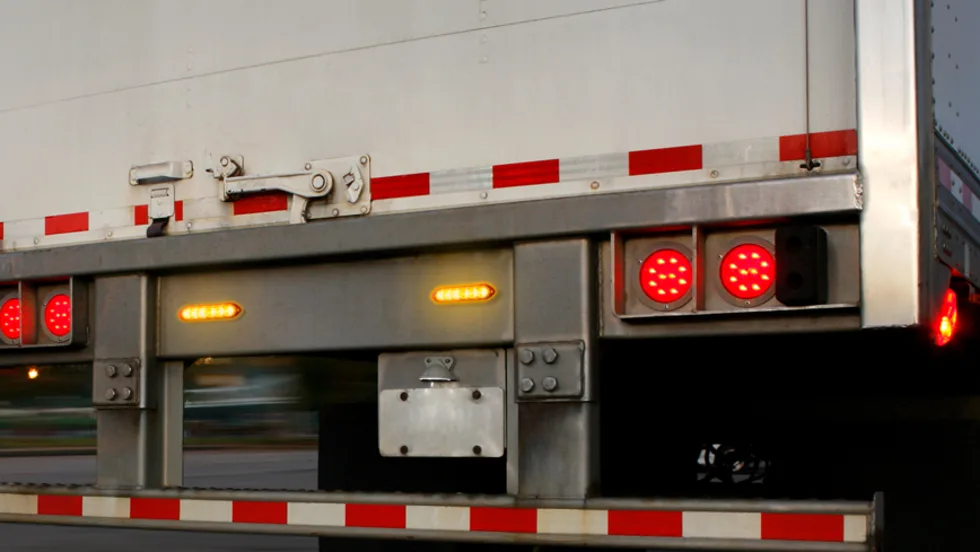
Pulsing Back-of-Trailer Lamps Aim to Prevent Crashes
Can the addition of a pulsing brake lamp on the back of a trailer prevent rear-end collisions? FMCSA seems to think so, if its exemptions are any indication.
Read More →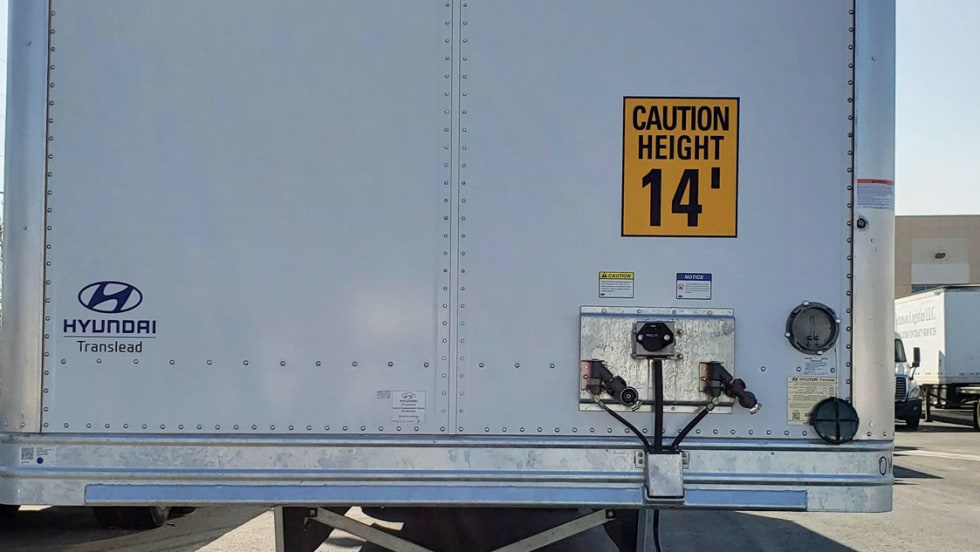
Designing a 14-Foot Trailer
Trailers are 13 feet, 6 inches high, right? Not for Hub Group, which developed a special 14-foot-high trailer spec for a dedicated customer based in California. Learn more in the Trailer Talk blog.
Read More →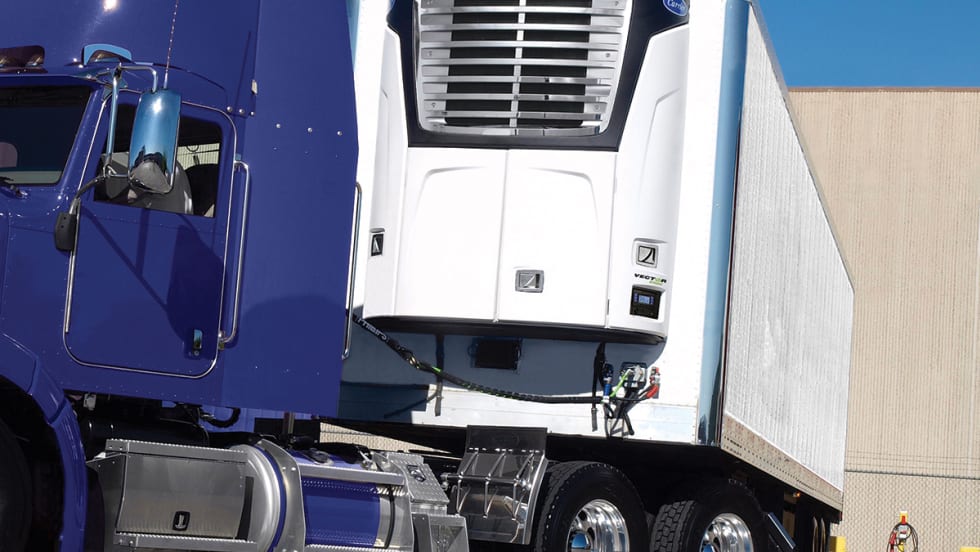
CARB Comes for Reefer Trailers
A new round of emissions control regulations decreed by the California Air Resource Board will begin affecting refrigerated trailer and TRU design and operations next year.
Read More →
5 Ways Data Analysis Maximizes the Value of Trailer Telematics
Are you getting the most out of your trailer telematics investment?
Read More →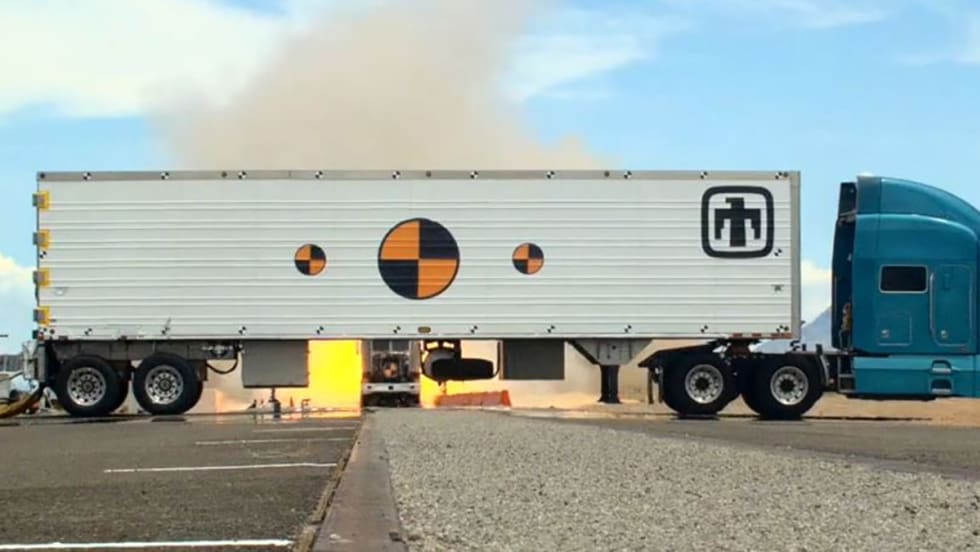
Can You Guess What's in That Trailer?
You don’t always know what’s in the trailers that pass you on the road. But some of those trailers are carrying something a little more dangerous that frozen food or new bedding…like, maybe, a nuclear weapon. But this isn’t an ordinary trailer; this is a trailer specifically made to not only carry this type of payload, but protect it at all costs.
Read More →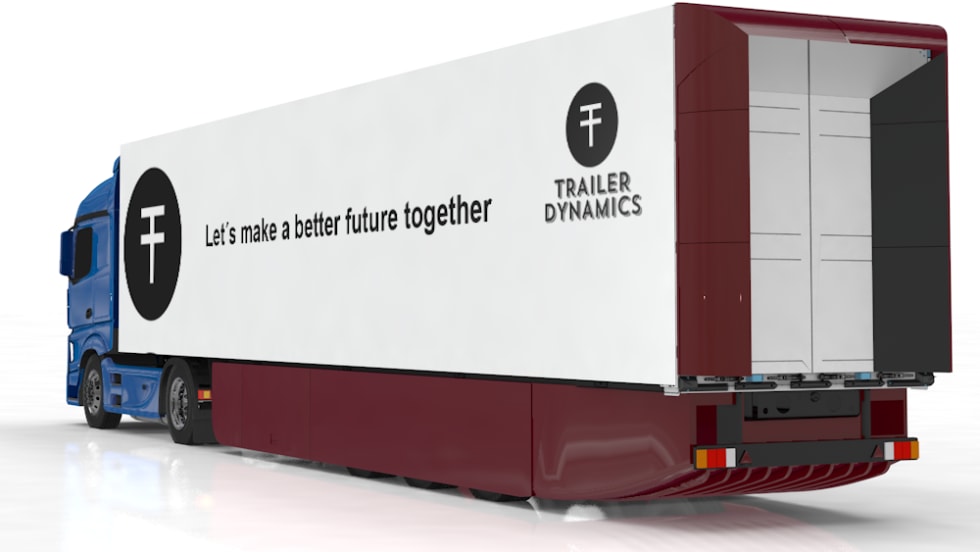
How Trailers Are Harnessing 'Free' Energy
Can trailers play a more active role in sustainable transport beyond aerodynamic add-ons or low-rolling-resistance tires? Some companies think so.
Read More →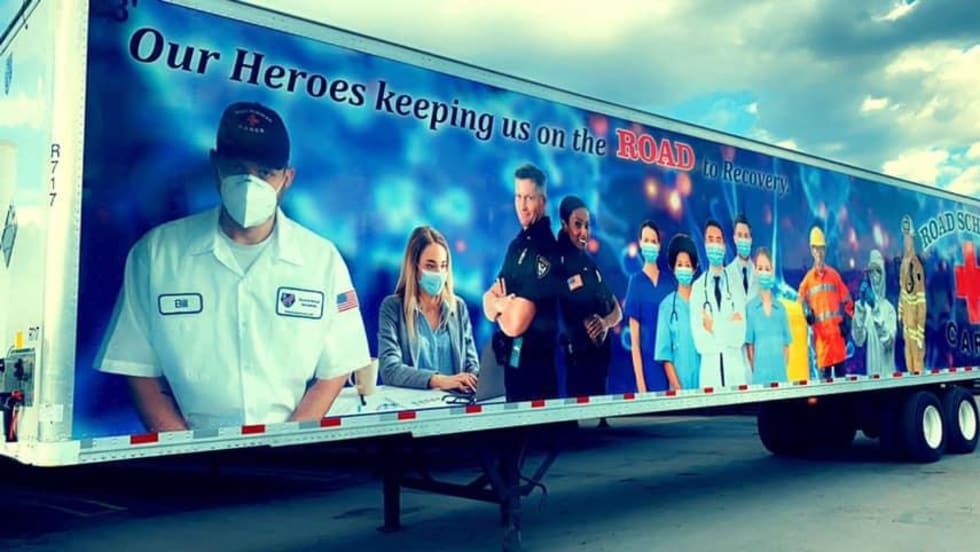
Wrapping a Trailer for COVID’s Everyday Heroes
“We don’t only deliver freight. We deliver awareness.” That’s what Jim Barrett, president and CEO of Road Scholar Transport, likes to say about the Dunmore, Pennsylvania-based carrier’s “awareness fleet.” Its latest trailer wrap honors the everyday heroes of the pandemic.
Read More →
How a Tanker Fleet is Using Unorthodox Trailer Lighting to Fight Rear-End Collisions
Groendyke Transport watched the number of rear-end collisions with its trailers rise steadily until it tried an unorthodox and then unapproved method of alerting following drivers that its trucks were applying brakes and slowing down.
Read More →
The Role Trailers are Playing in COVID-19 Funerals
In places such as New York City and Detroit, overwhelmed hospitals and mortuaries are using refrigerated trailers to store the bodies of people killed by COVID-19.
Read More →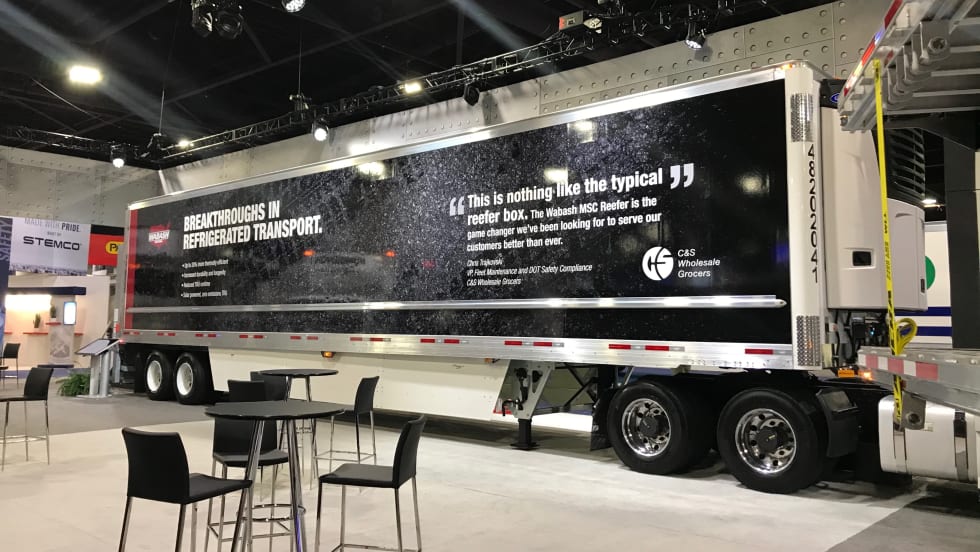
Reefer Trailer Aims to Help Reach Zero Emissions
Wabash National is partnering with C&S Wholesale Grocers to test a new type of zero-emissions refrigerated trailer.
Read More →