




In L.A. Beware of Baxter Street's 32% Grade!
The grade's apex is unnerving, and can hang up long vehicles, like trucks and semis. Residents want Waze, which has directed traffic in this direction, to wave off this route.

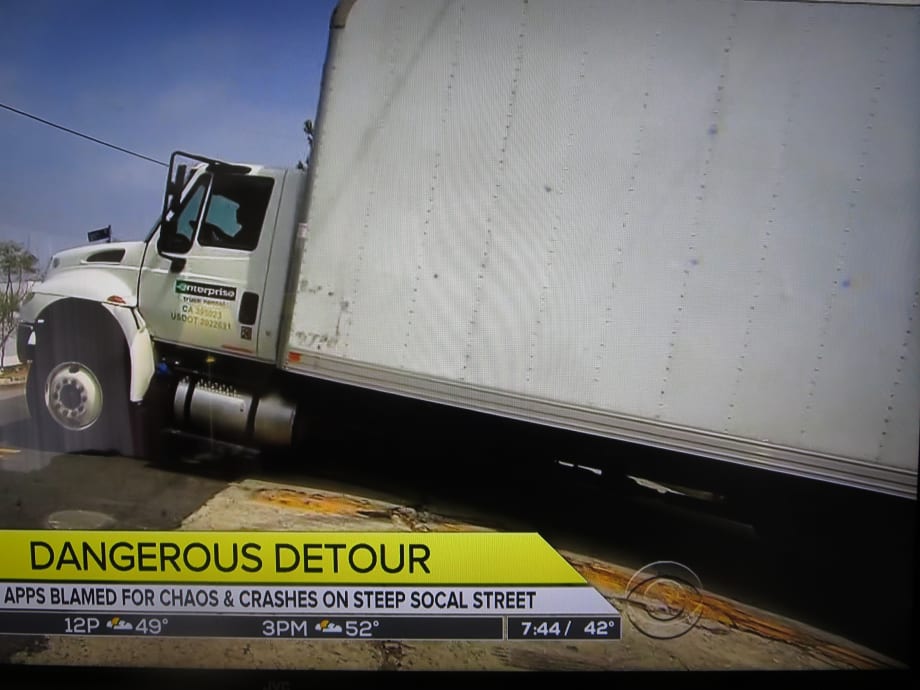
Rental truck got over the apex. Its driver, like others new to Baxter Street, must've been surprised by the series of hills.
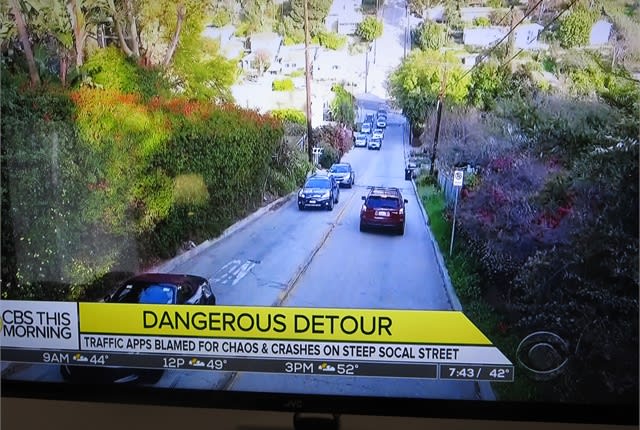
Whoa -- how'd you like to descend this hill with bad brakes? Images: Screen captures from CBS Morning News.
Yikes! A 32% grade in the midst of a city? That’s what Baxter Street in the Echo Park neighborhood of Los Angeles is said to be.
One section begins and ends abruptly, causing faint-of-heart drivers who’ve never been on it to panic upon encountering a blind apex. Sometimes they roll backwards downgrade, coming to grief and damaging neighbors' shrubs, planters and other property items, according to local media and a CBS News report last week.
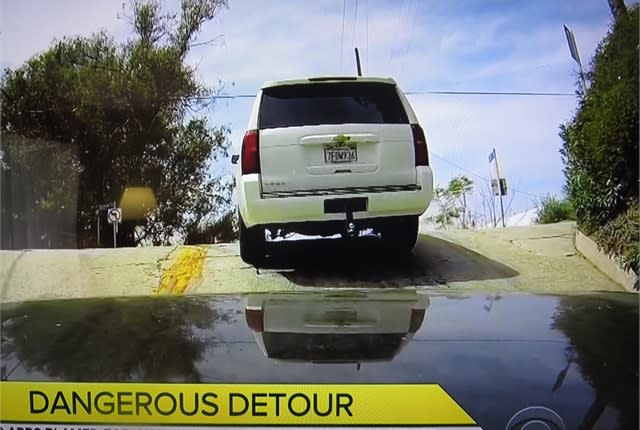
Drivers are blind for a few moments as they crest the apex at the top of this hill. Is it the edge of the earth?
Baxter is actually composed of a series of up- and downgrades – your basic roller coaster profile. And it’s not only steep but increasingly well-traveled during rush hours, due to its listing as an alternative commuter route by Waze, the smart phone traffic-assist app. Evidently Waze’s programming looks at street maps but not topographical charts, thus does not see the hilly terrain. That makes it not so smart.
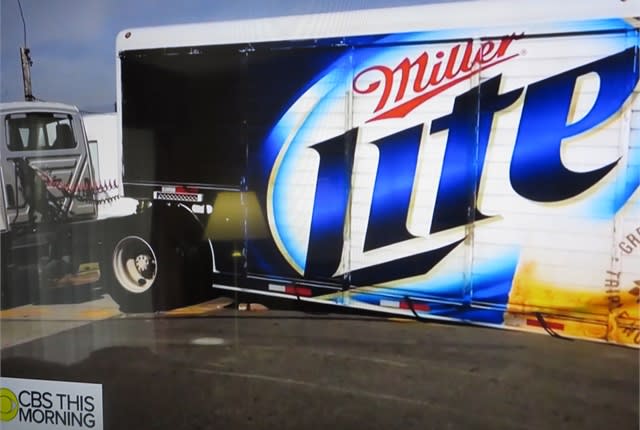
This low-slung beverage trailer barely scraped its way over the apex. Driver was probably using this route to bypass traffic backup on a more sane set of streets.
It’s not just cars that blunder up and down Baxter, but also stretch limos and long buses and trucks -- like this beer-delivery tractor-trailer, which almost hung up on the apex. It made it, as did a long rental truck – barely (think of the strain on their powertrains!). Other vehicles in recent months have gotten high-centered there, though, and had to be towed off.
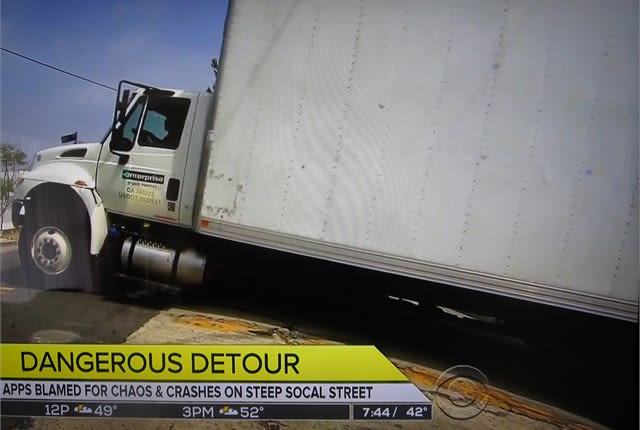
Rental truck got over the apex. Its driver, like others new to Baxter Street, must've been surprised by the series of hills.
This is another reason for drivers of trucks and other large and heavy vehicles to avoid using navigation aids not meant for them, especially when truck-specific products are available.
Residents have complained to city officials about the situation and transportation staffers are debating what to do about the onslaught of traffic and the real and present danger. CBS asked Waze if it would change its by-ways, so to speak. Maybe it has delisted Baxter by now.
Meanwhile, here’s a YouTube video for your viewing amusement.
More Blog Posts
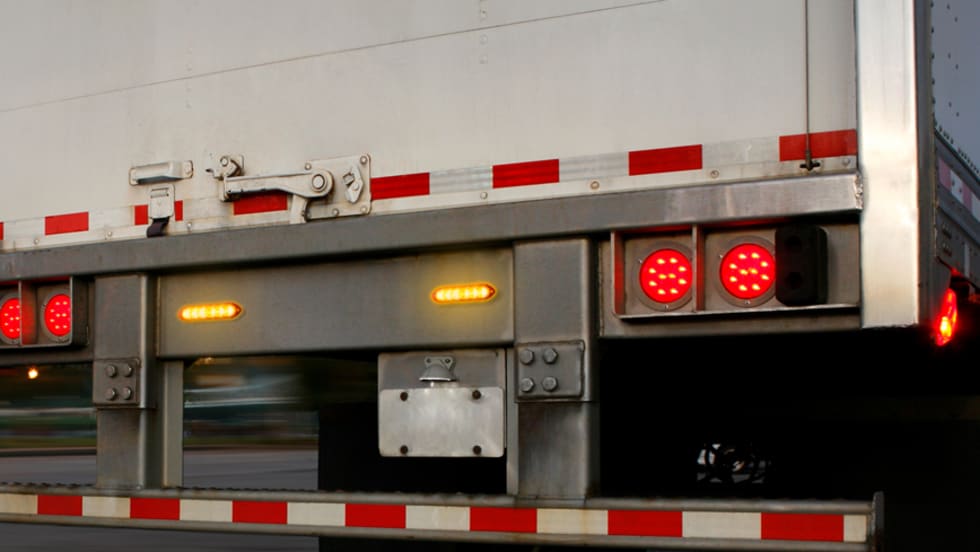
Pulsing Back-of-Trailer Lamps Aim to Prevent Crashes
Can the addition of a pulsing brake lamp on the back of a trailer prevent rear-end collisions? FMCSA seems to think so, if its exemptions are any indication.
Read More →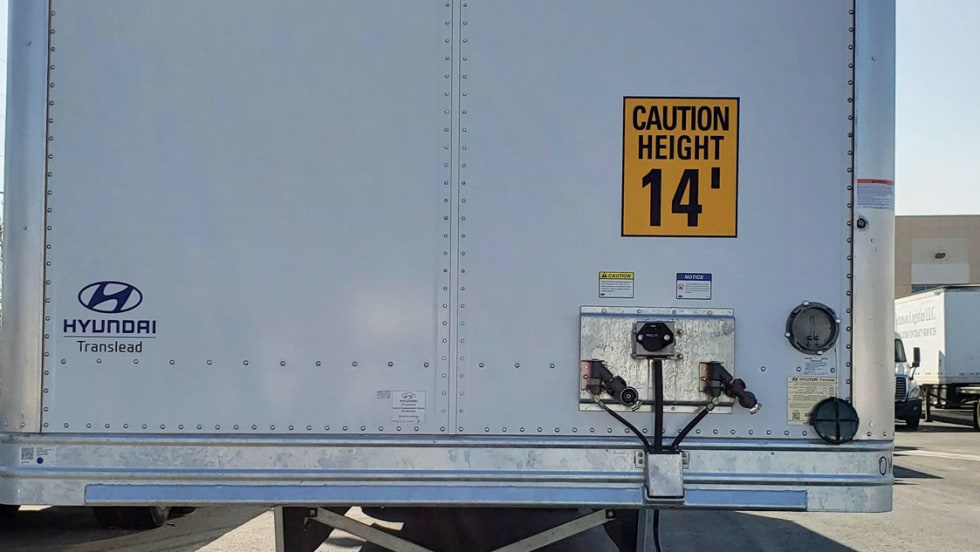
Designing a 14-Foot Trailer
Trailers are 13 feet, 6 inches high, right? Not for Hub Group, which developed a special 14-foot-high trailer spec for a dedicated customer based in California. Learn more in the Trailer Talk blog.
Read More →
CARB Comes for Reefer Trailers
A new round of emissions control regulations decreed by the California Air Resource Board will begin affecting refrigerated trailer and TRU design and operations next year.
Read More →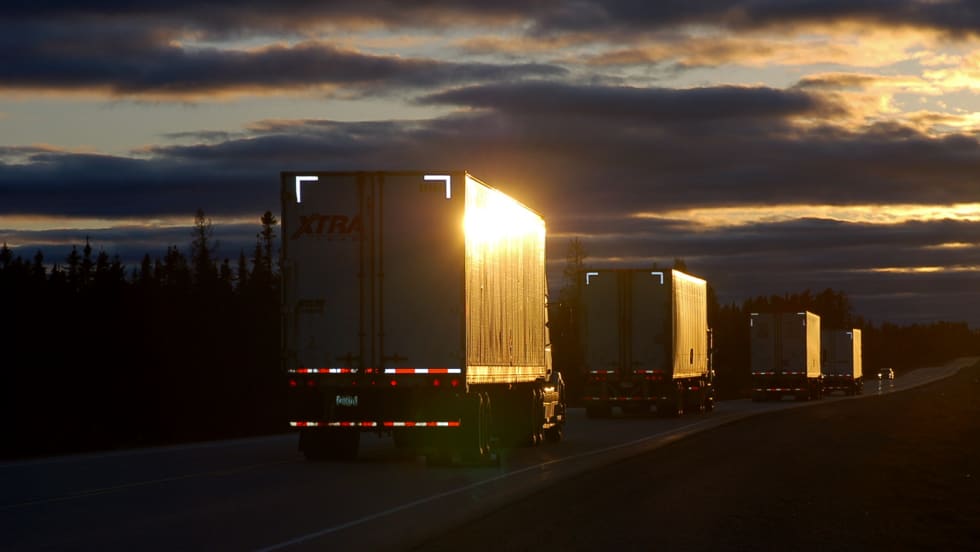
5 Ways Data Analysis Maximizes the Value of Trailer Telematics
Are you getting the most out of your trailer telematics investment?
Read More →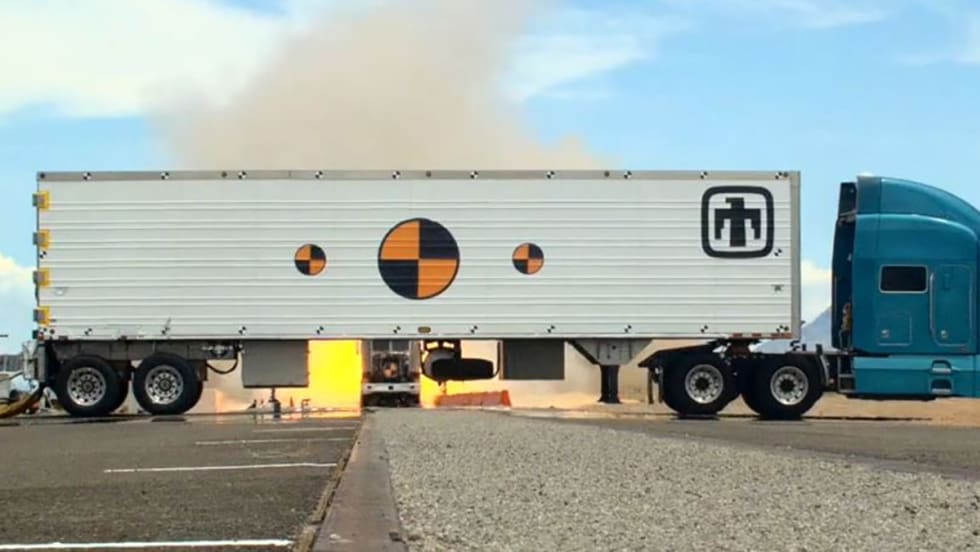
Can You Guess What's in That Trailer?
You don’t always know what’s in the trailers that pass you on the road. But some of those trailers are carrying something a little more dangerous that frozen food or new bedding…like, maybe, a nuclear weapon. But this isn’t an ordinary trailer; this is a trailer specifically made to not only carry this type of payload, but protect it at all costs.
Read More →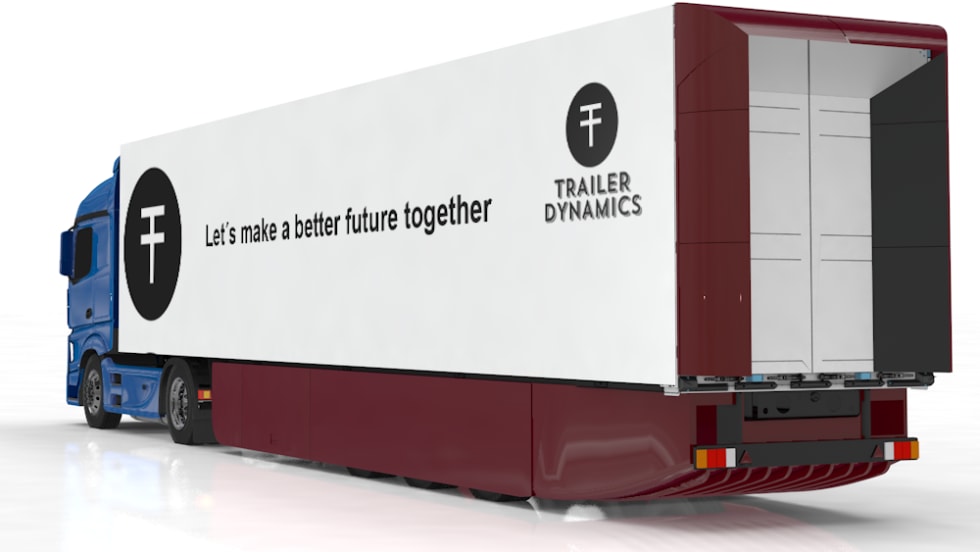
How Trailers Are Harnessing 'Free' Energy
Can trailers play a more active role in sustainable transport beyond aerodynamic add-ons or low-rolling-resistance tires? Some companies think so.
Read More →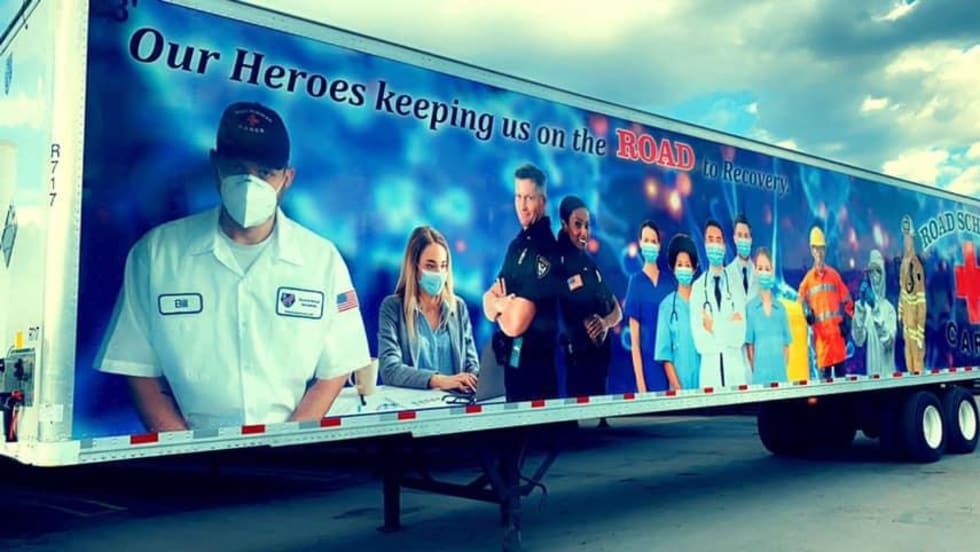
Wrapping a Trailer for COVID’s Everyday Heroes
“We don’t only deliver freight. We deliver awareness.” That’s what Jim Barrett, president and CEO of Road Scholar Transport, likes to say about the Dunmore, Pennsylvania-based carrier’s “awareness fleet.” Its latest trailer wrap honors the everyday heroes of the pandemic.
Read More →
How a Tanker Fleet is Using Unorthodox Trailer Lighting to Fight Rear-End Collisions
Groendyke Transport watched the number of rear-end collisions with its trailers rise steadily until it tried an unorthodox and then unapproved method of alerting following drivers that its trucks were applying brakes and slowing down.
Read More →
The Role Trailers are Playing in COVID-19 Funerals
In places such as New York City and Detroit, overwhelmed hospitals and mortuaries are using refrigerated trailers to store the bodies of people killed by COVID-19.
Read More →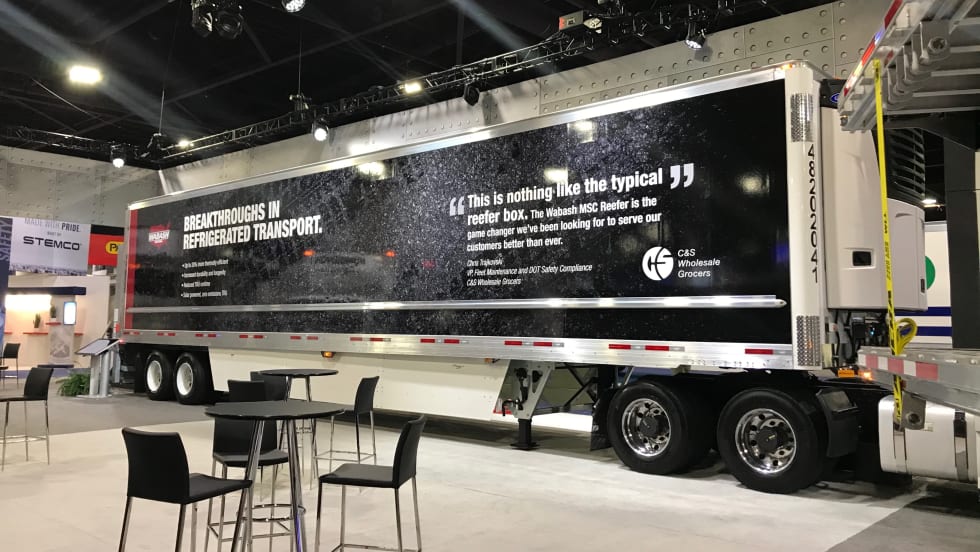
Reefer Trailer Aims to Help Reach Zero Emissions
Wabash National is partnering with C&S Wholesale Grocers to test a new type of zero-emissions refrigerated trailer.
Read More →