




How Fruehaufs and Whites Once Hauled Unique Steel Houses
Trailers were loaded with panels and hardware as they left the assembly line, then hauled to their destinations. At building sites, parts that were needed first had been loaded last, so they came off in the exact order required for erection.

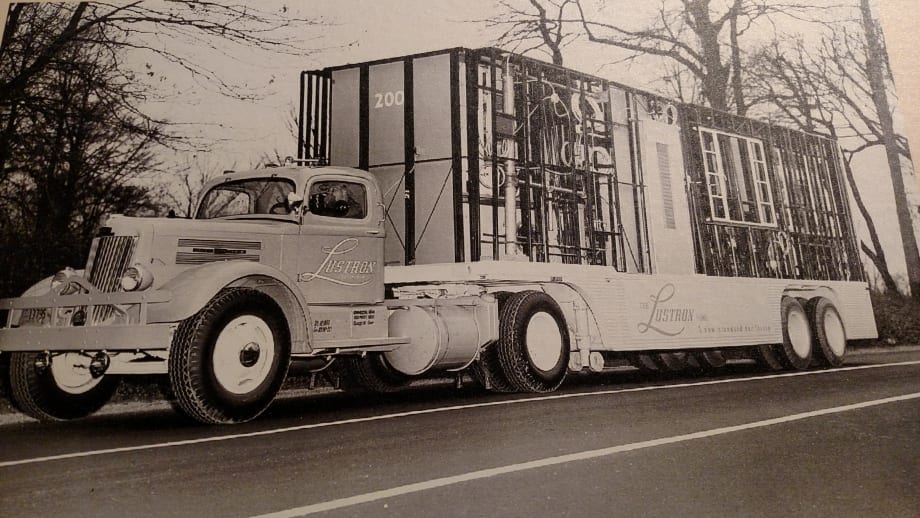
Lustron's fleet included 200 White WC-42s (though the number was probably 160) and 800 custom-made Fruehauf flatbeds with racks and boxes. Vehicles were painted a vivid blue-and-yellow.
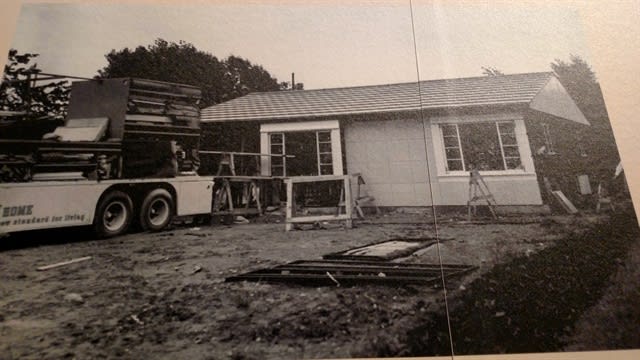
A Lustron steel house is erected from panels and parts taken from a parked trailer (wide-angle lens bends the image). Photos: Tom Berg
Ever hear of Lustron houses? They are prefabricated, porcelain-painted steel structures that were produced from 1947 to 1950 in a factory in Columbus, Ohio, and carried by the builder’s private truck fleet to erection sites in every state east of the Rockies. I had forgotten about these uniquely designed houses until I saw an exhibit on “1950s life” at the Ohio Historical Center. It includes a complete Lustron model home because it was a local product.
The exhibit included information on the Lustron Corp., which briefly capitalized on the critical need for housing for military veterans returning from World War II. Using specialized and expensive equipment, the company produced steel panels and coated them with glaze-like porcelain in several colors. Roofs, exterior and interior walls, cabinets, shelving, and floors were all steel.
Several of the houses were situated in the Milwaukee neighborhood where I grew up back in the ‘40s and ‘50s. Their stark simplicity and appliance-like appearance made them really stand out among the hundreds of conventional wood and brick houses. When we passed one we’d say, “Why would anybody want to live in something like that?”
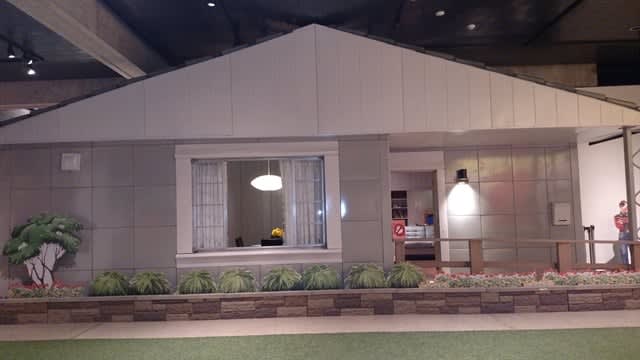
Model home is part of a display at the Ohio History Center in Columbus. Some 2,600 prefab Lustrons were built in the city and shipped to customers in the eastern half of the U.S.
Turns out that thousands of families thought they were just fine, because they cost less than “stick-built” houses and went up in less than a week, according to a book I bought at the history center, The Lustron Home, by Thomas T. Fetters. Erection work was done by local contractors following strict assembly instructions, he wrote.
The houses had some quirks, like ceiling-mounted radiant heating that warmed heads and shoulders but not legs and feet, and steel-and-glass windows that didn't keep out northern cold. But the porcelain-enameled steel stood up well to the weather and everyday wear-and-tear of family life. Most of some 2,600 houses built are still are inhabited today, and have something of a cult following.
Fetters researched and wrote about every conceivable aspect of Lustron Corp., including its truck fleet. Company executives acquired 800 custom-designed trailers from Fruehauf and 200 WC-42 tractors from White, through a Chicago home-supply firm that became a truck-leasing company. Trailers were basically 32.5-foot flatbeds equipped with racks and bins.
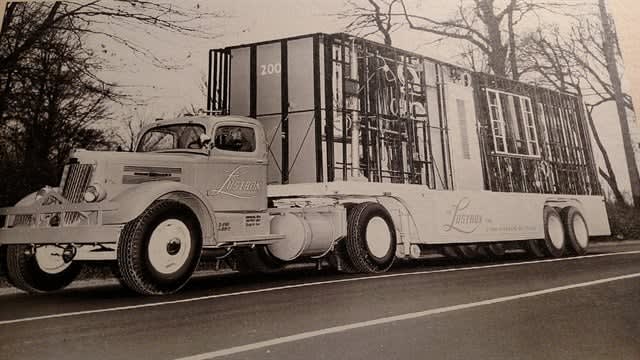
Lustron's fleet included 200 White WC-42s (though the number was probably 160) and 800 custom-made Fruehauf flatbeds with racks and boxes. Vehicles were painted a vivid blue-and-yellow.
Trailers were loaded with panels, hardware, and other parts as they came off the assembly line in Columbus, then parked on the premises until tractors hitched up and took them to their destinations. At building sites, parts that were needed first had been loaded last, so they came off in the exact order required for erection.
Trailers stayed at the sites until empty and were then retrieved and pulled back to the factory. Sometimes they stopped at steel suppliers to pick up raw materials needed at the plant. That was the plan, anyway. Carl Strandlund, the company’s founder, intended to ship loaded trailers by flatcar to the Pacific Northwest, but railroads weren’t interested. (Piggybacking came many years later.)
The trailer-to-tractor ratio was 4 to 1, so trailers spent a lot of time sitting. Or maybe the ratio was even greater because the lessor was suspected of delivering only 160 tractors. Lustron's dispatcher didn’t know because they were always gone and he couldn’t count them. Nonetheless, the lessor charged Lustron a wad of money per month for all 200, including the 40 phantoms. Unbeknownst to Lustron, the lessor also sold the tractors to their drivers, making them owner-operators who also made monthly payments.
And, the lessor neglected to pay Fruehauf for many of the trailers. The order was worth $4 million, but Fruehauf was stiffed to the tune of almost $3 million. That almost bankrupted the trailer builder before its time (which came in the mid-1980s). Roy Fruehauf, its president, recouped his losses by reclaiming the trailers and converting them to vans, then sorely needed by the nation’s growing trucking industry.
Lustron itself didn’t last long at all. That it couldn’t count the number of trucks it ran was a symptom of shaky management. It had taken more than $200 million in government loans to start up and operate. It never made enough money to pay much if anything on the loans. So – hounded by negative press reports and congressional investigations -- Reconstruction Finance Corp., the government agency involved, foreclosed on Lustron, seized and closed the plant, and put the company out of business.
It was another three decades before Fruehauf Corp. and White Motor Co., two once-dominant vehicle manufacturers, went under, the victims of mismanagement, internal squabbling and changing fortunes. That Lustron was one of their customers was perhaps prophetic.
More Blog Posts

Pulsing Back-of-Trailer Lamps Aim to Prevent Crashes
Can the addition of a pulsing brake lamp on the back of a trailer prevent rear-end collisions? FMCSA seems to think so, if its exemptions are any indication.
Read More →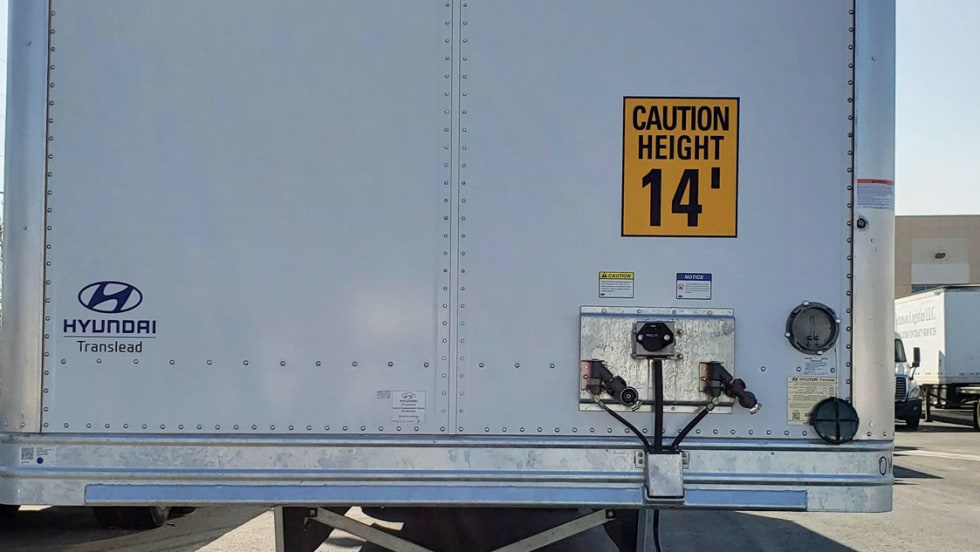
Designing a 14-Foot Trailer
Trailers are 13 feet, 6 inches high, right? Not for Hub Group, which developed a special 14-foot-high trailer spec for a dedicated customer based in California. Learn more in the Trailer Talk blog.
Read More →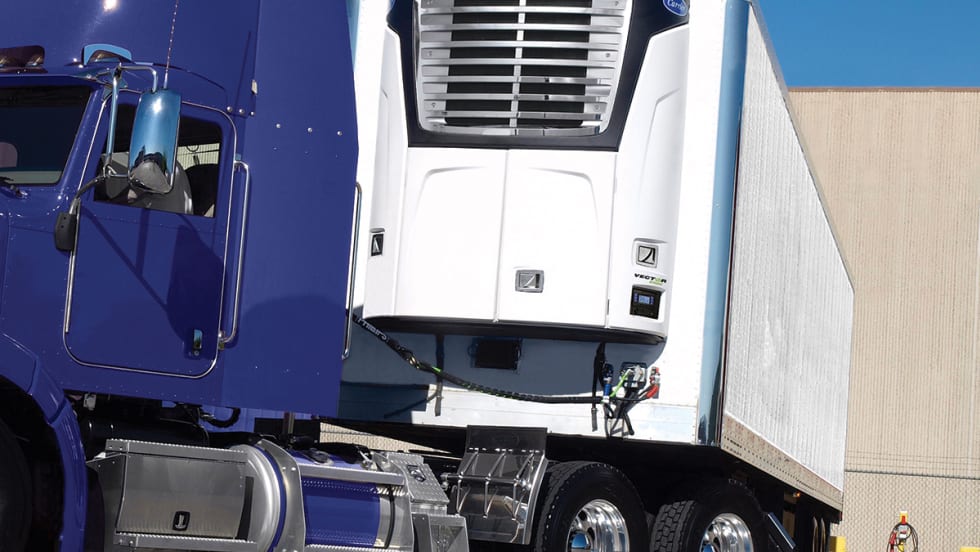
CARB Comes for Reefer Trailers
A new round of emissions control regulations decreed by the California Air Resource Board will begin affecting refrigerated trailer and TRU design and operations next year.
Read More →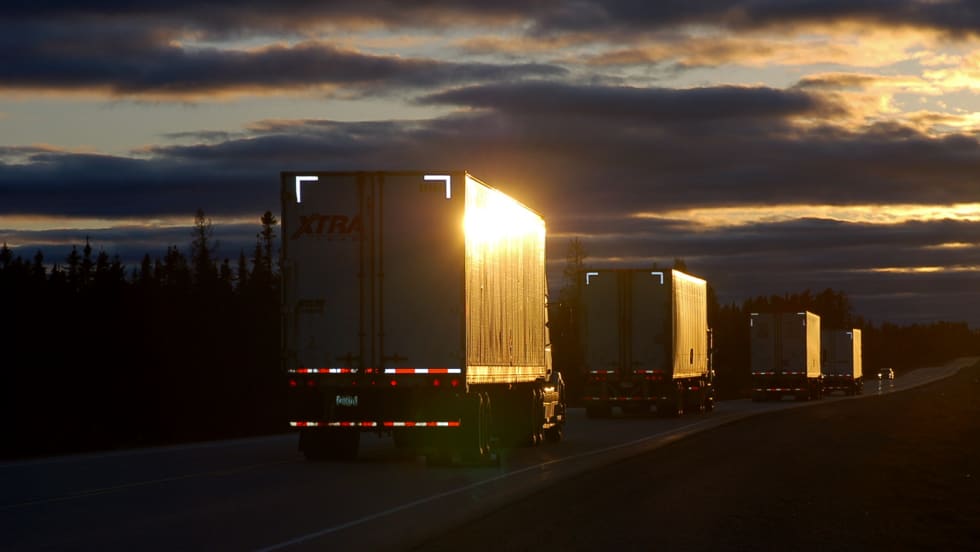
5 Ways Data Analysis Maximizes the Value of Trailer Telematics
Are you getting the most out of your trailer telematics investment?
Read More →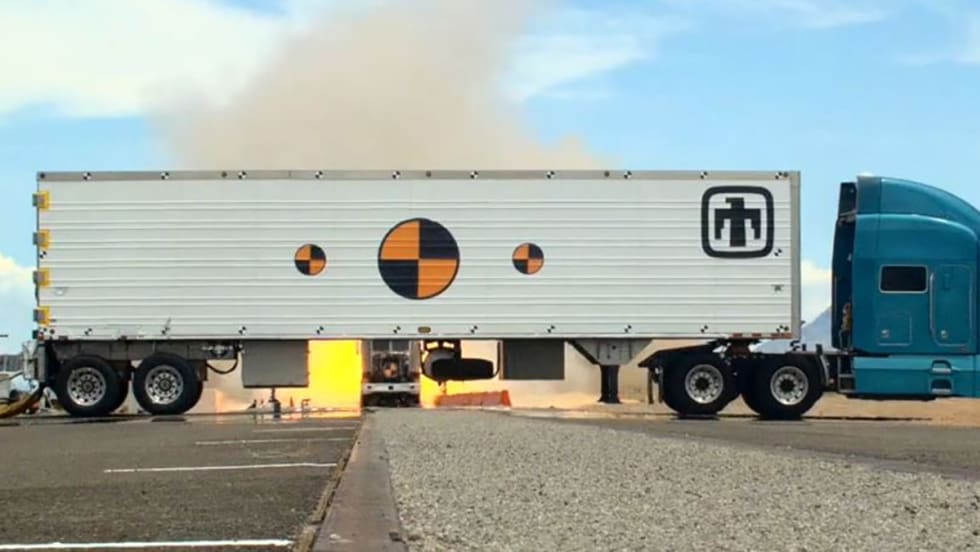
Can You Guess What's in That Trailer?
You don’t always know what’s in the trailers that pass you on the road. But some of those trailers are carrying something a little more dangerous that frozen food or new bedding…like, maybe, a nuclear weapon. But this isn’t an ordinary trailer; this is a trailer specifically made to not only carry this type of payload, but protect it at all costs.
Read More →
How Trailers Are Harnessing 'Free' Energy
Can trailers play a more active role in sustainable transport beyond aerodynamic add-ons or low-rolling-resistance tires? Some companies think so.
Read More →
Wrapping a Trailer for COVID’s Everyday Heroes
“We don’t only deliver freight. We deliver awareness.” That’s what Jim Barrett, president and CEO of Road Scholar Transport, likes to say about the Dunmore, Pennsylvania-based carrier’s “awareness fleet.” Its latest trailer wrap honors the everyday heroes of the pandemic.
Read More →
How a Tanker Fleet is Using Unorthodox Trailer Lighting to Fight Rear-End Collisions
Groendyke Transport watched the number of rear-end collisions with its trailers rise steadily until it tried an unorthodox and then unapproved method of alerting following drivers that its trucks were applying brakes and slowing down.
Read More →
The Role Trailers are Playing in COVID-19 Funerals
In places such as New York City and Detroit, overwhelmed hospitals and mortuaries are using refrigerated trailers to store the bodies of people killed by COVID-19.
Read More →
Reefer Trailer Aims to Help Reach Zero Emissions
Wabash National is partnering with C&S Wholesale Grocers to test a new type of zero-emissions refrigerated trailer.
Read More →