




Hardened Steel Used in Granite-Based Army Dumpers
Mack Granite-based heavy dump trucks, or HDTs, will replace early M917-series vehicles, some 50 years old, reports Senior Contributing Editor Tom Berg.

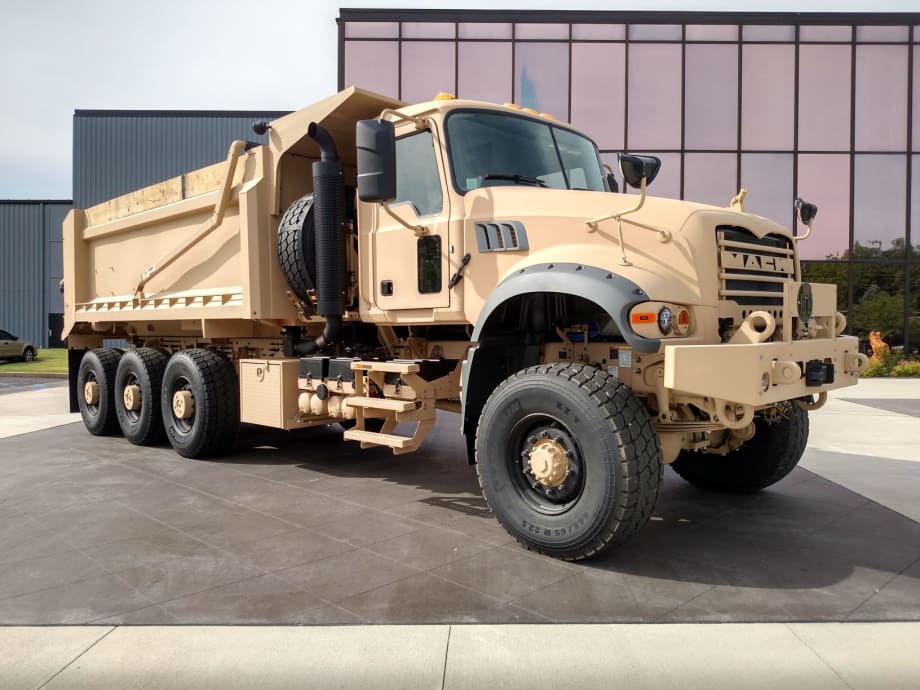
M917A3s are based on Mack’s Granite vocational truck. Meritor tri-drive rear axles deliver constant traction on or off-road, and young soldiers need not be concerned with lift axles. Front-driving axle makes this an 8x8. Payload with the standard cab is 27 tons; an armored cab cuts that by 2.5 tons. GVW rating is 94,500 pounds.
Photo: Tom Berg
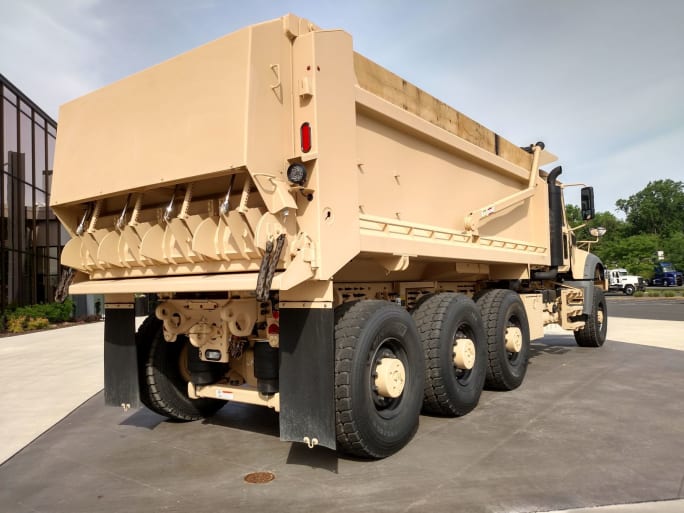
Crysteel bodies on the U.S. Army’s latest heavy dump trucks are made of AR 450 abrasion-resistant, high-strength steel. Tail gates allow volume dumping or any of four driver-controlled chutes can be opened for laying down one or more furrows of aggregates on roads and trails. Pintle hitch and air glad hands allow for towing of equipment trailers.
Photo: Tom Berg
Mack Defense LLC has officially delivered five heavy dump trucks to the U.S. Army, the first of an order that could exceed 1,200 units if further funding materializes. The chassis is designated M917A3 and is based on the Granite vocational model. It’s an all-wheel-drive 8x8 including tri-drive rear axles. It will replace earlier M917-series dump trucks, some as old as 50 years, the Army says.
The dump body from Crysteel is itself notable: It’s 17 feet long by 102.3 inches wide, and is fashioned of AR 450 high-strength hardened steel. It’s made to carry rocks, dirt, sand, gravel, and hot asphalt, among other things. Its tail gate has four driver-operated “material control” chutes for precise furrow placement of aggregates, according to Don Gorny, sales manager for J-Craft, owner of Crysteel.
AR has largely replaced mild carbon steel in dump boxes and trailers throughout the industry because it cuts weight and costs less than aluminum. An AR steel body is also more versatile, able to carry asphalt, something that aluminum bodies excel at, but also large rocks, rubble, and other abrasive materials that would damage aluminum and lesser steels.
AR steel has in some instances replaced aluminum for general-purpose dump bodies, other sources say. AR’s strength allows it to be used in thinner sheets, thus saving weight. In the Army bodies, flooring is 1/4-inch thick and sides are 3/16-inch.
Hot asphalt can be kept warm by directing exhaust flow from the engine into spaces beneath the floor. This is common in civilian dump bodies but this is the first time Crysteel has built this for the military, Gorny said.
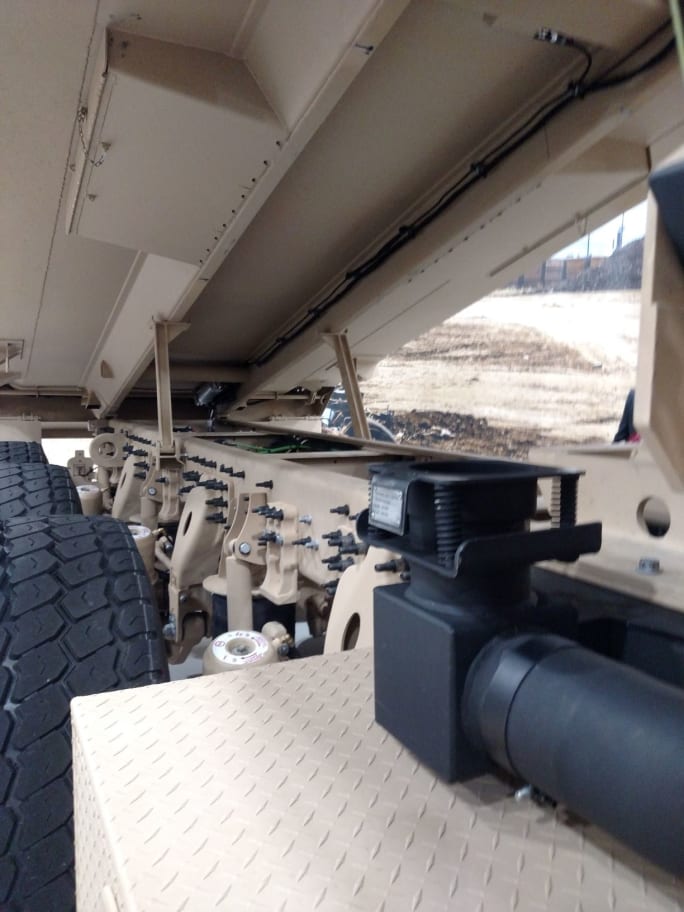
Exhaust gas can be diverted to compartments beneath the dump body’s floor to keep hot asphalt warm. Military trucks are exempt from U.S. emissions requirements because the Army uses high-sulfur fuel, so Mack MP8 diesels meet Euro 3 requirements but not the latest EPA limits.
Photo: Tom Berg
Crysteel is a supplier to Mack Defense, a subsidiary of Mack Trucks, in the contract for the heavy dump trucks, or HDTs. The five trucks delivered June 7 will undergo acceptance trials at the Army’s Aberdeen Test Center in Maryland.
In May 2017, the Army awarded Mack the M917A3 contract after reviewing its Granite-based proposal. Navistar Defense was an unsuccessful competitor for the work. Freightliner built M917A2 and A1 versions, but did not bid on this one, said Lt. Col. Jeffery Jurand, the Army’s program manager.
Mack will build the HDTs at its plant in Macungie, Pennsylvania. The initial $296 million contract is for 683 trucks plus development costs.
Aside from the Granite cab and chassis, civilian-type components include a Mack MP8-440 diesel, Allison 6-speed automatic transmission, Fabco 2-speed transfer case, and Meritor front- and rear-driving axles in an all-wheel-drive 8x8 configuration. Wheelbase is 243 inches.
Frame rails are 11.8 inches high and have full-length inserts. Gross vehicle weight rating is 94,500 pounds for an on-road payload of 27 tons. Some of the trucks will have armored cabs, which cut payload by 2.5 tons; they’re from JWF Defense in Johnstown, Pennsylvania. Standard and armored cabs can be switched in the field if necessary, Mack officials said.
Unit cost for an M917A3 heavy dump will be about $380,000 when the program is well along, Jurand said. The goal for full-rate production is October 2020, and it could run into 2025 with follow-on orders, said Dave Hartzell, president and CEO of Mack Defense, a Mack Trucks subsidiary.
Oh – like other modern, civilian-based trucks built for the military, the latest HDTs have air-conditioned cabs. That’s not to coddle young soldiers, but to allow them to button up the cabs against enemy gas attacks. The trucks will also have air-ride driver and passenger seats, which should reduce back injuries. So protection and comfort are sometimes comrades in today’s military, which is a world away from the Army I was in more than half a century ago.
More Blog Posts
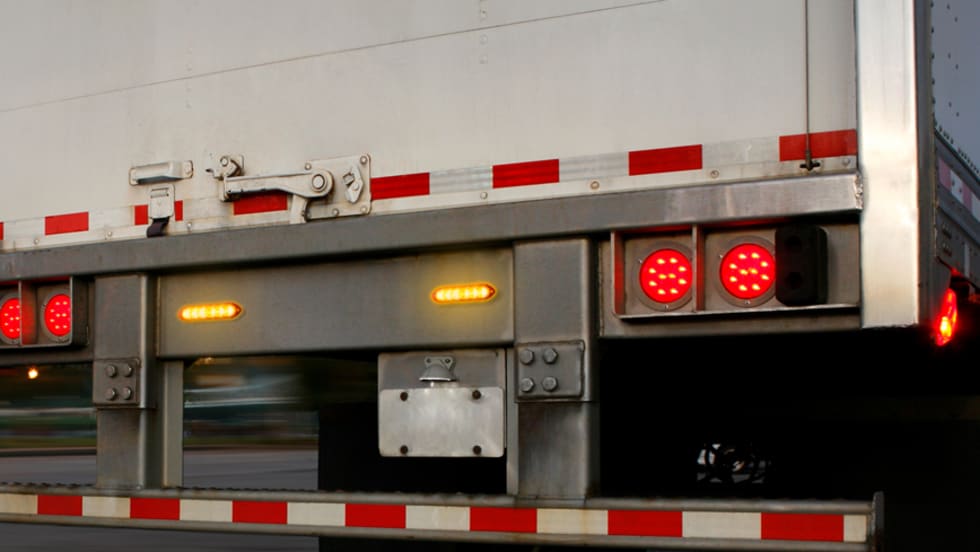
Pulsing Back-of-Trailer Lamps Aim to Prevent Crashes
Can the addition of a pulsing brake lamp on the back of a trailer prevent rear-end collisions? FMCSA seems to think so, if its exemptions are any indication.
Read More →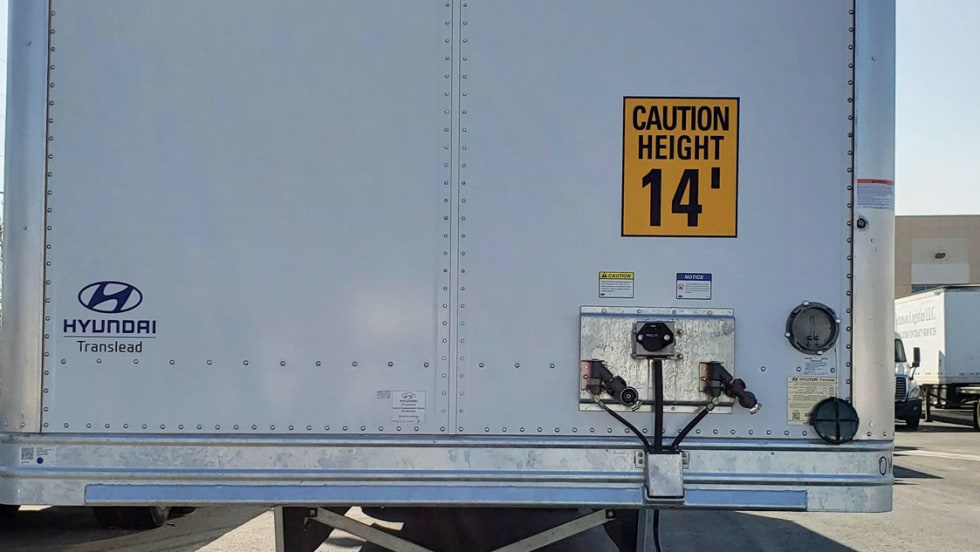
Designing a 14-Foot Trailer
Trailers are 13 feet, 6 inches high, right? Not for Hub Group, which developed a special 14-foot-high trailer spec for a dedicated customer based in California. Learn more in the Trailer Talk blog.
Read More →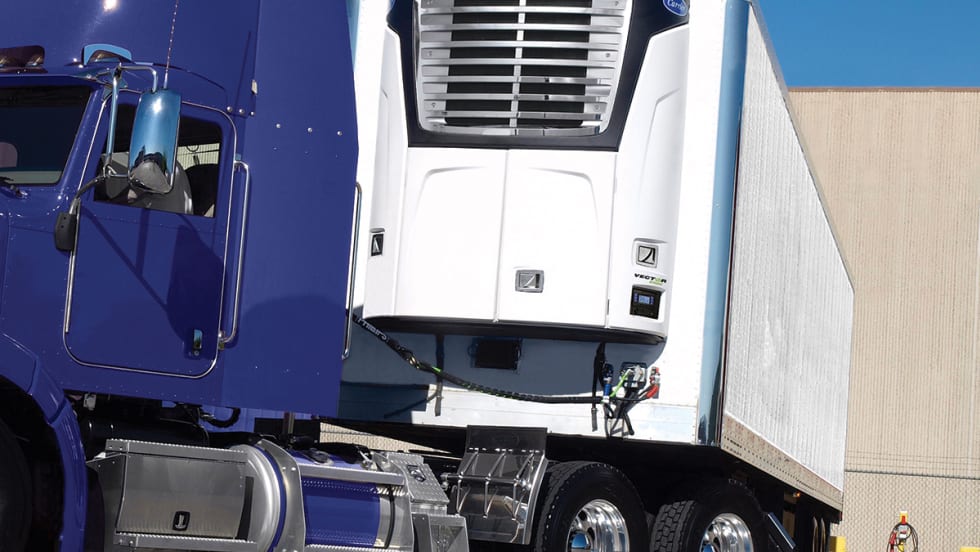
CARB Comes for Reefer Trailers
A new round of emissions control regulations decreed by the California Air Resource Board will begin affecting refrigerated trailer and TRU design and operations next year.
Read More →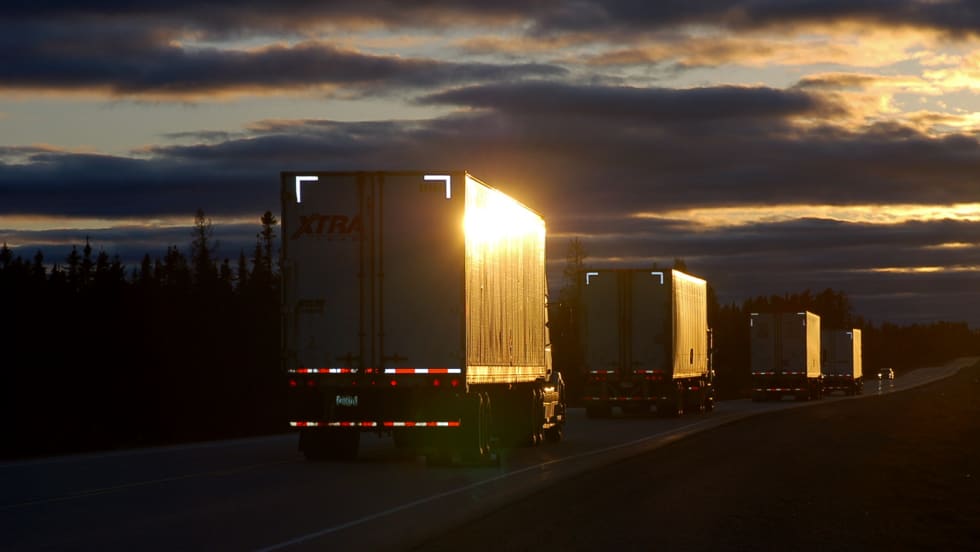
5 Ways Data Analysis Maximizes the Value of Trailer Telematics
Are you getting the most out of your trailer telematics investment?
Read More →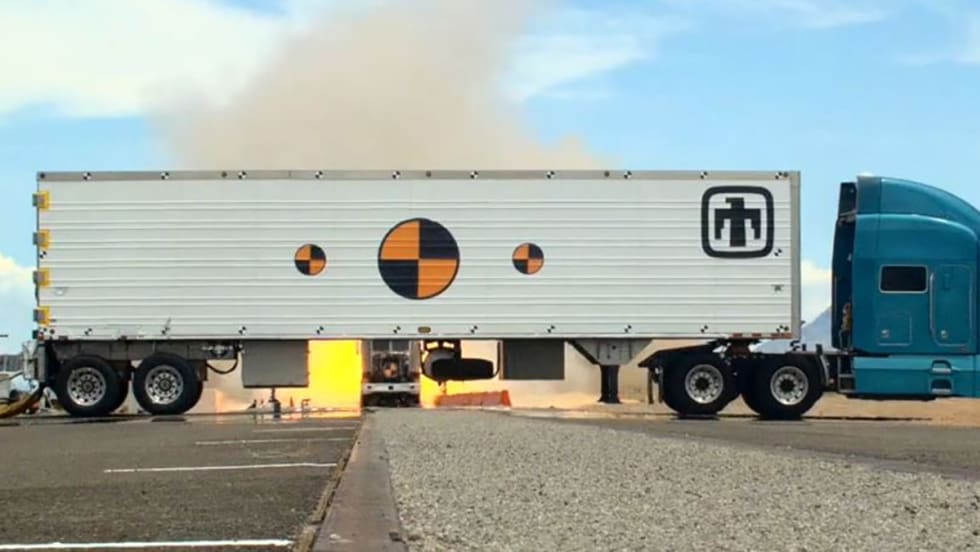
Can You Guess What's in That Trailer?
You don’t always know what’s in the trailers that pass you on the road. But some of those trailers are carrying something a little more dangerous that frozen food or new bedding…like, maybe, a nuclear weapon. But this isn’t an ordinary trailer; this is a trailer specifically made to not only carry this type of payload, but protect it at all costs.
Read More →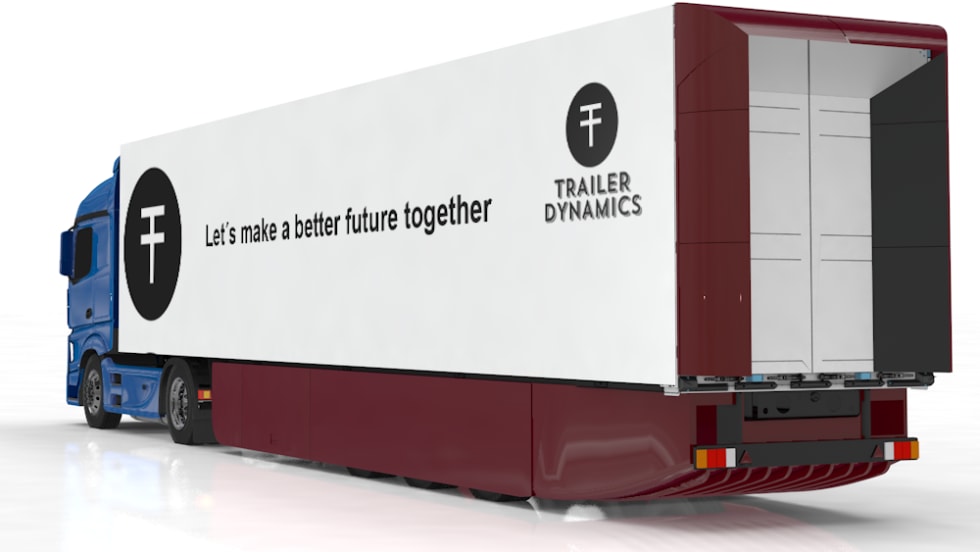
How Trailers Are Harnessing 'Free' Energy
Can trailers play a more active role in sustainable transport beyond aerodynamic add-ons or low-rolling-resistance tires? Some companies think so.
Read More →
Wrapping a Trailer for COVID’s Everyday Heroes
“We don’t only deliver freight. We deliver awareness.” That’s what Jim Barrett, president and CEO of Road Scholar Transport, likes to say about the Dunmore, Pennsylvania-based carrier’s “awareness fleet.” Its latest trailer wrap honors the everyday heroes of the pandemic.
Read More →
How a Tanker Fleet is Using Unorthodox Trailer Lighting to Fight Rear-End Collisions
Groendyke Transport watched the number of rear-end collisions with its trailers rise steadily until it tried an unorthodox and then unapproved method of alerting following drivers that its trucks were applying brakes and slowing down.
Read More →
The Role Trailers are Playing in COVID-19 Funerals
In places such as New York City and Detroit, overwhelmed hospitals and mortuaries are using refrigerated trailers to store the bodies of people killed by COVID-19.
Read More →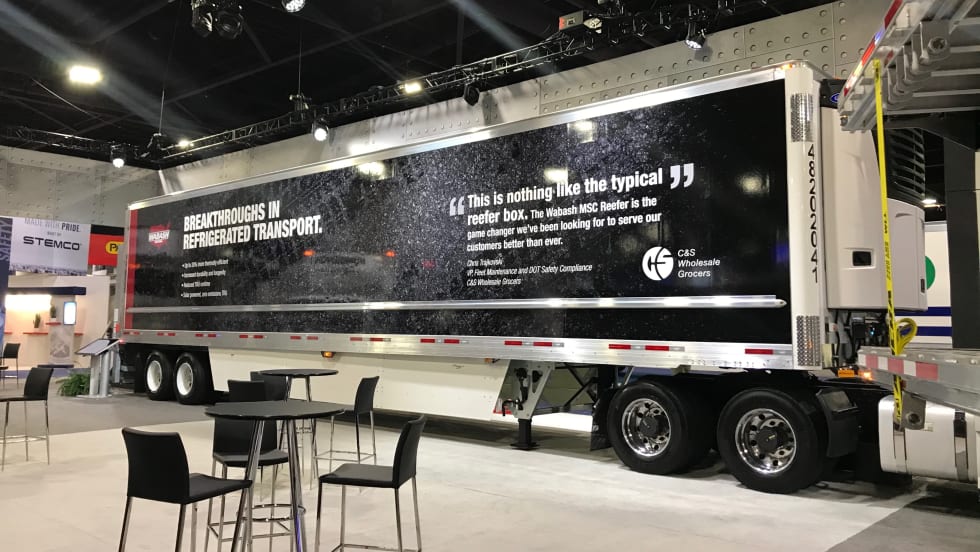
Reefer Trailer Aims to Help Reach Zero Emissions
Wabash National is partnering with C&S Wholesale Grocers to test a new type of zero-emissions refrigerated trailer.
Read More →