




Get to Know Hucktainers, Says Alcoa Fastening Systems
The compact Hucktainer has a head, sleeve and pintail, and is installed quickly with a special tool, clamping together the wall and sill materials and crimping off the excess length of the sleeve in a spiral-locking process.



What holds a trailer or truck body together? Various types of fasteners, usually rivets and threaded encapsulated types, depending on the body design and manufacturer.
There’s another device that Alcoa Fastening Systems wants us to know about: the Hucktainer. Akin to husky Huckbolts used to assemble truck frames, the Hucktainer is a compact item consisting of a head, sleeve and pintail. It’s installed quickly with a special tool, clamping together the wall and sill materials and crimping off the excess length of the sleeve in a spiral-locking process.
Here’s a YouTube video that shows the process:
The result is a high strength joint with consistent clamp that can be verified with simple visual inspection. Heavy zinc plating and available plastic encapsulation, along with an integral seal make the Hucktainer MC ideal for applications where corrosion and weather resistance are required, the company says.
There are two types of Hucktainers: the Standard for fiberglass-reinforced plywood walls and the new MC, for use in the increasingly popular metal clad walls in dry vans, according to James Wollard Jr., a design engineer at Alcoa Fastening Systems.
The MC accommodates thinner “stackups” of metal-and-foam sandwich materials for walls. Like the original standard type, the Hucktainer MC provides strength and vibration resistance, but in walls as thin as 3/16 (0.817) inch. The steel sleeve’s diameter is 3/8 inch.
“The Standard Hucktainer is currently being used by Great Dane in FRP trailers and by Utilimaster in truck bodies,” Wollard said in an email. “Some other trailer and truck body manufacturers that are currently using the standard HLP are as follows: Hyundai, Manac, Strick, Utility, Stoughton, Wabash, and Wilson.”
How many are used in a typical van? Wollard said 280 for a truck body and about 500 in a 53-foot trailer. Go count ‘em.
More Blog Posts

Pulsing Back-of-Trailer Lamps Aim to Prevent Crashes
Can the addition of a pulsing brake lamp on the back of a trailer prevent rear-end collisions? FMCSA seems to think so, if its exemptions are any indication.
Read More →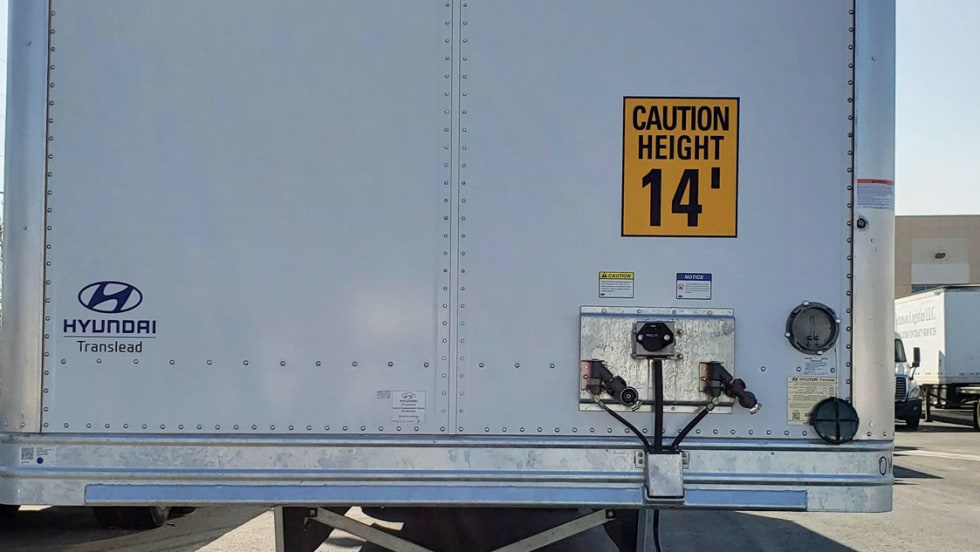
Designing a 14-Foot Trailer
Trailers are 13 feet, 6 inches high, right? Not for Hub Group, which developed a special 14-foot-high trailer spec for a dedicated customer based in California. Learn more in the Trailer Talk blog.
Read More →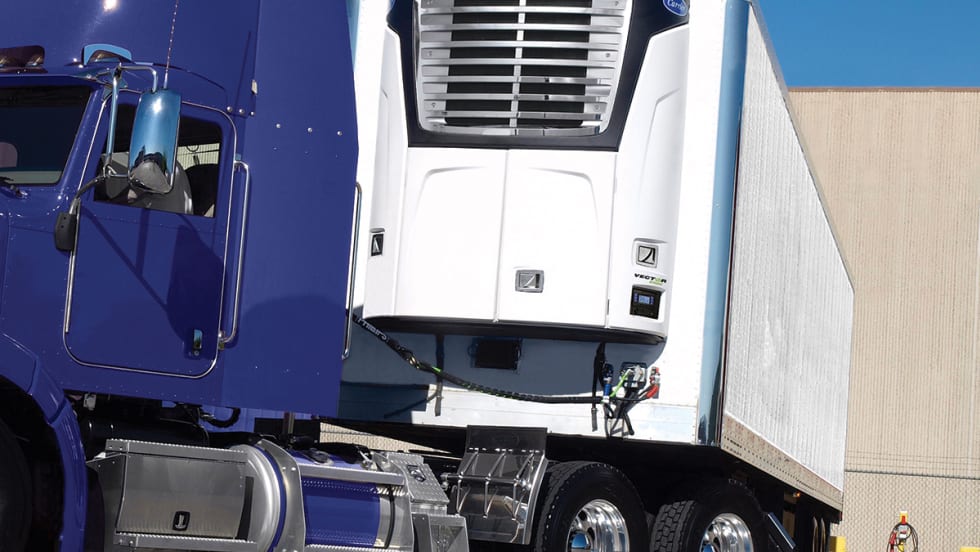
CARB Comes for Reefer Trailers
A new round of emissions control regulations decreed by the California Air Resource Board will begin affecting refrigerated trailer and TRU design and operations next year.
Read More →
5 Ways Data Analysis Maximizes the Value of Trailer Telematics
Are you getting the most out of your trailer telematics investment?
Read More →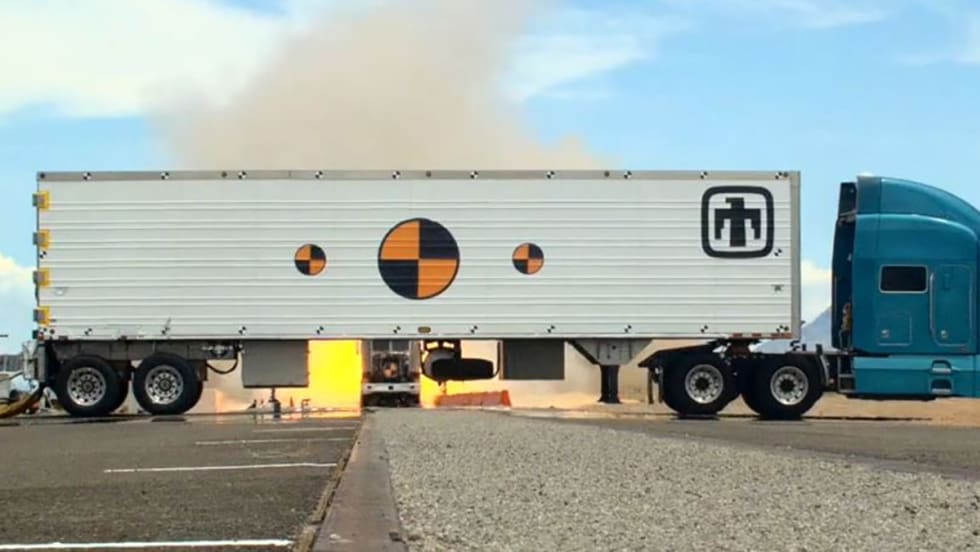
Can You Guess What's in That Trailer?
You don’t always know what’s in the trailers that pass you on the road. But some of those trailers are carrying something a little more dangerous that frozen food or new bedding…like, maybe, a nuclear weapon. But this isn’t an ordinary trailer; this is a trailer specifically made to not only carry this type of payload, but protect it at all costs.
Read More →
How Trailers Are Harnessing 'Free' Energy
Can trailers play a more active role in sustainable transport beyond aerodynamic add-ons or low-rolling-resistance tires? Some companies think so.
Read More →
Wrapping a Trailer for COVID’s Everyday Heroes
“We don’t only deliver freight. We deliver awareness.” That’s what Jim Barrett, president and CEO of Road Scholar Transport, likes to say about the Dunmore, Pennsylvania-based carrier’s “awareness fleet.” Its latest trailer wrap honors the everyday heroes of the pandemic.
Read More →
How a Tanker Fleet is Using Unorthodox Trailer Lighting to Fight Rear-End Collisions
Groendyke Transport watched the number of rear-end collisions with its trailers rise steadily until it tried an unorthodox and then unapproved method of alerting following drivers that its trucks were applying brakes and slowing down.
Read More →
The Role Trailers are Playing in COVID-19 Funerals
In places such as New York City and Detroit, overwhelmed hospitals and mortuaries are using refrigerated trailers to store the bodies of people killed by COVID-19.
Read More →
Reefer Trailer Aims to Help Reach Zero Emissions
Wabash National is partnering with C&S Wholesale Grocers to test a new type of zero-emissions refrigerated trailer.
Read More →