





Related: A Fruehauf Lowboy Carried Palomar Observatory's Mirror
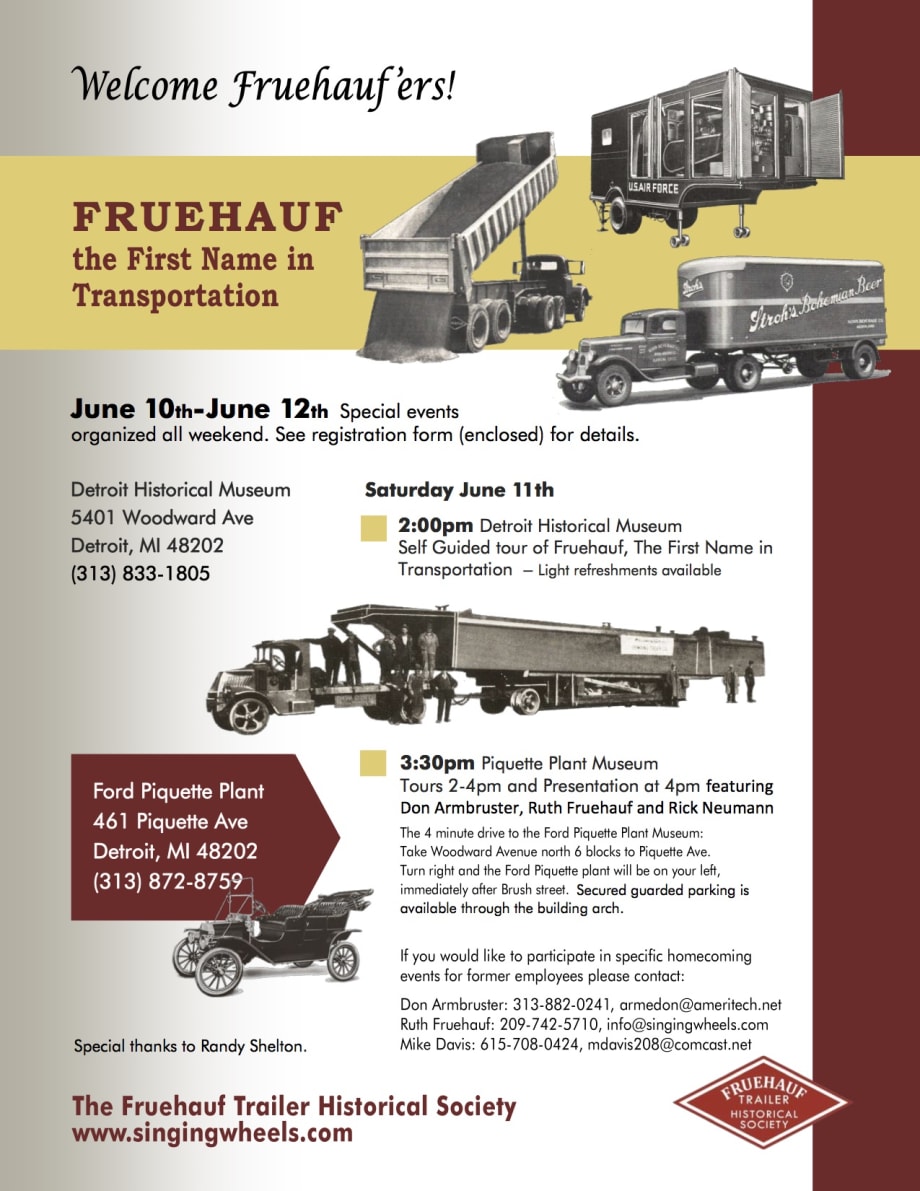
Fruehauf Trailer Reunion Set for Next Month in Detroit
Ruth Fruehauf continues her "Singing Wheels" efforts to preserve the trailer builder's history. Enthusiasts are invited to the event, honoring the long-gone company and its people.
May 5, 2016
2 min to read
Students of trucking history are well aware of Fruehauf trailers, as that Detroit-based company once dominated the industry. They know the story of its origin by August Fruehauf, as recalled last year by his granddaughter, Ruth:
“It has been 101 years since Frederick M. Sibley, a Michigan lumber tycoon, walked into August Fruehauf’s blacksmith shop in Detroit with a problem. Sibley had an 18-foot boat he needed to haul to his summer cottage. He’d put the boat on a wagon, and he wanted to use his Model T Ford instead of a horse team to pull it. Could that be done?
“Fruehauf talked it over with his partner, Otto Neumann, and they came up with a solution: Remove the back-seat portion of the T’s body and install a swivel-type hitch that would support the nose of the trailer. That, according to industrial history, was the world’s first semitrailer (and probably the first truck-tractor).”
By the early 1980s, Fruehauf was the biggest trailer builder, with plants around the country making many different type of vehicles. Within a few years it failed, the victim of friction among top managers and a financial attack by an outside investor. Ruth Fruehauf tells that story and many others in her book, “Singing Wheels,” a history of the company. That’s also the title of a website she set up, www.singingwheels.org.
She’s further maintaining interest in the company with special events, starting with a photo display at a Detroit museum last year. Next month, she's organized a reunion, also in the Motor City. She just sent a notice about it:
“Please join us for a weekend series of events commemorating the Fruehauf Trailer Company. We have over 75 out of towners who have already registered to return to Detroit.
“A homecoming reunion has been planned marked by a private lunch and tour of the former headquarters on Harper Avenue in Detroit followed by a group dinner at Sindbads Seafood Restaurant on the Detroit River.
“Saturday's events are open to anyone who is a Fruehauf Trailer history enthusiast. Please see the attached information for more details. We are hoping to confirm some additional exciting events, like a tour of Comerica Park, home of the Detroit Tigers along with special guest speakers, restored Fruehauf trailers and other excitement."
You can register online at http://www.singingwheels.com/store/c8/EVENTS.html.
I told Ruth that I will try to be there. You might want to also.
Topics:Trucking History
Subscribe to Our Newsletter
More Blog Posts

Pulsing Back-of-Trailer Lamps Aim to Prevent Crashes
Can the addition of a pulsing brake lamp on the back of a trailer prevent rear-end collisions? FMCSA seems to think so, if its exemptions are any indication.
Read More →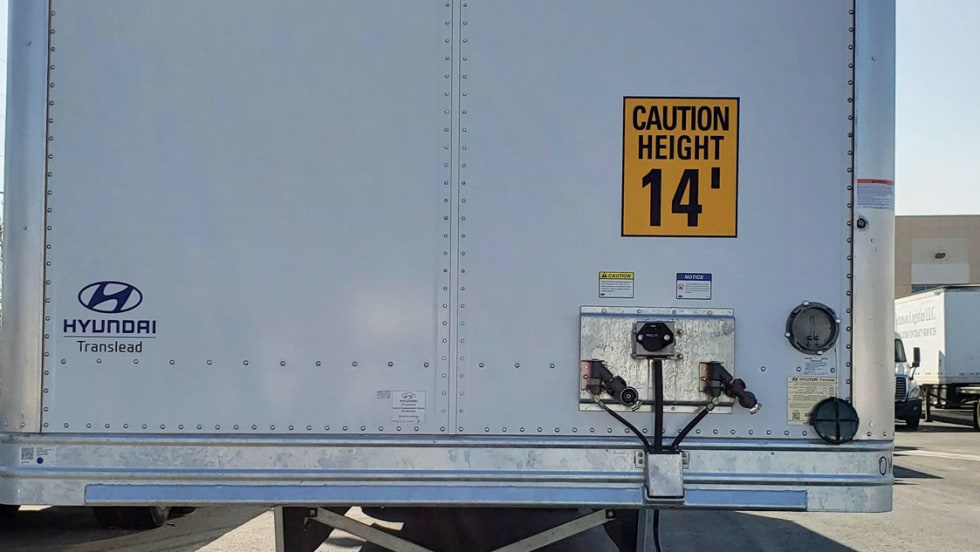
Designing a 14-Foot Trailer
Trailers are 13 feet, 6 inches high, right? Not for Hub Group, which developed a special 14-foot-high trailer spec for a dedicated customer based in California. Learn more in the Trailer Talk blog.
Read More →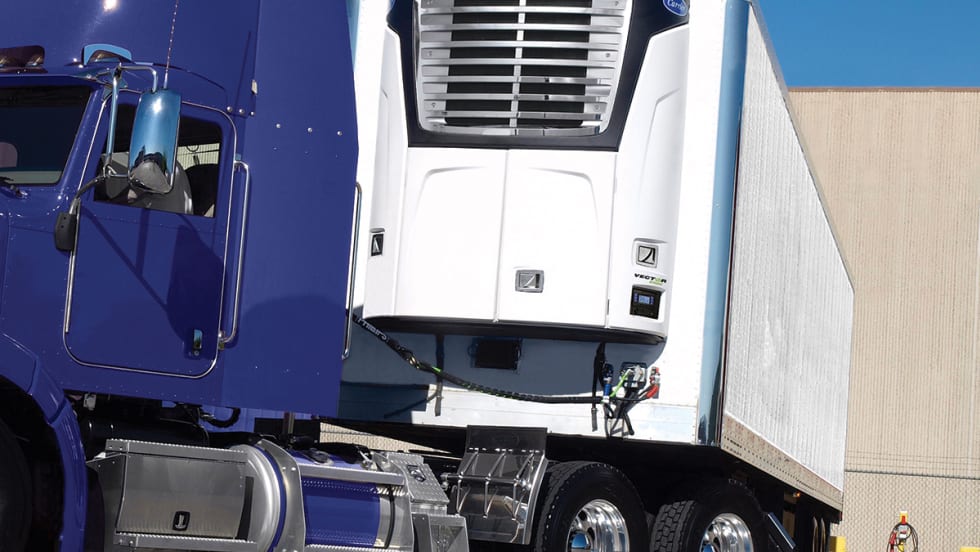
CARB Comes for Reefer Trailers
A new round of emissions control regulations decreed by the California Air Resource Board will begin affecting refrigerated trailer and TRU design and operations next year.
Read More →
5 Ways Data Analysis Maximizes the Value of Trailer Telematics
Are you getting the most out of your trailer telematics investment?
Read More →
Can You Guess What's in That Trailer?
You don’t always know what’s in the trailers that pass you on the road. But some of those trailers are carrying something a little more dangerous that frozen food or new bedding…like, maybe, a nuclear weapon. But this isn’t an ordinary trailer; this is a trailer specifically made to not only carry this type of payload, but protect it at all costs.
Read More →
How Trailers Are Harnessing 'Free' Energy
Can trailers play a more active role in sustainable transport beyond aerodynamic add-ons or low-rolling-resistance tires? Some companies think so.
Read More →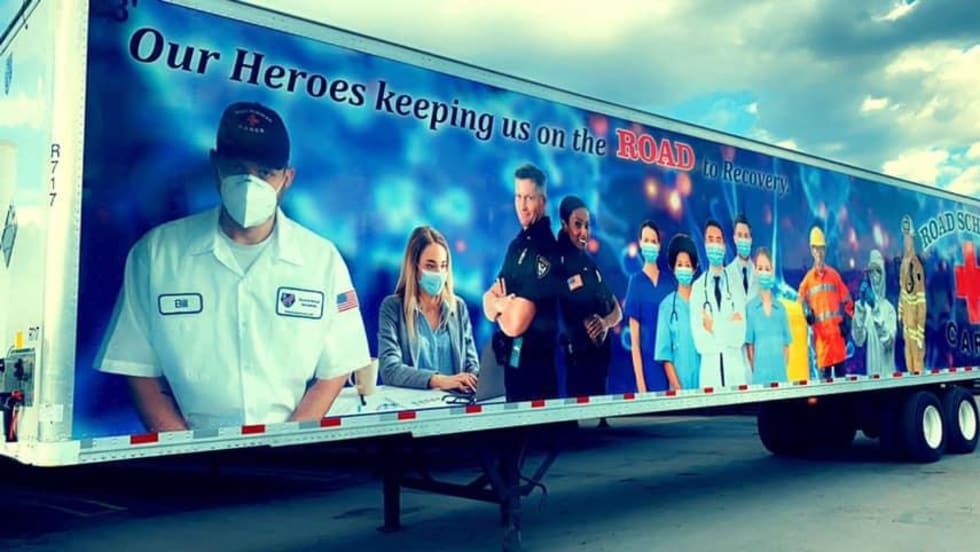
Wrapping a Trailer for COVID’s Everyday Heroes
“We don’t only deliver freight. We deliver awareness.” That’s what Jim Barrett, president and CEO of Road Scholar Transport, likes to say about the Dunmore, Pennsylvania-based carrier’s “awareness fleet.” Its latest trailer wrap honors the everyday heroes of the pandemic.
Read More →
How a Tanker Fleet is Using Unorthodox Trailer Lighting to Fight Rear-End Collisions
Groendyke Transport watched the number of rear-end collisions with its trailers rise steadily until it tried an unorthodox and then unapproved method of alerting following drivers that its trucks were applying brakes and slowing down.
Read More →
The Role Trailers are Playing in COVID-19 Funerals
In places such as New York City and Detroit, overwhelmed hospitals and mortuaries are using refrigerated trailers to store the bodies of people killed by COVID-19.
Read More →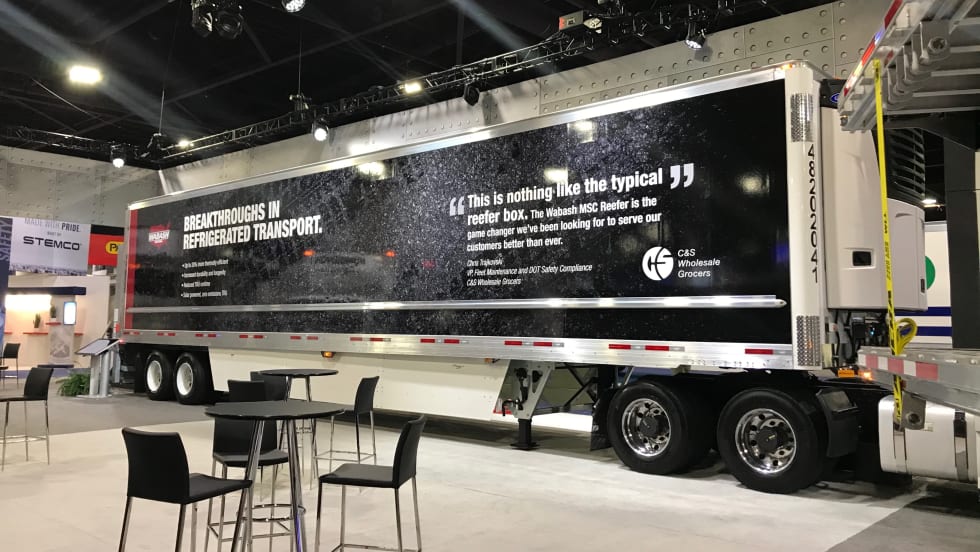
Reefer Trailer Aims to Help Reach Zero Emissions
Wabash National is partnering with C&S Wholesale Grocers to test a new type of zero-emissions refrigerated trailer.
Read More →