




Forget the evils of CO2. It's actually an environmentally safe refrigerant, Carrier says
The way that environmentalists bad-mouth carbon dioxide, it should be a four-letter word. Of course it is abbreviated to three characters - CO2.
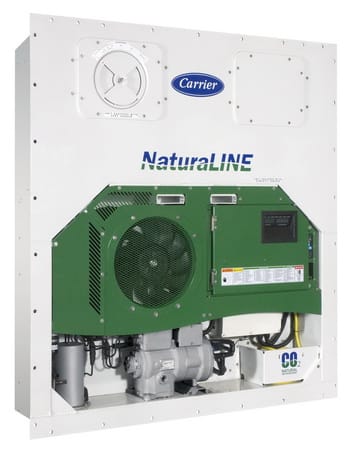
First NaturaLine units will be for use in temperature-controlled sea containers. Later, the CO2 concept might be used in trailer reefers.
The way that environmentalists bad-mouth carbon dioxide, it should be a four-letter word. Of course it is abbreviated to three characters - CO2.
High concentrations of it in the atmosphere since the advent of the Industrial Revolution are accused of contributing to global warming. So clean-air authorities have begun regulating it, with limits on truck engines beginning in 2014.
But there's a very good side to CO2, says Carrier Transicold. Aside from putting the bubbles in champagne and soft drinks, the gas occurs naturally: Among other things, we mammals exhale it.
And CO2 is a decent refrigerant, called R-744. If leaked, its environmental effects are neutral, and it is said to have a global warming potential, or GWP, of one.
By comparison, synthetic compounds like R-134a and R-404A have GWPs of 1,300 and 3,260, respectively. R-12, also called CFC-12 and best known as Freon, has a GWP of 8,050; it was banned after scientists found that when vented, it was depleting the earth's ozone layer, which protects us from the sun's ultraviolet rays.
Carrier uses CO2 recycled from the atmosphere for refrigerant cooling, so it adds no new environmental risk, the company said in a statement. In other words, the CO2 is there, no harm is done in harnessing it for refrigeration, and it makes immense sense to do so.
"We have an ongoing commitment to apply refrigerant alternatives that minimize environmental impact while serving customer needs," said David Appel, president of Carrier Transicold. "That's why the goal of the NaturaLine container unit and the CO2 concept trailer programs is to significantly reduce the global environmental impact, and improve energy efficiency at the same time."
Following success with carbon dioxide stationary cooling in Europe, Carrier began testing CO2 in a new series of transport refrigeration units called NaturaLine. The reefers are for ocean containers. That's the application now because steamship lines are under pressure from authorities in Europe to clean up their operations.
In three voyages by Hapag-Lloyd, a major steamship line, the concept proved sound. Now the NaturaLine reefers are entering additional sea trials, the company announced at an intermodal trade show in Hamburg, Germany, a few weeks ago. If successful, they'll be marketed worldwide, and trailer reefer units using CO2 may follow.
Mechanically the new units have "transcritical" distinctions from existing products to deal with CO2's special thermodynamic properties. This includes a new purpose-built multi-stage compressor, a "gas cooler" with a wrap-around coil design, multi-speed fans, and a flash tank. At light loads, the compressor can run on just one cylinder while the other cylinder is idled.
Otherwise the NaturaLine design is similar to Carrier's PrimeLine units, which have low on-board power generation requirements. That saves fuel for shipping companies. The basic frame, the evaporator and evaporator fans, and the controller and control box are virtually identical to existing models, the company said. The control interface is the same, but with new alarm and function codes, and servicing will be similar.
So, next time you hear CO2 being described in sky-is-falling terms, remember the refrigerant alternatives and breathe deeply.
More Blog Posts
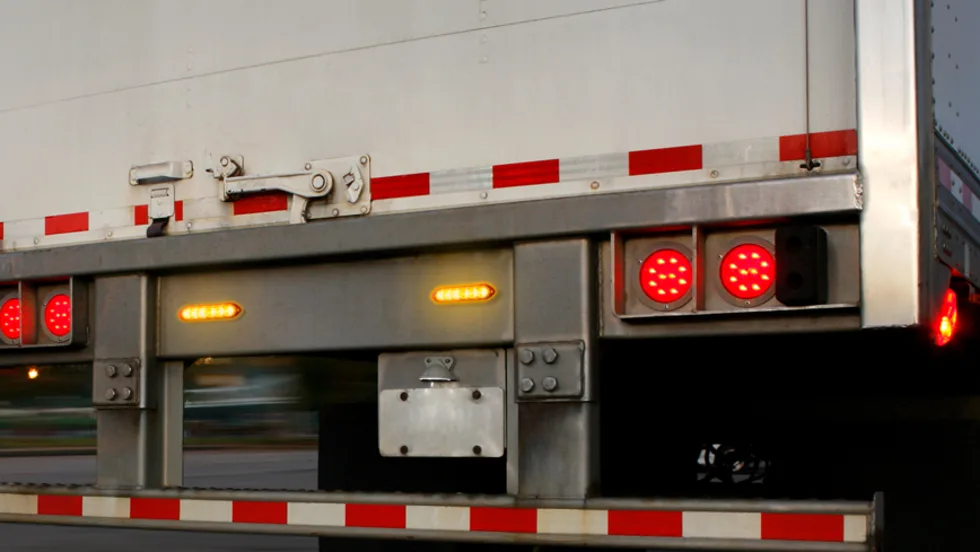
Pulsing Back-of-Trailer Lamps Aim to Prevent Crashes
Can the addition of a pulsing brake lamp on the back of a trailer prevent rear-end collisions? FMCSA seems to think so, if its exemptions are any indication.
Read More →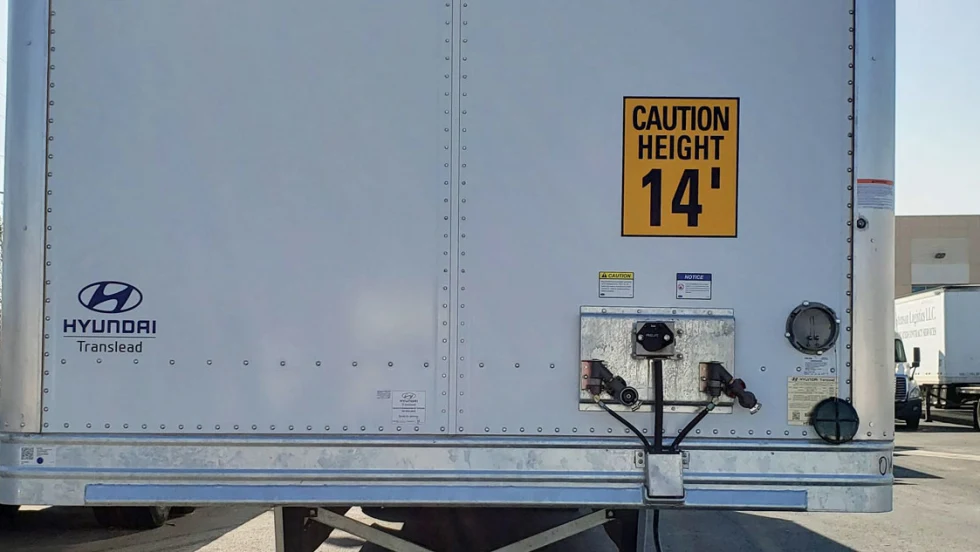
Designing a 14-Foot Trailer
Trailers are 13 feet, 6 inches high, right? Not for Hub Group, which developed a special 14-foot-high trailer spec for a dedicated customer based in California. Learn more in the Trailer Talk blog.
Read More →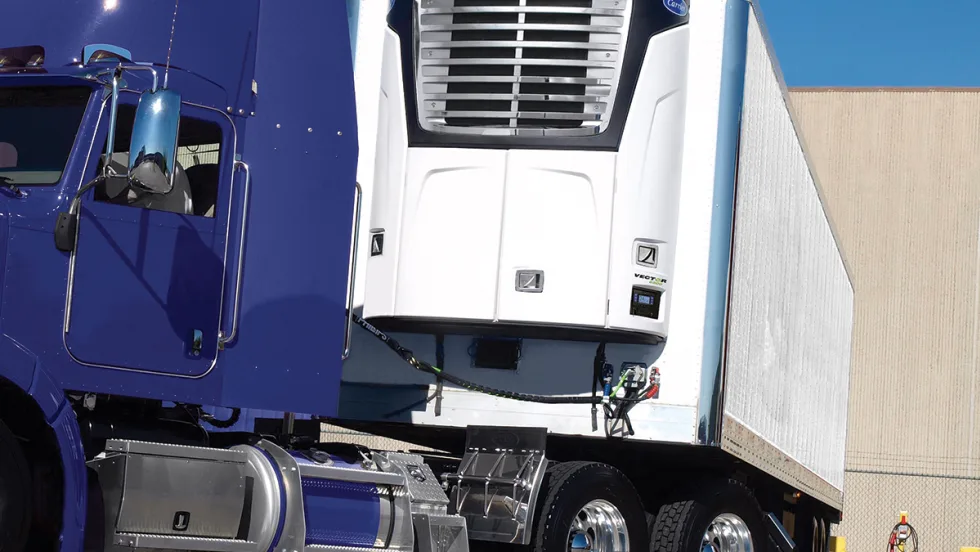
CARB Comes for Reefer Trailers
A new round of emissions control regulations decreed by the California Air Resource Board will begin affecting refrigerated trailer and TRU design and operations next year.
Read More →
5 Ways Data Analysis Maximizes the Value of Trailer Telematics
Are you getting the most out of your trailer telematics investment?
Read More →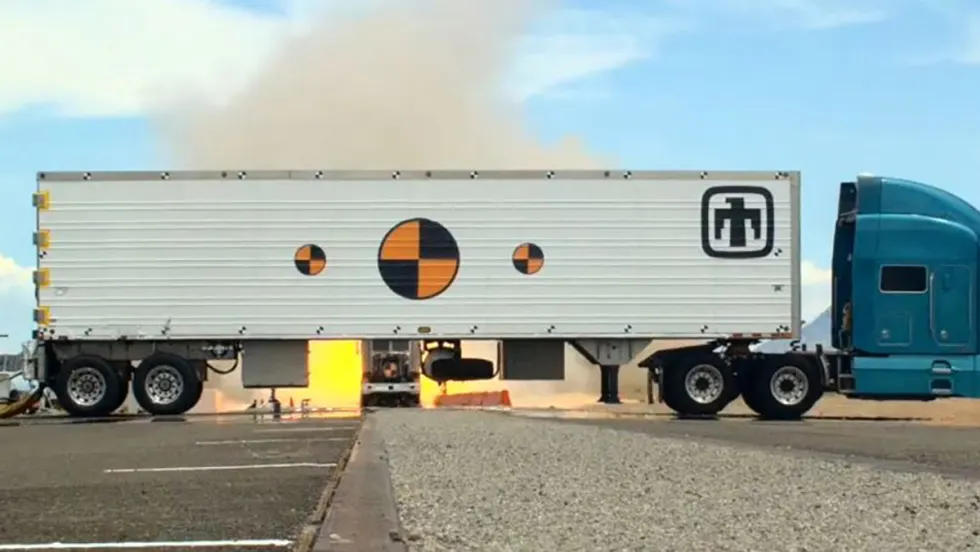
Can You Guess What's in That Trailer?
You don’t always know what’s in the trailers that pass you on the road. But some of those trailers are carrying something a little more dangerous that frozen food or new bedding…like, maybe, a nuclear weapon. But this isn’t an ordinary trailer; this is a trailer specifically made to not only carry this type of payload, but protect it at all costs.
Read More →
How Trailers Are Harnessing 'Free' Energy
Can trailers play a more active role in sustainable transport beyond aerodynamic add-ons or low-rolling-resistance tires? Some companies think so.
Read More →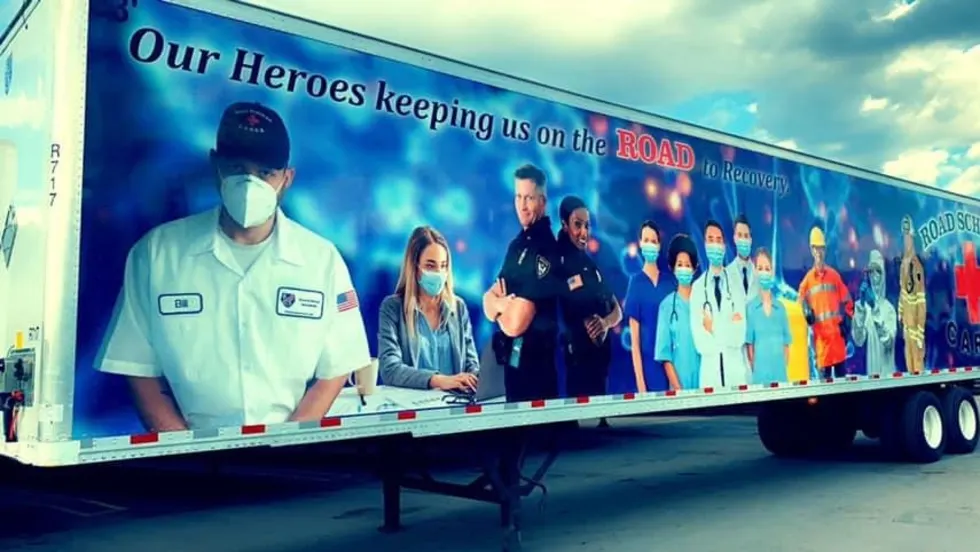
Wrapping a Trailer for COVID’s Everyday Heroes
“We don’t only deliver freight. We deliver awareness.” That’s what Jim Barrett, president and CEO of Road Scholar Transport, likes to say about the Dunmore, Pennsylvania-based carrier’s “awareness fleet.” Its latest trailer wrap honors the everyday heroes of the pandemic.
Read More →
How a Tanker Fleet is Using Unorthodox Trailer Lighting to Fight Rear-End Collisions
Groendyke Transport watched the number of rear-end collisions with its trailers rise steadily until it tried an unorthodox and then unapproved method of alerting following drivers that its trucks were applying brakes and slowing down.
Read More →
The Role Trailers are Playing in COVID-19 Funerals
In places such as New York City and Detroit, overwhelmed hospitals and mortuaries are using refrigerated trailers to store the bodies of people killed by COVID-19.
Read More →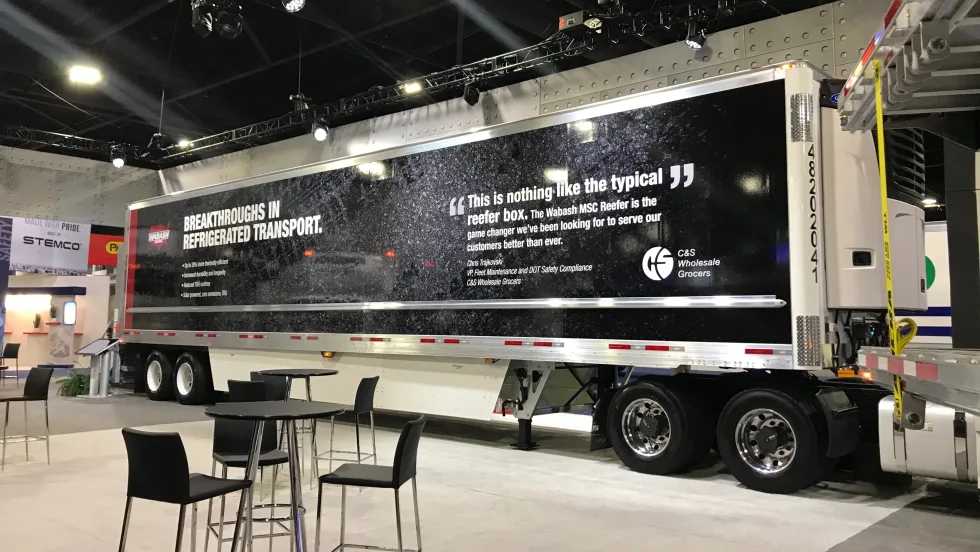
Reefer Trailer Aims to Help Reach Zero Emissions
Wabash National is partnering with C&S Wholesale Grocers to test a new type of zero-emissions refrigerated trailer.
Read More →