




Fairings Over Tractor's Tandem Save Fuel for Tanker Fleet
Stainless steel tanker trailers look smooth enough to easily slip through the air, but they have characteristics that cause drag. One fleet has turned to an aero system for the tractor tandems to help smooth the air flow over the trailer.

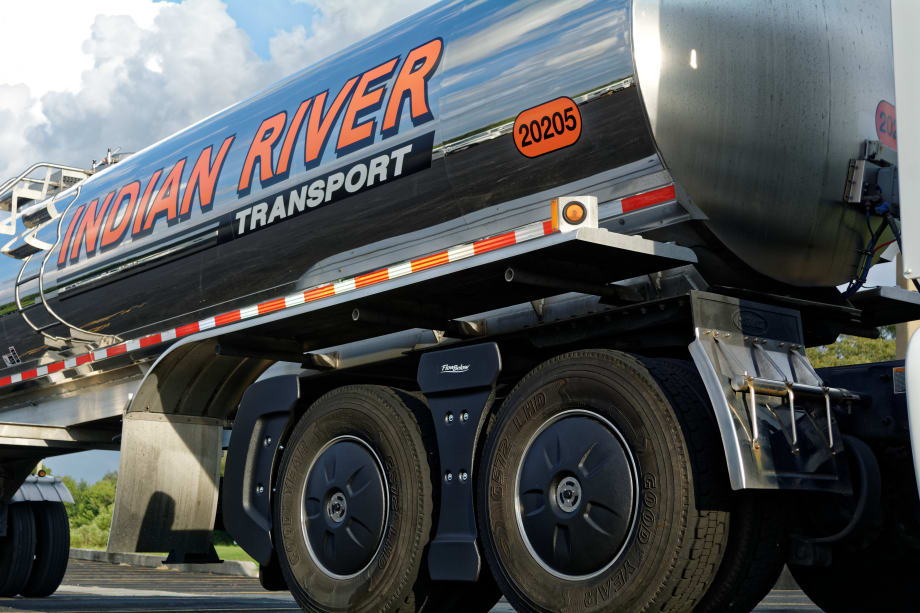
Wheel covers and fairings between and behind the tractor tandem's wheels reduce turbulance and save fuel.
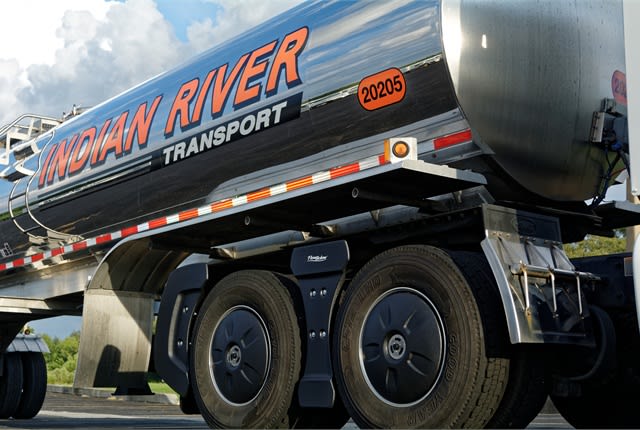
Wheel covers and fairings between and behind the tractor tandem's wheels reduce turbulance and save fuel.
Stainless steel tanker trailers look smooth enough to easily slip through the air, but they have characteristics that cause drag: an inevitable gap behind the tractor and ahead of the tank's nose, where turbulence forms, plus fenders, walkways and ladders that grab at the air.
Indian River Transport, a large Florida-based transporter of food-grade commodities whose rigs run in 48 states as well as Canada and Mexico, has about 800 of these tankers, mostly Walkers, along with 650 tractors. Like all economy-minded managers, the fleet’s executives look for ways to save fuel, and found one with a new product from FlowBelow Aero.
The device includes quick-release wheel covers and a pair of fairings installed between and behind the wheels of a tractor’s tandem. They control the complex airflow around the otherwise exposed wheels, and beneath the trailer's forward fenders. FlowBelow said its testing showed the patented AeroKit system reduces aerodynamic drag and improves fuel efficiency of a rig by 2.23%.
Indian River’s own in-service tests on four tractors showed even better results: more than 3% higher fuel economy versus tractors without the kits, said Mark Gressett, the fleet's safety director.
“We tested the AeroKit in our fleet for over seven months, starting in January specifically to test the product’s winter durability and performance,” he said, noting that there are limited options for improving the aerodynamic performance of a tanker trailer. “We were impressed with the product’s durability, ease of use, fuel efficiency performance of over 3% and investment payback in less than one year.”
Indian River has begun installing the kits on other tractors, and if they continue to prove out, they'll probably be completely phased in, Gressett said. An AeroKit retails for $1,800, but with volume pricing the fleet is paying less than that.
Controlling air flow should also reduce water spray and improve visibility, but for Indian River “the main thing is the fuel economy,” he said. “We found it worthwhile. It exceeded our expectations.”
FlowBelow, in Austin, Texas, was founded by mechanical and aerospace engineers, Josh Butler and Kyle Walker, the company said. Their product development process includes advanced computational fluid dynamics modeling and extensive interaction with fleet mechanics and drivers to ensure the products provide utility, efficiency, and profitability.
More Blog Posts
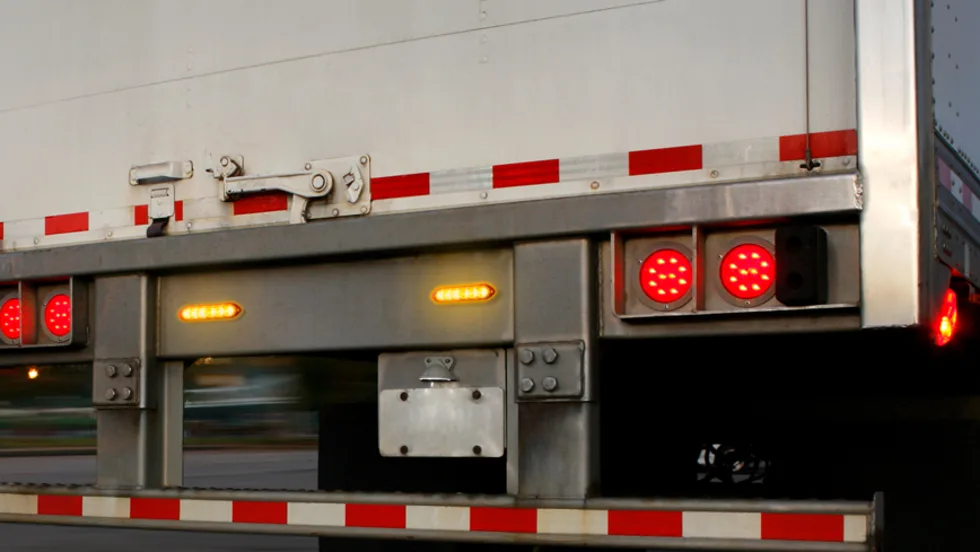
Pulsing Back-of-Trailer Lamps Aim to Prevent Crashes
Can the addition of a pulsing brake lamp on the back of a trailer prevent rear-end collisions? FMCSA seems to think so, if its exemptions are any indication.
Read More →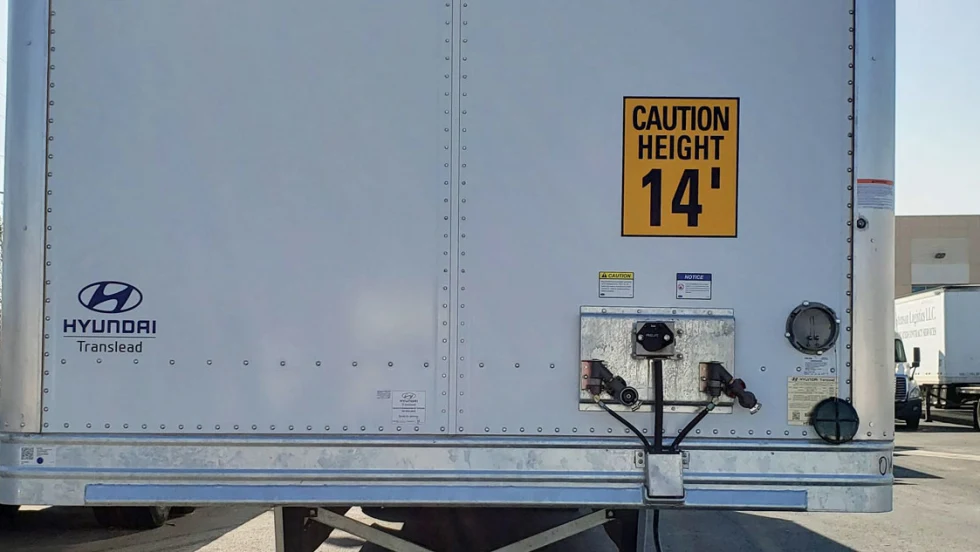
Designing a 14-Foot Trailer
Trailers are 13 feet, 6 inches high, right? Not for Hub Group, which developed a special 14-foot-high trailer spec for a dedicated customer based in California. Learn more in the Trailer Talk blog.
Read More →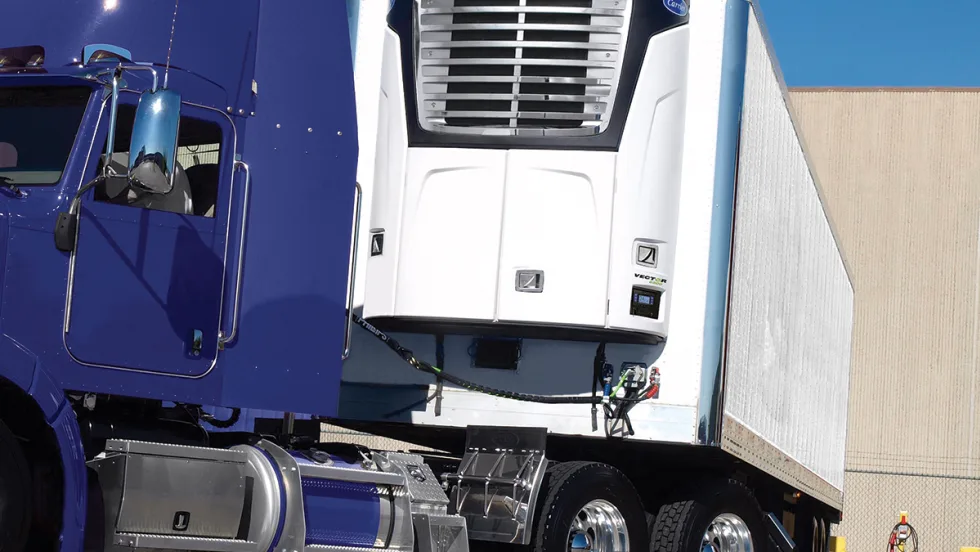
CARB Comes for Reefer Trailers
A new round of emissions control regulations decreed by the California Air Resource Board will begin affecting refrigerated trailer and TRU design and operations next year.
Read More →
5 Ways Data Analysis Maximizes the Value of Trailer Telematics
Are you getting the most out of your trailer telematics investment?
Read More →
Can You Guess What's in That Trailer?
You don’t always know what’s in the trailers that pass you on the road. But some of those trailers are carrying something a little more dangerous that frozen food or new bedding…like, maybe, a nuclear weapon. But this isn’t an ordinary trailer; this is a trailer specifically made to not only carry this type of payload, but protect it at all costs.
Read More →
How Trailers Are Harnessing 'Free' Energy
Can trailers play a more active role in sustainable transport beyond aerodynamic add-ons or low-rolling-resistance tires? Some companies think so.
Read More →
Wrapping a Trailer for COVID’s Everyday Heroes
“We don’t only deliver freight. We deliver awareness.” That’s what Jim Barrett, president and CEO of Road Scholar Transport, likes to say about the Dunmore, Pennsylvania-based carrier’s “awareness fleet.” Its latest trailer wrap honors the everyday heroes of the pandemic.
Read More →
How a Tanker Fleet is Using Unorthodox Trailer Lighting to Fight Rear-End Collisions
Groendyke Transport watched the number of rear-end collisions with its trailers rise steadily until it tried an unorthodox and then unapproved method of alerting following drivers that its trucks were applying brakes and slowing down.
Read More →
The Role Trailers are Playing in COVID-19 Funerals
In places such as New York City and Detroit, overwhelmed hospitals and mortuaries are using refrigerated trailers to store the bodies of people killed by COVID-19.
Read More →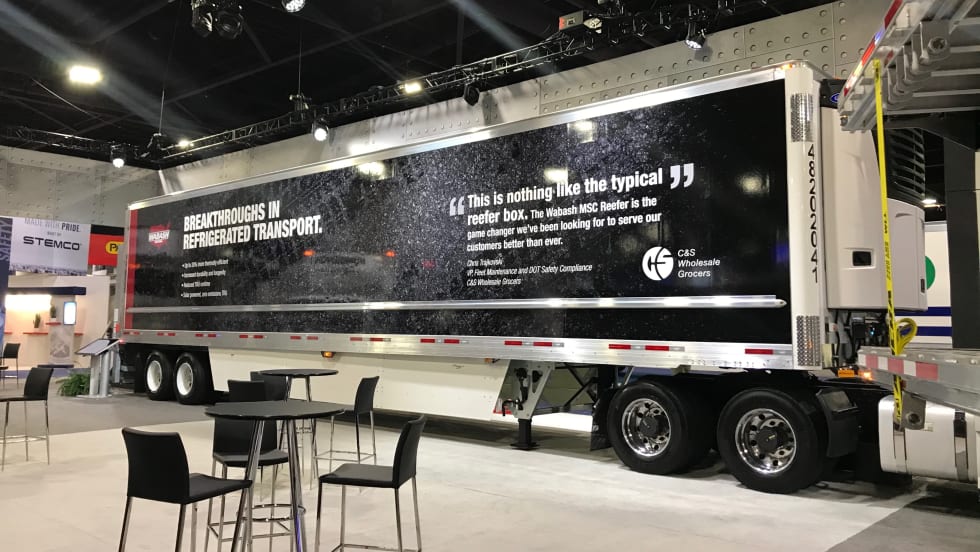
Reefer Trailer Aims to Help Reach Zero Emissions
Wabash National is partnering with C&S Wholesale Grocers to test a new type of zero-emissions refrigerated trailer.
Read More →