





Related: Like Late-Blooming Perennials, Trucks and Tractor-Trailers Appear for the Harvest
End Dump Plays the Middle Man in Grain Transfer Operation
A big two-wheel field cart has brought beans directly to a silo but needed the semi to dump them into an auger. Blog commentary by Tom Berg, Senior Contributing Editor
November 8, 2017
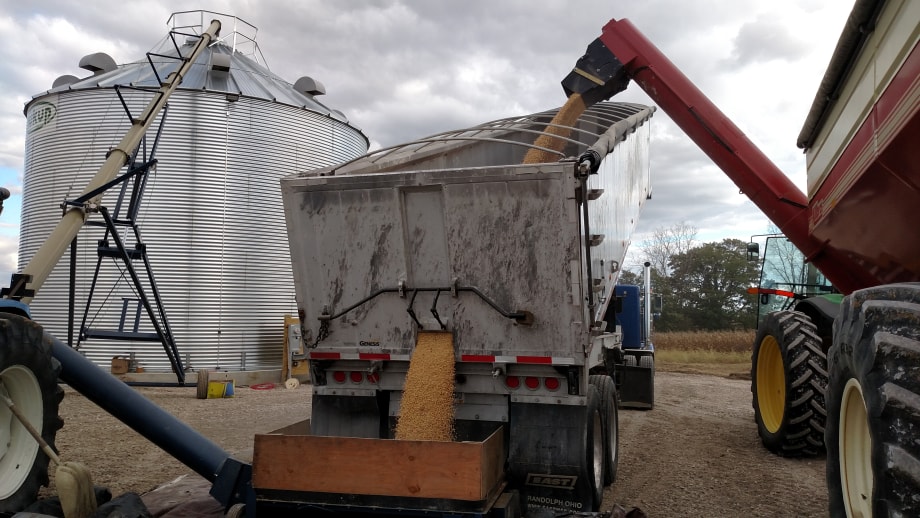
Soybeans move from Killbros field cart (right) into East end dump and then into a silo for storage. Photos: Tom Berg
3 min to read
Soybeans move from Killbros field cart (right) into East end dump and then into a silo for storage. Photos: Tom Berg
The harvest is coming in, and that brings out interesting trucks and trailers that haven’t seen service in almost a year. Seeing them scurrying up and down highways and county roads, and venturing into the fields to take on loads of the grains that go into the foods we eat, is as much a part of autumn as falling leaves, shorter days, and chillier air – to me, anyway.
A couple of weeks ago I spotted an activity that I’d not seen before: a three-stage method of transferring beans to a silo using a series of vehicles and augers. In the middle of the equipment group was an end-dump trailer acting as a chute. This was northeast of Delaware, in central Ohio, where I live. I pulled my car into a gravelly silo yard to shoot some photos and chat with the young farmer who was running things.
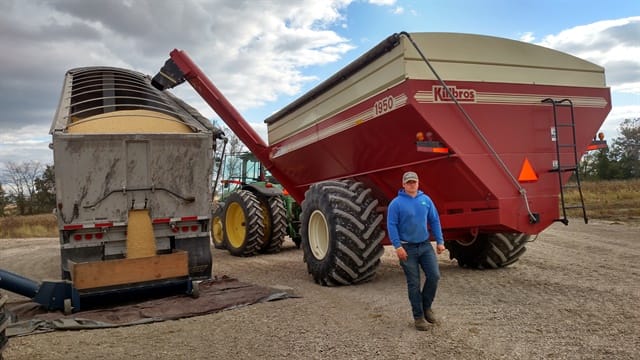
Farmer Nick walks up to greet a city boy with a camera and explain what's going on here. When loaded to its gills, the big Killbros 1950 can weigh more than 47,000 pounds.
His name was Nick, and he said his family farms about 2,400 nearby acres, including the adjacent field that this year was planted with soybeans (in standard crop rotation practice, the previous year it grew corn). He explained that bringing the big two-wheel cart to the silo yard was faster than taking the semi into the field, then pulling it back here to be unloaded.
Nick said the semi was still needed because the auger on the front of the Killbros 1900 cart could not drop down far enough to reach a deposit box, from which the second auger carried the beans up and into the silo. But the cart’s auger easily shot beans into the bed of the tipped semi, and yellow beans bunched up at the semi’s rear as a stream of them poured through a door in the tailgate and into the box.
One large John Deere tractor powered the cart’s auger via PTO, while a smaller New Holland tractor ran the second auger that led to the silo. (Mounted on two wheels, mobile augers can occasionally be seen being towed, trailer-like, down roads to where they’re needed.) There was some diesel noise in the air, though not as much as you might think.
This model 1950 two-wheel cart weighs more than 11,000 pounds empty, according to the Killbros website, and can carry up to 600 bushels of grain. With soybeans weighing 60 pounds per bushel (I found that value on www.grains.org), that’s a payload of 36,000 pounds – pretty hefty for an off-road vehicle. Of course, it and the Deere tractor run on huge flotation tires meant to tread through the mud as well as over dry dirt. Everything in modern agriculture is big, from what I can see.
The East aluminum end-dump trailer was hitched to a Peterbilt 379, an old highway tractor complete with sleeper box that probably doesn’t get much use in this, its second or third life. Through most of the year, farmers store rigs like this in large pole barns or park them in barnyards, and fire them up when the harvest comes.
A few miles away I spotted a pair of rigs in a wide spot along a lane called Panhandle Road (I wonder if there are roadways in Texas and Oklahoma with that name). Both were Wilson hopper bottoms, purpose-built to haul grain, each hitched to a highway tractor. One tractor was an International 9200 and the other an ex-military AM General M-915.
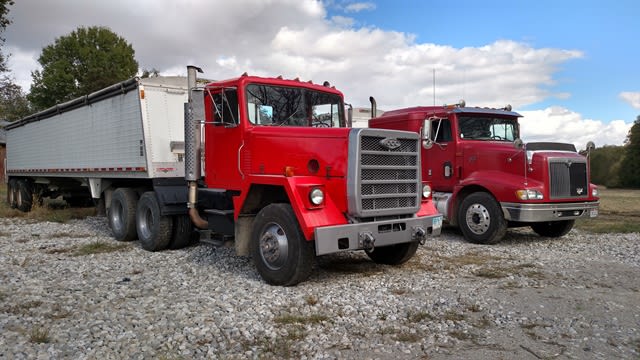
Wilson grain trailer and AM General M-915, an ex-Army "linehaul" tractor, is standing by to move harvested grain to storage. With this rig is another Wilson, hitched to an International 9200 tractor.
The 1980s-era civilian-design 915’s original dark green paint had been covered by a coat of red to sort of match the hue on the “Harvester” (a lingering moniker from when the truck builder was International Harvester). With a 6x4 axle layout, the M-915 was what the U.S. Army called a “linehaul” tractor, even though it was sleeperless.
Instead of hauling military equipment and supplies. here it was ready to carry grain to storage to await favorable market conditions. Like I said, you see a lot of interesting equipment at harvest time.
Subscribe to Our Newsletter
More Blog Posts

Pulsing Back-of-Trailer Lamps Aim to Prevent Crashes
Can the addition of a pulsing brake lamp on the back of a trailer prevent rear-end collisions? FMCSA seems to think so, if its exemptions are any indication.
Read More →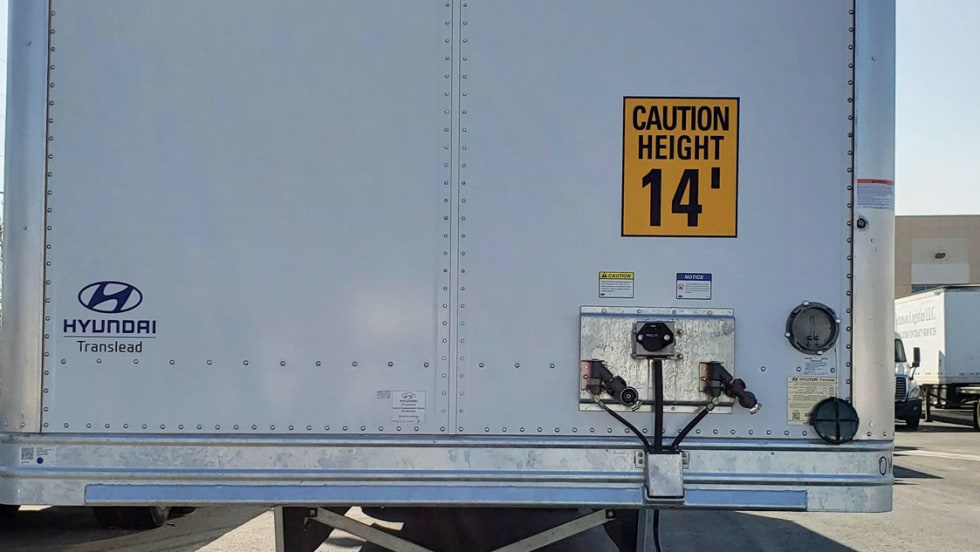
Designing a 14-Foot Trailer
Trailers are 13 feet, 6 inches high, right? Not for Hub Group, which developed a special 14-foot-high trailer spec for a dedicated customer based in California. Learn more in the Trailer Talk blog.
Read More →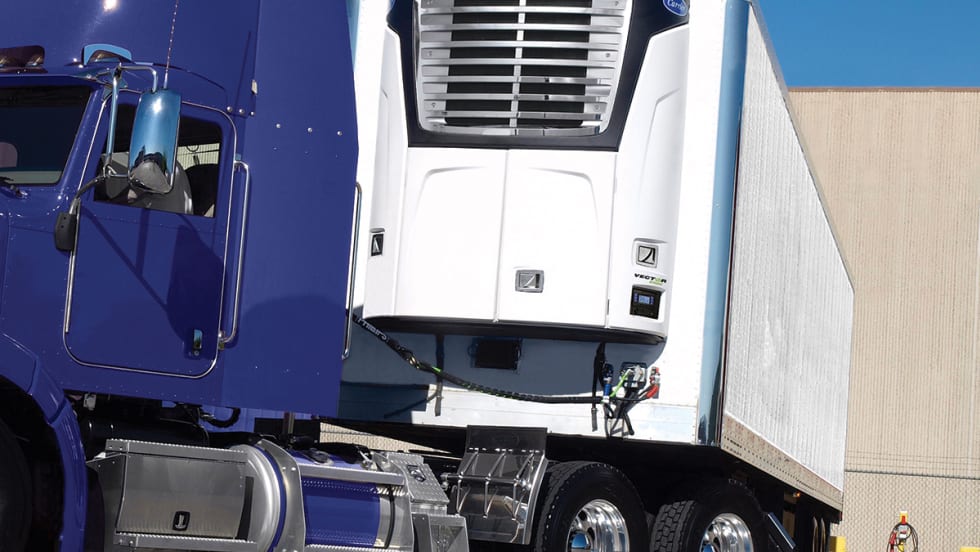
CARB Comes for Reefer Trailers
A new round of emissions control regulations decreed by the California Air Resource Board will begin affecting refrigerated trailer and TRU design and operations next year.
Read More →
5 Ways Data Analysis Maximizes the Value of Trailer Telematics
Are you getting the most out of your trailer telematics investment?
Read More →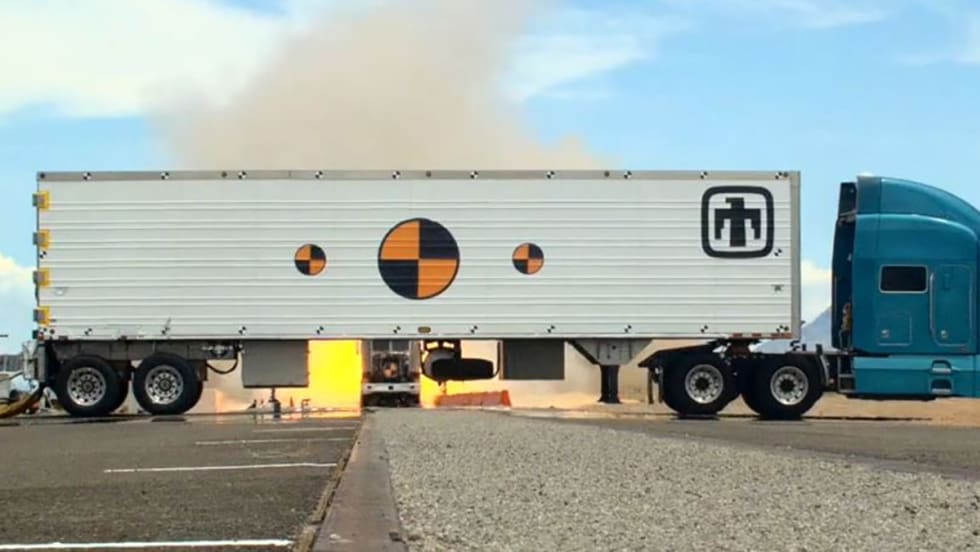
Can You Guess What's in That Trailer?
You don’t always know what’s in the trailers that pass you on the road. But some of those trailers are carrying something a little more dangerous that frozen food or new bedding…like, maybe, a nuclear weapon. But this isn’t an ordinary trailer; this is a trailer specifically made to not only carry this type of payload, but protect it at all costs.
Read More →
How Trailers Are Harnessing 'Free' Energy
Can trailers play a more active role in sustainable transport beyond aerodynamic add-ons or low-rolling-resistance tires? Some companies think so.
Read More →
Wrapping a Trailer for COVID’s Everyday Heroes
“We don’t only deliver freight. We deliver awareness.” That’s what Jim Barrett, president and CEO of Road Scholar Transport, likes to say about the Dunmore, Pennsylvania-based carrier’s “awareness fleet.” Its latest trailer wrap honors the everyday heroes of the pandemic.
Read More →
How a Tanker Fleet is Using Unorthodox Trailer Lighting to Fight Rear-End Collisions
Groendyke Transport watched the number of rear-end collisions with its trailers rise steadily until it tried an unorthodox and then unapproved method of alerting following drivers that its trucks were applying brakes and slowing down.
Read More →
The Role Trailers are Playing in COVID-19 Funerals
In places such as New York City and Detroit, overwhelmed hospitals and mortuaries are using refrigerated trailers to store the bodies of people killed by COVID-19.
Read More →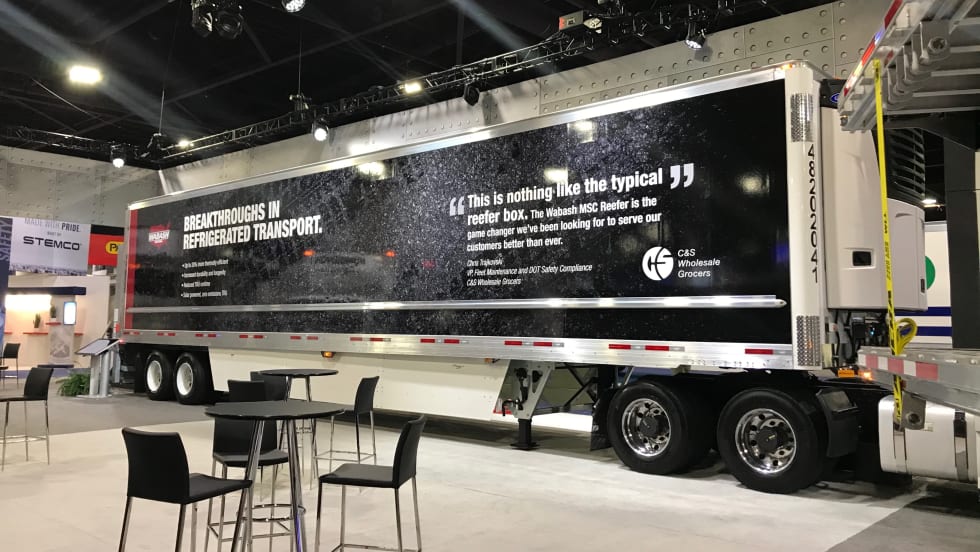
Reefer Trailer Aims to Help Reach Zero Emissions
Wabash National is partnering with C&S Wholesale Grocers to test a new type of zero-emissions refrigerated trailer.
Read More →