




Electronics can cut rollover wrecks; so can structural stiffness and lighter weight, Fontaine says
Rollover wrecks by tractor-trailers are among the worst kinds of accidents, safety people say, because property damage is high and driver injuries are severe

Box sections replace crossmembers in Fontaine Trailer’s Revolution flatbed, making it more resistant to flexing and rollover.
Rollover wrecks by tractor-trailers are among the worst kinds of accidents, safety people say, because property damage is high and driver injuries are severe.
About 11,000 rollovers occur every year in the United States, typically on freeway ramps and curves that drivers enter too fast.
Electronic systems that reduce the risk of rollovers have been available for some time for both tractors and trailers, and fleets that use them say they yield a healthy payback.
If the few thousand dollars spent for an anti-rollover product stops just one such wreck, the vehicle's owner has saved $85,000 to $250,000, according to statistics cited by Meritor Wabco in announcing a new Roll Stability Control product.
Look at videos of rollover tests and you'll see that trailers twist when lateral forces pull its tires off the pavement. The twisting quickly moves forward as the trailer tips over, and it yanks the tractor over with it.
Usually a driver doesn't feel it happening until he starts going over with the rig. This occurs in a second or two, and electronic systems intervene by applying brakes to try to stop the rollover before a driver can.
But how about making the vehicle itself less prone to rollovers? Avoiding that twisting motion with a stiff structure would make the trailer more stable, with or without an electronic system. Cutting weight also helps.
Those are part of the design of Fontaine Trailer's Revolution aluminum flatbed, according to Alan Briley, a regional vice president of sales.
"The Revolution series is designed for safety," Briley says. "Its unitized floor design makes for very high roll stability because the floor doesn't twist and flex, unlike the traditional crossmember design, so the load stays secured.
"The integrity of that system allows for heavy loads like steel coils to be hauled with a high degree of safety."
Tie-down methods also matter, he says. Usually, straps and chains are secured at the rub rail, outboard of the load. This exacerbates instability as high gravity forces begin to tug sideways at the trailer; they have more leverage with the tie-down at the flatbed's outer edge, just as you do when you flip over a table by grasping the edge farthest from you.
The Revolution offers stout cleats that fit into grooves on the floor; the cleats can be positioned close to the load, side to side and forward to rear. So the forces pulling on the tie-downs are more centered, making it harder for lateral forces to turn over the trailer. This placement also better secures the load so it resists movement during transit, he says.
Weight is another factor. A weight increase of 10% raises rollover tendency by 23%, Briley says, citing tests by Haldex. This stands to reason, as an empty or lightly loaded trailer is less likely to roll over than a heavily loaded one. But you can't make money running empty, so back to weight reduction in the vehicle.
"The Revolution's integrated crossmember-floor design with friction stir-welding takes out weight without taking out beef. There are 300 box sections rather than 35 or 40 crossmembers." Fontaine's website has a video explaining the Revolution's structure and how it cuts weight.
"Tractors are getting heavier, and we're just getting bombarded with requests to cut weight," he says. This of course relates to payload and revenue, which everyone understands.
A Revolution flatbed or the more recently introduced drop-deck version costs about 10% more than a traditional type, which Fontaine still offers, but the payback in payload and safety should be quick.
As a bonus, structural stiffness also increases fuel economy and tire life. "The Revolution tracks very straight for low rolling resistance," Briley says.
"Some fleets have measured fuel savings at 3% and with spread axles, tire wear savings of 30%. A trailer that doesn't twist and flex while rolling doesn't scrub the tires."
More Blog Posts
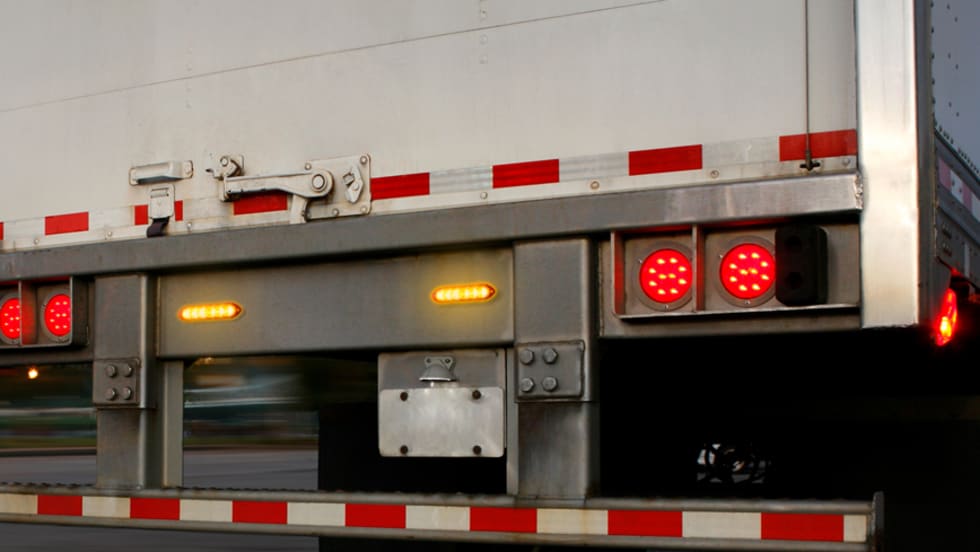
Pulsing Back-of-Trailer Lamps Aim to Prevent Crashes
Can the addition of a pulsing brake lamp on the back of a trailer prevent rear-end collisions? FMCSA seems to think so, if its exemptions are any indication.
Read More →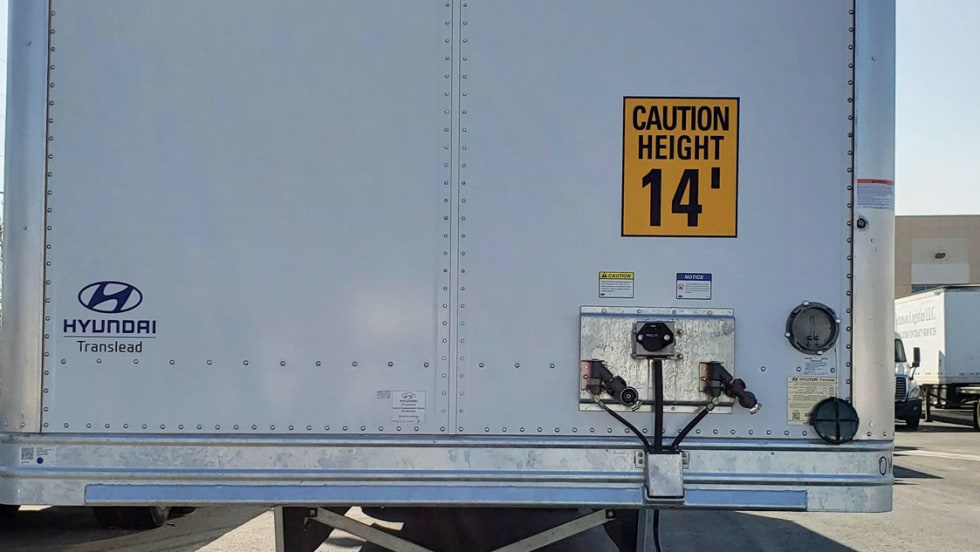
Designing a 14-Foot Trailer
Trailers are 13 feet, 6 inches high, right? Not for Hub Group, which developed a special 14-foot-high trailer spec for a dedicated customer based in California. Learn more in the Trailer Talk blog.
Read More →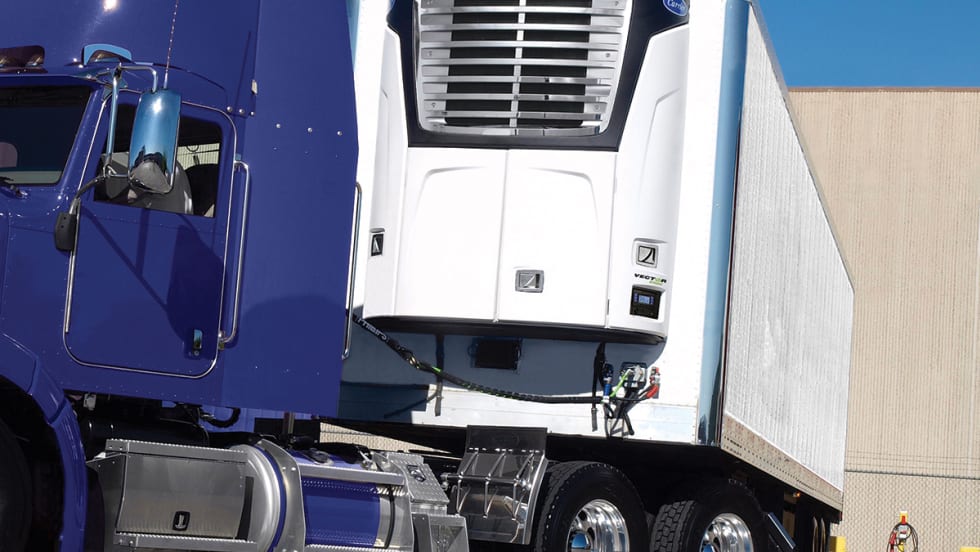
CARB Comes for Reefer Trailers
A new round of emissions control regulations decreed by the California Air Resource Board will begin affecting refrigerated trailer and TRU design and operations next year.
Read More →
5 Ways Data Analysis Maximizes the Value of Trailer Telematics
Are you getting the most out of your trailer telematics investment?
Read More →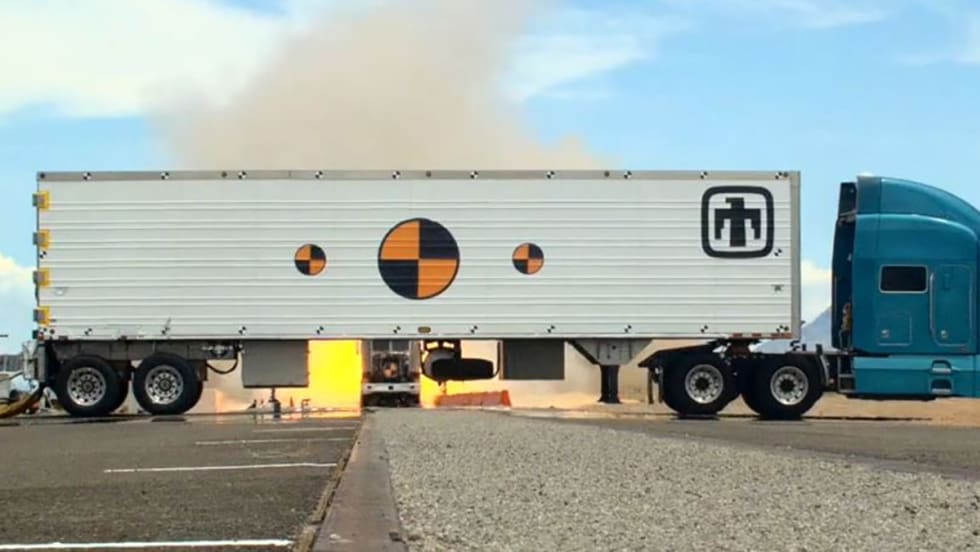
Can You Guess What's in That Trailer?
You don’t always know what’s in the trailers that pass you on the road. But some of those trailers are carrying something a little more dangerous that frozen food or new bedding…like, maybe, a nuclear weapon. But this isn’t an ordinary trailer; this is a trailer specifically made to not only carry this type of payload, but protect it at all costs.
Read More →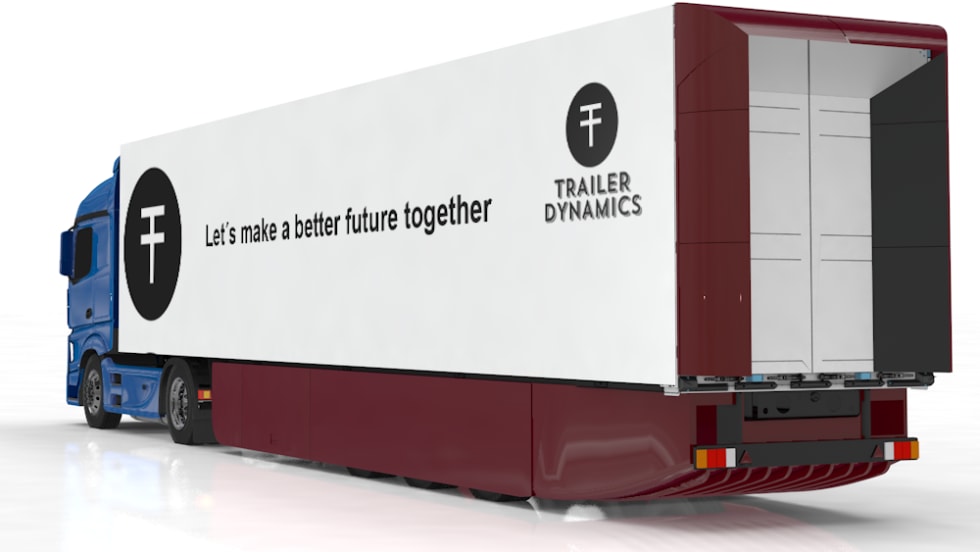
How Trailers Are Harnessing 'Free' Energy
Can trailers play a more active role in sustainable transport beyond aerodynamic add-ons or low-rolling-resistance tires? Some companies think so.
Read More →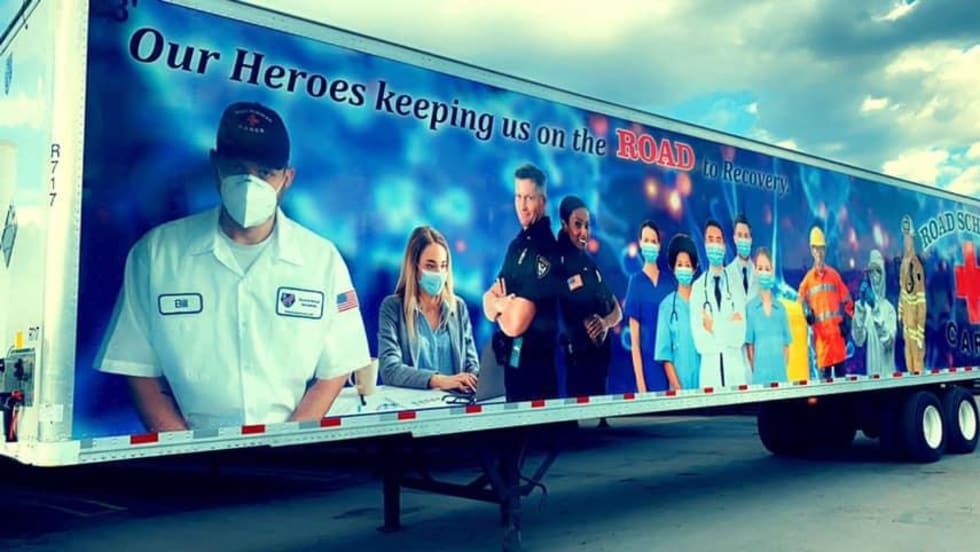
Wrapping a Trailer for COVID’s Everyday Heroes
“We don’t only deliver freight. We deliver awareness.” That’s what Jim Barrett, president and CEO of Road Scholar Transport, likes to say about the Dunmore, Pennsylvania-based carrier’s “awareness fleet.” Its latest trailer wrap honors the everyday heroes of the pandemic.
Read More →
How a Tanker Fleet is Using Unorthodox Trailer Lighting to Fight Rear-End Collisions
Groendyke Transport watched the number of rear-end collisions with its trailers rise steadily until it tried an unorthodox and then unapproved method of alerting following drivers that its trucks were applying brakes and slowing down.
Read More →
The Role Trailers are Playing in COVID-19 Funerals
In places such as New York City and Detroit, overwhelmed hospitals and mortuaries are using refrigerated trailers to store the bodies of people killed by COVID-19.
Read More →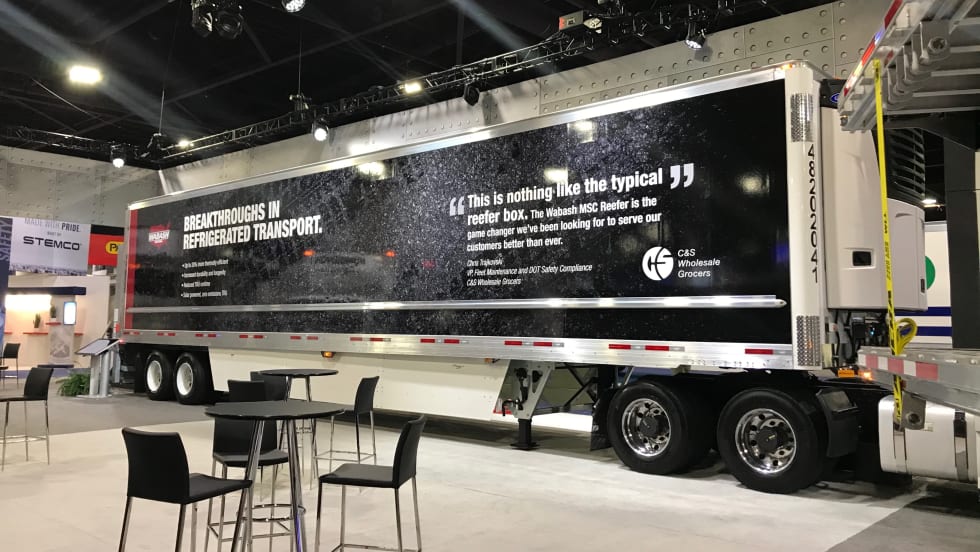
Reefer Trailer Aims to Help Reach Zero Emissions
Wabash National is partnering with C&S Wholesale Grocers to test a new type of zero-emissions refrigerated trailer.
Read More →