




Edge Fairings Gain SmartWay Elite Status
The Tail resembles the Trailer Tail from ATDynamics, but seems unique in that its panels automatically deploy when the rig reaches about 45 mph, then fold up as it slows down.

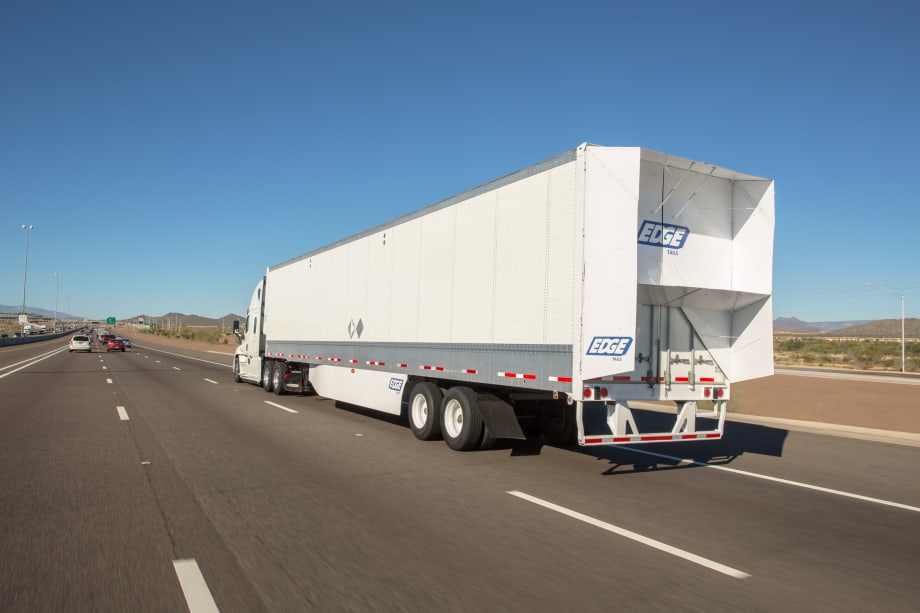
Photo via Transtex
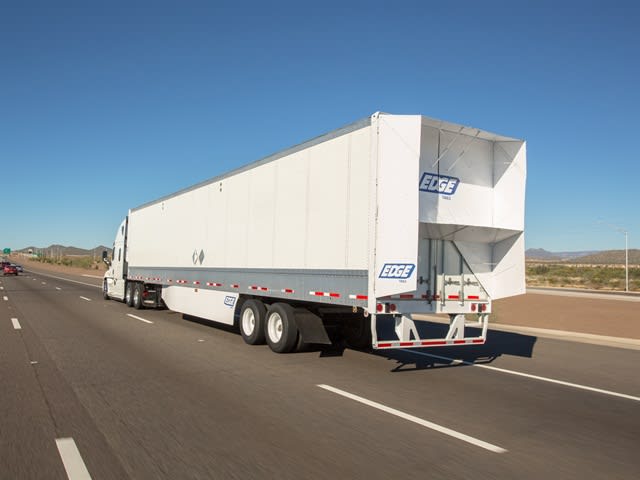
Photo via Transtex
Transtex Composite says its Edge aero improvers for van trailers have been granted Elite status by the Environmental Protection Agency’s SmartWay program. The company announced this at the Technology & Maintenance Council’s recent equipment expo in Nashville,
Elite means a set of equipment will save at least 9% in fuel at highway speeds – nothing to blow off with a shrug, as long as a trailer spends a good portion of its time moving down the highway and not sitting in a yard somewhere.
The ELITE designation was issued by the EPA in late December 2014 for Edge skirt-tail and for the skirt-tail-cone combinations, according to Marc Bolduc, Transtex’s general manager.
Skirts are hung from a trailer’s sides – a familiar sight on today’s Interstates – and direct air away from the undercarriage. The cone is placed on the nose to reduce turbulence behind the cab or sleeper and the front of the trailer. The Edge Tail mounts on the trailer’s rear to reduce the suction effect caused by swirling air.
The Tail resembles the Trailer Tail from ATDynamics, but seems unique in that its panels automatically deploy when the rig reaches about 45 mph, then fold up as it slows down. No powered mechanism is needed.
Air suction pulls out the hinged, 30-inch-long panels, Bolduc explained, and the reduced vacuum at lower speeds allows the spring-loaded panels to retract. A video showing it work is here.
Edge panels are made from strong, lightweight glass-reinforced thermoplastic material, he said. The flexible side panels give quite a bit when encountering an obstruction, then pop back into shape, as shown on another You Tube video near the Tail demo.
The products are the result of a decade of engineering, design and testing, he said. That included wind tunnel testing at Auto Research Center in Indianapolis. Much of ARC’s work is for auto racing teams, and thanks to Bolduc I got a tour of the place a couple of years ago. The testing isn’t cheap at about $30,000 per day, but answers a lot of questions about a fairing’s design.
Edge products are available for most commercial configurations including 53-foot trailers, 28-foot pups, and intermodal chassis, and may be custom ordered in various colors and material compositions.
Next week: What are SmartWay’s Elite guidelines?
More Blog Posts

Pulsing Back-of-Trailer Lamps Aim to Prevent Crashes
Can the addition of a pulsing brake lamp on the back of a trailer prevent rear-end collisions? FMCSA seems to think so, if its exemptions are any indication.
Read More →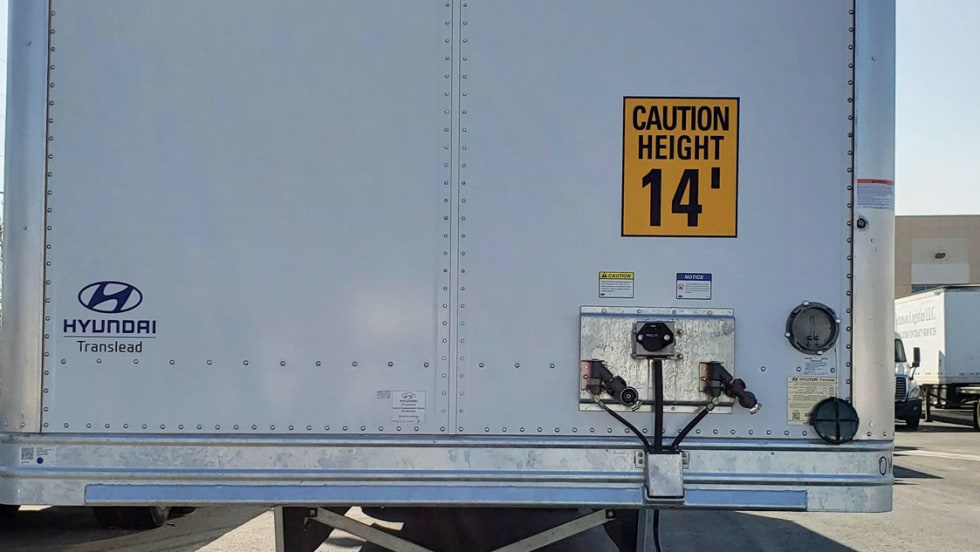
Designing a 14-Foot Trailer
Trailers are 13 feet, 6 inches high, right? Not for Hub Group, which developed a special 14-foot-high trailer spec for a dedicated customer based in California. Learn more in the Trailer Talk blog.
Read More →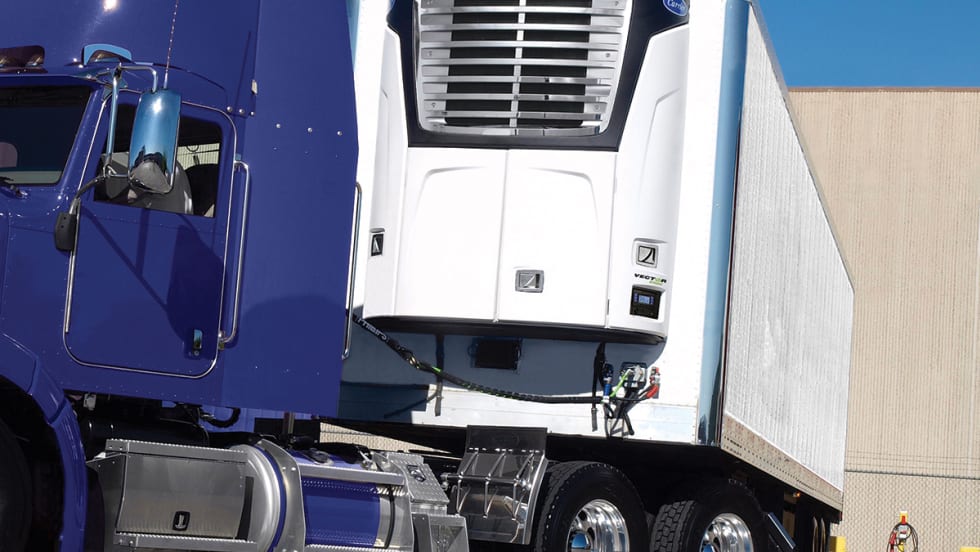
CARB Comes for Reefer Trailers
A new round of emissions control regulations decreed by the California Air Resource Board will begin affecting refrigerated trailer and TRU design and operations next year.
Read More →
5 Ways Data Analysis Maximizes the Value of Trailer Telematics
Are you getting the most out of your trailer telematics investment?
Read More →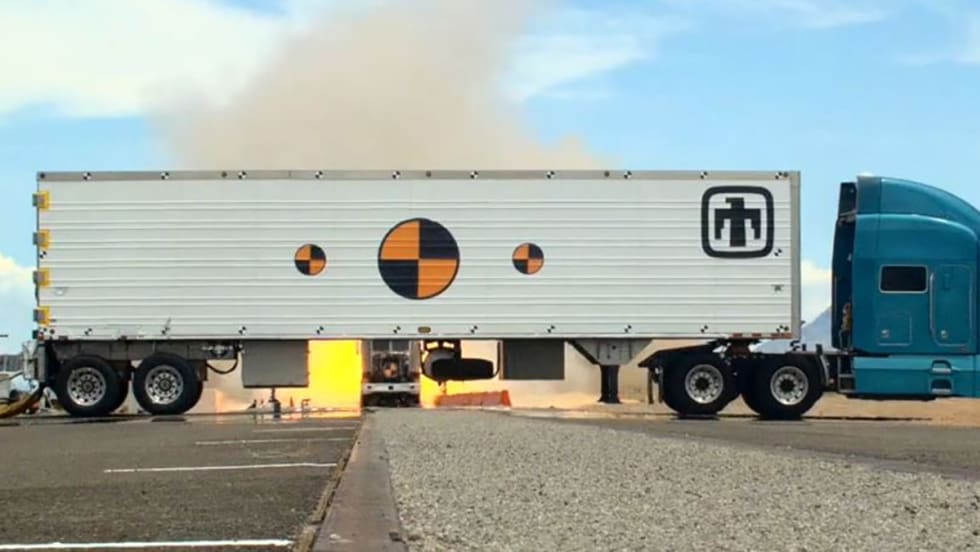
Can You Guess What's in That Trailer?
You don’t always know what’s in the trailers that pass you on the road. But some of those trailers are carrying something a little more dangerous that frozen food or new bedding…like, maybe, a nuclear weapon. But this isn’t an ordinary trailer; this is a trailer specifically made to not only carry this type of payload, but protect it at all costs.
Read More →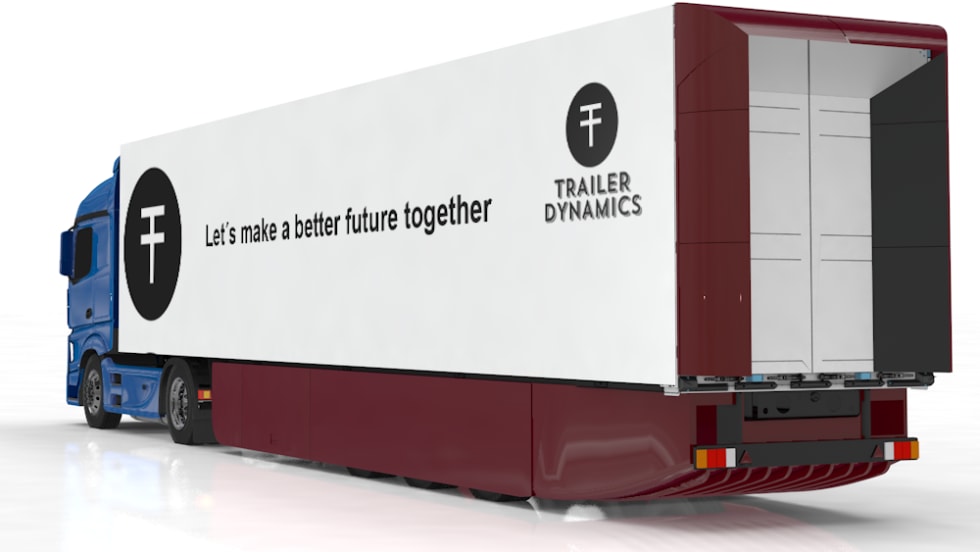
How Trailers Are Harnessing 'Free' Energy
Can trailers play a more active role in sustainable transport beyond aerodynamic add-ons or low-rolling-resistance tires? Some companies think so.
Read More →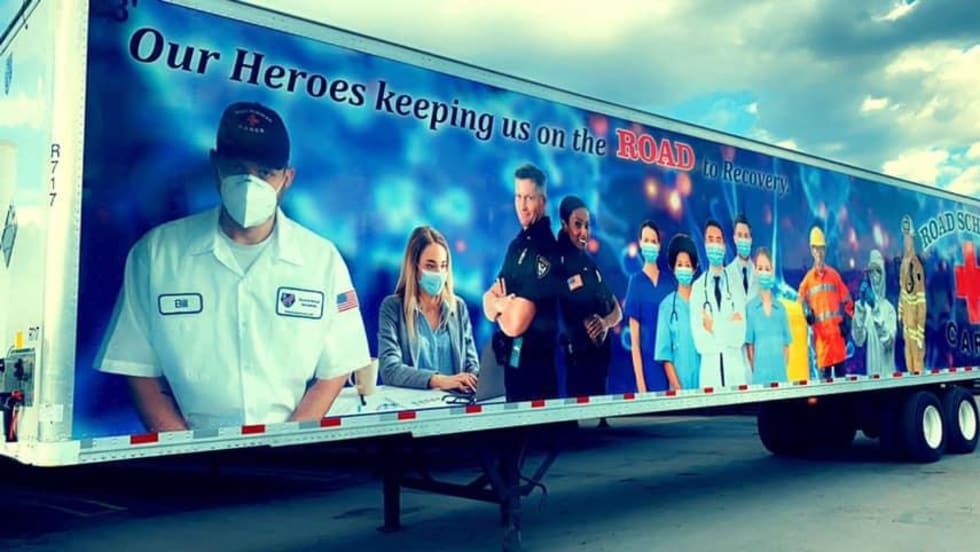
Wrapping a Trailer for COVID’s Everyday Heroes
“We don’t only deliver freight. We deliver awareness.” That’s what Jim Barrett, president and CEO of Road Scholar Transport, likes to say about the Dunmore, Pennsylvania-based carrier’s “awareness fleet.” Its latest trailer wrap honors the everyday heroes of the pandemic.
Read More →
How a Tanker Fleet is Using Unorthodox Trailer Lighting to Fight Rear-End Collisions
Groendyke Transport watched the number of rear-end collisions with its trailers rise steadily until it tried an unorthodox and then unapproved method of alerting following drivers that its trucks were applying brakes and slowing down.
Read More →
The Role Trailers are Playing in COVID-19 Funerals
In places such as New York City and Detroit, overwhelmed hospitals and mortuaries are using refrigerated trailers to store the bodies of people killed by COVID-19.
Read More →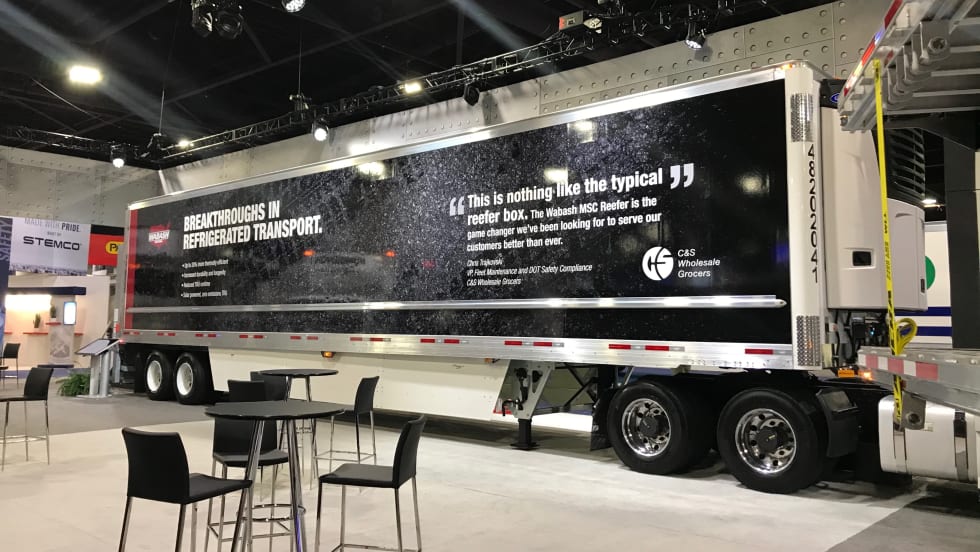
Reefer Trailer Aims to Help Reach Zero Emissions
Wabash National is partnering with C&S Wholesale Grocers to test a new type of zero-emissions refrigerated trailer.
Read More →