




Curtainside Trailers Made for Alley Deliveries
The concept came from Europe, where not many factories have loading docks, but they do have alleyways for trucks to make pickups and deliveries.

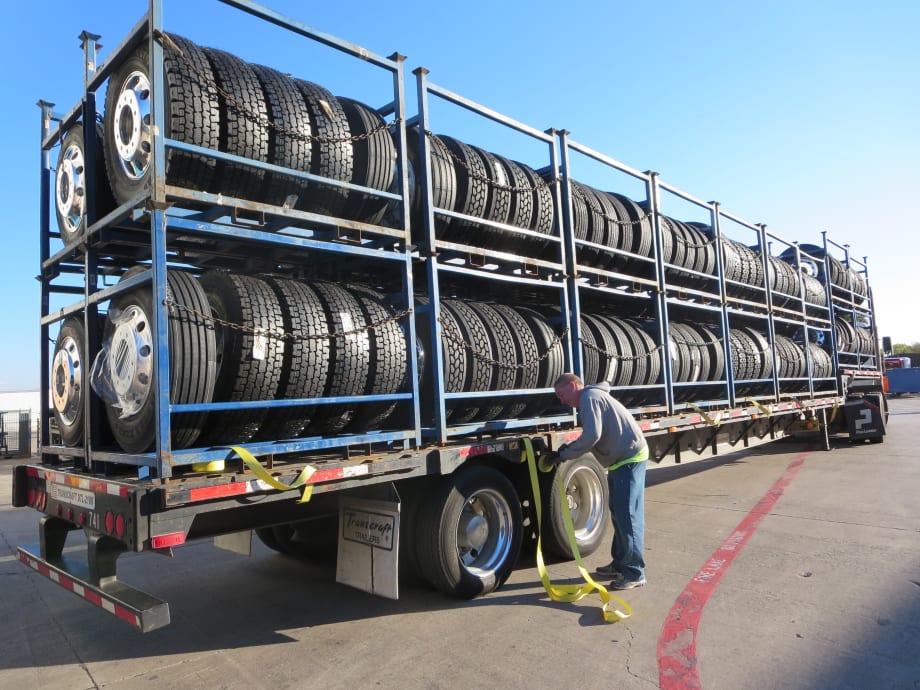
If this rig suffers a flat tire, its driver has plenty of spares. Naw -- he's delivering the load to Peterbilt's plant in Denton, Tex.
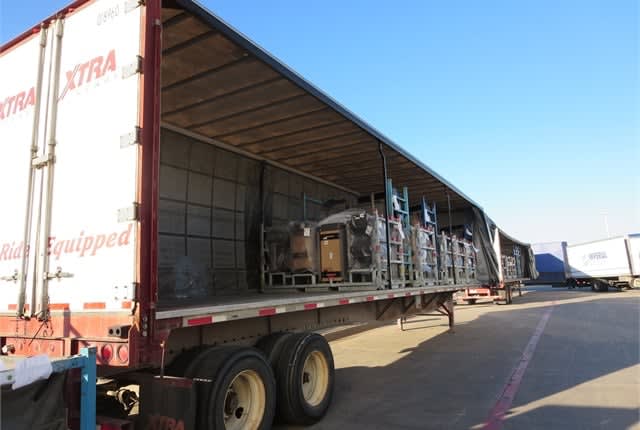
Curtainside trailers can back up to docks, but don't need to. Photos: Tom Berg
In North America, most manufactured goods ride to their destinations in van trailers, which is why they constitute about two-thirds of all the trailers out there. That works when the shipping and receiving points have loading docks, which most do. Some places don’t, and for them another type of trailer can be used: the curtainsider, a flatbed with a top, rear doors and fabric sides that fold open, like a shower curtain, except they’re anchored along the bottom as well as the top.
I see these when I visit Peterbilt Motors’ plant in Denton, Tex., where curtainsiders deliver items from an alleyway at one end of the plant. Forklifts take palletized truck parts inside where they’re soon installed on new heavy duty Petes coming down the assembly line. If need be, these trailers can be loaded or unloaded from both sides at once, though here the ‘lift operators usually work one side at a time. It goes fast.
Back in the late 1980s, I delivered a curtainside trailerload of glass to a factory in Santa Monica, Calif., that made shower doors. This was part of a test drive of a new tractor for which I needed a loaded trailer. The truck dealer up in Fresno arranged it through a customer, with the stipulation that I deliver the load. Sure, I said.
I found that the trailer pulled like a van. It was heavy, too, and I was a bit wary as I entered a CHP scale on the way to Los Angeles. The officer called me in and told me the rig was overweight on the drivers. "Move the fifth wheel ahead a few notches and you'll be alright," he said pleasantly -- as he wrote out a citation.
First thing the next morning I checked in with the plant's receiving office and a young forklift driver told me to park in the center of the three-lane street out front. I’d never unraveled a curtainside, but figured it out pretty quickly. I unlatched the locking mechanisms and rolled back the curtains, then watched as he removed the loaded pallets.
The trailer’s floor was littered with small shards of glass, and I hoped that I hadn’t done anything to cause them. If the ‘lift driver saw ‘em, he didn’t say anything, so maybe this was common with this product. We got to talking and I allowed as how I wrote about trucks for a living and this was a part of a test run.
“I didn’t think you were a real trucker,” he said. “You wouldn’t be wearing shoes like that” – he gestured toward my loafers – “if you were.” In those days, cowboy boots were the truckers’ style, but the loafers let me punch the pedals and got me onto and off the trailer just fine. He signed for the load, we said good bye, I closed and secured the curtains, and went on my way.
Go to Europe and you’ll see a lot of curtainsiders, and in fact the concept came from there. Utility Trailer introduced what it called the Tautliner about 10 years before, and touted its flexibility. A curtainsider can be loaded and unloaded from the sides or the rear, like a regular van.
Somebody later commented to me that the soft fabric sides could be cut into by thieves, but that wasn’t likely in Europe because people there are honest. Well, maybe, but that’s not why curtainsiders are common over there.
The real reason is that not many factories in Europe have loading docks; most do have alleys, and that’s why the soft-sided trailers are used. Over here, they also work well at places like Peterbilt’s plant. It does have docks on other sides, and many regular vans also roll in and out of the place.
Farther up the alley on the day I photographed the curtainsiders was a flatbed with racks stacked with tires all mounted on wheels. An off-site supplier mounts the tires and sends them to the plant in a specific order, to match the trucks as they come down the line. Like a lot of manufacturing sites, this one receives its parts on a just-in-time basis, so there’s little wasted time in the alleys and on the docks.
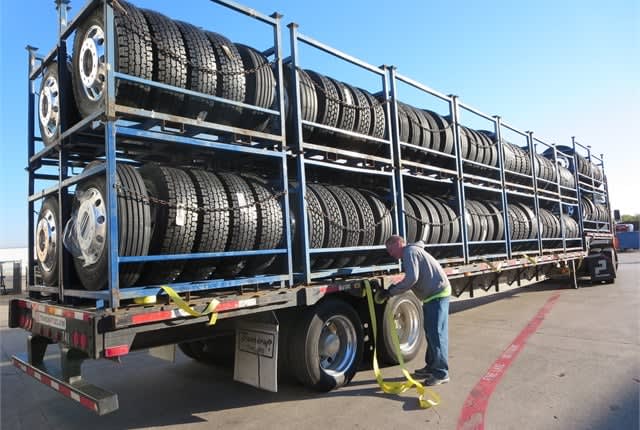
If this rig suffers a flat tire, its driver has plenty of spares. Naw -- he's delivering the load to Peterbilt's plant in Denton, Tex.
The driver was pulling off tie-down straps in preparation for offloading as I shot the photo. I noticed that the guy’s tractor was a Peterbilt obtained from PacLease. Nothing like keeping the business in the family.
More Blog Posts
Pulsing Back-of-Trailer Lamps Aim to Prevent Crashes
Can the addition of a pulsing brake lamp on the back of a trailer prevent rear-end collisions? FMCSA seems to think so, if its exemptions are any indication.
Read More →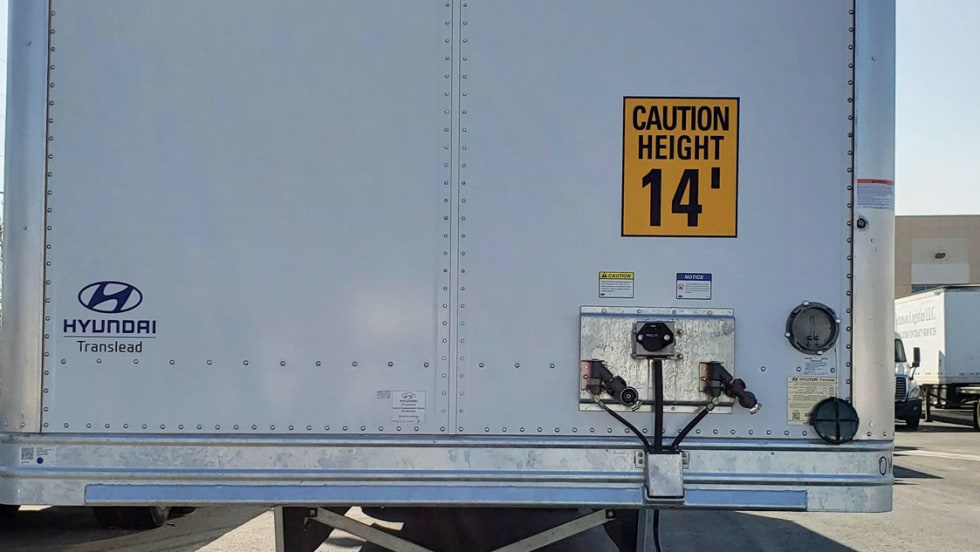
Designing a 14-Foot Trailer
Trailers are 13 feet, 6 inches high, right? Not for Hub Group, which developed a special 14-foot-high trailer spec for a dedicated customer based in California. Learn more in the Trailer Talk blog.
Read More →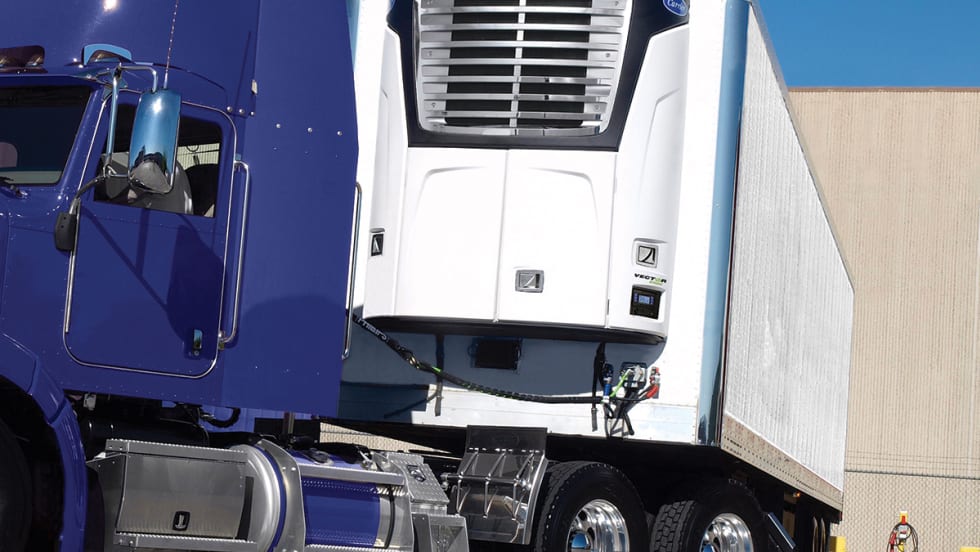
CARB Comes for Reefer Trailers
A new round of emissions control regulations decreed by the California Air Resource Board will begin affecting refrigerated trailer and TRU design and operations next year.
Read More →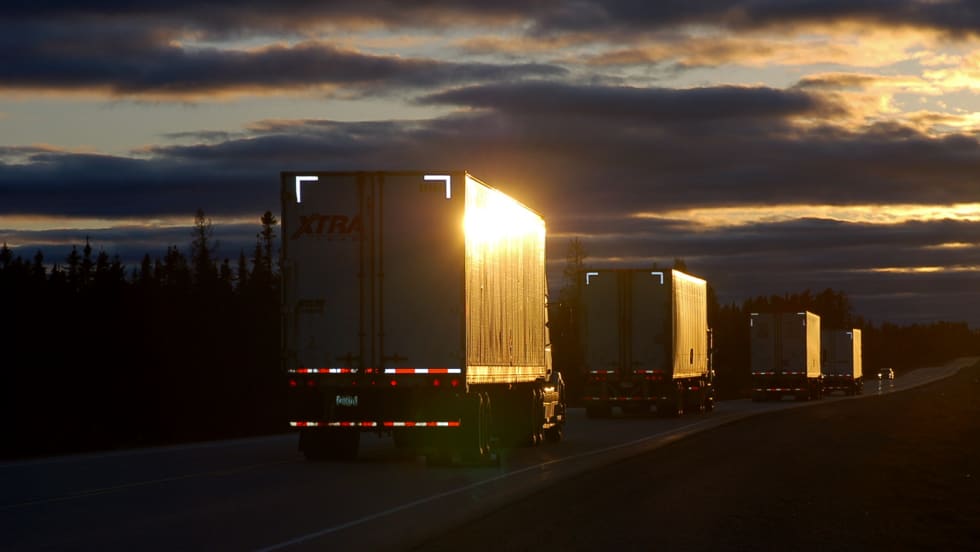
5 Ways Data Analysis Maximizes the Value of Trailer Telematics
Are you getting the most out of your trailer telematics investment?
Read More →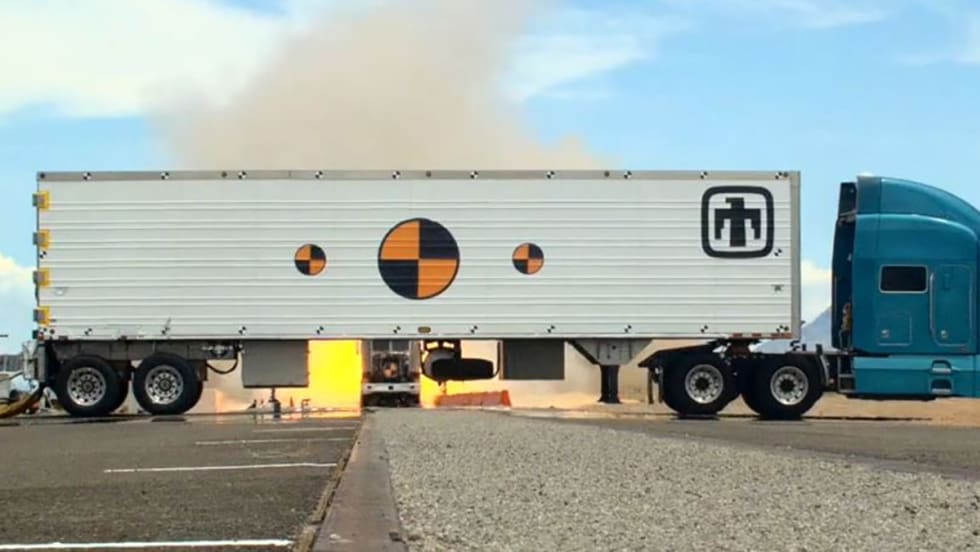
Can You Guess What's in That Trailer?
You don’t always know what’s in the trailers that pass you on the road. But some of those trailers are carrying something a little more dangerous that frozen food or new bedding…like, maybe, a nuclear weapon. But this isn’t an ordinary trailer; this is a trailer specifically made to not only carry this type of payload, but protect it at all costs.
Read More →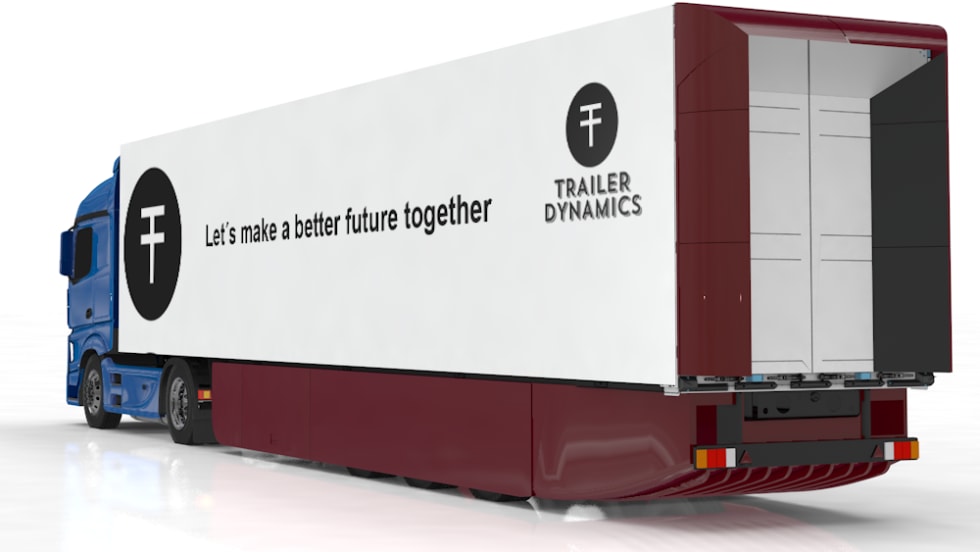
How Trailers Are Harnessing 'Free' Energy
Can trailers play a more active role in sustainable transport beyond aerodynamic add-ons or low-rolling-resistance tires? Some companies think so.
Read More →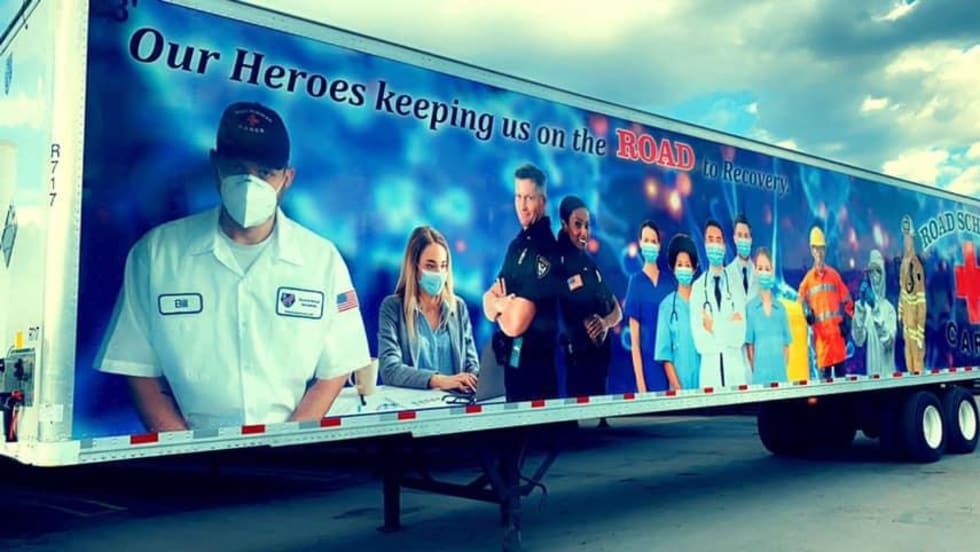
Wrapping a Trailer for COVID’s Everyday Heroes
“We don’t only deliver freight. We deliver awareness.” That’s what Jim Barrett, president and CEO of Road Scholar Transport, likes to say about the Dunmore, Pennsylvania-based carrier’s “awareness fleet.” Its latest trailer wrap honors the everyday heroes of the pandemic.
Read More →
How a Tanker Fleet is Using Unorthodox Trailer Lighting to Fight Rear-End Collisions
Groendyke Transport watched the number of rear-end collisions with its trailers rise steadily until it tried an unorthodox and then unapproved method of alerting following drivers that its trucks were applying brakes and slowing down.
Read More →
The Role Trailers are Playing in COVID-19 Funerals
In places such as New York City and Detroit, overwhelmed hospitals and mortuaries are using refrigerated trailers to store the bodies of people killed by COVID-19.
Read More →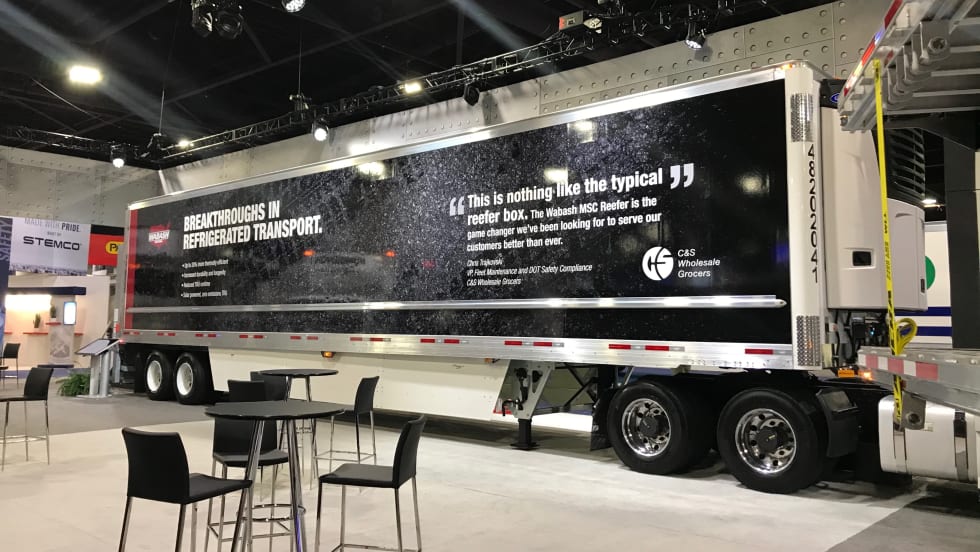
Reefer Trailer Aims to Help Reach Zero Emissions
Wabash National is partnering with C&S Wholesale Grocers to test a new type of zero-emissions refrigerated trailer.
Read More →