




Can You Remember Every Pre-Trip Item?
Pre-trips are supposed to be done before the vehicle is pulled away from a parking place and heads for the highway. In this blog from Senior Editor Tom Berg, we run through each item in a pre-trip inspection.

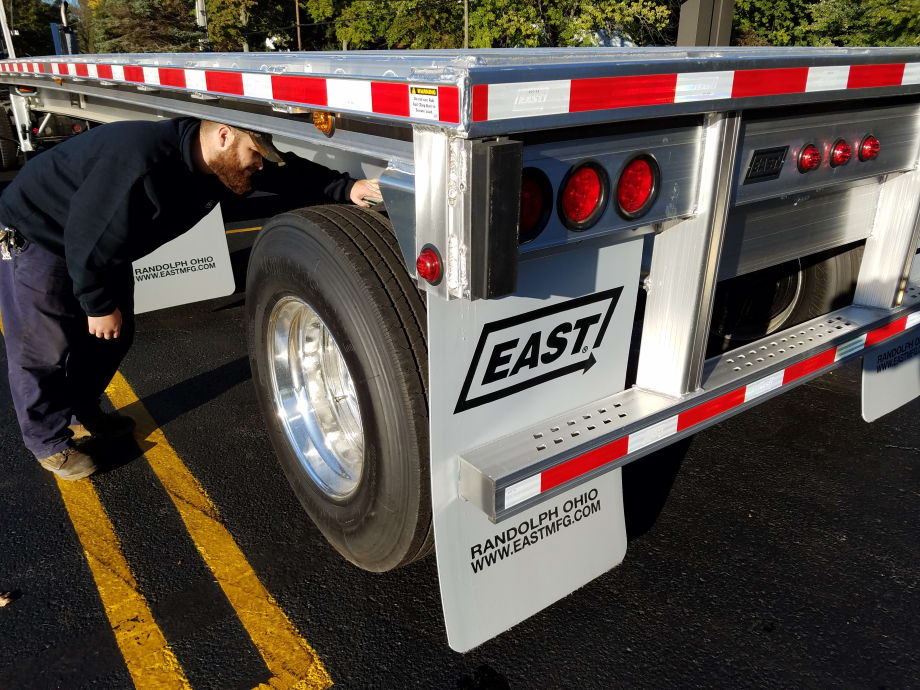
It's not likely that there's anything wrong with this brand-new flatbed, but check it anyway. Photo: East Mfg. Co.
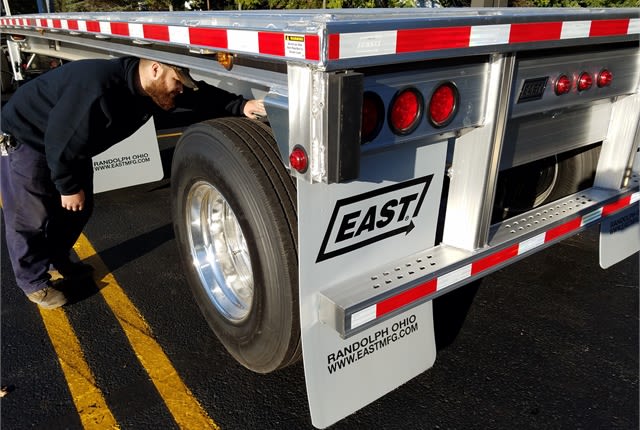
It's not likely that there's anything wrong with this brand-new flatbed, but check it anyway. Photo: East Mfg. Co.
How good are you at doing a pre-trip Inspection on a trailer? It’s supposed to be done just before the vehicle is pulled away from a parking place and heads for the highway. There are post-trip inspections, too, but let’s concentrate on the pre-tripper.
If you do it from memory, you’re probably missing something. See if you’d cover all these points as offered by East Manufacturing:
1. Inspect for any apparent damage. Look for oil, water and fuel and other fluid leaks.
2. Check to see that all lights function, and that all reflectors are in place and not obscured.
3. Is the kingpin engaged and locked within the fifth wheel?
4. Examine the landing gear for proper road clearance, and make sure the crank handle is securely stowed.
5. Check that the rear stairway door, if the trailer has one, is securely latched before moving.
6. Check that all air springs are inflated, if it has an air suspension.
7. Make sure the spare tire is secure in the carrier, and that the carrier is securely bolted to the chassis.
8. Check tire air pressures. Tires should be inflated to tire manufacturer's specifications.
9. Check wheel lug nuts for proper torque on disc wheels.
10. On wheels with see-through hubcaps, check the oil level in the wheel hubs. Add oil as needed, or get a shop guy to do it.
11. On wheels with solid hubcaps, pull plug and check oil level in wheel hubs, adding oil as needed (likewise about the shop).
12. Visually check the brake shoe lining and brake drums for wear and proper adjustment.
13. Check for chafed hoses or cracked fittings.
14. By actuation, determine if the brake system is in proper working order.
15. Turn on the ignition and observe the ABS warning light. Verify that the light comes on for three seconds and then goes off. If the light remains on, the ABS requires service.
16. Set trailer parking brakes and rock the trailer back and forth to test its brakes, or apply the trailer brakes while moving away from the parking place.
Everything OK? Fill out the form and you’re good to go.
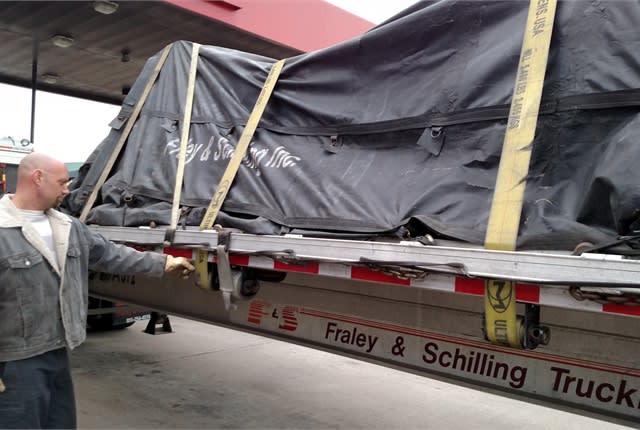
Checking tie-downs is not on the pre-trip list, but still needs to be done. Photo: Tom Berg
More Blog Posts
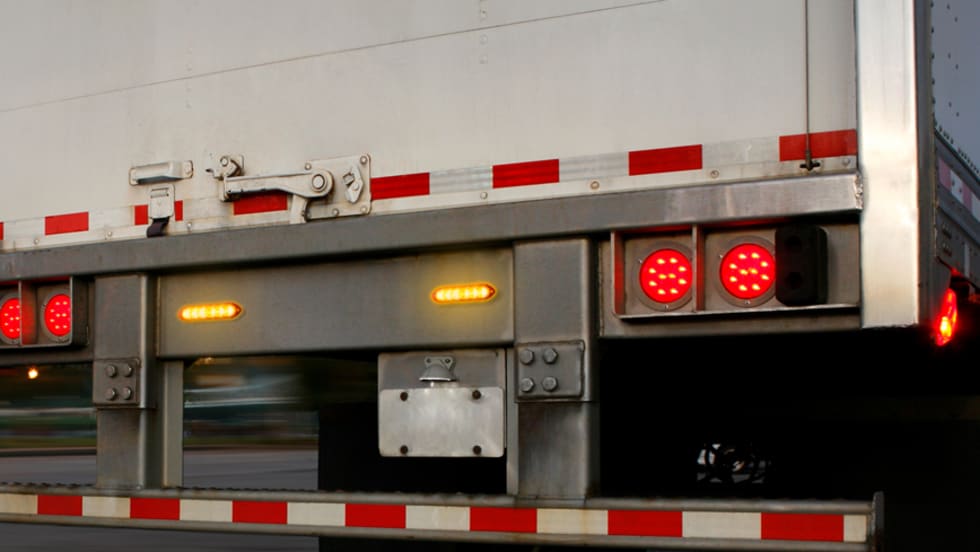
Pulsing Back-of-Trailer Lamps Aim to Prevent Crashes
Can the addition of a pulsing brake lamp on the back of a trailer prevent rear-end collisions? FMCSA seems to think so, if its exemptions are any indication.
Read More →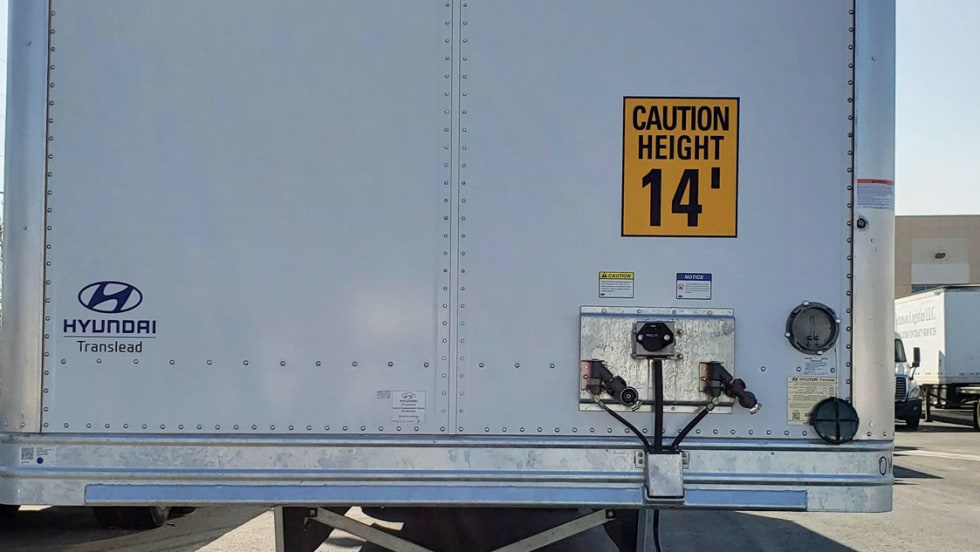
Designing a 14-Foot Trailer
Trailers are 13 feet, 6 inches high, right? Not for Hub Group, which developed a special 14-foot-high trailer spec for a dedicated customer based in California. Learn more in the Trailer Talk blog.
Read More →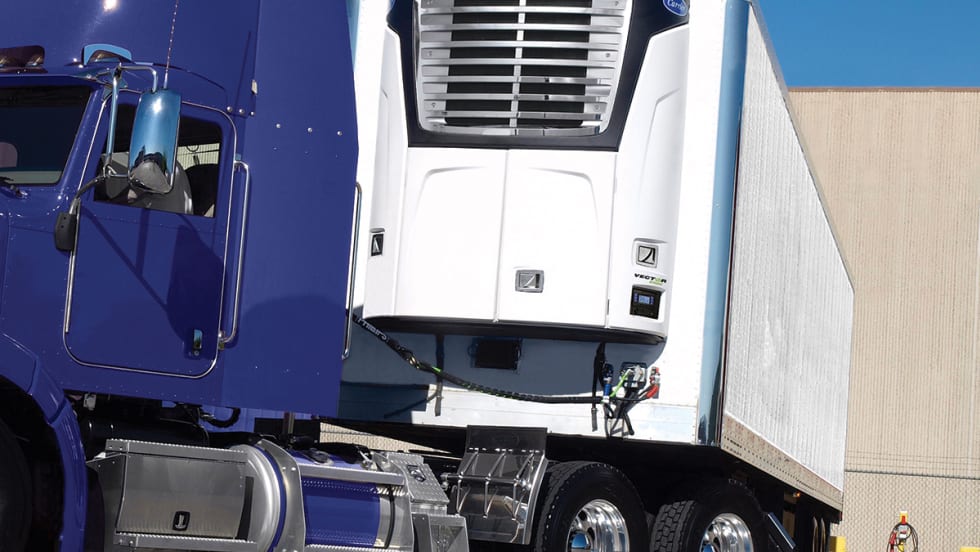
CARB Comes for Reefer Trailers
A new round of emissions control regulations decreed by the California Air Resource Board will begin affecting refrigerated trailer and TRU design and operations next year.
Read More →
5 Ways Data Analysis Maximizes the Value of Trailer Telematics
Are you getting the most out of your trailer telematics investment?
Read More →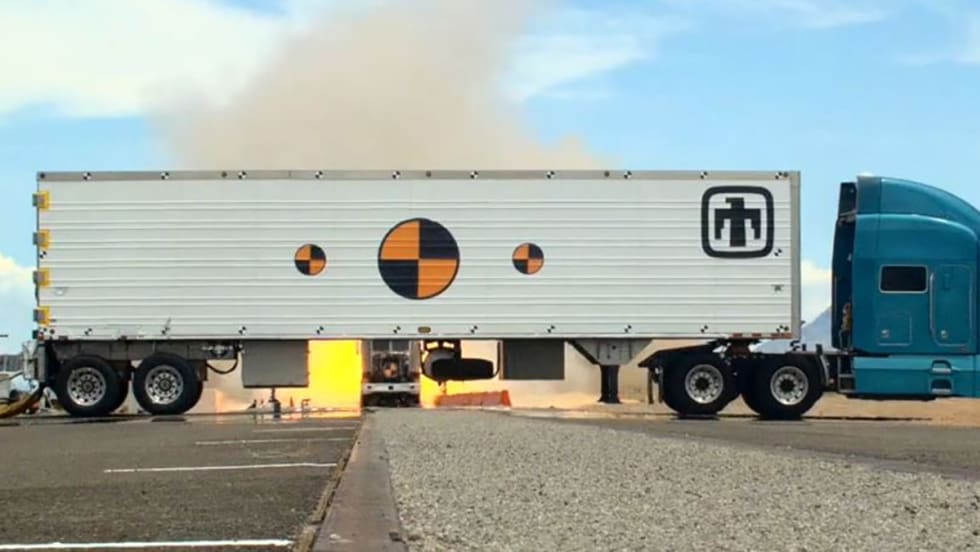
Can You Guess What's in That Trailer?
You don’t always know what’s in the trailers that pass you on the road. But some of those trailers are carrying something a little more dangerous that frozen food or new bedding…like, maybe, a nuclear weapon. But this isn’t an ordinary trailer; this is a trailer specifically made to not only carry this type of payload, but protect it at all costs.
Read More →
How Trailers Are Harnessing 'Free' Energy
Can trailers play a more active role in sustainable transport beyond aerodynamic add-ons or low-rolling-resistance tires? Some companies think so.
Read More →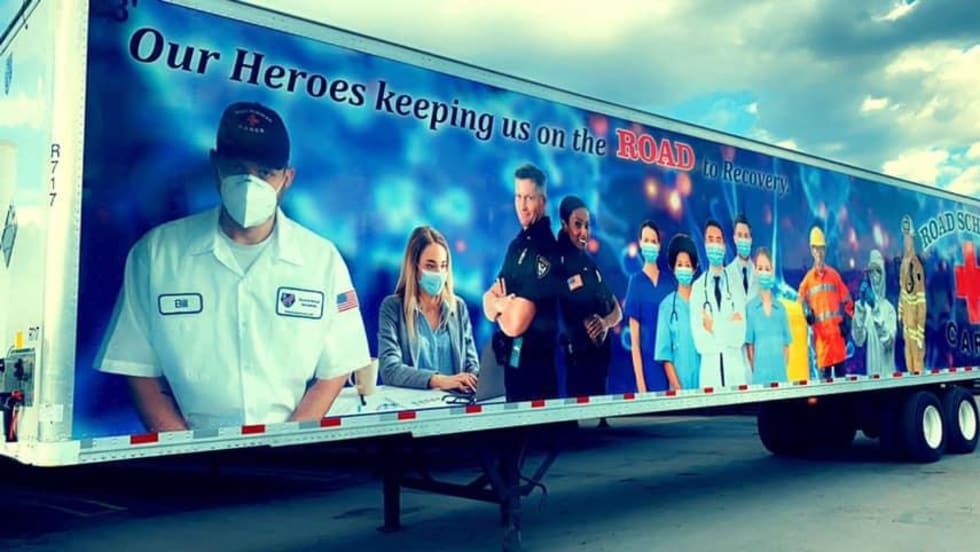
Wrapping a Trailer for COVID’s Everyday Heroes
“We don’t only deliver freight. We deliver awareness.” That’s what Jim Barrett, president and CEO of Road Scholar Transport, likes to say about the Dunmore, Pennsylvania-based carrier’s “awareness fleet.” Its latest trailer wrap honors the everyday heroes of the pandemic.
Read More →
How a Tanker Fleet is Using Unorthodox Trailer Lighting to Fight Rear-End Collisions
Groendyke Transport watched the number of rear-end collisions with its trailers rise steadily until it tried an unorthodox and then unapproved method of alerting following drivers that its trucks were applying brakes and slowing down.
Read More →
The Role Trailers are Playing in COVID-19 Funerals
In places such as New York City and Detroit, overwhelmed hospitals and mortuaries are using refrigerated trailers to store the bodies of people killed by COVID-19.
Read More →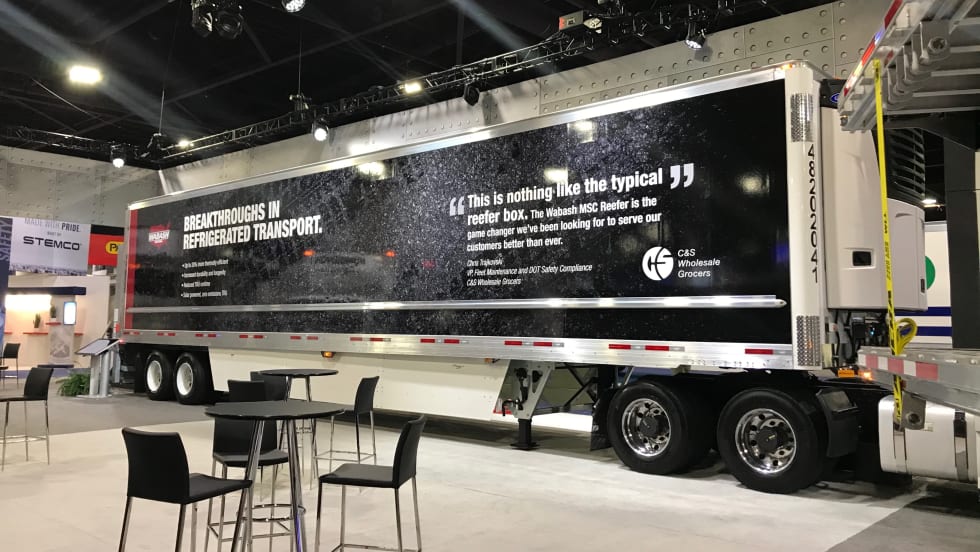
Reefer Trailer Aims to Help Reach Zero Emissions
Wabash National is partnering with C&S Wholesale Grocers to test a new type of zero-emissions refrigerated trailer.
Read More →