




Aero Trailer could save $3,900 a year in Euro fuel, Daimler engineer says
HANOVER, GERMANY - Thirty years of aerodynamic research is behind a streamlined semitrailer displayed this week at the huge Hanover truck show in Germany, says a Daimler Trucks executive who briefed a crowd of journalists on the efforts behind the vehicle
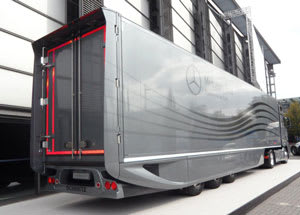
Aero improvers on this Schmitz reefer trailer cut wind drag by 18% and improve fuel economy by 4.5%, says Daimler Trucks, whose research went into the design. It's on display this week and next at the IAA show in Hanover, Germany.
HANOVER, GERMANY - Thirty years of aerodynamic research is behind a streamlined semitrailer displayed this week at the huge Hanover truck show in Germany, says a Daimler Trucks executive who briefed a crowd of journalists on the efforts behind the vehicle.
Georg Weiberg, head of truck product engineering for Daimler, emphasized that the Aerodynamics Trailer was not a concept, but is a cargo hauler that could go to work now.
Like their counterparts in the U.S., Daimler engineers have been giving increased attention to aerodynamics as a way to cut air drag and save fuel. Tests have shown that this one gets impressive results.
"Believe it or not, with the Aerodynamics Trailer we have reduced the total wind resistance for a semitrailer by a massive 18%, and this helps us reduce fuel consumption by 4.5% -- all without changing the slightest detail on the (basic) semitrailer," he said.
A "record run" showed the rig used less than 25 liters per 100 kilometers, the equivalent of 9.4 miles per gallon, he said. With a rig running 150,000 kilometers or 93,000 miles per year, it could save 3,000 liters (793 gallons) or 3,000 euros ($3,900) in current European diesel prices, he said.
"As an engineer, I can assure you of one thing: In the field of drive systems, you have to work for a very long time indeed, and spend a great deal of money, to achieve a major development advance" like this, he said. Engineers used knowledge of more than 30 years of research to design fairings that reduce the wind drag. They include:
- An "air dam," or gap sealer applied to the already short space between tractor and trailer on the usual European rig;
- Deep sideskirts, which Weimer called "trim panels," that keep air from reaching the trailer's undersides and also cover its wheels and landing gear;
- Short side-panel "wing" extensions at the rear; and
- A smoothly countoured "diffuser" that covers the rear underride guard and houses tail lamps.
The fiberglass and aluminum panels were applied to a standard 13.6-meter (44.6-foot)-long reefer trailer built by Schmitz Cargobull, a prominent trailer maker in Germany. The tractor is a Mercedes-Benz Actros cab-over-engine model with a StreamSpace cabin.
Testing in a full-scale wind tunnel, on tracks and on roads proved the fuel economy potential, Weiberg said. The side skirts produce the greatest single drag-reduction benefit, 8%.
This roughly corresponds to track testing done on skirted trailers in North America. The rear fairings leave the trailer's rear doors unhindered and it looks like they can be loaded by a standard forklift.
More road testing will be done after the truck show, and next year selected truck operators will test the tractor-trailer in actual service, Weiberg said.
Not so incidentally, European Union length restrictions currently would prohibit operation of the Aerodynamics Trailer on public roads. But an EU commission has approved a proposed allowance of 500 milimeters (19.7 inches) for aero improvers at a trailer's rear. Daimler hopes that will take effect later this year.
Such a waiver already exists in the U.S., where up to 5 feet can be used for rear aero improvers that bear no cargo weight. This allows use of appendages like the folding Trailer Tail, which is much longer than what Weiberg and his engineers have concocted.
Being a prototype, the Aerodynamics Trailer is heavy and expensive, he acknowledged. The extra equipment weighs 200 to 300 kilograms (440 to 660 pounds) and might cost 6,000 to 8,000 euros (about $7,800 to $10,000). Designers intend to bring down the weight by using lighter materials and cut the cost so the investment would be paid back in about two years.
Corrected 3:30 EDT 9/20 to indicate 30 years of research, not 20. We regret the error.
More Blog Posts
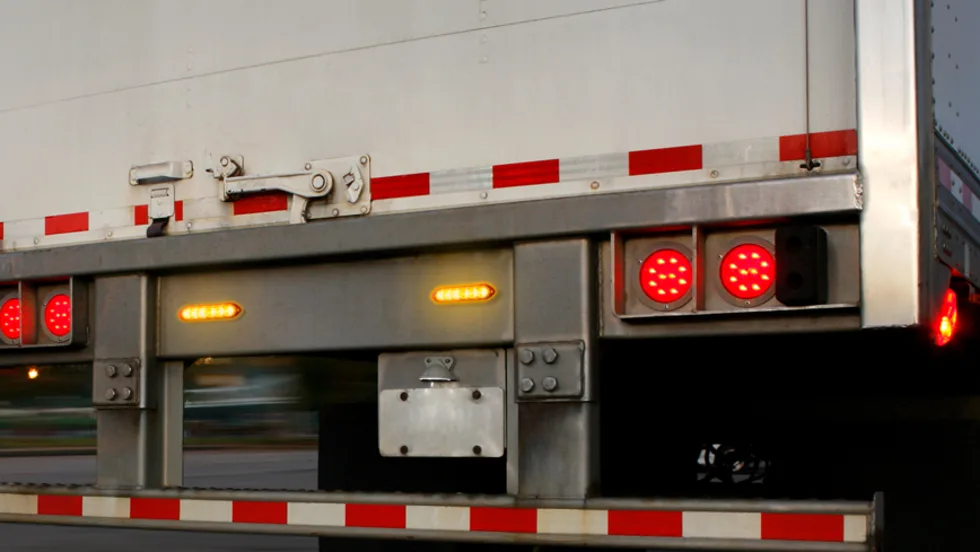
Pulsing Back-of-Trailer Lamps Aim to Prevent Crashes
Can the addition of a pulsing brake lamp on the back of a trailer prevent rear-end collisions? FMCSA seems to think so, if its exemptions are any indication.
Read More →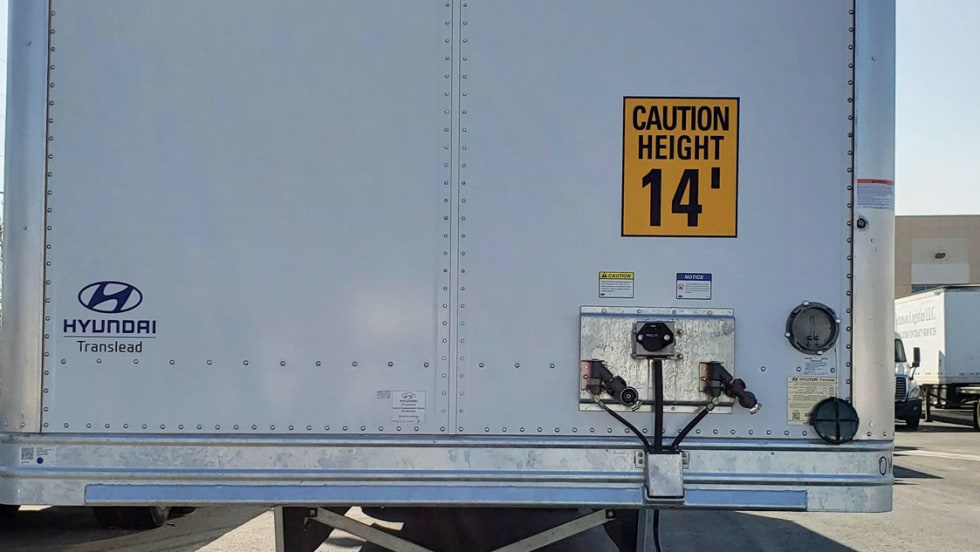
Designing a 14-Foot Trailer
Trailers are 13 feet, 6 inches high, right? Not for Hub Group, which developed a special 14-foot-high trailer spec for a dedicated customer based in California. Learn more in the Trailer Talk blog.
Read More →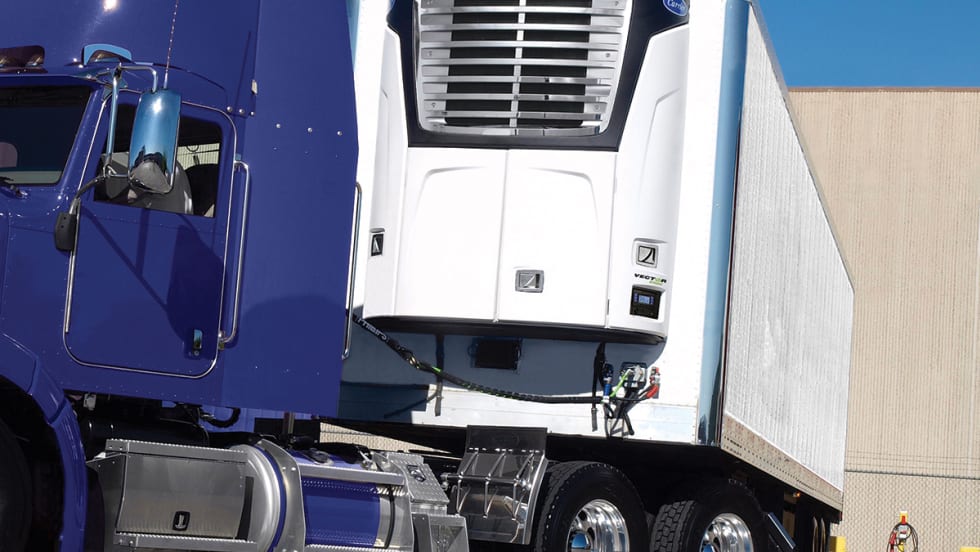
CARB Comes for Reefer Trailers
A new round of emissions control regulations decreed by the California Air Resource Board will begin affecting refrigerated trailer and TRU design and operations next year.
Read More →
5 Ways Data Analysis Maximizes the Value of Trailer Telematics
Are you getting the most out of your trailer telematics investment?
Read More →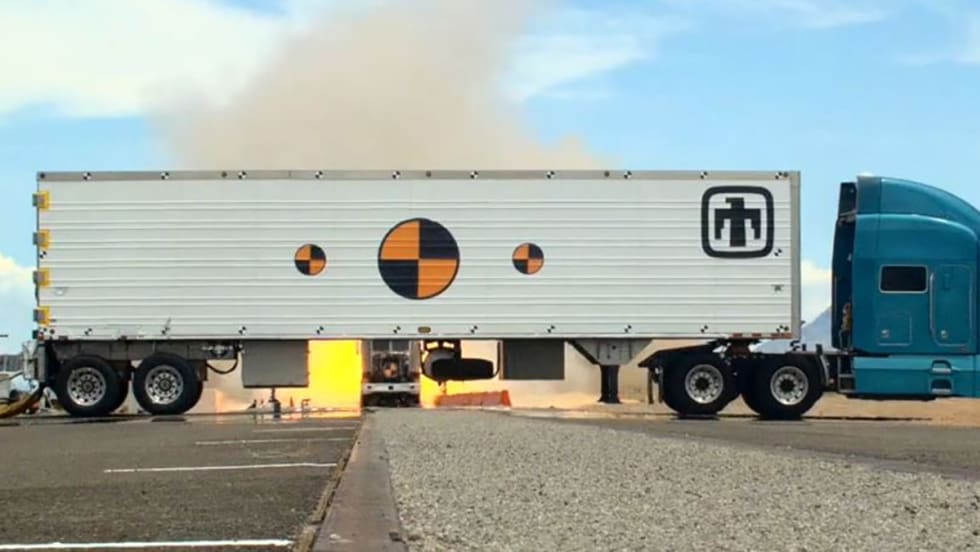
Can You Guess What's in That Trailer?
You don’t always know what’s in the trailers that pass you on the road. But some of those trailers are carrying something a little more dangerous that frozen food or new bedding…like, maybe, a nuclear weapon. But this isn’t an ordinary trailer; this is a trailer specifically made to not only carry this type of payload, but protect it at all costs.
Read More →
How Trailers Are Harnessing 'Free' Energy
Can trailers play a more active role in sustainable transport beyond aerodynamic add-ons or low-rolling-resistance tires? Some companies think so.
Read More →
Wrapping a Trailer for COVID’s Everyday Heroes
“We don’t only deliver freight. We deliver awareness.” That’s what Jim Barrett, president and CEO of Road Scholar Transport, likes to say about the Dunmore, Pennsylvania-based carrier’s “awareness fleet.” Its latest trailer wrap honors the everyday heroes of the pandemic.
Read More →
How a Tanker Fleet is Using Unorthodox Trailer Lighting to Fight Rear-End Collisions
Groendyke Transport watched the number of rear-end collisions with its trailers rise steadily until it tried an unorthodox and then unapproved method of alerting following drivers that its trucks were applying brakes and slowing down.
Read More →
The Role Trailers are Playing in COVID-19 Funerals
In places such as New York City and Detroit, overwhelmed hospitals and mortuaries are using refrigerated trailers to store the bodies of people killed by COVID-19.
Read More →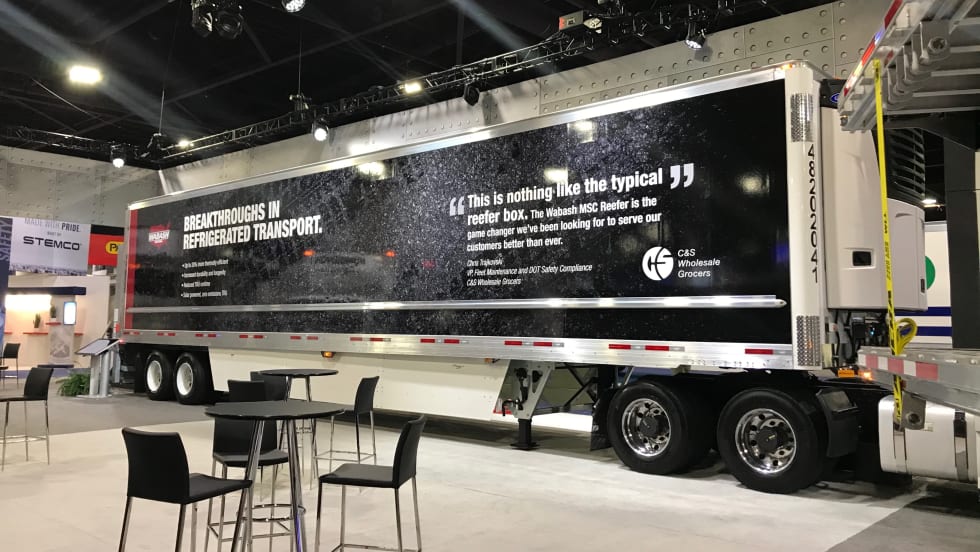
Reefer Trailer Aims to Help Reach Zero Emissions
Wabash National is partnering with C&S Wholesale Grocers to test a new type of zero-emissions refrigerated trailer.
Read More →