




10 Die in Trailer in Latest Human Trafficking Incident
It might have been 130 degrees or more inside that trailer. How long can anyone stand that? It’s amazing anyone survived.

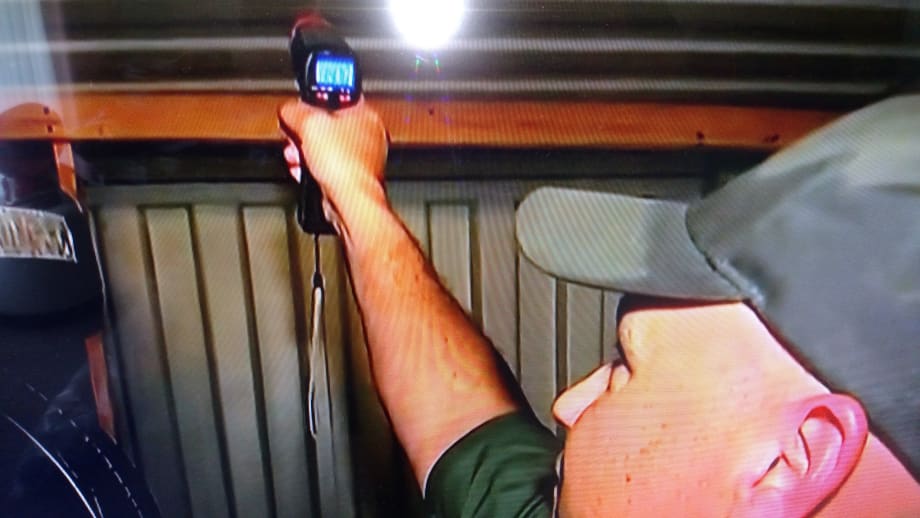
Border Patrol agent uses a laser thermometer to read the temperature near the trailer's ceiling. It registered 143.6 degrees Fahrenheit.

Now infamous reefer trailer stopped in a parking lot in San Antonio. There, close to 100 illegal aliens were discovered inside and rescued. Ten died from the heat insiide. Images from CBS and NBC news reports.
The news from Texas on Sunday was disturbing. As many as 100 illegal immigrants desperate to get into the U.S. rode inside a sweltering semi-trailer for about 160 miles from Laredo to San Antonio, until discovered and rescued when the truck stopped at a Walmart store. Ten of them died of heat stroke, apparently, and many others are still hospitalized. The callousness of the “coyotes” who locked them in there, with or without the knowledge of the truck driver, is disgusting.
Because I do this blog each week, I quickly focused on the equipment -- not so much the tractor, which appears to be a customized Freightliner FLD Classic, but the trailer: What kind, who owns it, why was it going down the road with no cargo but humans suffering from heat and lack of water?
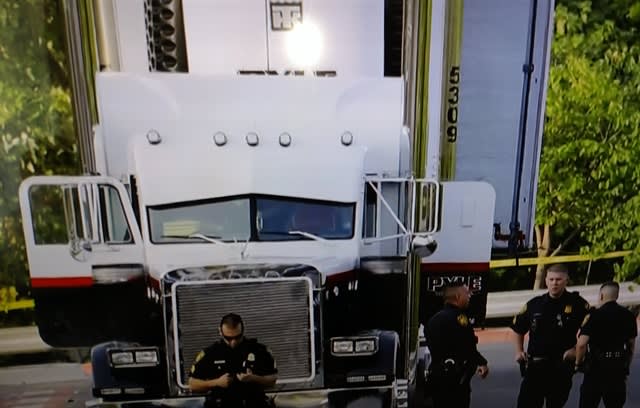
Police searched owner-operator James Bradley's tractor the morning after the human trafficking discovery. He was supposed to have delivered the trailer to a new owner in Brownsville, TX.
The arrested driver, owner-operator James Bradley Jr. of Florida, told police that the trailer’s owner, Pyle Transportation in Iowa, hired him to deliver the trailer to Brownsville, TX, where a new owner was to pick it up (the firm’s president corroborated that to a Des Moines TV news reporter). Bradley said he had gone to Laredo to have his tractor washed and detailed. If so, why didn’t he go straight to Brownsville to deliver the trailer?
Bradley said he didn’t know anyone was aboard until he stopped at that Walmart in San Antonio and heard noise from inside. He opened the doors and “Spanish people” began climbing out, knocking him to the ground in their terrified haste. It turns out that Bradley has a criminal record going back 20 years, and was driving without a CDL. Investigators will determine whether or not he’s telling the truth in this case.
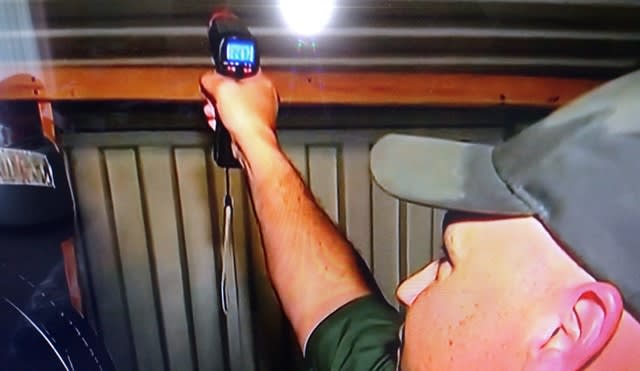
Border Patrol agent uses a laser thermometer to read the temperature near the trailer's ceiling. It registered 143.6 degrees Fahrenheit.
As for the trailer, it’s a Great Dane refrigerated van with a Thermo King reefer unit that evidently was shut down. I’m sure people at those companies, and at Pyle and Walmart, wish this had never happened, much less their being drawn into it.
Heat was the killer, but how hot was it inside? It was close to 100 degrees F in San Antonio at the time, and an NBC report showed a Border Patrol agent shooting a laser thermometer at the forward ceiling. It registered 143.6. It might have been in the 130s closer to the floor, but how long can anyone stand that? It’s amazing anyone survived. The Border Patrol says this sort of thing has happened before, and that there was another case earlier this month.

In a 2015 incident, illegal aliens jump out of a van after being discovered inside. They were desparate to get into the U.S.
Network news coverage of the San Antonio event has been understandably extensive, with this story leading newscasts for two days. And as always, reporters and anchors who aren’t too familiar with the trucking industry seldom used the correct terms in describing the vehicle. They said the people “were locked inside a tractor-trailer,” “the driver of the semi-trailer,” and other imprecise verbiage. That’s trivial in light of the human tragedy, I know, but it still bugs me. Why don’t they learn the correct terms and use them?
And there’s an irony here: The surviving victims are getting the best medical care, yet when they’re well enough, they’ll be sent back to Mexico and Guatemala, where they came from. And maybe they’ll die in another attempt to get into our country just to try to live decent lives. That’s far more than sad, and I wish I had a solution to the problem.
Related: Truck Driver Charged in Fatal Human Smuggling Operation
More Blog Posts

Pulsing Back-of-Trailer Lamps Aim to Prevent Crashes
Can the addition of a pulsing brake lamp on the back of a trailer prevent rear-end collisions? FMCSA seems to think so, if its exemptions are any indication.
Read More →
Designing a 14-Foot Trailer
Trailers are 13 feet, 6 inches high, right? Not for Hub Group, which developed a special 14-foot-high trailer spec for a dedicated customer based in California. Learn more in the Trailer Talk blog.
Read More →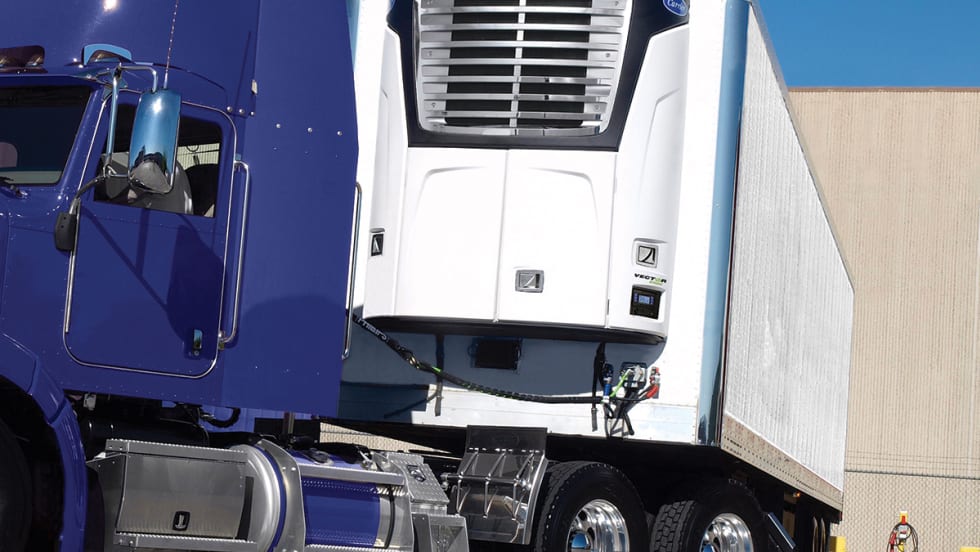
CARB Comes for Reefer Trailers
A new round of emissions control regulations decreed by the California Air Resource Board will begin affecting refrigerated trailer and TRU design and operations next year.
Read More →
5 Ways Data Analysis Maximizes the Value of Trailer Telematics
Are you getting the most out of your trailer telematics investment?
Read More →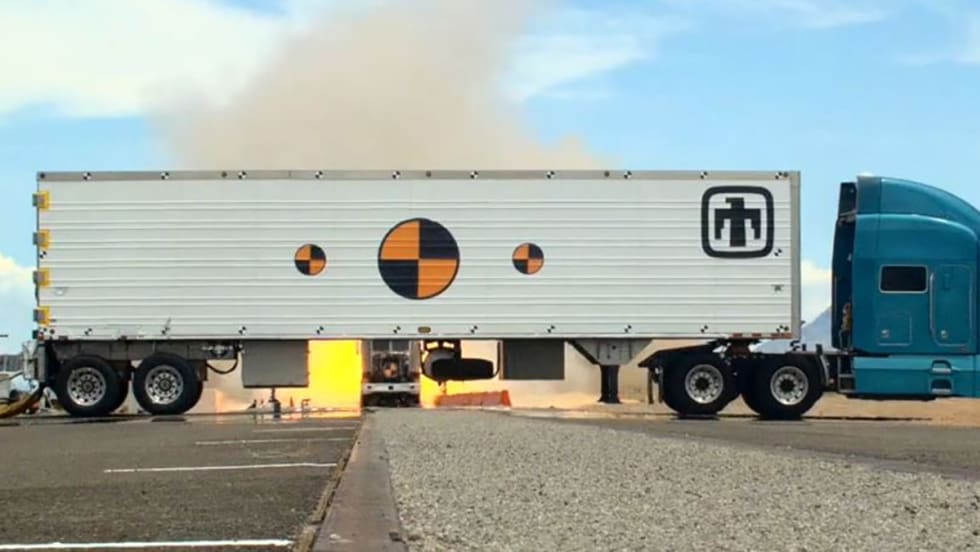
Can You Guess What's in That Trailer?
You don’t always know what’s in the trailers that pass you on the road. But some of those trailers are carrying something a little more dangerous that frozen food or new bedding…like, maybe, a nuclear weapon. But this isn’t an ordinary trailer; this is a trailer specifically made to not only carry this type of payload, but protect it at all costs.
Read More →
How Trailers Are Harnessing 'Free' Energy
Can trailers play a more active role in sustainable transport beyond aerodynamic add-ons or low-rolling-resistance tires? Some companies think so.
Read More →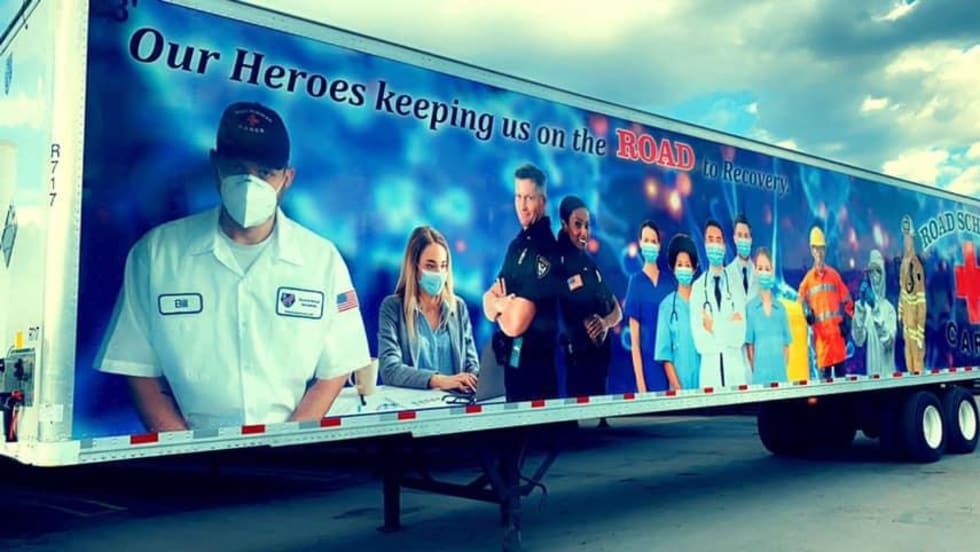
Wrapping a Trailer for COVID’s Everyday Heroes
“We don’t only deliver freight. We deliver awareness.” That’s what Jim Barrett, president and CEO of Road Scholar Transport, likes to say about the Dunmore, Pennsylvania-based carrier’s “awareness fleet.” Its latest trailer wrap honors the everyday heroes of the pandemic.
Read More →
How a Tanker Fleet is Using Unorthodox Trailer Lighting to Fight Rear-End Collisions
Groendyke Transport watched the number of rear-end collisions with its trailers rise steadily until it tried an unorthodox and then unapproved method of alerting following drivers that its trucks were applying brakes and slowing down.
Read More →
The Role Trailers are Playing in COVID-19 Funerals
In places such as New York City and Detroit, overwhelmed hospitals and mortuaries are using refrigerated trailers to store the bodies of people killed by COVID-19.
Read More →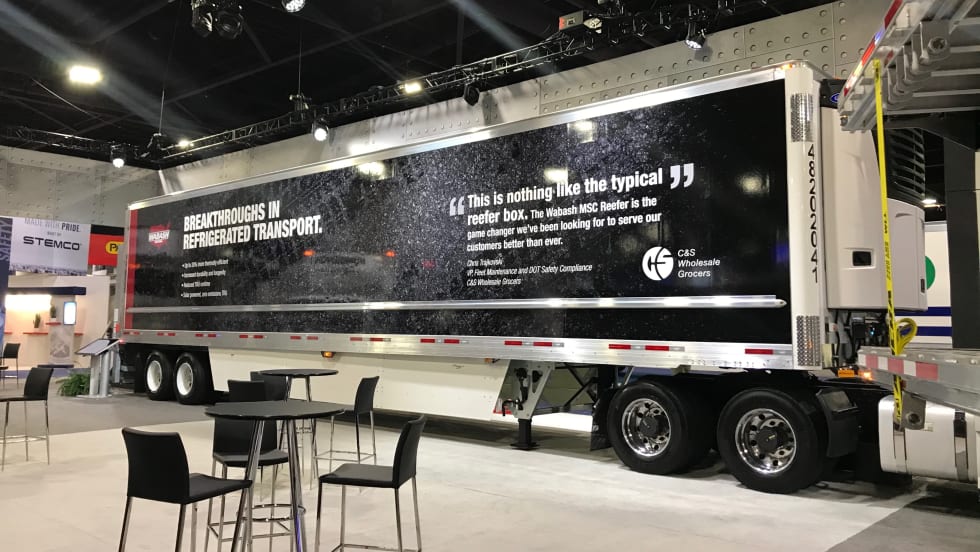
Reefer Trailer Aims to Help Reach Zero Emissions
Wabash National is partnering with C&S Wholesale Grocers to test a new type of zero-emissions refrigerated trailer.
Read More →