




Using the Safety Management Cycle
The Compliance, Safety, Accountability enforcement model has been fine-tuned on multiple occasions since the program's inception by the Federal Motor Carrier Safety Administration
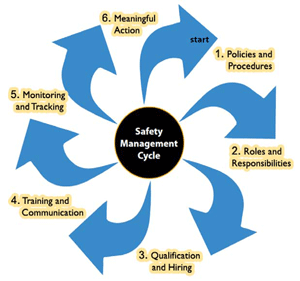
The Compliance, Safety, Accountability enforcement model has been fine-tuned on multiple occasions since the program's inception by the Federal Motor Carrier Safety Administration.
One constant within the model, first appearing during the pilot project, but not drawing much attention until recently, is the agency's Safety Management Cycle.
The SMC is a safety management model developed by the agency to help motor carriers identify weaknesses that contributed to a specific violation during a roadside inspection or an audit of their records.
By analyzing the root cause of the problem area, you can continuously improve your business practices to improve your CSA scores and reduce the risk of a serious crash.
The SMC has its roots in a related term that has appeared in the regulations for a number of years: safety management controls.
The phrase is contained in the definition of reviews in 49 CFR Section 385.3. It states that FMCSA will make an assessment of the carrier's safety performance and basic safety management controls. It goes on to say that safety management controls are the systems, policies, programs, practices, and procedures used by a motor carrier to ensure compliance with applicable safety and hazardous materials regulations...to reduce the risk of highway accidents and hazardous materials incidents resulting in fatalities, injuries, and property damage.
In the past, that is where FMCSA's direction ended. Today, FMCSA takes this concept a step further by offering categories of safety management controls. The root cause of a violation or crash will fall within one of these categories, as will secondary causes, since everything in the SMC model is inter-related. All the pieces of a safety program must be working together in order for risk to be reduced.
The root cause of a violation or crash will lie within one of the following components of the SMC model:
- Policies and procedures: Implementing operational rules and processes for a motor carrier and its employees.
- Roles and responsibilities: Identifying, clearly defining, and documenting roles and responsibilities of employees directly or indirectly involved with regulatory compliance and safety best practices, and assigning and reinforcing these continued responsibilities.
- Qualifications and hiring: Finding and qualifying people for the defined roles and responsibilities.
- Training and communication: Ensuring that a motor carrier and its employees have the proper skills and knowledge to complete their jobs based on an ongoing process.
- Monitoring and tracking: Ensuring that a motor carrier and its employees are in compliance with policies and procedures, and roles and responsibilities.
- Meaningful action: Providing positive reinforcement for, or aiming at improving or correcting, employee behavior.
Even though the SMC currently does not appear in the Federal Motor Carrier Safety Regulations, FMCSA enforcement personnel have been trained on its use as they investigate a motor carrier's compliance efforts. It is simply an extension of the definition of the term reviews contained in Section 385.3 as mentioned above.
Enforcement officers who review a motor carrier's records will use the SMC to determine if the business has adequate safety management controls.
For example, suppose the auditor discovers that the motor carrier consistently used drivers before they received a negative pre-employment drug test result. This is a critical violation under the compliance review model. The auditor will want to find out why the violation repeatedly took place and where the safety management controls broke down.
One common way of determining the primary reason is to ask a series of why questions:
- Why weren't the pre-employment tests conducted?
Joe Supervisor used to be in charge, and he retired.
- Why didn't the carrier reassign the role?
No one really knew all the tasks that Joe did.
- Why wasn't the recordkeeping error discovered?
No one was monitoring the drug and alcohol files.
- Why weren't the files audited?
Our policy and procedures still had Joe assigned to that task.
- Why was Joe's name still in the policy and procedures?
No one was assigned to review the current policies and procedures.
In this example, the individual who used to schedule the tests retired, and no one took over the responsibility because no one knew better. Their current policies and procedures included self-auditing the U.S. Department of Transportation drug and alcohol records, but the policy was outdated. And no one was assigned the role of reviewing and updating the policies and procedures to identify that the former employee's name needed to be replaced.
The first step in this example is to assign the role of reviewing and updating current policies and procedures to ensure that obsolete references are removed and that all roles are assigned to current employees. In the event of a change in staff, responsibilities need to be shifted to either the replacement employee or another motor carrier employee. It might be wise to have a primary and secondary party assigned to some roles, especially during interim periods waiting on replacements.
You can use the SMC as a best practice tool before FMCSA ever has a reason to conduct an investigation.
To continuously improve your safety program, your company should review its roadside inspection data and crash reports, and conduct mock audits to determine patterns and discover problem areas. Using the categories of potential reasons listed in the SMC, your company can then make necessary adjustments and continue to monitor and track to see if they are working.
By finding the primary and secondary causes of the violations and applying the fixes using the SMC, your safety management practices should stand up against the FMCSA's SMC litmus test in the event of a compliance review.
The Federal Motor Carrier Safety Administration introduced an expanded version of its Pre-Employment Screening Program, making it easier for more motor carriers, with the driver's consent, to access PSP records. A PSP record includes three years of crash history and five years of roadside inspection history for a commercial driver.
PSP is now available to eligible intrastate motor carriers and companies directly involved in the pre-employment screening and hiring of commercial drivers.
FMCSA also launched an iPhone app for PSP. Account holders can now securely access a PSP dashboard on an iPhone or iPad, and easily review a PSP record in a mobile-friendly format, www.psp.fmcsa.dot.gov
In addition, J.J. Keller is now offering a PSP service to provide carriers with a complete review of a driver's history. Carriers receive a PSP scorecard from Keller with an overall evaluation based on variables tied to driver performance.
Carriers have to sift through com plex PSP reports from the FMCSA," explains Scot Rambo, director of compliance services. We interpret these driver history reports to provide a clear assessment, as well as explain the meaning behind the data present ed in the PSP. www.jjkellerservices.com/psp
Kathy Close is a subject matter expert at J.J. Keller & Associates. Her areas of expertise include transportation security, DOT drug and alcohol testing, and driver qualification.
From the November issue of Heavy Duty Trucking magazine.
More Safety & Compliance
FMCSA: Stop Using These 15 Electronic Logging Devices
Fleets and drivers must replace the revoked ELDs with ones on the FMCSA's registered device list of electronic logging devices.
Read More →
How HDT’s 2026 Truck Fleet Innovators Are Rethinking Fleet Operations
Meet five trucking leaders who are challenging assumptions, solving operational problems, and putting innovative ideas to work.
Read More →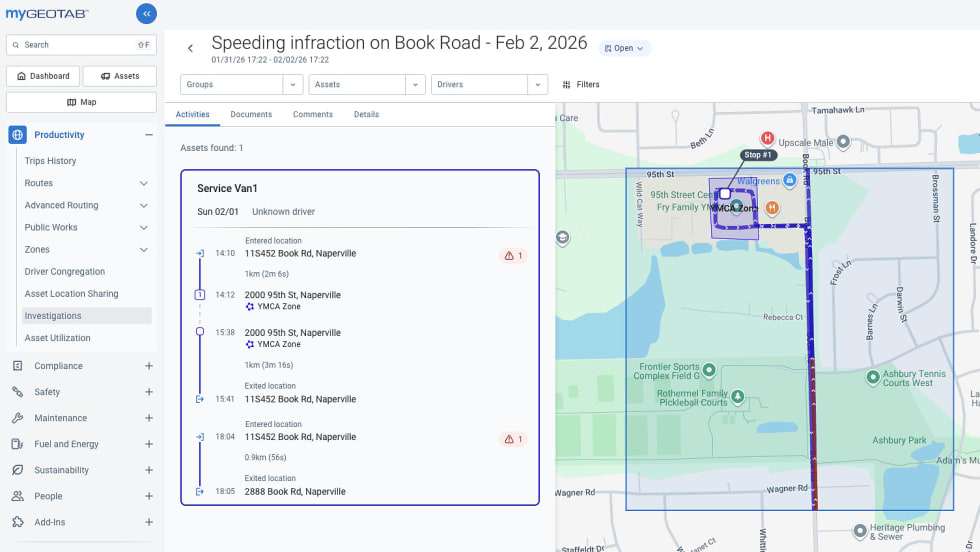
Geotab Launches Tool to Speed Fleet Incident Investigations
Geotab Investigations brings telematics data, video, photos, reports and other evidence into one case file to help fleets determine what happened and resolve incidents faster.
Read More →
FMCSA Moves to Codify English Language Requirements for Commercial Drivers
By changing regulations on English-language proficiency requirements for commercial drivers, rather than relying on a guidance memo, the FMCSA said future administrations won't be able to walk back the Trump administration's stricter enforcement with just a memo.
Read More →
Trump Administration Expands Homeland Security's Role in Trucking Enforcement
The administration's latest trucking crackdown goes beyond roadside inspections, expanding Homeland Security's role in commercial vehicle enforcement and investigations involving CDL training schools.
Read More →
Paccar Recalls 2027 Trucks Built This Summer for Possible Electrical Problem
The nearly 6,000 Kenworth and Peterbilt trucks in the recall could potentially lose engine power, among other things.
Read More →
Brake Safety Week to Focus on Drums and Rotors
Commercial vehicle inspectors will be focusing on brakes during CVSA's Brake Safety Week, August 23-29.
Read More →
Trump Administration Looks to Put More Veterans Behind the Wheel
The Freedom Haulers program pulls together existing and expanded programs at several federal agencies to recruit veterans to drive commercial heavy-duty trucks and cut the red tape for them to get a CDL, training, and employment.
Read More →
$604 Million Verdict Tests Broker Liability After Supreme Court Ruling
C.H. Robinson plans to appeal after a Texas jury found it bore the largest share of responsibility for a fatal 2021 crash, in a case that follows the Supreme Court's Montgomery decision allowing negligent hiring claims against freight brokers.
Read More →
How Fraley & Schilling Improved Logbook Compliance by Over 50%
Fraley & Schilling needed a way to close a compliance workflow gap in its ELD system without adding more work from driver training, reminders, and back-office follow-ups. It found the answer in a custom driver app.
Read More →