




Using Technology to Combat Distracted Driving
Distracted driving has been the subject of two national DOT summits in the past two years, and new Federal Motor Carrier rules that became effective in October prohibit commercial drivers from texting while driving

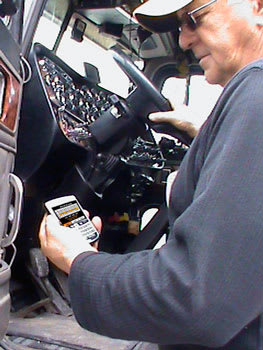
Distracted driving has been the subject of two national DOT summits in the past two years, and new Federal Motor Carrier rules that became effective in October prohibit commercial drivers from texting while driving.
The Commercial Vehicle Safety Alliance is currently working on a distracted driving transportation program directed toward fleets that it plans to roll out in 2011.
There is good reason for the focus, according to Steve Keppler, CVSA executive director. "Nationwide, 16 percent to 20 percent of all highway fatalities are related to distracted driving or inattention."
And truck drivers have even more opportunity for distraction, says Jack Hegarty, Arizona Department of Public Safety, who is working on the training program with CVSA. "They have to balance the cell phone with the dispatch device, and this training helps them use those systems safely."
While mobile communications systems revolutionized trucking over the last 20 years, the technology has also created some problems.
"We know we are one of the potential distractions in the cab, but in a lot of cases our systems are very necessary for both the fleet and the driver," says Chris Silver, senior product manager with Qualcomm Enterprise Services. Today, there are a host of applications available in mobile technology platforms, she points out.
"It's not the lone truck driver out there on the road by himself anymore focusing on driving and getting to where he needs to go," Silver says. "Now there are instructions, there's assignment to the next load, there's personal discussions with families. Mobile technology has always had the opportunity to distract drivers, and now, there are more opportunities available with the increasing technology."
Charlie Mohn, product marketing manger with Xata, says driver distraction is a function of the notion of being connected. "I think it started with cell phones and the Internet and the concept that you can always be connected to just about anything, any time anywhere," he says. "It is a positive thing in a lot of ways. It helps companies and drivers be more efficient and more effective in managing their fleet."
On the other hand, Mohn notes the technology has evolved to the point that it's changed our expectations. People expect to have access to things in real-time, whether that's being connected to people or being connected to the office.
"I think (distracted driving) was bound to happen with the evolution of technology," says Tony Lourakis, CEO of Complete Innovations, which offers communication products to customers in delivery, courier and service applications. He notes that just 10 years ago, a small percentage of consumers and commercial vehicle drivers used handheld devices. Since then, there is almost full penetration.
Lourakis points out that it is not just a commercial vehicle issue: "I don't think this problem is isolated to the commercial world. Some of the regulation coming out is across the board, not specific to trucking; you can't talk on the phone while driving in certain states, or you need hands-free."
Less touching, less looking
While new technologies may increase driver distraction, most providers offer tools customers can use to minimize distractions. Mohn notes there are tools available regardless of the technology customers use, whether it is a fixed display or a hand-held device.
For fixed-display devices, the product is connected to the vehicle's data bus, so the mobile communication system knows when the vehicle is moving. The Xata system comes with options that allow fleets to control whether or not the driver can interact with the application when the vehicle is in motion. "Basically, you can lock the driver out from interacting at all, depending on the fleet's needs," Mohn says.
Xata also has a text-to-speech capability, so when messages come in from dispatch the driver can listen to them rather than read them. Plus there are audible alerts for when the truck is speeding or departing from its lane. Navigation directions can also be delivered audibly. "This way, drivers don't have to look at a map to know when they should turn," Mohn says.
Chris Silver says QES provides a number of technologies to deal with driver distraction. "Twenty years ago, the way you dealt with the onboard system was to blank the screen if you didn't want the driver to become distracted," she says. "Buy you don't want to blank the screen completely, because drivers may need to know where their next turn is. If you just blank the screen, he has to pull over to find this out. We give him the ability to see the things that are important to him and the tools to retrieve this information while keeping his eyes on the road."
Qualcomm's newer systems include a text-to-speech application that can read aloud messages to the driver, give him audible navigation directions or tell him how much time he has left for hours-of-service compliance. An arrival/departure engine recognizes when the vehicle is within a certain radius of a location and then delivers instructions on where to go from that point.
Silver says this type of user interface will be integrated into all of their applications moving forward. The key is these tools mean "less things to touch, fewer things to see and really simplifying the user interface and the tasks that are required of a driver."
PeopleNet's mobile communication system offers similar tools to help fleets control access to the system while the vehicle is moving and reduce driver distractions, according to Jim Angel, product manager of safety and compliance solutions.
"We provide tools where on different platforms we can completely lock down the keyboard so no messages can be sent. We can lock down the device on our CE and Windows platforms so the driver is looking at a blank screen. Or the company can look at a safe mode screen in which we provide the driver real-time information in regards to his hours-of-service" or fuel mileage.
PeopleNet also offers a text-to-voice application for driving directions.
Not all companies want to completely lock their mobile communication systems while driving. It depends upon the application. For example, Mohn points out that a company that uses team drivers may choose not to lock the drivers out of the system when the truck is moving, because they may want the non-driving member of the team to respond to a dispatch messages or otherwise communicate with dispatch while the other is driving.
Schneider National late last year began retrofitting all its trucks with a new technology that provides text-to-voice street-level driving directions. "That eliminates the driver having to look at a roadmap, look at written instructions, or look for road signs," explains Don Osterberg, senior vice president of safety and security. "We believe through our investment in that technology we've been able to reduce other forms of distraction."
For mobile device and smartphone users, technology also offers tools to reduce driver distractions. Lourakis says Complete Innovations' systems can use canned messages for communicating both directions. The driver only has to push a button, instead of making a voice call. Another feature is using the dispatch application on handheld device like the new Motorola ES 400 or a Blackberry. This eliminates the need to call a driver and verbally tell them details about their next job. You can dispatch them a work order with the details about the job, and the driver can look at that data when it's convenient and safe instead of being interrupted by a phone call, he says.
ZoomSafer provides software for mobile phones to prevent distracted driving, which includes among other things GPS-based motion detector that locks the mobile phone's screen and keypad wh
More Safety & Compliance
A Camera Isn't a Safety Program. Here's What Brokers Are Screening for Now
Footage alone may not be enough to pass broker vetting processes. Here's what counts as a defensible safety program now.
Read More →
Marijuana and Trucking’s Drug-Testing Dilemma
Marijuana is getting stronger, laws are changing, and drug tests still can’t reliably establish impairment. What does that mean for truck drivers and the fleets that employ them?
Read More →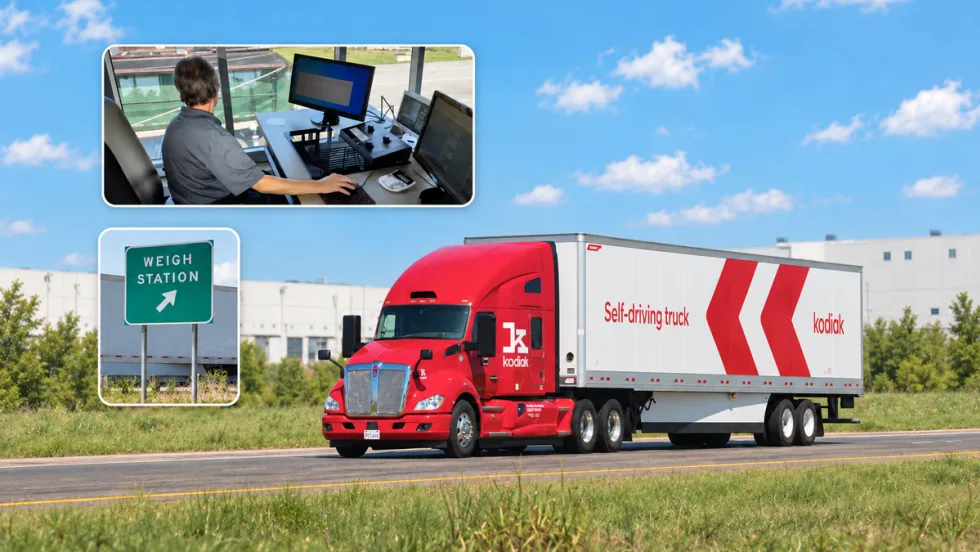
PrePass, Kodiak Connect Driverless Trucks to Roadside Enforcement
The system will allow enforcement agencies to verify Enhanced Inspection information and decide whether Kodiak’s autonomous trucks can bypass roadside screening sites.
Read More →

From One Generation to the Next: How Mentorship Builds Safer Truck Drivers
After three decades in trucking, Harold Perry shares what he's learned about driver safety, mentorship, and helping the next generation build confidence behind the wheel.
Read More →
FMCSA Pauses Biennial-Update Enforcement Amid Motus Transition
Carriers whose updates were due on or after June 1 have more time, while FMCSA works to stabilize its new registration system and warns of phishing sites impersonating its new carrier registration system, Motus.
Read More →
ZF Expands Commercial Vehicle Push in North America
ZF is expanding its North American commercial-vehicle presence with new transmission applications, electrification, trailer technology and autonomous-driving systems.
Read More →
Truck Drivers Need More Than Another Alert
Fleets have more visibility into truck health, safety events, and driver activity than ever. The next challenge is turning all that information into useful guidance for the person who has to decide what to do next.
Read More →
Tesla Wants a Self-Driving Semi. Are Cameras Enough?
Could Tesla’s camera-only autonomous driving technology work on an 80,000-pound Semi? In this commentary, HDT's Deborah Lockridge takes a look at Tesla, Cybercab, and how autonomous trucks see the road.
Read More →
What DOT’s Automated Vehicle Strategy Means for Trucking
The U.S. Department of Transportation issued a new automated-vehicle strategy that outlines plans for driverless-truck regulations, cross-state freight corridors, and federal safety standards.
Read More →
NYC Expands Speed, Pedestrian Safety Tech Across Fleet
New York City is expanding intelligent speed assistance and pedestrian-alert systems across its municipal fleet, moving the technologies from pilot programs into vehicle procurement and retrofit requirements.
Read More →