




Using a Safety Program to Get the Best Rates in a Hard Market
With a hard market on the way for the insurance industry, it's more important now than ever to shore up your safety program (although developing a safety culture should always be a focus, no matter what the market conditions.

With a hard market on the way for the insurance industry, it's more important now than ever to shore up your safety program (although developing a safety culture should always be a focus, no matter what the market conditions.)
With market conditions growing continuously more difficult, a safety program can have a significant impact on your premium.
Whether you're starting a safety program for the first time or looking to improve your existing program, the following are the critical elements of a successful program.
The total value of an effective safety program is difficult to measure. How can you calculate the value of accidents that didn't happen? From working with hundreds of businesses over the years, however, I can assure you that companies with a commitment to safety have experienced far fewer premium increases than companies with poor safety programs. In almost every case, an effective program pays dividends.
Even if you already have a safety program, make sure you're continuously improving and keeping it fresh. There is danger in becoming complacent and taking an effective safety program for granted when it's achieving its natural goal of managing your risks. If you eliminate or decrease your safety resources, be prepared to incur more losses.
We like to break losses down into three categories: workplace/employees, third-party liability and property/assets. You can impact each of those areas with a safety program, either by creating or improving one.
Effective safety programs begin with management's safety philosophy and commitment to creating a safety culture. Continuous reinforcement is important to effectively getting this across.
Do an honest assessment of how management's view on safety is perceived. Is safety the top priority, or is it sacrificed from time to time for increased productivity? Are leaders presenting conflicting messages?
Unclear priorities from senior leadership on this will create confusion among employees and jeopardize the success of a safety program. This is a very common problem.
Involving employees in your safety program is the key to its success. Begin with the recruitment of individuals who share your safety philosophies and subject them to drug/alcohol testing.
Once you have the right people, you will need to establish a strong and consistent training program. Training should be ongoing, and although annual or semi-annual safety meetings are good, monthly training programs are even better. Depending on the size and type of your operation, you might consider short meetings each week to provide a constant reinforcement of your safety message.
Gaining respect and trust from your employees can be difficult, so recognizing and rewarding them for excellent safety practices is crucial to your program's overall success. On the other hand, an unsafe employee can be detrimental to your company's success. Discipline and, at times, termination have to be a part of your safety program as well.
Although safety should be everyone's job at the company, empowering safety supervisors or a safety committee who are responsible for ensuring a safe workplace. Establishing ownership of the program is critical and provides focused leadership for the effort.
Consistent and organized documentation will help you communicate your safety efforts to underwriters and protect your business in the event of a loss. Beyond that, it is also the best way to communicate and reinforce your message to employees.
Start by establishing program goals and share them with your workforce. Written policies, rules and regulations should also be shared and enforced with employees. It is a good idea to post the policies along with the goals in a visible location.
By properly reporting and monitoring employee injuries and accidents, you can minimize the impact to your Worker's Compensation experience rating. Complete reports immediately following an injury or accident and follow the progress of your claim with the adjuster. You can minimize total claim costs by controlling the medical expenses and providing an early return to work program.
Safety has to be an ongoing effort - don't get complacent. Embrace the new Lowe's slogan "Never Stop Improving" as the mantra of your safety program.
Conduct regular inspections to identify hazards and/or problem areas within your organization. Form a team composed of safety supervisors and management who have the experience to identify dangers and have the resources and authority to correct them immediately.
Keep safety efforts fun to prevent things from getting stale. Celebrate with employees when you achieve milestones such as X days incident-free, and look for ways to reward successes (instead of just punishing the mistakes).
Remember, no matter what insurance environment we're experiencing (hard or soft market), reducing your losses always improves your bottom line.
Look at your safety expenses as an investment. Your return on investment will vary from year to year. In light of your total cost of risk, you will find your safety program is a necessary investment that will provide a valuable return.
This article originally appeared on HNI's blog and is reprinted with permission.
More Safety & Compliance
FMCSA: Stop Using These 15 Electronic Logging Devices
Fleets and drivers must replace the revoked ELDs with ones on the FMCSA's registered device list of electronic logging devices.
Read More →
How HDT’s 2026 Truck Fleet Innovators Are Rethinking Fleet Operations
Meet five trucking leaders who are challenging assumptions, solving operational problems, and putting innovative ideas to work.
Read More →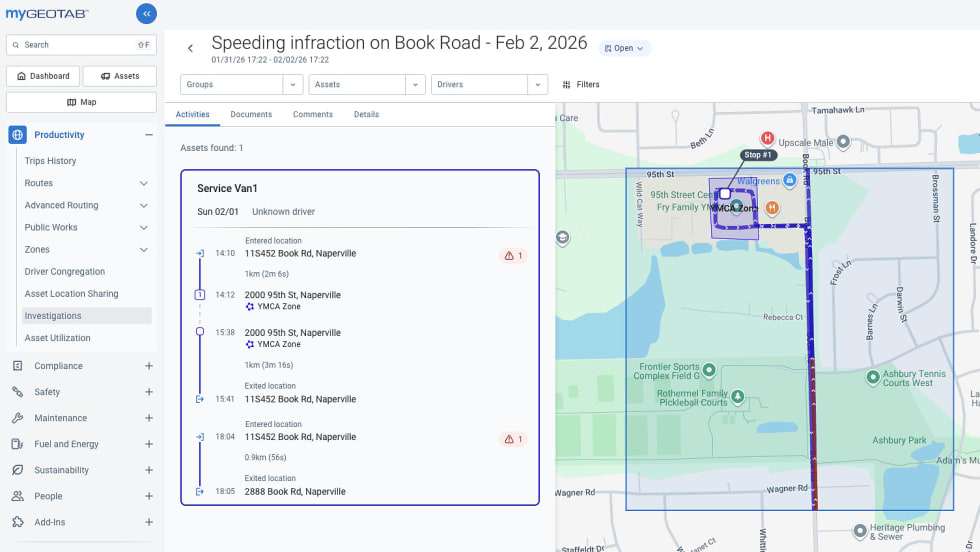
Geotab Launches Tool to Speed Fleet Incident Investigations
Geotab Investigations brings telematics data, video, photos, reports and other evidence into one case file to help fleets determine what happened and resolve incidents faster.
Read More →
FMCSA Moves to Codify English Language Requirements for Commercial Drivers
By changing regulations on English-language proficiency requirements for commercial drivers, rather than relying on a guidance memo, the FMCSA said future administrations won't be able to walk back the Trump administration's stricter enforcement with just a memo.
Read More →
Trump Administration Expands Homeland Security's Role in Trucking Enforcement
The administration's latest trucking crackdown goes beyond roadside inspections, expanding Homeland Security's role in commercial vehicle enforcement and investigations involving CDL training schools.
Read More →
Paccar Recalls 2027 Trucks Built This Summer for Possible Electrical Problem
The nearly 6,000 Kenworth and Peterbilt trucks in the recall could potentially lose engine power, among other things.
Read More →
Brake Safety Week to Focus on Drums and Rotors
Commercial vehicle inspectors will be focusing on brakes during CVSA's Brake Safety Week, August 23-29.
Read More →
Trump Administration Looks to Put More Veterans Behind the Wheel
The Freedom Haulers program pulls together existing and expanded programs at several federal agencies to recruit veterans to drive commercial heavy-duty trucks and cut the red tape for them to get a CDL, training, and employment.
Read More →
$604 Million Verdict Tests Broker Liability After Supreme Court Ruling
C.H. Robinson plans to appeal after a Texas jury found it bore the largest share of responsibility for a fatal 2021 crash, in a case that follows the Supreme Court's Montgomery decision allowing negligent hiring claims against freight brokers.
Read More →
How Fraley & Schilling Improved Logbook Compliance by Over 50%
Fraley & Schilling needed a way to close a compliance workflow gap in its ELD system without adding more work from driver training, reminders, and back-office follow-ups. It found the answer in a custom driver app.
Read More →