





Watch HDT Talks Trucking Behind the News: The End of the Owner-Operator Model?
Trucking Looks for New Owner-Operator Strategies as Independent Contractor Model is Threatened
Motor carriers that use owner-operators in California are working to re-evaluate their operations in order to meet AB5's strict restrictions on the use of independent contractors.
July 29, 2022
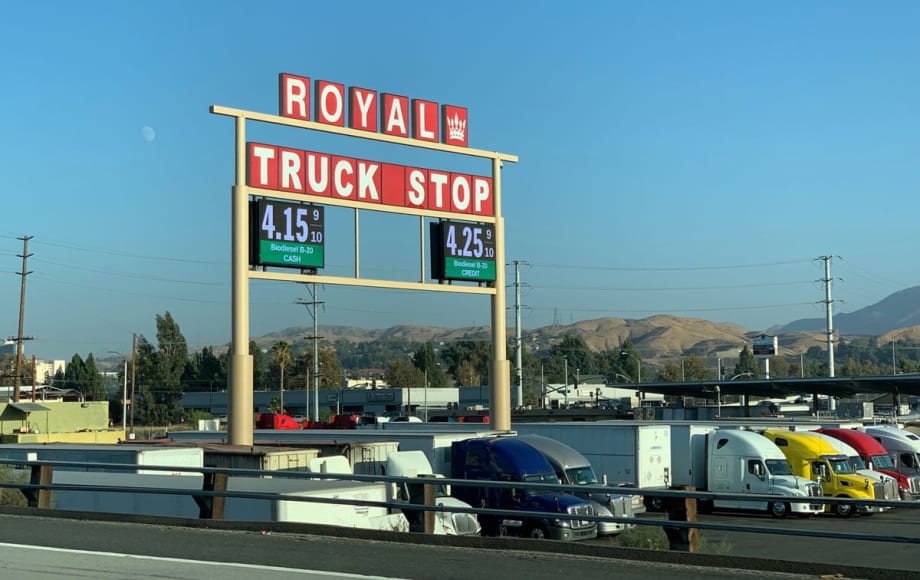
Some 70,000 owner-operators in California are affected by AB5, according to the California Trucking Association.
HDT file photo by Deborah Lockridge (2021)
7 min to read
Motor carriers that use owner-operators in California are working to re-evaluate their operations in order to meet strict restrictions on the use of independent contractors, as labor officials at the national level push to crack down on “employee misclassification” as well.
Recent independent trucker protests that brought the Port of Oakland to a crawl gained plenty of media attention, but California Gov. Gavin Newsom’s office indicated a lack of concern.
The truckers were protesting AB5 (California Assembly Bill 5), a 2019 law that restricts businesses from classifying workers as independent contractors if those workers are in the same business. On June 30 of this year, the U.S. Supreme Court decided not to hear a case brought by the California Trucking Association challenging the law. That negated an injunction that had been keeping the state from enforcing the law in trucking while the case went through the courts.
According to published reports, a spokesperson for Newsom’s office said that the truckers should “focus on supporting this transition....Although it has been the subject of litigation, AB 5 was enacted in 2019, so no one should be caught by surprise by the law’s requirements at this time.”
Many motor carriers already have been taking action, or at least researching their options.
Landstar, for instance, has about 350 owner-operators (which it calls business capacity owners, or BCOs) that are potentially affected by AB5.
During a second quarter earnings call, Landstar’s Joe Beacom, VP and chief safety and operations officer, said the company has been making its contractors aware of the legal situation in California, as well as options they have if they want to stay on as owner-operators with Landstar, “which would be relocating out of California, or not haul California-originating loads, or get their own authority.”
Options for Trucking Companies with Owner-Operators in California
In 2019 after the passage of AB5, transportation attorneys at Scopelitis, Garvin, Light, Hanson & Feary outlined two potential solutions:
First is the settlement carrier model, where the equipment owner takes on the responsibility of operating as an authorized motor carrier with its own DOT authority. “However, owner-operators may not want to tackle the maze of regulatory, safety, and insurance obligations that come with operating as a motor carrier,” they noted.
And Joe Rajkovacz with the Western States Trucking Association told HDT that it may not be enough to satisfy California employment officials. "Relationships involving carriers and brokers contracting with single-truck operators that have incorporated and have their own operating authority will come under the microscope, too.”
The second option is the two-check system, where the professional driver becomes an employee and is paid separately for the use of the equipment in an unrelated transaction. The former owner-operator gets two checks. The first check is to the driver as an employee. The second check is for the lease or rental of the driver’s equipment.
It’s not new to the trucking industry and has historically been used in the oil and gas industry, according to Scopelitis.
“But the environment created by AB5 may have created a circumstance in which the two-check system may be worthy of further discussion for owner-operator businesses.”
However, they note, this “may be seen by many owner-operators as ending or limiting their entrepreneurial aspirations and may not provide a sustainable model for recovering their investment in equipment.” In other words, drivers who became owner-operators because they wanted the independence it provides may not want to become employees.
The Two-Check Option
Motor carriers must comply with AB5 law or risk costly penalties up to $25,000 per infraction, according to TransForce, which is offering a “two-check” service to help fleets meet the new law while owner-operators keep their trucks.
The TransForce AB5 Dedicated Solutions Program transitions a motor carrier's independent contractors to full-time TransForce employee drivers. TransForce hires the independent contractors as its employees, then contracts with the motor carrier to provide drivers dedicated to that carrier's company.
“By partnering with TransForce, carriers can become compliant with AB5 regulations quickly and eliminate the risk of misclassifying workers, which means they can continue to keep trucks moving to deliver goods to consumers throughout the state of California,” said Dennis Cooke, TransForce President and CEO. He said the program can help carriers achieve AB5 compliance in a matter of days.
TransForce explained to HDT that while the drivers in the program will be employees, they are still business owners in that they are able to lease their equipment to the carrier. The company already has worked with a number of motor carriers on this conversion. For instance, a spokesperson told HDT, it has worked with Osterkamp on transitioning close to 150 drivers with a 99% retention rate.
“This is an interesting way to approach it, and potentially helpful,” Kristen Johnson, partner with transportation law firm Taylor Johnson, told HDT when asked about the TransForce approach. “The question immediately is cost. Also willingness of the owner-operators to become Transforce employees and lose some of the independence they experienced as ICs.”
Some motor carriers reportedly are setting up similar two-check systems by creating their own separate hiring entities (similar to Transforce but private to them), which hire the ICs as employees, and then the carrier will contract with that hiring entity for the drivers.
There are disadvantages to this approach, especially for the driver, explained ATBS, a financial consulting firm for owner-operators, in its Quick Guide to AB5 for Truck Drivers. For example, because the carrier is renting the truck, it could put another driver in the truck, especially if the primary driver is taking extended time off.
“Another example is that some believe they can pay the employee driver minimum wage and then put the rest of the money towards the rental of the truck,” ATBS says. “However, it’s likely in this scenario that the IRS will consider this as shielding income.”
A third issue is that as an employee, the driver can no longer choose when to work, how much they want to work, what loads they want to haul, or any of the other reasons that drivers choose to be independent contractors instead of employees.
Will AB5 Affect Me if I'm Not in California?
If an owner-operator lives in Nevada but has routes that take him into California, is that status at risk? What if a carrier is located out of state but wants to contract with ICs in California? The answers aren’t entirely clear.
“Generally, a state will assert authority over a person who resides in that state and impose its employment laws,” explained Johnson. “However, there are instances where a state might find that it has an ‘interest’ in an out-of-state resident enough that it will also try to exert authority over the out-of-state resident. In terms of AB5, unless the IC is spending a considerable amount of time in California, it is unlikely that drivers being dispatched from outside of California would be subject to the law. I’m not saying the state couldn’t try, but it would be unusual and hard to win.”
If a motor carrier is out of state and wants to contract with an IC that resides in California, she said, the carrier is at risk of being subject to claims of misclassification.
“This could arise by the IC suing for failure to treat him/her like an employee or through state actions. A carrier can be considered an ‘employer’ of a misclassified IC in the state of residence of that IC regardless of where the carrier is located.”
AB5 Could Spread Outside of California
There is a significant concern that AB5 will quickly spread to other states, such as New Jersey, Illinois, Washington, and New York, and the Biden administration is also targeting “employee misclassification.”
In June, Jessica Looman, acting Department of Labor Wage and Hour Division Administrator, wrote in a blog post, “The misclassification of employees as independent contractors is one of the most serious problems facing affected employees, employers and the U.S. economy.”
Shortly after Biden took office, the DOL took action to reverse a new definition of independent contractor that the Labor Department published in the final days of the Trump Administration. However, on March 14, 2022, a district court ruled against the administration, saying because it didn’t allow enough time for public comment before withdrawing the rule, the Trump-era definition was still in effect.
The Department of Labor is now working on rewriting the definition again.
“We remain committed to ensuring that employees are recognized correctly when they are, in fact, employees so that they receive the protections the FLSA provides. At the same time, we recognize the important role legitimate independent contractors play in our economy,” Looman wrote.
In late July, President Biden nominated Looman to become the official DOL wage and hour administrator.
Subscribe to Our Newsletter
More Drivers

Platform Science Adds Dispatch and Safety Tools
Four additions to PS Fleet help fleets monitor loads, manage driver coaching, share truck locations and adjust video system settings.
Read More →
When Language Stops the Truck: The Return of ELP Out-of-Service Orders
English language proficiency rules for commercial drivers aren’t new, but renewed out-of-service enforcement has raised the stakes. Here’s what carriers need to know before a driver reaches a roadside inspection.
Read More →
Samsara Launches Custom AI Agent Builder
Agent Studio lets fleets create AI tools for hours-of-service monitoring, reporting and driver support, including agents that communicate by phone.
Read More →
Trucker Path Expands Reserved Parking Network
Trucker Path has added close to 6,000 more truck parking spaces to its Trucker Path Reserved Parking Network with the addition of Safe Truck Parking.
Read More →
EEOC Sues Texas Trucking Company Over Driver Age Limits
The agency says Trancasa USA rejected applicants over 65 and applied tougher driving-record standards to those over 60.
Read More →
Nussbaum, Roehl Announce Second Driver Pay Increase This Year
This year has seen a swath of major truck driver pay increases as freight capacity has tightened.
Read More →
From One Generation to the Next: How Mentorship Builds Safer Truck Drivers
After three decades in trucking, Harold Perry shares what he's learned about driver safety, mentorship, and helping the next generation build confidence behind the wheel.
Read More →
Truck Drivers Need More Than Another Alert
Fleets have more visibility into truck health, safety events, and driver activity than ever. The next challenge is turning all that information into useful guidance for the person who has to decide what to do next.
Read More →
FMCSA Removes 110 Truck Driver Training Schools from Certified ELDT List
Federal regulators also are targeting more than 160 additional training providers and launching a nationwide audit of third-party CDL skills testers as part of a broader crackdown on trucking fraud.
Read More →
Hours of Service Pilot Programs: FMCSA Readies for 2027 Rollout
Two pilot programs could eventually reshape hours-of-service rules, giving truck drivers options to pause their 14-hour clock or use longer split sleeper rest periods.
Read More →