




Related: Why Not Propane?
Top 3 Maintenance Tips for Propane Vehicles
Technicians don’t need to worry when they hear the word “propane.” Aside from a few differences, propane autogas vehicles are much like gasoline-fueled models when it comes to keeping them running.
by Todd Mouw, Roush CleanTech
August 16, 2018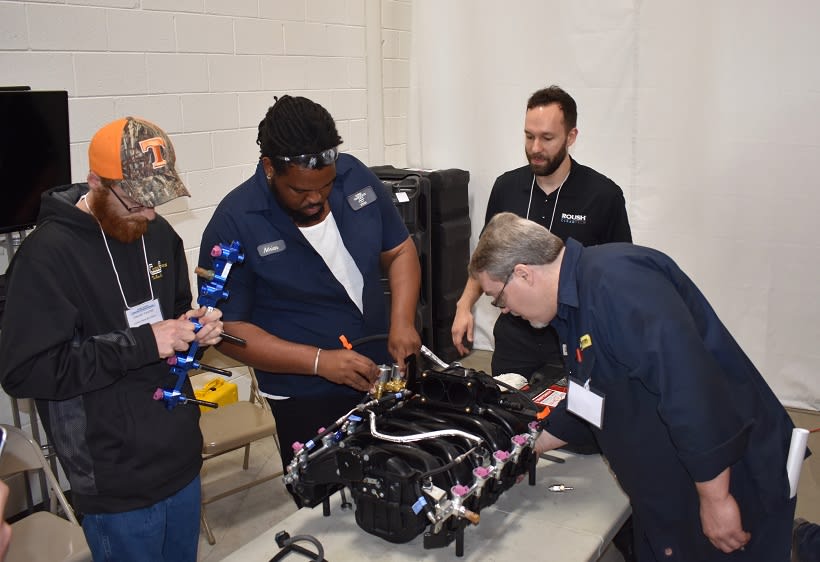
Roush CleanTech trained more than 1,000 technicians on propane autogas vehicles in 2017.
Photos courtesy Roush CleanTech
3 min to read
Automotive technicians don’t need to worry when they hear the word “propane.” Aside from a few differences, propane autogas vehicles are much like gasoline-fueled models when it comes to keeping them running. And in some cases, even easier. Here are the top three tips from Roush CleanTech’s field service team to consider when maintaining a propane vehicle.
Tip #1: Don’t fear the unknown
Propane has been around for more than 100 years to fuel vehicles. More than 27 million vehicles travel worldwide with propane autogas in their fuel tank. This includes shuttles, school buses, delivery vans, construction trucks, transit vehicles and more.
Although propane is referred to as “propane autogas” when used as an on-road transportation fuel, it’s the same stuff used to heat up homes or fire up a back-yard grill. It's a cost-saving energy source that is making strides in the U.S. transportation industry. For more than 30 years, the cost of propane autogas has been, on average, 50% less than the cost of diesel.
Propane autogas is a readily available, domestically produced fuel used to power vehicles. More than 90% of the United States propane autogas supply is produced domestically, with an additional 7% from Canada.
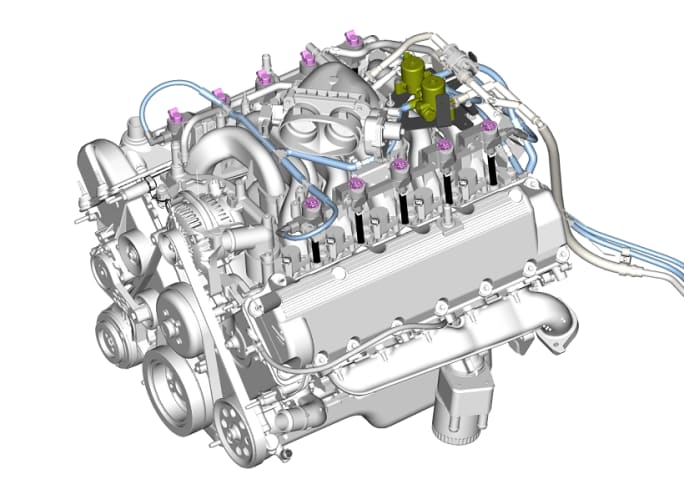
Roush CleanTech’s class 4-7 propane autogas vehicles come equipped with Ford 6.8L engines.
Tip #2: Know the maintenance differences
Today’s diesel vehicles are cleaner than those of years past, but the tradeoff has been expensive and high-maintenance emissions and aftertreatment systems, which aren’t required on propane autogas models. Propane’s chemical properties allow it to power an engine while reducing the emissions released into the atmosphere without aftertreatment equipment. Heavier-duty vehicles fueled by propane autogas emit fewer greenhouse gases and total hydrocarbon emissions, and virtually eliminate particulate matter, when compared to conventional diesel-powered heavy-duty vehicles.
In addition, engines fueled by propane autogas require less oil by volume than diesel and no additional diesel emission fluids or extra valve adjustments.
There are a few differences to consider. When depressurizing the fuel lines in a propane vehicle, follow manufacturer recommended procedures. Fuel lines typically maintain pressure after shutdown.
Since safety is key, be sure to wear appropriate personal protection equipment, such as propane safe gloves and safety glasses, whenever servicing a propane fuel system.
Tip #3: Follow the owner’s manual
Just like with any vehicle, always refer to the vehicle owner’s manual for regular maintenance — even with a propane model. Follow the manufacturer’s recommended oil change intervals, but be aware that the oil may not look like it needs changing because propane burns cleaner. This helps keep your propane engine clean, but the oil should still be changed at the recommended interval. There are necessary protective additives in engine oils that can still wear out. Make sure you are using the proper oil levels with fuel filters changed every 50,000 miles. Continue with basic maintenance — changing and inspecting spark plugs, air filters, battery, etc., at proper intervals — just like you would with diesel or gasoline vehicles.
If you have questions about the propane fuel system in a vehicle, call the fuel system manufacturer with any questions. They should be able to help you with the propane system components and might recommend a workshop to further your knowledge about the propane system. For all non-propane-related questions, contact the vehicle manufacturer directly.
About the Author: Todd Mouw is president of Roush CleanTech, a commercial industry provider of alternative fuel vehicle technology. Mouw has served as president of the NTEA Green Truck Association. This article was authored under the guidance and editorial standards of HDT’s editors to provide useful information to our readers. You can read more about propane autogas and other alternative fuels in our upcoming September 2018 alternative fuels issue.
Subscribe to Our Newsletter
More Maintenance

Sponsored•September 16, 2026
Color Match Smarter: Tools That Restore & Perform
For fleet managers and collision repair professionals keeping heavy-duty trucks on the road, getting the color right the first time isn't just about appearance — it's about efficiency, turnaround time, and bottom-line results. Discover how today's digital color tools are transforming the repair process from guesswork to precision.
Read More →
Wrong Repair Prompts Recall of Freightliner, Western Star 4x2 Trucks
DTNA is recalling more than 2,400 trucks that received an incompatible software fix instead of the hardware repair required to address brake valve corrosion.
Read More →
Truck Drivers Need More Than Another Alert
Fleets have more visibility into truck health, safety events, and driver activity than ever. The next challenge is turning all that information into useful guidance for the person who has to decide what to do next.
Read More →
The Maintenance Checks Trucking Fleets Should Prioritize Before Fall Freight Picks Up
Making it through August isn’t the same as being ready for the next several months of operation. Find out what systems may have suffered from summer heat and need to be checked out before fall.
Read More →
What Three Fleets Are Doing Differently When Buying Truck Parts in 2026
With freight improving but costs still climbing, fleet maintenance executives explain how they're balancing price, quality, and supplier relationships.
Read More →
Paccar Recalls 2027 Trucks Built This Summer for Possible Electrical Problem
The nearly 6,000 Kenworth and Peterbilt trucks in the recall could potentially lose engine power, among other things.
Read More →
Will API PC-12 Oil Change Trucking Fleet Maintenance?
The new API PC-12 heavy-duty engine oil category reflects the changing demands of modern diesel engines. But fleets like Foodliner are looking to getting their own data before making decisions on adopting the new oils and questions such as extending oil drain intervals.
Read More →
Brake Safety Week to Focus on Drums and Rotors
Commercial vehicle inspectors are focusing on truck brakes during CVSA's Brake Safety Week, August 23-29.
Read More →Possible Battery-Cable Fires Prompt Recall of 15,000+ International MV and HV Trucks
On the recalled vehicles, manufacturing variations can cause the battery interconnect cable to contact the auxiliary stud and hold down the bracket.
Read More →
Rush, MCT Team Up to Grow Refrigeration Service Network
The joint venture will operate MCT's network of Carrier Transicold dealerships and mobile service locations, with the companies promising greater service capacity and uptime for refrigerated fleets.
Read More →