




TMC: Aerodynamic Wheel Covers Work if You Cover Your Bases
Last year, the Technology & Maintenance Council of the American Trucking Associations set out to identify the potential promise and pitfalls associated with using aerodynamic wheel covers.
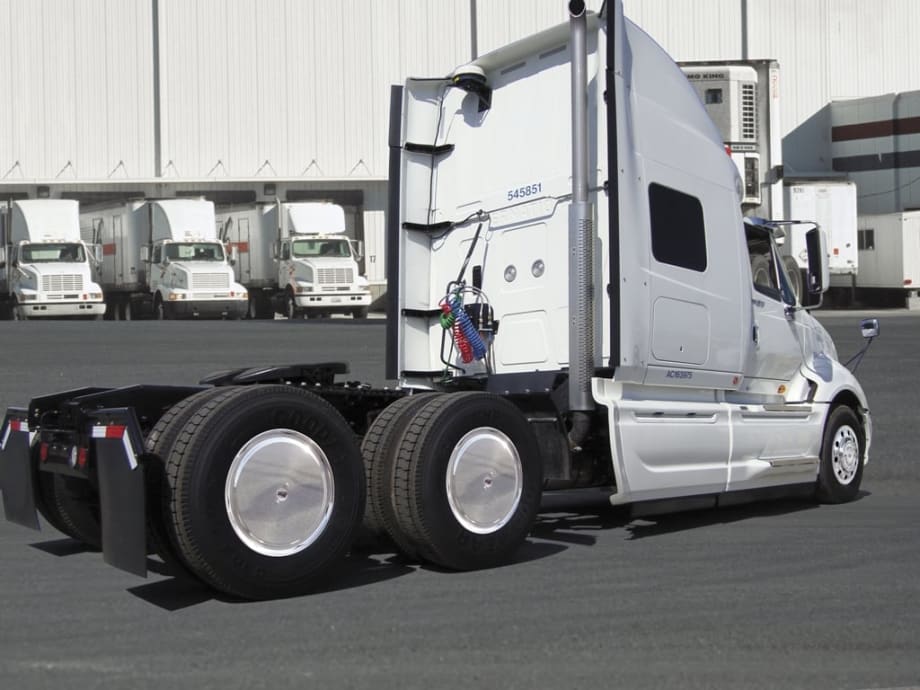
Photo: RealWheels
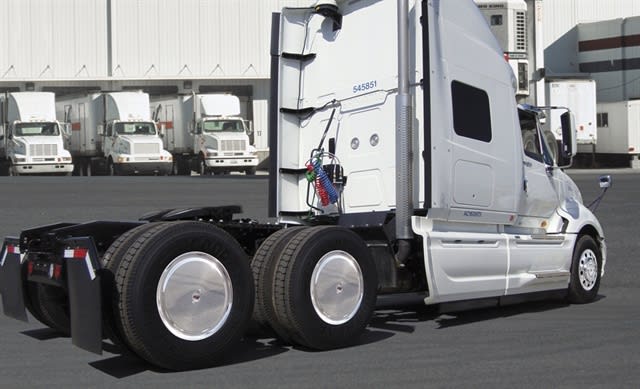
Photo: RealWheels
Many equipment users are seriously considering the use of aerodynamic wheel covers to improve the fuel economy of their commercial vehicles. While fleets in over-the-road, linehaul operations may realize fuel economy improvements thanks to aerodynamic wheel covers, they may also suffer negative impacts from these devices in other areas of their operations.
So last year, the Technology & Maintenance Council of the American Trucking Associations set out to identify the potential promise and pitfalls associated with using aerodynamic wheel covers. The work fell to TMC's S.2 Tire and Wheel Study Group and its Aerodynamic Wheel Cover Task Force, led by Dave Walters with Alcoa Wheels. The resulting TMC Recommended Practice, RP 261(T), Considerations for Aerodynamic Wheel Covers, was preliminarily approved at TMC’s 2017 Annual Meeting in Nashville, Tennessee, in February.
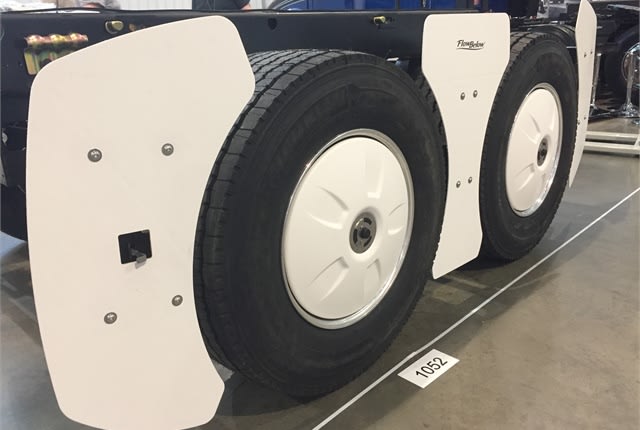
Photo: FlowBelow
The Task Force found that fleet evaluation of aerodynamic wheel covers should include unintended negative consequences on operations and maintenance, since the potential fuel savings could be offset by unexpected increases in maintenance and operational costs.
Vehicle inspections are an important first consideration when evaluating aerodynamic wheel cover use. Will a driver or technician be able to properly inspect the vehicle’s wheel ends with aerodynamic wheel covers installed?
Some wheel covers are clear/transparent and thus allow personnel to see through them for axle-end inspection. However, such designs may not remain clear or transparent after being placed into service. Wheel covers may also inhibit a technician’s ability to clean the wheel surfaces of corrosive material.
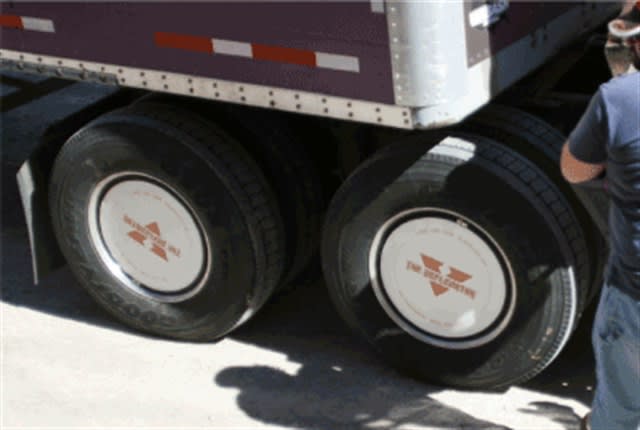
Photo: Deflecktor
Another consideration is the impact aerodynamic wheel covers may have on tire and wheel maintenance. If the aerodynamic wheel cover hides the wheel handholds and prevents access to tire valve stems, it must be removed before checking and adjusting tire inflation. If the covers must be removed, they should be able to be removed and reinstalled easily and quickly. Their attaching hardware should also be reusable and remain effective over multiple removals and installations; otherwise, they may detach from the wheel end while en route.
TMC RP 261(T) is expected to enter the appeal period later this summer. It is expected to be adopted officially by year’s end.
Adapted from "Technical Difficulties" in the April 2017 issue of the TMC Fleet Advisor. Used with permission.
More Fuel Smarts

How Volvo Updated Its D13 for EPA 2027 [Watch]
Volvo’s updated D13 promises lower emissions without sacrificing performance or fuel economy. Take a closer look at what changed inside the engine in this HDT Spotlight video.
Read More →
Diesel Price Spike Shortens Payback for Natural Gas Trucks, Report Says
Energy Vision estimates fleets could recover the higher purchase price of an RNG-fueled Class 8 tractor in 1.3 to 2.8 years under current fuel-price scenarios.
Read More →
Calstart Becomes Catalyst Mobility, Reflecting Broader Focus
Calstart is now Catalyst Mobility, reflecting the nonprofit’s growing national role in clean transportation, including zero-emission trucks, infrastructure and incentive programs.
Read More →

Record Diesel Prices Squeeze Trucking Fleets
Average U.S. diesel prices have climbed to nearly $6 a gallon, surpassing the 2022 record as tight refinery capacity and Middle East disruptions keep fuel costs elevated.
Read More →
How Fuel Delivery Shapes Engine Performance
Fuel delivery depends on more than what happens at the injector. For fleet, maintenance and technical professionals, looking at the full path from pump to injector can provide useful context for understanding engine performance.
Read More →
East Coast Port Launches $45M Electric Truck Push
The Port Authority of New York and New Jersey announced millions in incentives for zero-emission drayage trucks, yard tractors, and new charging hubs near the port.
Read More →
California Bill Could Shed Light on Electric Truck Prices
Why do battery-electric Class 8 trucks remain so expensive? A California bill headed to Gov. Gavin Newsom would give fleets and state agencies more visibility into what manufacturers charge.
Read More →
Detroit Opens Orders for EPA 2027 Engines
Detroit isn’t starting from scratch to meet EPA 2027 diesel emissions standards. Its Gen 6 DD13 and DD15 engines keep much of today’s platform while updating the fuel and aftertreatment systems.
Read More →
Zero-Emission Truck Corridor Planned for West Coast
California, Oregon, Washington, British Columbia and Baja California are coordinating plans for truck charging and hydrogen fueling from Canada to Mexico.
Read More →
A Closer Look at Kenworth’s Electric T880E Vocational Truck [Video]
Learn more about Kenworth's T880E battery-electric vocational truck at the Paccar Technical Center, including its range, applications, upfitting considerations, and PTO options, in this HDT Spotlight video.
Read More →