Additive Isn't Necessarily a Four-Letter Word
Discussions about diesel fuel additives are perilous at best. But the conversation becomes more comfortable when you have evidence from a trusted source, even if it’s not scientifically documented. Joel Morrow, the director of research and development at Bellvue, Ohio-based Ploger Transportation, told us about a product that he uses successfully.
“We have plenty of proof that Winter Klenz ID 5757 with Ice Check from Primrose Oil Company has bumped up our mpg significantly and kept our trucks from icing up in the winter,” he says.
Don’t view that as an endorsement; it’s just one fleet’s experience.
Matthew Moore, the technical director and chemist at Primrose, says despite the minimum cetane standard for diesel fuel in the U.S., actual values vary considerably around the country.
“A product like our 5757 blend will increase the cetane rating of the fuel, which will increase the speed of the combustion event, leading to a more efficient burn, better performance and ultimately less fuel consumed at a given power demand,” he says. “The minimum cetane rating here in the U.S. is 40. In Europe now, it’s 51. Some fuel suppliers add cetane enhancers [usually something called 2-ethylhexyl nitrate] to their fuel. We offer it blended with other improvers to fleets so they can treat their own fuel.”
Morrow claims the results he sees are easily measurable, but that’s not always the case with additives, especially those claiming to lower the cloud point of diesel to prevent low-temperature problems.
“Just because you used an additive and you didn’t gel up doesn’t necessarily mean it was the additive that saved you,” Morrow says. “Maybe it just wasn’t cold enough to cause a problem.”
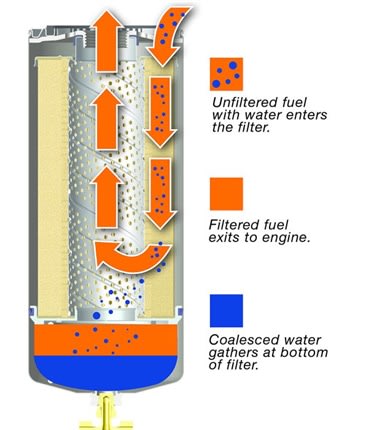
Research Laboratories Inc., Fort Wayne, Indiana, tests diesel fuels, crude oils and other distillates, and has evaluated commercially available diesel fuel additives. In a 2015 white paper, it notes that because crude oil stocks are different, refined fuels differ as well, so some refined diesel fuels have a cloud point temperature higher than others. So if an additive says it prevents fuel gelling “down to” or “as low as” a specific temperature, keep in mind that’s basically a best-case scenario. Also, just because an additive lowers the fuel pour point, it doesn’t mean the diesel fuel will flow through the fuel filter. “Inherent paraffin wax crystal separation (settling) in the fuel can cause the wax to agglomerate, plugging the fuel filter and obstructing the fuel flow through the filters.”
And if there’s water in the fuel, it freezes at higher temperatures than the fuel, causing filter problems well above the diesel fuel additive’s advertised flow temperature.
The ATA’s Technology & Maintenance Council offers Recommended Practice RP 341A, “Diesel Fuel Additive Functionality Groups and Winter Operability Guidelines,” to help fleets sort the wheat from the chaff. There is product out there that lives up to the billing, and some that doesn’t. Only field tests can prove what might be a good investment for your fleet.