




Surveys Yield Clues to Driver Satisfaction
Where can trucking companies improve driver satisfaction? It’s a question that has somewhat different answers for drivers at different stages of their careers with their employers.

Courtesy Strategic Programs Inc.

Where can trucking companies improve driver satisfaction? It’s a question that has somewhat different answers for drivers at different stages of their careers with their employers.
Strategic Programs, which works with trucking companies to do driver satisfaction and exit surveys, recently put out some statistics gleaned from its 2016 surveys from a representative sample of its clients in different types of trucking across the industry.
New hires surveyed gave their company the lowest scores for these statements:
Delays are minimal at the customer
I earn what I thought I would when I accepted this job
I am paid fairly for everything I do on the job
My pay is competitive with other companies doing the same work
When I am home, it is an acceptable amount of time.
“The good news about the new hire low scores is that they are all easily managed upfront during the hiring and onboarding process, by setting clear expectations with drivers,” says Strategic Programs’ Megan Younkin.
Her colleague Jay Green says the takeaway here is that fleets need to work with customers better and work with new hires better about delays at the shipper. “We see delays being an issue more for newer drivers than longer tenured ones. It is especially shocking to those new to the industry.”
Green says guaranteed pay for new hires is one way to address concerns about earnings expectations.
“While the job may allow them to make X amount per year, it doesn't always seem that way out of the gates, and before they know how to work their carriers network, they easily check out and decide they can't reach their earnings potential. We have seen success with guaranteed pay for new hires to help with those rough first few months.”
Current employees surveyed gave their company the lowest scores for these statements:
My compensation is competitive with other companies doing the same work.
Delays are minimal at the customer
I am compensated fairly for the work I do.
I am provided with opportunities to grow professionally as a driver.
Loads/work assignments are distributed fairly.
“For all drivers there will still be harsh realities of the job that some will adapt to better than others,” Green says. “Anything fleets can do to train their managers to understand problems drivers face, to equip these managers with better trust-building skills, will be worth the investment. Just having someone on the other end of the phone who can empathize and relate will go a long way. After a frustrating day, the last thing you need is a manager who is too busy or treats you like a number.”
Exiting employees surveyed gave their company the lowest scores for these statements:
My company appreciates its employers/owner-operators
I earned what I thought I would when I was hired
My manager/dispatcher was effective in resolving problems.
Delays were minimal at the customer.
I was paid fairly for everything I did on the job.
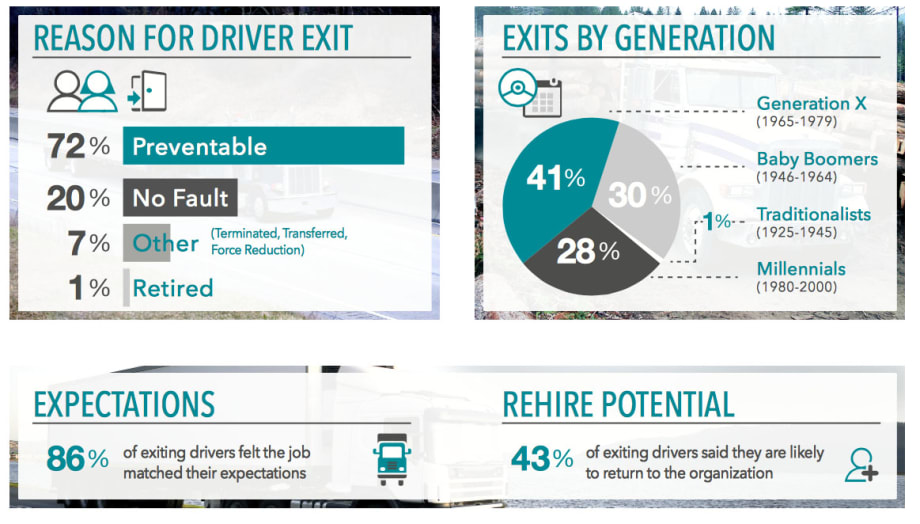
“At the end of the day, 72% of the exits are saying the company could have done something different to keep those who left,” says Green. “There is clearly a lot of room for improvement across the industry.”

Compensation issues were a problem for all three groups of drivers.
“Managing perceptions of pay will continue to be an issue,” Green says. ”At the end of the day, fleets need to communicate pay better, make it easier to understand, make it consistent to obtain, continually make sure they are competitive with pay and that drivers know it, and provide regular pay reviews and coaching on how to make more money.”
Younkin notes that some of these low scores could be missed perceptions that need managed, and some are issues that need to be fixed or addressed. “Either way, these are all actionable items that can lead to organizational improvements.”
Green recommends that fleets looking to make improvements look at the top four actions that impact engagement as determined by Strategic Programs’ research:
My manager understands the problems employees face.
My suggestions for change are given consideration
Leadership follows through on commitments
I am satisfied with the opportunities available to make more money (bonuses, raises, etc.)
These items, he explains are a key driver analysis across all data from current drivers that show us what items directly correlate with an improvement on engagement.
More Drivers
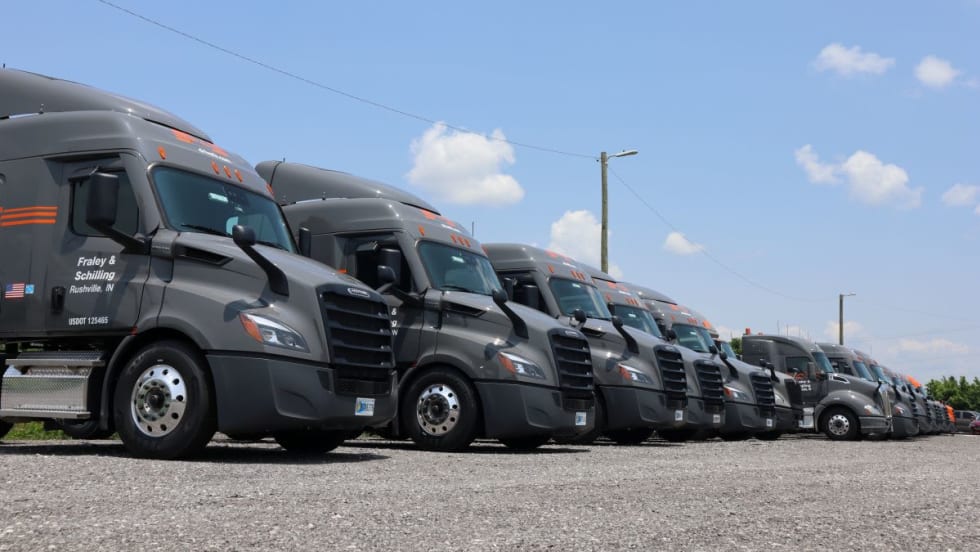
How Fraley & Schilling Improved Logbook Compliance by Over 50%
Fraley & Schilling needed a way to close a compliance workflow gap in its ELD system without adding more work from driver training, reminders, and back-office follow-ups. It found the answer in a custom driver app.
Read More →
Volvo Goes Gaming
Volvo has roared into American Truck Simulator with two new flagship trucks.
Read More →
What the Best Fleets to Drive For Teach About Driver Retention
Survey fatigue, AI-powered routing, owner-operator expectations, and the decline of social media all emerged as themes from this year's Best Fleets to Drive For program.
Read More →
Driver Retention Lessons From the Best Fleets to Drive For
What separates trucking's best workplaces from the rest? Jane Jazrawy shares the biggest lessons from this year's Best Fleets to Drive For program on driver retention, communication, AI, and workforce trends on the HDT Talks Trucking podcast.
Read More →
Farewell, CDL: Why I'm Giving Up My Commercial Driver's License
After more than 20 years as a CDL holder, HDT Executive Editor Jack Roberts is letting his commercial license expire. Not because he wants to — but because trucking's nuclear verdict crisis has made the risks of public-road test drives too great for editors, manufacturers, and everyone involved.
Read More →
How Top Trucking Fleets Improve Driver Retention [Video]
What do healthy snacks, optimized routing, and just picking up the phone have in common? They're all strategies the Best Fleets to Drive For are using to retain truck drivers.
Read More →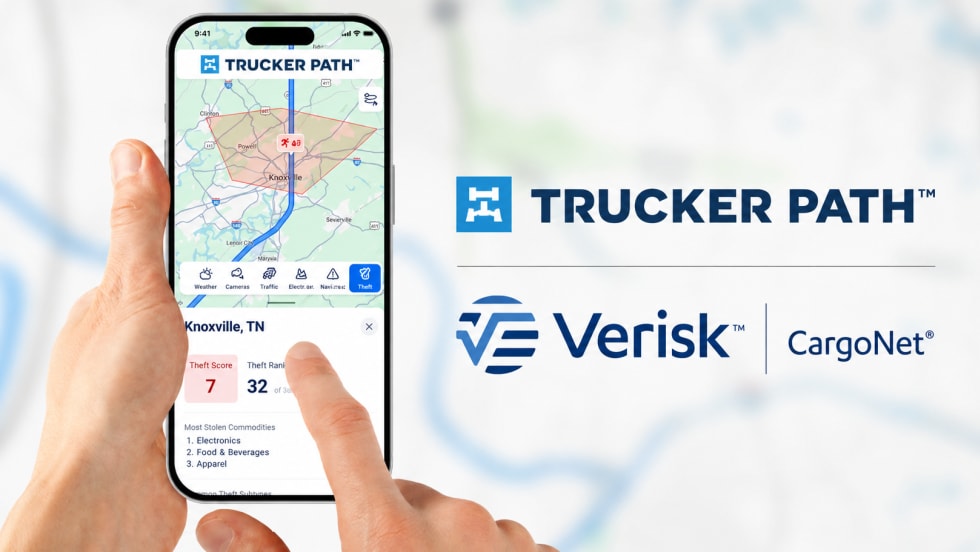
Trucker Path Adds Verisk CargoNet Theft Data to Navigation Platform
Trucker Path’s new cargo theft risk overlays give drivers and fleets visibility into high-risk areas, stolen commodity trends, and theft hotspots.
Read More →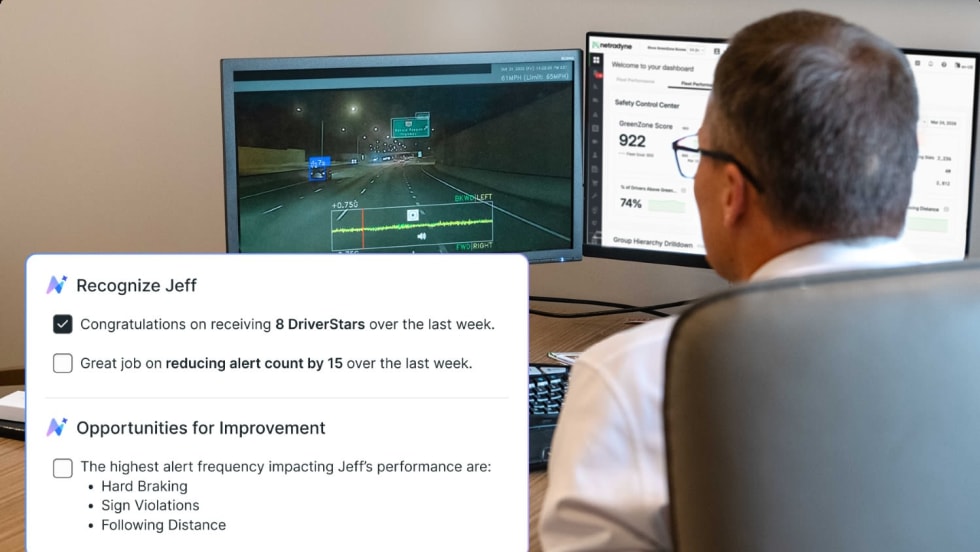
Netradyne Intelligence Uses New AI Agents to Automate Response to In-Cab Camera Data
The company called the next-generation in-cab camera safety platform "a fundamental shift from systems that report on what happened to systems that actively drive what should happen next."
Read More →
Why Truck Detention Keeps Costing Fleets Time and Money
A 2024 ATRI study found detention affects nearly 40% of truckload stops and costs the industry more than $15 billion annually. Despite the toll on drivers, fleets, and supply chains, the problem remains stubbornly persistent.
Read More →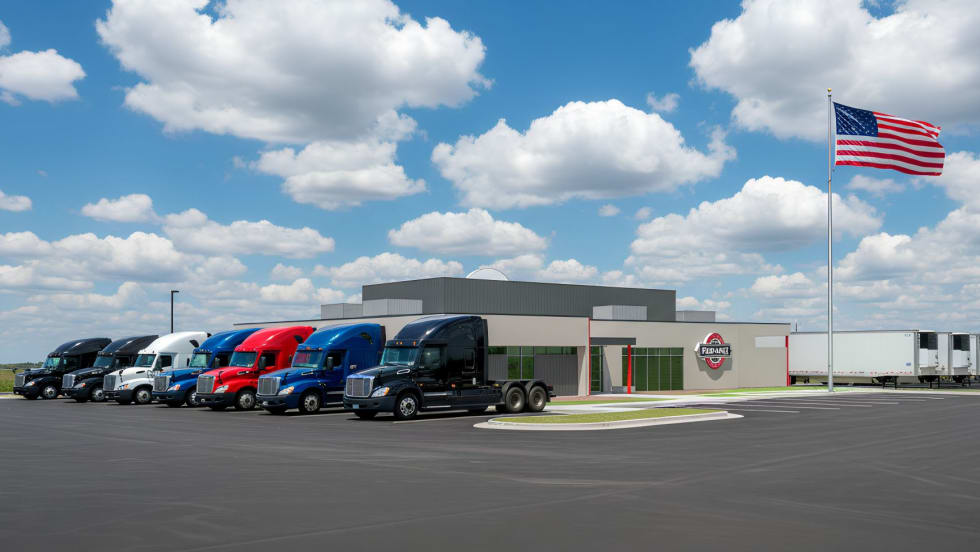
Prime Inc. to Open $7.9M Flagship Used-Truck Dealership
A new driver-focused facility to sell Prime Inc's used trucks and trailers will be the first purpose-built location in the company's history.
Read More →