




Successful Field Tests of DME in Europe prompt Volvo to Consider the Alternative Fuel for U.S.
Engineers at Volvo Trucks are exploring the possibility of using dimethyl ether, or DME, as an alternative fuel in North America, following successful field tests in Europe.
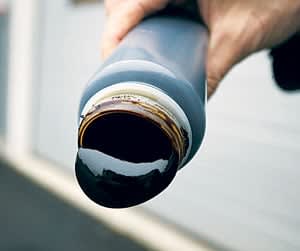
In Volvo's field trials in Sweden, DME is produced from a forestry-based biomass known as black liquor.
Engineers at Volvo Trucks are exploring the possibility of using dimethyl ether, or DME, as an alternative fuel in North America, following successful field tests in Europe.
DME is produced from natural gas or biomass such as wood byproducts and can be burned in diesels with few changes. In the field trials in Sweden, the DME is produced from "black liquor," a waste byproduct of paper and pulp production. Energy efficiency is high, and carbon dioxide emissions are as much as 95% lower than diesel exhaust.
Volvo Group is overseeing hundreds of thousands of miles of customer field-testing of DME-powered trucks in Europe, says Ron Huibers, sales and marketing president for Volvo Trucks North America.
Strong results from 10 vehicles operating in a variety of applications indicate DME holds much promise as a heavytruck fuel, Volvo says. The company believes DME could become a viable alternative to natural gas based on performance, environmental impact, safety and distribution.
DME mirrors the performance qualities and high energy content of diesel while significantly reducing greenhouse gas emissions, Huibers says. It is an excellent compression ignition fuel - like diesel, it uses a commonrail fuel system and requires no spark ignition mechanism.
It does not require cryogenic temperatures, like liquefied natural gas, or high storage pressures, like compressed natural gas's 3,600 psi. DME is handled like propane, with tank pressures of 75 psi, and it is nontoxic. DME burns with a blue flame and does not produce the soot that diesel does. Thus, it requires no diesel particulate filter and might not need diesel exhaust fluid.
The fuel packages densely enough to allow long-range operations or to allow room for vocational truck equipment on the frame, Huibers says. The infrastructure to supply DME to trucks will develop with the market.
Little DME is now being made in the U.S., but Volvo is aware of a new DME plant under construction in Imperial County, Calif., and believes more will follow.
DME working in Sweden
In Volvo's home country of Sweden, J-Transportation in Gothenburg is running with DME in the tanks, as well as DHL and the Swedish Mail in Jonkoping. In the north, trials are being conducted with a regional logging truck and a regional transporter that runs paper rolls from a mill to a nearby port for shipping.
It takes 1.8 times as much DME to run a truck compared to ordinary diesel.
A 40-ton-GCWvehicle that normally uses 4.2 liters (1.1 gallons) of diesel per 10 km (6.2 miles), instead consumes some 7.6 liters (about 2 gallons) when operating on DME, says
Per Salomonsson, project manager for the DME trials. Or, in more familiar terms in the U.S., a vehicle that gets around 6 mpg on diesel would get a little better than 3 mpg on DME.
Driving impressions
A drive of one of Volvo FH models in field tests with DHL in Sweden shows the DME-fueled truck behaves like any diesel truck, with some small exceptions.
The DME engine is a bit more difficult to start and cranks a few extra seconds on the starter. After it starts, the 13-liter engine with 440 horsepower fires up and forcefully pulls away. It also runs much quieter than the diesel variant.
The DME engine is a diesel engine with another fuel system and a modified engine control. The common rail system has low injection pressure. Fuel system seals are DME-resistant.
In its daily work, this truck runs two shifts, running 270 km (about 170 miles) in the daytime and 350 km (about 215 miles) at night.
These trucks are not yet commercially available, mainly because there is no fuel distribution network organized. There are currently only four filling locations in Sweden: Stockholm, Jonkoping, Gothenburg and northern Pitea. The bio-DME is produced and distributed by Preem Fuel Company. The working distance of the trucks has been extended from 500 (about 310 miles) to 800 kilometers (nearly 500 miles).
Volvo is currently the only OEM to provide a DME engine. Policymakers, politicians and market forces must work together to establish the necessary distribution network to make DME fuel available in a larger scale. Only then will it be commercially viable for DME to become an alternative to diesel.
More Fuel Smarts

How Volvo Updated Its D13 for EPA 2027 [Watch]
Volvo’s updated D13 promises lower emissions without sacrificing performance or fuel economy. Take a closer look at what changed inside the engine in this HDT Spotlight video.
Read More →
Diesel Price Spike Shortens Payback for Natural Gas Trucks, Report Says
Energy Vision estimates fleets could recover the higher purchase price of an RNG-fueled Class 8 tractor in 1.3 to 2.8 years under current fuel-price scenarios.
Read More →
Calstart Becomes Catalyst Mobility, Reflecting Broader Focus
Calstart is now Catalyst Mobility, reflecting the nonprofit’s growing national role in clean transportation, including zero-emission trucks, infrastructure and incentive programs.
Read More →

Record Diesel Prices Squeeze Trucking Fleets
Average U.S. diesel prices have climbed to nearly $6 a gallon, surpassing the 2022 record as tight refinery capacity and Middle East disruptions keep fuel costs elevated.
Read More →
How Fuel Delivery Shapes Engine Performance
Fuel delivery depends on more than what happens at the injector. For fleet, maintenance and technical professionals, looking at the full path from pump to injector can provide useful context for understanding engine performance.
Read More →
East Coast Port Launches $45M Electric Truck Push
The Port Authority of New York and New Jersey announced millions in incentives for zero-emission drayage trucks, yard tractors, and new charging hubs near the port.
Read More →
California Bill Could Shed Light on Electric Truck Prices
Why do battery-electric Class 8 trucks remain so expensive? A California bill headed to Gov. Gavin Newsom would give fleets and state agencies more visibility into what manufacturers charge.
Read More →
Detroit Opens Orders for EPA 2027 Engines
Detroit isn’t starting from scratch to meet EPA 2027 diesel emissions standards. Its Gen 6 DD13 and DD15 engines keep much of today’s platform while updating the fuel and aftertreatment systems.
Read More →
Zero-Emission Truck Corridor Planned for West Coast
California, Oregon, Washington, British Columbia and Baja California are coordinating plans for truck charging and hydrogen fueling from Canada to Mexico.
Read More →
A Closer Look at Kenworth’s Electric T880E Vocational Truck [Video]
Learn more about Kenworth's T880E battery-electric vocational truck at the Paccar Technical Center, including its range, applications, upfitting considerations, and PTO options, in this HDT Spotlight video.
Read More →