





Editor's Note: This article originally appeared in 2020. HDT's editors have followed up with the original sources to ensure the information is up to date as of April 2025.
Spring Into Summer With Heavy-Duty Truck Electrical System Maintenance
Is your heavy-duty truck's electrical system up to handling the long, hot summer?
April 17, 2025
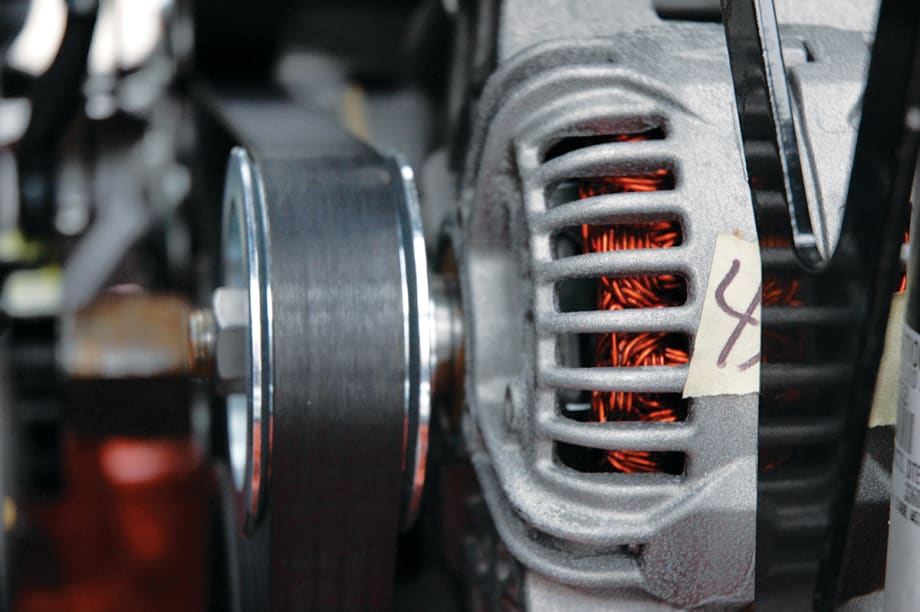
Alternators sometimes seem fine when they are faulty and show puzzling results when they are working fine. Testing is required to determine the alternator’s condition before replacing it.
Photo: Jim Park
5 min to read
If you have a bad alternator, chances are you’d never recognize the problem in the winter when it’s cold. But the problem will show up pretty fast once the weather warms up and electrical loads increase with air conditioner use. Unless you know what to look for, a dying alternator can be hard to spot in the winter.
Cold batteries don’t charge well because of their chemistry. As truck electrical system expert Bruce Purkey will tell you, “It’s like trying to push energy into a cinder block.”
A typical flooded-cell battery at zero degrees will only take about 2 amps per hour. You might have a 150-amp alternator, but the whole battery pack will take only 8 amps (4 batteries, 2 amps/hour each) Everything may look right, with the volt meter right up there where it’s supposed to be at 14 volts trying to push something into the batteries, but the batteries are losing charge faster than the alternator can make it up, explains Larry Rambeaux, a sales application engineer at Purkeys.
“Doing a jump start for a dead battery isn’t going to solve the problem,” he says. “It will get the truck going again, but unless it’s run for a long time, it’ll be just as dead as before the next time you try to start it.”
Unfortunately, the same thing might happen in summer when drivers start using air conditioning — except now it might actually be an alternator problem. You might miss it entirely because the system appears to be working properly.
“In winter, people get a false sense of security because they see the volt meter is right up where it’s supposed to be,” Rambeaux says.
“They can easily miss an alternator with a bad diode that has lost performance, but because the loads are so small, everything looks fine.
“Summertime is when you’re likely to have an alternator change for no reason,” he adds.
“If the batteries are low, the alternator will put out everything it can, and the batteries will take everything they can get, but the voltage will be down at 12.5 volts rather than 14 — and it could be really hot to the touch. That leads most people to assume the alternator is bad. That heat is actually just a byproduct of putting out that much energy trying to top up the four batteries.”
For example, if one diode fails on a 135-amp alternator, it will lose about one-third of its output.
“A 90-amp alternator is probably fine in the winter, but in summer when all the extra loads come on and the batteries are more receptive to taking a charge, the alternator cannot keep up, and suddenly you have a road call,” says Rambeaux.
Can Your Truck Batteries and Alternators Handle the Heat?
Another factor that affects alternator performance and battery life is all the other electrical demand.
When manufacturers build a truck, they put in an average battery that will service the cab and chassis requirements with a little bit extra.
“Typically, OEMs design their C&Cs with batteries and alternators to operate the factory chassis items," says Joe Puff, vice president of Truck Technology and Maintenance at NationaLease.
"What OEMs don’t know is whether or not a customer plans to add additional electrical demands, such as a liftgate, an in-cab refrigerator, an inverter, or other hotel loads."
And in the summer when truck drivers start using air conditioning, that can become obvious.
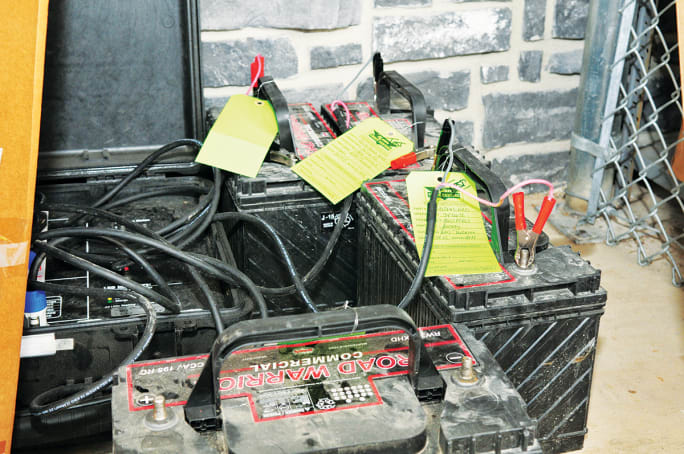
Dead batteries aren’t always completely dead. They may only need reconditioning.
Photo: Jim Park
“These added power demands can stress a basic chassis battery system," Puff says. "When spec’ing batteries and alternators, we need to compare the power draw placed on batteries with the alternator output and drive times, so you have ample time to recharge the batteries.
"Things like ambient temperature, short drive times, reduced idling, and liftgate usage, all need to be considered when spec’ing the right battery and alternator," he says.
"You could be setting yourself up for frequent battery failures if you settle for the basic factory-spec electrical system.”
If you run trucks through the winter with liftgates and hotel loads and you have weak or inadequate batteries, or an alternator that’s either not up to the task or not at 100% performance, summertime is when the problems will show up.
Keep the Truck Batteries Charged
The key to extended battery life is keeping the battery above its recommended state of charge, Puff says.
"For example, a flooded acid battery starts to degrade quickly when it is discharged to around 50% of its capacity. So, keeping the battery charged is the key to long battery life."
There are many solutions to consider, he notes, including the number and type of batteries, the alternator size, engine auto start with low voltage, progressive power shutoffs, solar panels, overnight chargers, and so on.
Battery Maintenance is More Than a Visual Check
If your definition of a battery inspection means opening the battery box cover to see if the batteries are still there, you may be surprised by how much you’re overlooking.
If you’re unfamiliar with proper battery, charging, starting and cable inspection and maintenance, check out the Technology & Maintenance Council’s Recommended Practices 129A and 132B.
Rambeaux suggests using an electronic tester rather than a carbon pile tester, because they can do a much more thorough job and provide greater insights into the condition of the electrical system.
“You have to start with testing the batteries to make sure they are at a minimum state of charge," he explains. "If the batteries are at 100% SOC, the alternator isn’t doing anything. You have to test with a good state of charge to make sure the alternator is regulating properly, and you have to test the system when it’s under load, so the alternator is working.”
Using a carbon pile tester is complicated and time-consuming, and it relies on the technician to perform the test properly. Rambeaux says the better (and significantly more expensive) high-quality electronic testers can run all the required tests more or less automatically and consistently, which produces more accurate and documentable results.
Considering the whole of the electrical system — alternator, starter, voltage regulators, cables and the batteries — there are a lot of moving parts, and each can affect the performance of the other components. Rambeaux says hundreds of alternators, starters and batteries are taken out of service needlessly, simply because they weren’t tested properly.
Before the heat of the summer hits in full is an ideal time to turn over a new leaf on electrical maintenance, and all the money you save on non-warrantable replacements will more than pay for the proper tools and the training to get this vital inspection right.
Subscribe to Our Newsletter
More Maintenance

Sponsored•September 16, 2026
Color Match Smarter: Tools That Restore & Perform
For fleet managers and collision repair professionals keeping heavy-duty trucks on the road, getting the color right the first time isn't just about appearance — it's about efficiency, turnaround time, and bottom-line results. Discover how today's digital color tools are transforming the repair process from guesswork to precision.
Read More →
Wrong Repair Prompts Recall of Freightliner, Western Star 4x2 Trucks
DTNA is recalling more than 2,400 trucks that received an incompatible software fix instead of the hardware repair required to address brake valve corrosion.
Read More →
Truck Drivers Need More Than Another Alert
Fleets have more visibility into truck health, safety events, and driver activity than ever. The next challenge is turning all that information into useful guidance for the person who has to decide what to do next.
Read More →
The Maintenance Checks Trucking Fleets Should Prioritize Before Fall Freight Picks Up
Making it through August isn’t the same as being ready for the next several months of operation. Find out what systems may have suffered from summer heat and need to be checked out before fall.
Read More →
What Three Fleets Are Doing Differently When Buying Truck Parts in 2026
With freight improving but costs still climbing, fleet maintenance executives explain how they're balancing price, quality, and supplier relationships.
Read More →
Paccar Recalls 2027 Trucks Built This Summer for Possible Electrical Problem
The nearly 6,000 Kenworth and Peterbilt trucks in the recall could potentially lose engine power, among other things.
Read More →
Will API PC-12 Oil Change Trucking Fleet Maintenance?
The new API PC-12 heavy-duty engine oil category reflects the changing demands of modern diesel engines. But fleets like Foodliner are looking to getting their own data before making decisions on adopting the new oils and questions such as extending oil drain intervals.
Read More →
Brake Safety Week to Focus on Drums and Rotors
Commercial vehicle inspectors are focusing on truck brakes during CVSA's Brake Safety Week, August 23-29.
Read More →Possible Battery-Cable Fires Prompt Recall of 15,000+ International MV and HV Trucks
On the recalled vehicles, manufacturing variations can cause the battery interconnect cable to contact the auxiliary stud and hold down the bracket.
Read More →
Rush, MCT Team Up to Grow Refrigeration Service Network
The joint venture will operate MCT's network of Carrier Transicold dealerships and mobile service locations, with the companies promising greater service capacity and uptime for refrigerated fleets.
Read More →