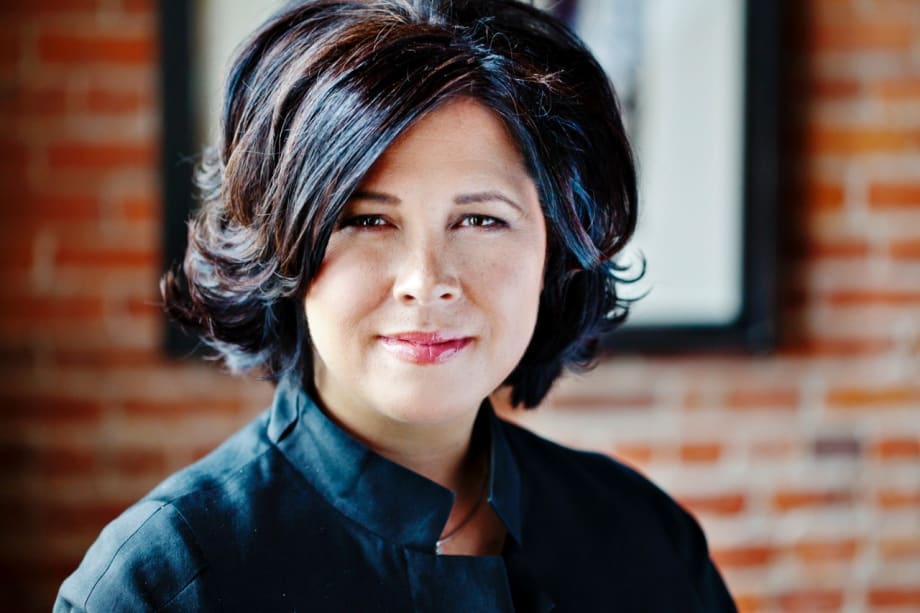
Sheryl Connelly is Ford's in-house futurist tasked with identifying global trends for the manufacturer. She is the closing keynote speaker at this year's Fleet Technology Expo.
Steven Martinez・Web Editor
June 16, 2015
Sheryl Connelly, the in-house futurist at Ford and one of the Fleet Technology Expo's Keynote speakers.Photo courtesy of Ford.
8 min to read
Sheryl Connelly, the in-house futurist at Ford and one of the Fleet Technology Expo's Keynote speakers.Photo courtesy of Ford.
Sheryl Connelly is the in-house futurist at Ford. She is tasked with tracking global trends and using that information to influence discussions about future designs, product development and corporate strategy. She is one of the Keynote speakers at this year's Fleet Technology Expo, held Aug. 24-26 in Long Beach, Calif.
Ad Loading...
She has been with the company for 19 years and while Connelly's title may sound grandiose, it turns out predicting the future is more about noticing reality than projecting far off ideas.
What is your background prior to your current role at Ford?
Ad Loading...
I grew up in Metro Detroit. I would not consider myself a traditional car enthusiast but I was drawn to the Ford brand, in part because it’s always been very present growing up in this area. I had a finance degree from Michigan State and a JD and MBA from the University of Detroit.
When I initially went to Ford it was to inquire about a position that I thought was in an intersection of my three degrees. Much to my surprise, I found myself receiving an offer from the marketing sales and service side of the business. I started out answering the 1-800 number for customers who had questions about the towing capacity on their truck, where their local dealer was located or the terms of their warranty – I fielded those calls for about a year.
Then I was assigned to the Pittsburg region to work with dealers. The dealers were incredibly kind and generous with their time, teaching me about the business and industry as a whole and here it is 19 years later and I’m still with the company.
Which would you say influenced your current career as the futurist at Ford more - your schooling or your time in your career at Ford?
I don’t think its fair to pick one over the other because I don’t think I could do it with one or the other but they both were critical. The education taught me how to do research and how to build a case. When you’re talking about something abstract or distant like foresight, the future, or long-term thinking or planning, it’s easily dismissed by the day-to-day urgencies of what’s going on.
Ad Loading...
But I’m equally grateful for my time with the dealers. The task of wholesaling can be a challenging one because you have a set amount of product and you only have a set amount of dealers. We’re both captive audiences to one another, but the product has to be sold. Not selling it wasn’t an option.
So month after month you would go into these meetings and ask dealers to commit millions of dollars to buying new inventory. When the stakes are that high, you start to be able to read their body language and anticipate if your pitch is going wrong. That lesson is something that I still use today.
Specifically, how do you apply it to your work today?
When you talk about something as abstract as global trends or futuring, different individuals have different levels of interest or appetite. You always have to be able to gauge how far will the audience go on that journey with you.
It’s also a very iterative process. You might introduce something to somebody one month and then return three months later and try to bring it up again – or a year later and bring up different proof points.
Ad Loading...
It sounds like a lot of your job is getting people turned on to the idea that we should focus more on the future.
I think so. Often what I say to people is that I might have the exotic title of being a futurist but everyone is a futurist because any time you make a decision you’re trying to predict the future. We make these kinds of assumptions about how the future is going to play out for big things and small things.
My role is to make sure that we all stay on the same page. It used to be that the work wasn’t centralized it was done in an ad hoc fashion. In early 2000 Ford decided that that work should be centralized so that we were a one-stop-shop. We would try to set up what we thought were the global trends and still allow enough latitude that we have global trends but understand the implications will vary region by region.
One of the trends that is fairly standard is the aging population around the world. People are living longer with improved quality of life.
What are some ways you can apply this information to business?
Ad Loading...
There are lots of different reasons why we should think about that and it depends on what business you work in. If you’re a part of Ford’s corporate strategy team you might start thinking about aging population through a metric called the dependency ratio. The dependency ratio is a metric that shows how many workers are supporting your non-working population.
Engineers within Ford might start thinking about how long a person might drive. I like to ask the question that if a person is 83, giving up their car might not be a big deal if they think they’re going to live to 85 or 90. But it’s a different consideration if they think they’re going to be 105 or 125.
Beyond engineering, there can also be applications to human resources development.
Can you give me an example of that?
We have three generations engaged in work right now, the Baby Boomers, the Gen Xers and the Millennials. Each of them have fundamentally points of view on work.
Ad Loading...
Baby Boomers believe in complete sacrifice in service of your employer. They are the first to arrive, last to leave and dedicated and believe that it's a tried and true recipe to get ahead.
Gen Xers do not believe in complete service to the employer. They have families but don’t want to make the same sort of sacrifices that the Boomers did. They want to work where, when and how they want to.There is a blurred boundary between personal and professional.
The last generation, the Millennials, might say when, where and how I work doesn’t matter as long as the work gets done. They favor a results-oriented work environment. So there are companies out there that don’t limit vacation days or holidays - as long as the work gets done, they don’t care.
What is a Millennial’s attitude toward cars?
A Millennial doesn’t believe in open roads, they have witnessed the effects of urbanization and congestion. Some studies around the world say that the average speed travelled is something like 25 miles per hour. The thrill of the drive is not quite as important to them and sometimes its much more about the thrill of the ride.
Ad Loading...
We’ve integrated our technology in a way that keeps their hands on the wheel, their eyes on the road and their mind on the drive through our Sync platform. We talk to Millennials by saying, "hey your car is becoming a toolbox on wheels, and it’s a lifestyle enabler." We understand that and we are putting a lot of energy into the user interface and experience.
Connected technology isn’t that old but is it clearly becoming more and more important?
Ford has to rethink itself as being more than just a car company. We have said in year’s past that we’re a consumer electronics company. If you’re going to hold on to your car for 5-10 years, how many times will you change your phone in that period? There’s no point in putting a sync system in if we can’t stay compatible with that.
A few years ago we updated sync and we looked through our customer database and sent everyone flashdrives that they just had to plug in to get the latest and greatest update. If they weren’t comfortable doing it, we directed them to their dealer.
In the future those kind of upgrades will come through WiFi so if your car is parked in your garage and your house is equipped with WiFi, you can download those upgrades overnight while you sleep.
Ad Loading...
You’re going to be speaking at the Fleet Technology Expo, what is Ford doing in terms of looking forward on the fleet side of things?
Fuel economy is near and dear to them but nobody can tell you that they know what the future of energy looks like. As a response to that, Ford has a parallel path of innovation where we’re looking at many kinds of innovation and possibilities. One of the best places to start is in what we already have with the traditional gas engine.
A few years ago we introduced the EcoBoost engines for that purpose. We also have high-tech diesel engines as well as hybrid vehicles. I’m proud of our hybrid strategy because other manufacturers came out with dedicated nameplates where they said this is our green product and Ford didn’t do that. We said pick the car, truck or utility vehicle that fits your need and we’ll pair the powertrain with it that you loved.
We have many different forms of green energy with diesel, natural gas and even gasoline hybrids, which of these do you see gaining traction?
I don’t know because geographically you have to realize that every region will be different. Take China for instance. China’s leaders have been very vocal about their preference for electric as a future power source. Whereas a country like Brazil, which has rich resources in sugar cane prefers ethanol. Europe historically has a high preference for diesel.
Ad Loading...
It’s difficult to figure out a preference that works around the world which is why I think Ford’s strategy is particularly smart because it’s nimble enough to respond to changing needs by region or by global marketplace.
More about Connelly's closing keynote address at Fleet Technology Expo, held Aug. 24-26 in Long Beach, Calif.:
10 Trends That Are Shaping the Future
Who knew we wouldn’t all be in flying cars – Jetsons-style – by 2015? We expect a lot out of our future, no matter the generation, but the result is usually not quite what we expect or at least surprising. In making smart and efficient decisions, it’s often about future-proofing, and while there’s technically no way to predict the future, you can arm yourself with the highs and lows of what’s possible and more importantly, what’s likely.
For more information and a full schedule of events at the Fleet Technology Expo, please go to the official FTX website.
Fleets have more visibility into truck health, safety events, and driver activity than ever. The next challenge is turning all that information into useful guidance for the person who has to decide what to do next.
Federal regulators also are targeting more than 160 additional training providers and launching a nationwide audit of third-party CDL skills testers as part of a broader crackdown on trucking fraud.
Two pilot programs could eventually reshape hours-of-service rules, giving truck drivers options to pause their 14-hour clock or use longer split sleeper rest periods.
Medical-card violations jumped to the top of the driver out-of-service list during CVSA’s 2026 International Roadcheck, while English-language proficiency violations appeared among the leading violations for the first time.
New Teletrac Navman research suggests that onboarding, transparency about driver data, and positive feedback can play a significant role in how commercial drivers respond to safety and coaching technology.
By changing regulations on English-language proficiency requirements for commercial drivers, rather than relying on a guidance memo, the FMCSA said future administrations won't be able to walk back the Trump administration's stricter enforcement with just a memo.
The Freedom Haulers program pulls together existing and expanded programs at several federal agencies to recruit veterans to drive commercial heavy-duty trucks and cut the red tape for them to get a CDL, training, and employment.