




Manhattan Beer Distributors Invests in Training to Retain Drivers
Find out how the largest beer and beverage distributor in New York City makes its demanding operation attractive to truck drivers.

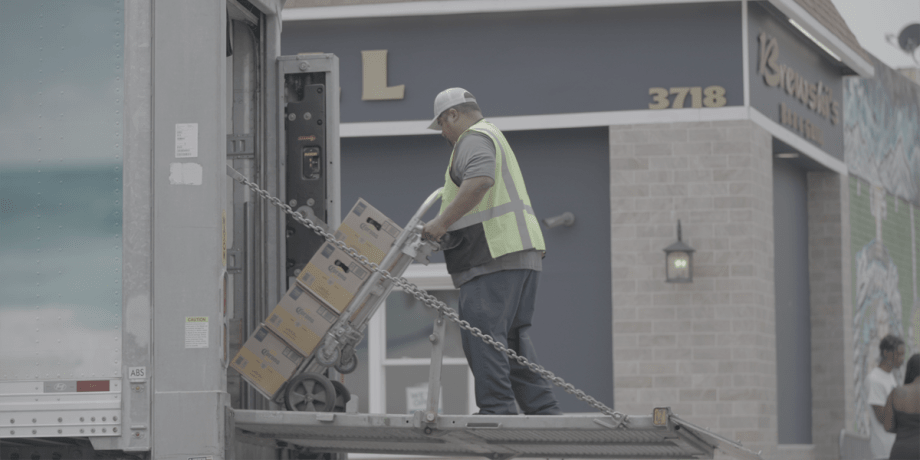
Manhattan Beer Distributors hires younger drivers to operate its smaller delivery trucks, with the goal to train them to eventually transition to their Class 8 CDL fleet.
Photo: Manhattan Beer Distrubtors
Trucking fleets of all types are struggling with recruitment and retention of qualified drivers. The cherry on top for the beverage distribution industry is the physical requirements often demanded of drivers to unload deliveries, which can deter people from entering the industry.
Manhattan Beer Distributors is one of the largest beer and beverage distributors in New York City, and it needs more than 300 drivers to man its 25 over-the-road trucks, and 375 delivery trucks. New York State also requires its tractor drivers to have a Class A commercial driver’s license. As one can imagine, recruiting drivers can be a challenge.
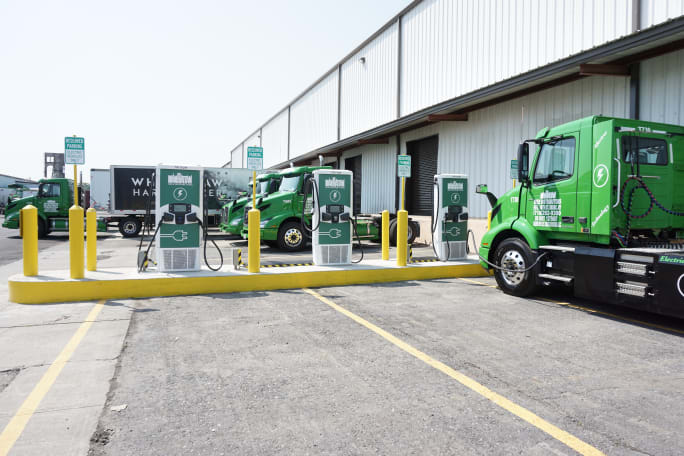
By keepings drivers in newer, decked-out trucks, and investing in their driving careers, Manhattan Beer can keep their demanding operation attractive to drivers.
Photo: Vesna Brajkovic
Because it’s easier to find drivers without a CDL, Manhattan Beer hires younger drivers to operate its smaller delivery trucks, with the goal to train them to eventually transition to its CDL fleet.
“We work with them, we train them, we then help them get their permit for a CDL,” Manhattan Beer CEO Simon Bergson said during a Volvo press event in August. “We then pay for their capability to apply and get the CDL. We give every driver a truck for their tests. We basically help them graduate from a non-CDL driver to a CDL driver. We then hope that we retain them.”
The in-house program guarantees the new hires a starting base pay rate while they complete training and get a sense of their role and the fleet operations, says Michel Bergson, Manhattan Beer’s chief transformation officer.
Fleet Snapshot
Who:Manhattan Beer Distributors
Where: New York City
Fleet:25 over-the-road tractors, 375 delivery trucks. About half of the fleet runs on CNG.
Operations: Beer and beverage distribution
Fun Fact: MBD pays over $2.5 million a year in parking violations for being double parked while serving customers.
Challenge: Recruiting drivers to the physically demanding beverage distribution.
Within the first two weeks, Manhattan Beer expects the new hires to complete classroom training and acquire their DOT medical card. Within the first month, they must acquire a permit, and within the first 10 weeks they will have completed road training and scheduled their road test.
Manhattan Beer performs training in-house, but relies on outside resources for some of the classroom training.
While not all drivers stick with Manhattan Beer after they obtain their CDL, Simon Bergson said sometimes they do – and that’s worth the investment.
Of course, the fleet would have an easier time running trucks that don’t require a CDL, but from a business perspective it’s not as efficient as running their Class 8 fleet to full capacity, he added.
To help sweeten the deal even further, Manhattan Beer also invests in its equipment.
“What we’ve learned is by retrofitting these vehicles with air conditioning and backup cameras and all the safety features, the drivers in the area are realizing that, even though it might be a little bit more physical work in the beer industry, the vehicle is a much nicer, quieter, safer vehicle,” Simon Bergson said. “And we are able to get some drivers from other industries.”
Manhattan Beer was one of the first fleets in New York City to begin converting its diesel truck fleets to compressed natural gas. Earlier this year it also began welcoming its first batch of Volvo VNR Electric trucks.
The company plans to eliminate diesel within four years by switching 35 trucks a year to either electric or compressed natural gas. Most likely, the fleet will continue with electric, following successful deployment of its first five electric trucks, said Juan Corcino, senior director of fleet operations and sustainability at Manhattan Beer, during the press event.
By keepings drivers in newer, decked-out trucks, and investing in their driving careers, Manhattan Beer can keep its demanding operation attractive to drivers in New York City, Long Island and the surrounding counties.
This article first appeared in the November 2021 issue of Heavy Duty Trucking.
Photos: Volvo Delivers VNR Electric to Manhattan Beer Distributors
More Drivers

Truck Drivers Need More Than Another Alert
Fleets have more visibility into truck health, safety events, and driver activity than ever. The next challenge is turning all that information into useful guidance for the person who has to decide what to do next.
Read More →
FMCSA Removes 110 Truck Driver Training Schools from Certified ELDT List
Federal regulators also are targeting more than 160 additional training providers and launching a nationwide audit of third-party CDL skills testers as part of a broader crackdown on trucking fraud.
Read More →
Hours of Service Pilot Programs: FMCSA Readies for 2027 Rollout
Two pilot programs could eventually reshape hours-of-service rules, giving truck drivers options to pause their 14-hour clock or use longer split sleeper rest periods.
Read More →
Medical Cards, English Proficiency Reshape Roadcheck Violations
Medical-card violations jumped to the top of the driver out-of-service list during CVSA’s 2026 International Roadcheck, while English-language proficiency violations appeared among the leading violations for the first time.
Read More →
Driver Trust Can Make or Break the Success of Fleet Safety Technology
New Teletrac Navman research suggests that onboarding, transparency about driver data, and positive feedback can play a significant role in how commercial drivers respond to safety and coaching technology.
Read More →
EEOC Sues KLLM Over Alleged Sex Discrimination in Driver Training
KLLM is facing a federal sex-discrimination lawsuit over policies the EEOC alleges put female truck driver trainees at a disadvantage.
Read More →
FMCSA Moves to Codify English Language Requirements for Commercial Drivers
By changing regulations on English-language proficiency requirements for commercial drivers, rather than relying on a guidance memo, the FMCSA said future administrations won't be able to walk back the Trump administration's stricter enforcement with just a memo.
Read More →
Drivers Put Western Star Trucks to the Test at Star Nation Experience
Watch to get an inside look at the Western Star trucks, technology, and community behind the Star Nation Experience 2026!
Read More →
Trump Administration Looks to Put More Veterans Behind the Wheel
The Freedom Haulers program pulls together existing and expanded programs at several federal agencies to recruit veterans to drive commercial heavy-duty trucks and cut the red tape for them to get a CDL, training, and employment.
Read More →
Putting Mack’s Command Steer to the Test
A test drive of Mack’s Command Steer active steering system evaluates how it can make truck driving easier and less tiring.
Read More →