




How To Help Truck Drivers Reduce Cancer Risks
Truck drivers face many added risks, including some alarming correlations to numerous types of cancers. Here's how fleets can help drivers reduce the risk.

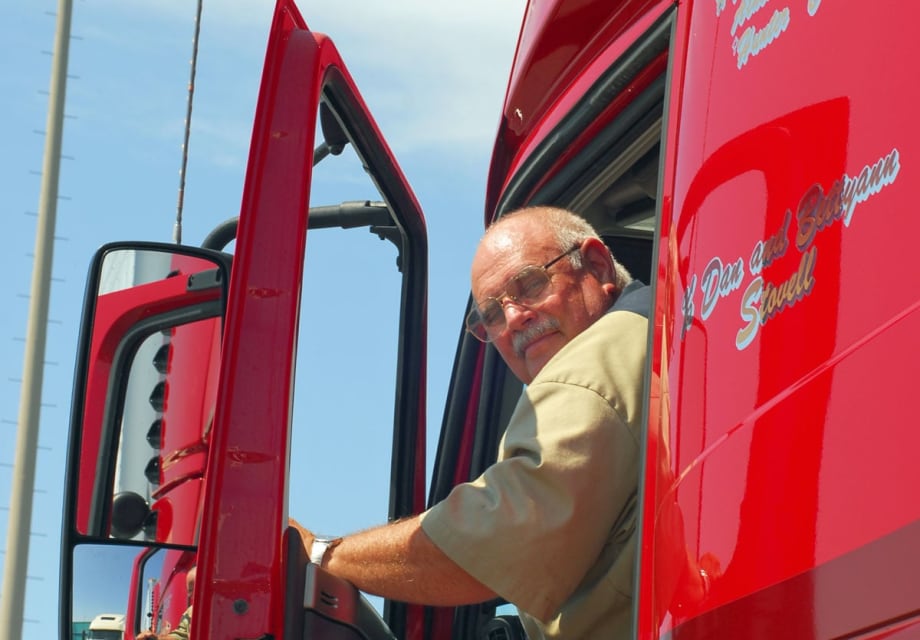
Studies have shown a correlation between the whole-body vibrations experienced when driving a truck and aggressive prostate cancer.
Photo: Jim Park
Truck drivers face many added risks, including some alarming correlations to numerous types of cancers – in particular, lung cancer, prostate cancer, and melanoma (the most aggressive type of skin cancer).
It’s critical to understand that both lifestyle and genetics play significant roles in every individual’s risk for cancer. While we cannot control our genetics, we can affect our genes’ expression through lifestyle changes.
It’s not only important to educate and emphasize the health benefits of exercise, healthy eating and proper sleep with your drivers, but also to support drivers in their efforts. Simple changes such as walking and stretching during breaks, eating more greens and natural foods, and getting an average of seven or more hours of sleep per night will significantly reduce the risk for most cancers.
If cancer is in a person’s family history, they likely are at an increased risk, so extra precautions need to be taken. Educating drivers and working with them to attain this information, along with providing resources for regular check-ups, is a great starting point.
Let’s look more specifically at three types of cancers where truck drivers may be more at risk.
1. Melanoma
There has been an increased concern for truck drivers over the past decade. You may recall seeing a viral image of a 69-year-old trucker who had been on the road for 28 years, who showed significant aging on the left side of his face – the side exposed to more ultraviolet light while driving.
More than one study has found that melanoma is more prevalent on the side of the body, especially on the arms, that’s exposed to the sun. In the U.S., that’s on the left side. In Australia, where you drive on the opposite side, it’s more prevalent on the right. While most car and truck windows block out a majority of ultraviolet light, some still gets through and causes damage over time. And for drivers who like to keep their windows open, often due to smoking, there is a significant added risk.
Encourage drivers to use sunscreen (minimum 30 SPF) regularly and/or covering up with clothing. It’s also important for fleets to provide window treatments that block out UVB and UVA rays.

Sergio Rojas
2. Prostate cancer
Another concern for drivers is the risk for aggressive prostate cancer. Studies have shown a correlation between the whole-body vibrations experienced when driving a truck and aggressive prostate cancer, although researchers are not sure why. In comparison to educators who experience no vibration on the job, truck drivers were four times more likely to have an aggressive form of prostate cancer.
While it’s not easy to reduce vibration (outside of shock absorption in the seat and wheels of the truck, which need to be considered), encourage and educate drivers about other steps they can take to reduce their risk of prostate cancer, such as stopping smoking, and a diet rich in foods like tomatoes, broccoli, green tea, legumes, and healthy fats from fish and nuts.
3. Lung cancer
Truck drivers are at higher risk of developing lung cancer. Not only are they more likely to smoke cigarettes than the average American, but they also may be exposed to more harmful air pollution from cars and other trucks. Drivers who are using N95 (or KN95 or KF94) face masks to prevent the spread of COVID-19 should be encouraged to wear masks while driving, especially in heavy traffic. Multi-layer cloth masks and surgical masks also can offer some protection but are not as effective.
I always want to encourage fleets to take a proactive approach to helping drivers stay healthy and safe on the road.
More Drivers

Truck Drivers Need More Than Another Alert
Fleets have more visibility into truck health, safety events, and driver activity than ever. The next challenge is turning all that information into useful guidance for the person who has to decide what to do next.
Read More →
FMCSA Removes 110 Truck Driver Training Schools from Certified ELDT List
Federal regulators also are targeting more than 160 additional training providers and launching a nationwide audit of third-party CDL skills testers as part of a broader crackdown on trucking fraud.
Read More →
Hours of Service Pilot Programs: FMCSA Readies for 2027 Rollout
Two pilot programs could eventually reshape hours-of-service rules, giving truck drivers options to pause their 14-hour clock or use longer split sleeper rest periods.
Read More →
Medical Cards, English Proficiency Reshape Roadcheck Violations
Medical-card violations jumped to the top of the driver out-of-service list during CVSA’s 2026 International Roadcheck, while English-language proficiency violations appeared among the leading violations for the first time.
Read More →
Driver Trust Can Make or Break the Success of Fleet Safety Technology
New Teletrac Navman research suggests that onboarding, transparency about driver data, and positive feedback can play a significant role in how commercial drivers respond to safety and coaching technology.
Read More →
EEOC Sues KLLM Over Alleged Sex Discrimination in Driver Training
KLLM is facing a federal sex-discrimination lawsuit over policies the EEOC alleges put female truck driver trainees at a disadvantage.
Read More →
FMCSA Moves to Codify English Language Requirements for Commercial Drivers
By changing regulations on English-language proficiency requirements for commercial drivers, rather than relying on a guidance memo, the FMCSA said future administrations won't be able to walk back the Trump administration's stricter enforcement with just a memo.
Read More →
Drivers Put Western Star Trucks to the Test at Star Nation Experience
Watch to get an inside look at the Western Star trucks, technology, and community behind the Star Nation Experience 2026!
Read More →
Trump Administration Looks to Put More Veterans Behind the Wheel
The Freedom Haulers program pulls together existing and expanded programs at several federal agencies to recruit veterans to drive commercial heavy-duty trucks and cut the red tape for them to get a CDL, training, and employment.
Read More →
Putting Mack’s Command Steer to the Test
A test drive of Mack’s Command Steer active steering system evaluates how it can make truck driving easier and less tiring.
Read More →