




Ensuring the Correct Tire Replacement
Incorrect remote tire replacements when trucks get road service have nagged fleets since the beginning of trucking.

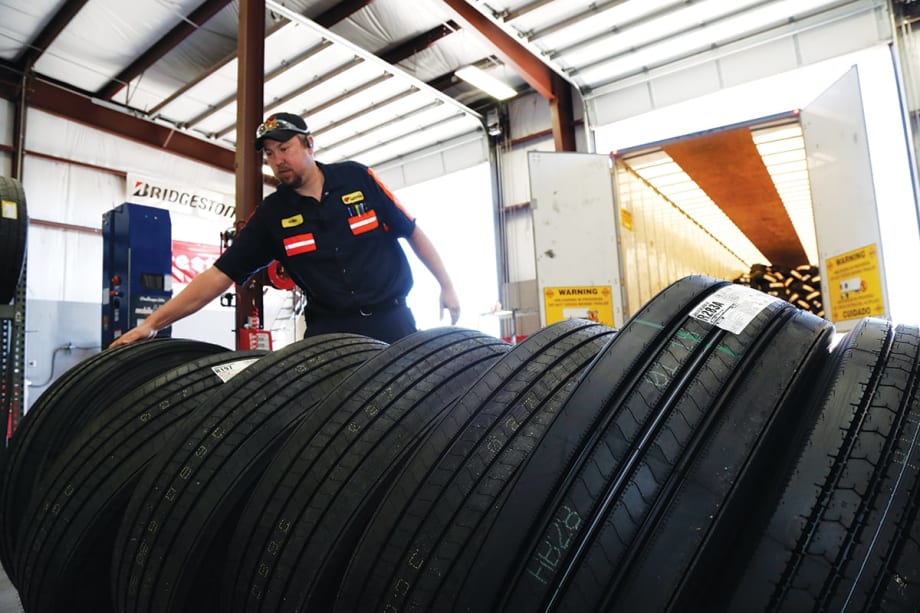
Love’s Travel Stops has set up a digital communication network to help its fleet customers ensure they get the right tires, regardless of location or time of day.
Photo: Love’s Travel Stops
The number of tires even a small fleet can go though in a year’s time is staggering. Just ask Bryan Golden, director of fleet maintenance for Southeast Logistics, based in Tuscaloosa, Alabama.
Southeast runs around 160 company-owned tractors as well as a number of leased power units and 452 flatbed trailers throughout the Southeast. The fleet’s average length of haul is approximately 385 miles. During a year’s time, Golden says the fleet puts on anywhere from 1,200 to 2,000 tires purchased from remote vendors. But to his ongoing frustration, many times the replacement tires his technicians find on the trucks when they roll back into the yard are not the ones he wants.
Golden has spent years working out his preferred tire choices. Moreover, he’s a firm believer in the value of retreads. “We run spread axles,” he says. “So, I need a very high scrub value on my tires. And if my tires are spec’ed correctly, I can expect to get 13 or 14 months’ service from them, and have a good casing left over to retread and use two or three more times on the drive axles and, eventually, the trailer axles.”
The problem is that many times, when a truck comes in after a remote tire replacement, the new tire is not one from his approved replacement tire spec sheet.
“I have one terminal here in Tuscaloosa,” he says, “so we totally rely on outside vendors to help us get the right tires on the trucks and trailers.”
Too often the trucks come in with low-scrub-value tires that not only wear out stunningly fast, but also rob him of a usable retread casing.
“If they don’t have an approved tire on our spec list in stock, I’ll happily pay for a more expensive virgin tire that meets the spec in terms of scrubbing, tread design and tread depth,” he says. “Because even though it costs a bit more money, I actually come out ahead in the long run, because I at least have a reusable casing I can retread. But most of these incorrect tires have low scrub values and completely burn up in six to eight months. And usually the casing is destroyed as well. So, I’ve just shelled out $325 for a tire that will be gone in six months — and I’ll have literally nothing to show for it once it’s gone.”
Buyer Beware
One might suspect this could be traced back to drivers sweet-talking a technician late at night into putting a premium brand on the vehicle. But Golden says that scenario is rare. “We have pretty good controls in place that keep drivers from bypassing our preferences and putting a different tire on,” he says. “It does happen from time to time. But I really think the problem is training on the technician side of the issue.”
Golden believes most technicians don’t understand the nuances of tire specs. “They don’t understand why a high-scrub value is important to a fleet that’s running spread axles,” he says. “And in the normal course of a shift, they primarily deal with dry van trailers. So they’re in a hurry, running behind — they need a tire. This one is round, black and it rolls. And it’s good enough for most of the long-haul, dry van fleets they deal with, so they slap it on and don’t think about it again.”
“It’s ‘buyer beware’ away from your home base,” agrees Darry Stuart, president of DWS Fleet Services in Wrentham, Massachusetts, who serves as a limited-time executive helping fleets with their maintenance programs. “The problem with remote tire replacements is that the buyer usually isn’t aware until the truck comes back to home base.”
Stuart advises clients running spread-axle trailers to negotiate second- or third-tier new rubber for remote purchases. “I’m a ‘deep rubber’ guy and have been for years,” he says with a chuckle. “But, on the other hand, good used casings are getting harder to find,” he notes. “Everybody wants them. And a lot of them ended up going to China. So part of the problem in getting high-scrub retreads could be that the tires are hard to find.”
Love’s Travel Stops has emerged as a major remote tire service center for fleets since opening its first Truck Tire Care location in 2008. Eric Daniels, Love’s director of shop operations, says the company works hard to make sure fleets large and small get the tires they need when a failure hits away from home.
“At Love’s, we stock the same tire brands and models at our over 370 Love’s Truck Care Center and Speedco locations across the country,” he notes. “We also have our own retread centers so we can offer high-quality retread products at affordable prices. We want to ensure we can meet our customers’ needs and get them back on the road quickly.”
To help make sure fleets are getting the tires they’ve spec’d, Daniels says all Love’s Truck Care Center and Speedco locations let customers set up specification profiles so all shop personnel can see what a fleet’s requested products and procedures are. “From oil changes to tire replacements, we can outline exactly what the fleet wants and ensure consistency across our network,” he says.
Another option he suggests, for fleets that are having trouble with correct specs, is the Love’s Shop Connect digital communications solution. “This is a one-stop-shop for fleets to manage accounts and schedule maintenance and inspections at any Love’s Truck Care Center or Speedco location,” Daniels explains. “With Shop Connect, fleets can dispatch repairs, chat with our team and approve repair estimates prior to work being completed. We also have a 24/7 dispatch center that makes it easy for a fleet to communicate with our locations.”
Love’s, of course, is not the only remote tire provider offering digital tools these days to help fleets manage the work on the road. TA/Petro, for instance, has TA Truck Service eShop, which allows fleets to authorize work orders and purchase orders online and get detailed cost estimates before work is completed. If you’re not already using such tools with your on-the-road tire providers, check to see what they offer.
Confront, Address, and Correct
Stuart says remote repairs in general, not just tires, have been a frustration for fleets since trucks first hauled goods away from their home bases. “We’ve got better means of communicating today. But the frustration for fleet managers is understandable. You can over-communicate, monitor and even change your specs. But all it takes is for one guy out there somewhere to not care, and it all goes out the window.”
It’s a sentiment Golden can relate to. “It’d be one thing if I was asking for crazy, exotic stuff,” he says. “But I’m not. This is just everyday trucking. And it just drives us crazy because this happens all the time.”
For now, he says, he’ll keep on coaching his techs to let him know when a non-spec tire rolls into the shop, and keep his staff working the phones to confront, address and correct the issue when one does.
More Maintenance

Oil Crisis Squeezes Trucking Lubricant Supplies
Fleets report higher lubricant costs as Middle East disruptions tighten supplies of ingredients used in synthetic engine oils and some driveline lubricants.
Read More →
Shell Prepares Rotella Oils for 2027
New CL-4 and FB-4 formulations will begin arriving in early 2027, with improved protection against oil breakdown, wear and deposits, according to Shell.
Read More →
Mack Expands Extended Coverage With Four Chassis System Plans
Mack Trucks' new system-specific coverage options allow heavy-duty fleets to select protection for driveline, cab, HVAC, electronics, and advanced safety components.
Read More →
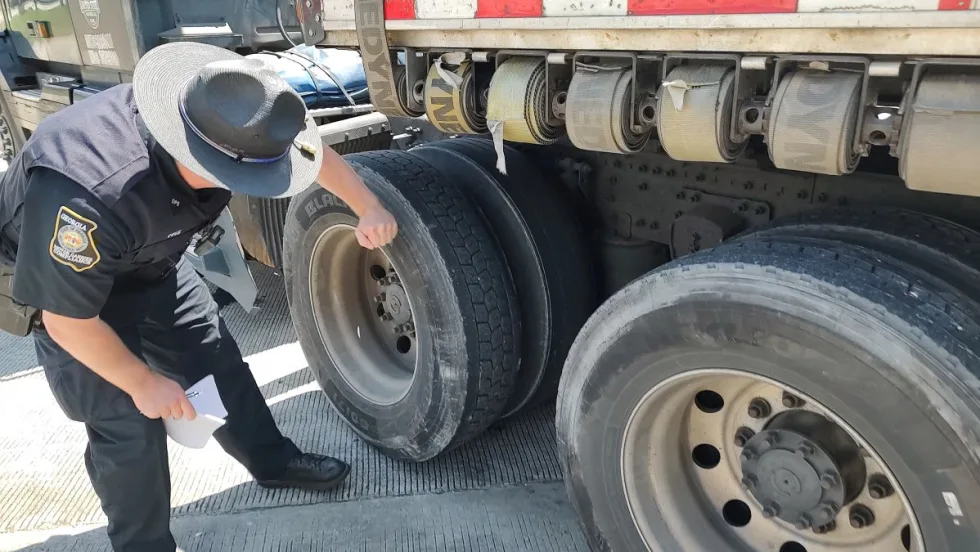
What an Out-of-Service Order Really Costs, and How to Plan for One
The repair invoice is the first number you see — and often one of the smallest. Here’s what else an out-of-service order can cost a fleet, and how planning can reduce the damage.
Read More →
International Launches Online Truck Parts Store
Fleetrite.com lets fleets and repair shops find OEM and all-makes parts, check prices and availability, and order without calling a parts counter.
Read More →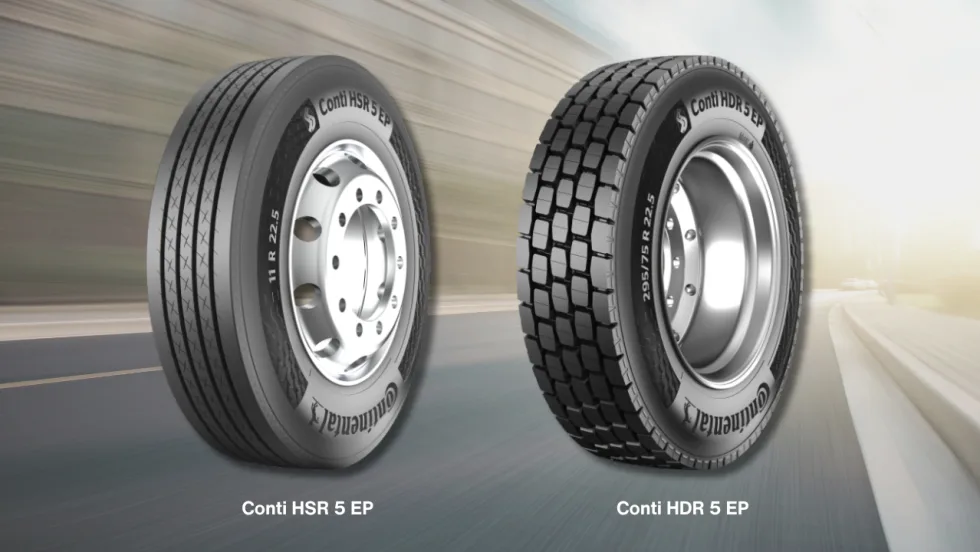
Continental Introduces New Regional Truck Tires
Continental says its new Generation 5 steer and drive tires for regional operations offer longer tread life, with estimated mileage gains of 22% and 19%, respectively.
Read More →
How AI Can Help Your Techs’ Efficiency
The technician shortage isn't going away, and no single fix can close the gap on its own. Trent Broberg makes the case that AI's real job in the shop is protecting the billable hours and job satisfaction of the techs you already have, not asking them to work faster.
Read More →
Color Match Smarter: Tools That Restore & Perform
For fleet managers and collision repair professionals keeping heavy-duty trucks on the road, getting the color right the first time isn't just about appearance — it's about efficiency, turnaround time, and bottom-line results. Discover how today's digital color tools are transforming the repair process from guesswork to precision.
Read More →
Wrong Repair Prompts Recall of Freightliner, Western Star 4x2 Trucks
DTNA is recalling more than 2,400 trucks that received an incompatible software fix instead of the hardware repair required to address brake valve corrosion.
Read More →
Truck Drivers Need More Than Another Alert
Fleets have more visibility into truck health, safety events, and driver activity than ever. The next challenge is turning all that information into useful guidance for the person who has to decide what to do next.
Read More →