




Engines Today: How Are the EPA-Spec Engines From the Past Decade Performing?
A lot of truck owners aren't particularly happy with some of their EPA-emissions-spec engines from the past decade, and that could spell aftermarket opportunities as those engines come out of warranty.
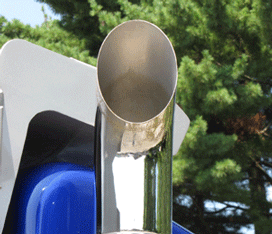
A lot of truck owners aren't particularly happy with some of their EPA-emissions-spec engines from the past decade, and that could spell aftermarket opportunities as those engines come out of warranty.
That was evident when listening to truck maintenance professionals at the American Trucking Associations' Technology & Maintenance Council Fall Meeting. In the Fleet Talk session, managers griped openly about engines and the trucks they're in.
To encourage participants to speak freely, Fleet Talk is closed to suppliers, and trade-press people in the room are expected to protect identities of managers and products, so we won't name names.
One well-known medium-duty engine, which was once the best one out there, has been failing early and often, a manager said. Its maker suggests repairs that will carry an engine past its warranty, and it breaks down again. Then the owner is on his own for costs.
Another manager reported "problems right out of the box" with brand-new heavy-duty engines from a different manufacturer. A third manager said new trucks arrive with their check engine lights on, and it's up to his technicians to find out why or try to get the dealer to help.
Many problems are related to inferior wiring and connectors, still another manager said. He thinks it's because old, reliable suppliers went out of business during the recent recession, and new companies are making inferior parts. Truck builders are trying to sort this out.
It all translates to lousy reliability for increasingly expensive products. The manager of a major snack-foods fleet said it's not unusual for a brand-new walk-in van to break down on its very first run.
And here's an upsetting statistic: "20% is the out-of service norm" for another manager's new heavy trucks.
"I'm glad I'm not in the norm," remarked a fleet manager from Georgia at lunch the next day. "We've seen very few problems with our trucks," heavies which are the same make as some of those criticized in Fleet Talk. "Knock on wood," he added.
Engine report card
TMC has sponsored "report card" sessions about new-technology engines since the start of the ever-stricter emissions regulations cycle, starting with the advent of exhaust-gas recirculation in October 2002. During the sessions, managers gave mixed reviews, and the managers ranged from people with a handful of trucks to those with thousands.
Of course, an informal complaint session is hardly a scientific sampling. So, to find out the number and nature of fleets' engine problems, TMC is working on a survey of its members.
The survey asks managers to compare EPA 2007 and 2010 diesels with previous models in 20 categories, ranging from performance and durability/reliability to driver satisfaction to serviceability and ease of diagnosing. Factory support and warranties also are included.Preliminary results reported in December basically confirm what we've heard anecdotally:
- 2002/04-spec engines with exhaust-gas recirculation are more troublesome than their non-EGR predecessors;
- 2007-spec engines with EGR and diesel particulate filters are more troublesome than the ones that came before; and
- 2010-spec engines with EGR, DPFs and selective catalytic reduction are more reliable and turn in better fuel economy than the 2007s.
We've seen that breakdown before, but TMC activists are getting more numbers on it. (Final results will be shared at TMC's 2011 Annual Meeting in Tampa, Fla., Feb. 20-23.)
The Environmental Protection Agency's performance requirements in the three stages listed above were the strictest exhaust-emissions limits ever published. Many in the industry believe the ever-stricter emissions steps came too quickly on top of one another for the engine builders to really wring bugs out of the equipment.
Customer satisfaction
Customer satisfaction surveys by J.D. Power and Associates tell a similar story.
Technology changes related to emissions standards revisions caused a spike in engine-related problems during recent years, but it wasn't as bad last year, according to J.D. Power's 2011 U.S. Heavy-Duty Truck Engine and Transmission Study.
The 2011 study found that 42% of owners of heavy-duty truck engines that are one model-year old reported experiencing some type of engine-related problem. This number is down from 46% in 2010. However, this was still well above the historically low average in 2004, when 26% of owners of truck engines that were two model-years old reported experiencing a problem -- before the 2002/2004 emissions engines.
The most-commonly reported engine problems are issues with the exhaust gas recirculation valve (23%) and electronic control module calibration (21%).
Midrange, too
On the midrange side (Class 5-7), J.D. Power's 2011 U.S. Medium-Duty Truck Customer Satisfaction Study found that although the quality of trucks has improved considerably during the past five years, overall customer satisfaction has declined.
The reason? Manufacturers have made dramatic improvements during the past five years in wheel/tire, braking system, and cab/body quality, resulting in a decline in the total number of problems, say the survey's analysts. However, the number of engine problems in trucks that have been in service for 13 to 18 months increased by 13 problems per 100 vehicles from 2007 to 2011.
"Electronic control module calibration and regeneration system problems now impact 46% of medium-duty truck customers who experience an engine-related problem," said Brent Gruber, senior manager of the commercial vehicle practice at J.D. Power and Associates.
However, it appears that engine makers are working out some of the kinks. In the 2011 survey, engine problems dropped to an average of 66 problems per 100 vehicles from 72 in 2010. As a result, satisfaction with engines has increased by 22 points to an average of 739, on a 1,000-point scale.
"It's encouraging to see that the number and frequency of problems is improving," Gruber said. "With the new technology required to meet emissions standards, today's engines simply are more problematic than the previous generation."
Gruber notes that the most recent emissions standards revision took place in 2010. How those changes will affect quality and customer satisfaction will be reflected in the 2012 J.D. Power study.
"Given the quality issues that arose from new emissions requirements in 2004 and 2007, the 2010 emissions standards will likely create another round of challenges for engine manufacturers," said Gruber. Although, if the TMC study proves correct, they won't be as tough as the previous two emissions steps.
From the Jan/Feb 2012 issue of HDAJ.
More Aftermarket

What Three Fleets Are Doing Differently When Buying Truck Parts in 2026
With freight improving but costs still climbing, fleet maintenance executives explain how they're balancing price, quality, and supplier relationships.
Read More →
ConMet Expands Aftermarket Brake Drum Lineup With TruCast
A new heavy-duty truck brake drum option in the aftermarket gives customers more flexibility within the ConMet product family.
Read More →
Phillips Opens High-Tech Distribution Center for Faster Parts Delivery
Phillips Industries’ new Cincinnati-area distribution center is now shipping aftermarket trucking parts nationwide, aiming to speed up delivery times for customers.
Read More →
Volvo to Sponsor America’s Road Team for 2025
Volvo Trucks announced that it is extending its exclusive sponsorship of America’s Road Team for 2025.
Read More →
Webb to Start Taking Orders for UltraSet Pre-Adjusted Wheel Hubs
Webb, which recently acquired the Stemco Trifecta pre-adjusted hub program, will soon start taking orders for its replacement pre-assembled hub, the UltraSet.
Read More →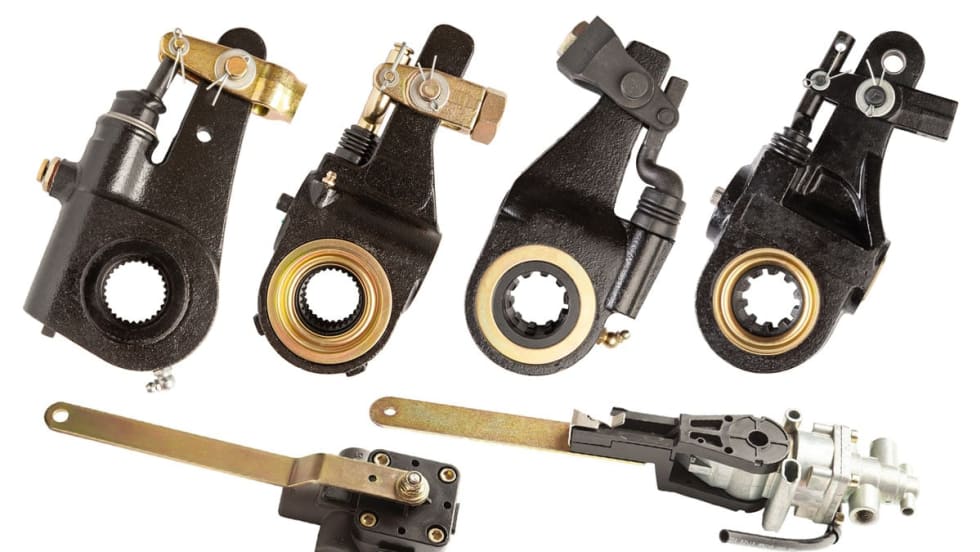
All-Makes Automatic Brake Adjusters, Ride Height Control Valves from Midland
SAF-Holland has added automatic brake adjusters and ride height control valves to its Midland All-Makes Program.
Read More →
ZF Aftermarket Expands [pro]Academy Training
ZF Aftermarket said it is expanding its ZF [pro]Academy training and will be adding 40 new modules this year.
Read More →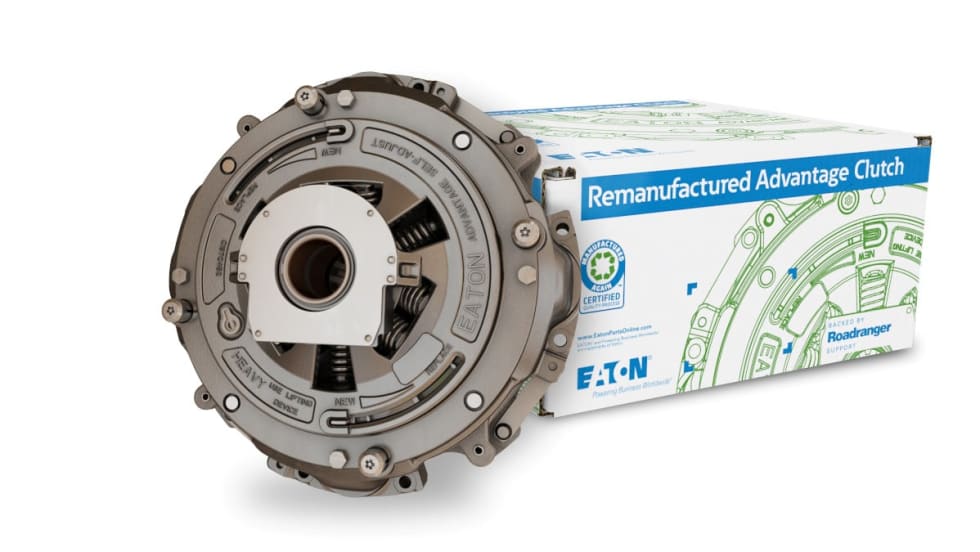
Eaton Adds Remanufactured Advantage Line of Clutches
Eaton has added its Advantage clutches to its remanufactured product line. The clutches feature a unique strap drive intermediate plate designed to allow customers to choose the latest OE specification
Read More →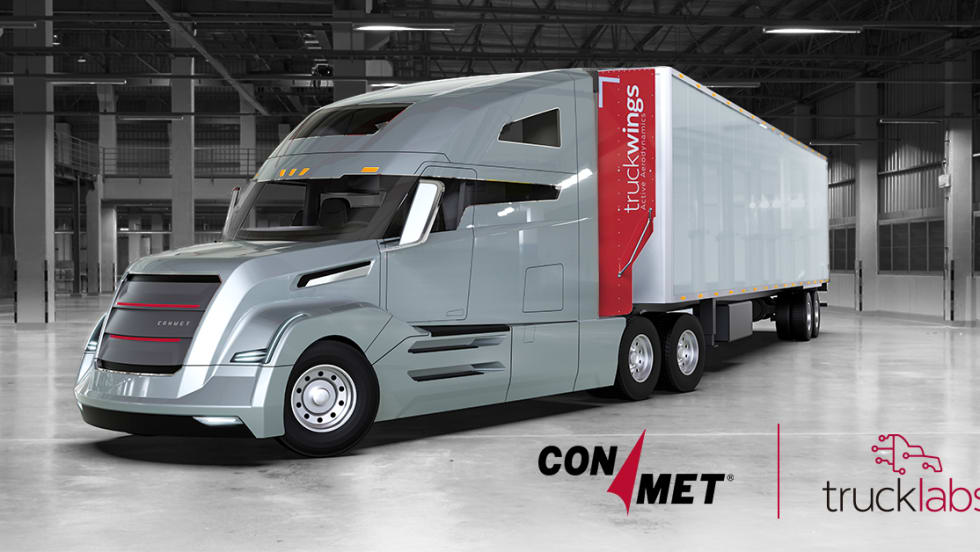
ConMet Acquires TruckLabs, the Creator of TruckWings
Commercial truck and trailer parts provider ConMet acquired TruckLabs, the company that created TruckWings, an aerodynamic device that attaches to truck cabs and deploys to close the gap between truck and trailer. TruckLabs now operates as a subsidiary of ConMet.
Read More →
Diesel Laptops Releases Fault-Code-to-Part-Number Tool
Diesel Laptops said its Truck Fault Codes allows users to input a fault code and immediately identify and order the parts needed to complete repair work.
Read More →