




Do You Have a DQ File?
The driver qualifications regulations, which are found in Part 391 of the FMCSA regulations, apply to all interstate drivers and most intrastate drivers that operate a commercial motor vehicle – no matter whether your company employs one driver or 1,000.
The driver qualifications regulations, which are found in Part 391 of the FMCSA regulations, apply to all interstate drivers and most intrastate drivers that operate a commercial motor vehicle – no matter whether your company employs one driver or 1,000.
The only thing that “changes” is who is responsible for making sure the driver is qualified (including the paperwork).
The qualification requirements
As far as the basic qualification requirements are concerned, Part 391 requires that the driver:
Be at least 21 years old (18 in some states for intrastate drivers),
Be able to read and speak English well enough to converse with the public and law enforcement,
Be medically qualified — this means a driver will need to undergo a physical every 2 years, or sooner, depending on the length of the current certification,
Has a valid driver's license of the correct class for the vehicle being driven,
Completes the necessary paperwork (DOT driver's application, certificate of violations, etc.),
Has undergone a Safety Performance History background check (including checking with the driver's previous DOT-regulated employers),
Has the necessary training and/or experience to safely operate the equipment, and
Has passed a road test.
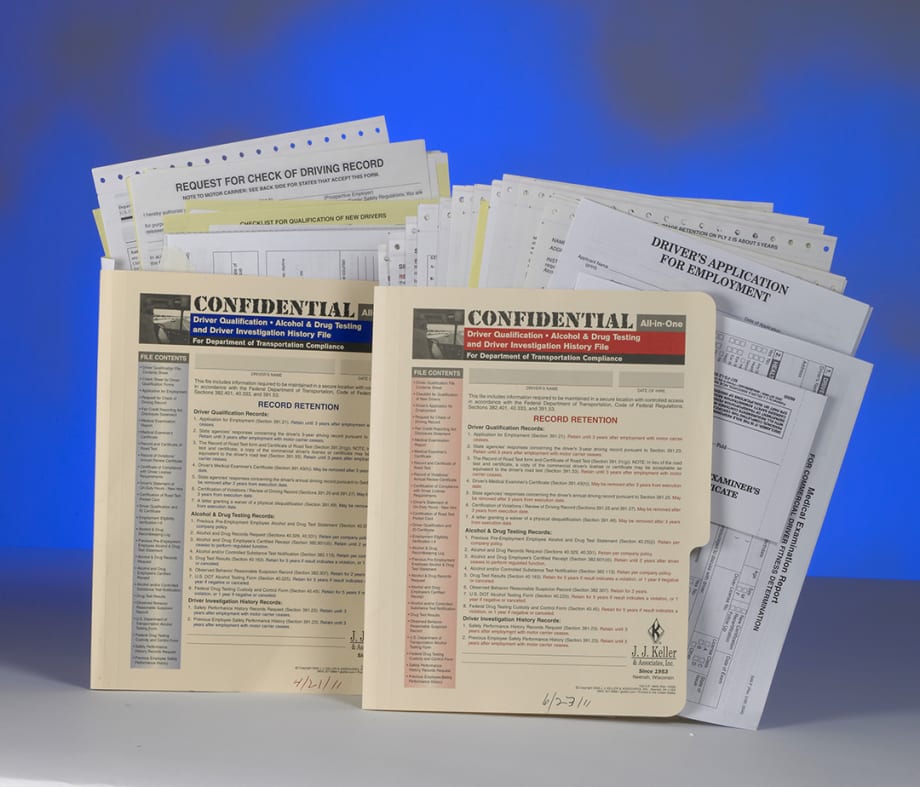
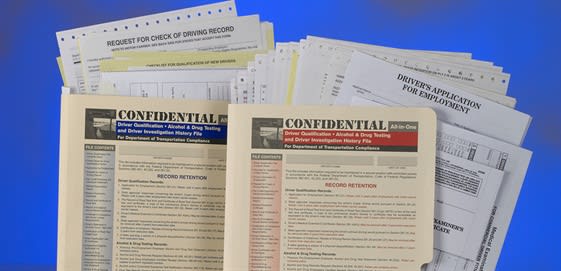
The regulations also require that proof of all of the above, as well as proof of an annual review of the driver's motor vehicle record and performance, be kept on file at the company for which the driver is operating. This “proof” is referred to as the Driver's Qualification, or DQ, file. Documents that must be in the DQ file include:
Driver’s application
Records of the background check conducted by the company. This needs to show that you verified employment with any DOT-regulated employer the driver worked for during the previous three years, including dates of employment, drug and alcohol testing, and accidents, and the driver’s motor vehicle record (MVR) from all states where he or she held a license in during the three years previous to hire.
Road test and copy of the road test certificate (which is issued to the driver after he/she passes the road test), or an acceptable equivalent (such as a road test certificate issued by another carrier within the last three years or a copy of a valid CDL)
Annual (that is, every 12 months) review record for all annual reviews conducted over the last three years, including:
Copies of medical certificates (cards) for all physicals taken over the last three years. The driver must pass a physical before the one that is on file expires.
The application, background check records (MVRs and SPH), and road test records must be kept the entire time the driver is employed with that carrier, plus three years.
Who is responsible for maintaining the DQ file?
If the driver is an owner-operator operating under his/her own DOT number, then the owner-operator is responsible for making sure he/she meets the qualification requirements and remains qualified. The owner-operator must maintain his/her DQ file.
As far as the qualification process and DQ file is concerned, the only thing an owner-operator needs outside assistance to accomplish is the road test (unless an acceptable equivalent is used, such as a CDL). An owner-operator needs to find someone who is competent at evaluating drivers operating a CMV on the road and have this individual conduct and document the road test.
Owner-operators are allowed to self-manage and administer their application, the background checks, the medical certificate, and conducting annual reviews. In effect, the owner-operator is both the driver and the company.
If the owner-operator leases onto a carrier, then the carrier he/she is leased to becomes responsible for the driver’s DQ file and ongoing qualifications, such as making sure the owner-operator’s credentials (license and medical card) stay current and for conducting annual reviews. In this case the owner-operator is responsible for maintaining his/her personal qualifications (license and medical card) and the company is responsible for overseeing the owner-operator and maintaining the DQ file.
Thomas Bray is an editor in the Transportation Publishing Department of the Editorial Resource Unit at J.J. Keller & Associates, Inc., specializing in motor carrier safety and operations management.
More Drivers

Samsara Launches Custom AI Agent Builder
Agent Studio lets fleets create AI tools for hours-of-service monitoring, reporting and driver support, including agents that communicate by phone.
Read More →
Trucker Path Expands Reserved Parking Network
Trucker Path has added close to 6,000 more truck parking spaces to its Trucker Path Reserved Parking Network with the addition of Safe Truck Parking.
Read More →
EEOC Sues Texas Trucking Company Over Driver Age Limits
The agency says Trancasa USA rejected applicants over 65 and applied tougher driving-record standards to those over 60.
Read More →
Nussbaum, Roehl Announce Second Driver Pay Increase This Year
This year has seen a swath of major truck driver pay increases as freight capacity has tightened.
Read More →
From One Generation to the Next: How Mentorship Builds Safer Truck Drivers
After three decades in trucking, Harold Perry shares what he's learned about driver safety, mentorship, and helping the next generation build confidence behind the wheel.
Read More →
Truck Drivers Need More Than Another Alert
Fleets have more visibility into truck health, safety events, and driver activity than ever. The next challenge is turning all that information into useful guidance for the person who has to decide what to do next.
Read More →
FMCSA Removes 110 Truck Driver Training Schools from Certified ELDT List
Federal regulators also are targeting more than 160 additional training providers and launching a nationwide audit of third-party CDL skills testers as part of a broader crackdown on trucking fraud.
Read More →
Hours of Service Pilot Programs: FMCSA Readies for 2027 Rollout
Two pilot programs could eventually reshape hours-of-service rules, giving truck drivers options to pause their 14-hour clock or use longer split sleeper rest periods.
Read More →
Medical Cards, English Proficiency Reshape Roadcheck Violations
Medical-card violations jumped to the top of the driver out-of-service list during CVSA’s 2026 International Roadcheck, while English-language proficiency violations appeared among the leading violations for the first time.
Read More →
Driver Trust Can Make or Break the Success of Fleet Safety Technology
New Teletrac Navman research suggests that onboarding, transparency about driver data, and positive feedback can play a significant role in how commercial drivers respond to safety and coaching technology.
Read More →