




Related: Diesel Falls Below $2 Per Gallon For First Time in 11 Years
Commentary: A Crude Awakening
With all the hoopla lately over the plummeting crude oil prices, you may not have noticed a recent change in U.S. policy that could send prices in the other direction.

Evan Lockridge・Former Business Contributing Editor
Source: EIA
3 min to read
Source: EIA
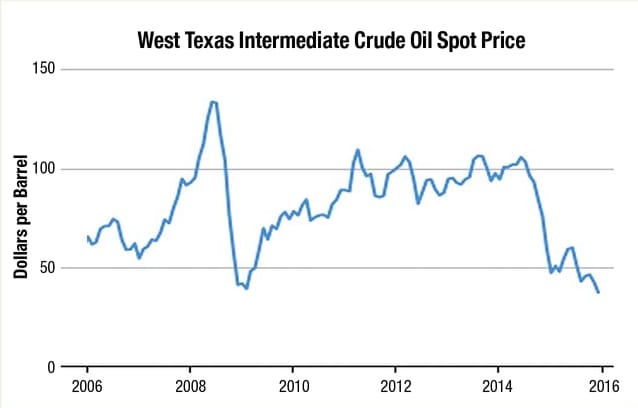
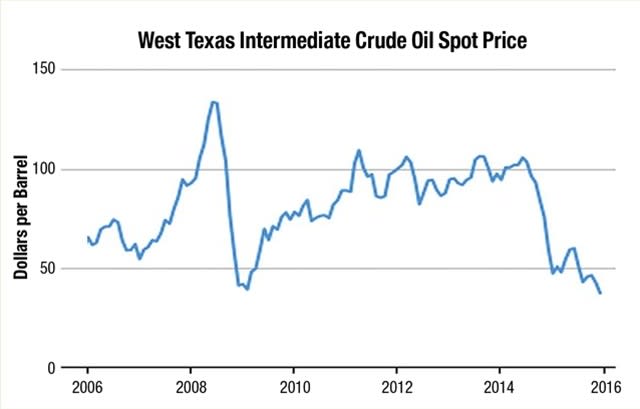
With all the hoopla lately over the plummeting crude oil prices caused by a global oil glut, you may not have noticed a recent change in U.S. policy that could send prices in the other direction.
The federal budget bill signed late last year includes a provision ending a 1975 ban on U.S. crude oil exports, originally enacted as a response to the Arab Oil Embargo. The idea was to keep the U.S. from being as dependent on crude oil imports and to reduce fuel price volatility.
Since then, both and oil and fuel prices have been anything but stable. But some say removing this four-decade-old ban will mean higher prices for both oil and fuel, though not right away.
One of them is Tyson Slocum, energy director at the consumer advocacy group Public Citizen. In an interview with CNBC, he said he expects oil prices to rebound later this year. When it does, he said, that will allow oil producers to be “free to move very large volumes” of U.S. crude out of the country. That will “raise U.S. benchmark oil prices, which in turn, is going to increase the price at the pump.”
On the other side of the fence are all sorts of individuals and groups, ranging from economic forecasters and “think tanks” to the federal government, all pointing to studies claiming this change in policy will drive down the price of oil and fuel due to increases in U.S. production of crude.
In this group is the oil and natural gas trade group the American Petroleum Institute. It counts among its members the nation’s largest petroleum producers. You have to wonder: Since API supported ending the export ban, isn’t taking their word that this would lead to lower fuel and oil prices kind of like walking into a barber shop and asking if you need a haircut?
Two years ago, Bloomberg News reported the investment banking firm Barclays said lifting export limits would halt the decline in U.S. crude prices while costing motorists as much as $10 billion a year in higher fuel prices. This presumably also translates into big bucks for trucking and what it pays for diesel. Bloomberg also quoted an official with the energy analytics company RBN Energy, who said, “the most obvious thing that’s going to happen is that crude prices will go up.”
The Center for American Progress, an independent, nonpartisan group, contends that API and its members lobbied heavily for removing this ban, not to lower what you pay for fuel, but to increase their members’ profits. According to the Center, lifting the ban on exports allows oil companies to sell their product to the rest of the world while simultaneously forcing the U.S. to import more expensive oil to replace domestic oil.
There is no doubt the world will first have to work off the excess crude that is in the marketplace before oil and fuel prices will go higher, but sooner or later it will. Possibly even sooner. Goldman Sachs is forecasting crude oil futures to be above $40 per barrel by mid-year, compared to one point where it dipped below $30 in January. At press time in late January, oil traders were pricing oil for December delivery at close to $40 per barrel.
It’s often been said there is no better cure for low prices than low prices. Due to changes in U.S. oil policy, the low fuel prices you and the rest of the public have been enjoying may soon be nothing more than a memory.
Subscribe to Our Newsletter
More Fuel Smarts

How Volvo Updated Its D13 for EPA 2027 [Watch]
Volvo’s updated D13 promises lower emissions without sacrificing performance or fuel economy. Take a closer look at what changed inside the engine in this HDT Spotlight video.
Read More →
Diesel Price Spike Shortens Payback for Natural Gas Trucks, Report Says
Energy Vision estimates fleets could recover the higher purchase price of an RNG-fueled Class 8 tractor in 1.3 to 2.8 years under current fuel-price scenarios.
Read More →
Calstart Becomes Catalyst Mobility, Reflecting Broader Focus
Calstart is now Catalyst Mobility, reflecting the nonprofit’s growing national role in clean transportation, including zero-emission trucks, infrastructure and incentive programs.
Read More →

Record Diesel Prices Squeeze Trucking Fleets
Average U.S. diesel prices have climbed to nearly $6 a gallon, surpassing the 2022 record as tight refinery capacity and Middle East disruptions keep fuel costs elevated.
Read More →
Sponsored•September 9, 2026
How Fuel Delivery Shapes Engine Performance
Fuel delivery depends on more than what happens at the injector. For fleet, maintenance and technical professionals, looking at the full path from pump to injector can provide useful context for understanding engine performance.
Read More →
East Coast Port Launches $45M Electric Truck Push
The Port Authority of New York and New Jersey announced millions in incentives for zero-emission drayage trucks, yard tractors, and new charging hubs near the port.
Read More →
California Bill Could Shed Light on Electric Truck Prices
Why do battery-electric Class 8 trucks remain so expensive? A California bill headed to Gov. Gavin Newsom would give fleets and state agencies more visibility into what manufacturers charge.
Read More →
Detroit Opens Orders for EPA 2027 Engines
Detroit isn’t starting from scratch to meet EPA 2027 diesel emissions standards. Its Gen 6 DD13 and DD15 engines keep much of today’s platform while updating the fuel and aftertreatment systems.
Read More →
Zero-Emission Truck Corridor Planned for West Coast
California, Oregon, Washington, British Columbia and Baja California are coordinating plans for truck charging and hydrogen fueling from Canada to Mexico.
Read More →
A Closer Look at Kenworth’s Electric T880E Vocational Truck [Video]
Learn more about Kenworth's T880E battery-electric vocational truck at the Paccar Technical Center, including its range, applications, upfitting considerations, and PTO options, in this HDT Spotlight video.
Read More →