




Avoid Maintenance Headaches by Spec'ing the Right Truck
With maintenance and repair costs running at a dollar a minute and half that again for parts, does it make any sense to scrimp on your truck spec?

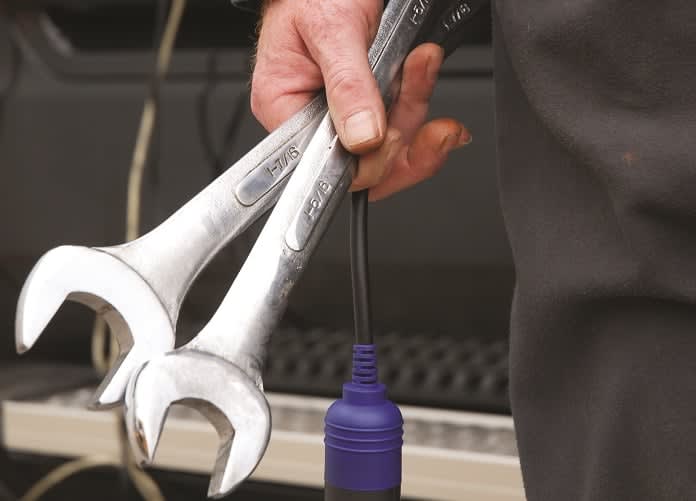
It costs a dollar a minute to keep a truck in the shop. You’re money ahead to spec premium and long-lasting components up front than to pay for shop time in the end. Photos: Jim Park
The only people who like maintenance are those who are paid to do it. At a cost of about a dollar a minute, maintenance is an expensive proposition. But smart operators can spec some of that cost out of the truck before it even rolls down the assembly line. The cost reduction strategy begins with establishing a purchase/lease schedule that aligns with the fleet’s financial goals and continues with ordering components that will help reduce the time trucks spend in the shop.
There’s little benefit in spec’ing a bulletproof truck if you plan to keep it only four or five years. If you can keep a truck running for 500,000 miles without any significant maintenance or replacement cost, you’ll come out money ahead. But that doesn’t mean you can simply ignore the truck for five years.
Preventive maintenance schedules were once based largely on oil change intervals. Not long ago, the average interval was 10,000-15,000 miles, or about once a month. With some of today’s engines capable of going 40,000-50,000 and even out to 70,000 miles between oil drains, PM intervals can be safely extended only if the rest of the truck can be left alone that long – and that’s not often the case.
Looking at Long- and Short-Term Factors in Truck Spec'ing
You need to look at maintenance from the long and short view. Long-term considerations involve spec’ing components that can be expected to last the anticipated first life of the truck. The short view demands that you regularly inspect the consumables, top-off fluid reservoirs and check for progressive wear, such as with tires and components likely to corrode.
Air disc brakes are a good example of the long-view spec’ing decision. The full life-cycle cost of discs compared to drums is about the same. You pay more up front for discs, but you’ll spend more maintaining drum brakes over time.
“Looking purely at the numbers, the two almost neutral themselves out,” says Valparaiso, Indiana-based Greg Hart, principal of Hart Consulting. “Discs are far more reliable than drums and there are way fewer parts to worry about. They’ll also keep you out of trouble during roadside inspections. So, are disc brakes a smart spec’ing decision in the right application? Hell, yes!”
Be warned, though, that while disc brakes are nearly maintenance-free, they do require regular inspections. And there’s a risk to ignoring them. Should you try to avoid the inevitable mid-life pad changes — a quick and cheap PM item — you run a high risk of destroying a $3,000 rotor, which more than negates the savings.

Solar panels, extra deep-cycle batteries, and high-efficiency, high-output alternators will offset additional electrical loads and prevent no-starts.
Hart’s spec’ing philosophy is to look at the trucks’ historically most expensive time frame, years three and four. “If you look at years three and four, years one and two will take care of themselves,” he says. “Experience has taught me that spending a little extra money up front always pays off in the end.”
Take alternators, for example. The upcharge for a high-efficiency, high-output alternator when ordering new might be a couple of hundred dollars more than the standard spec, but it will more than pay for itself in fewer battery problems, fewer no-starts and even in fuel efficiency.
“In certain applications, a high-efficiency alternator can save $100 a year in fuel alone,” says Joe Puff, vice president of truck technology and maintenance at NationaLease. “If that alternator has kept the batteries charged, you might not need to replace them in the third year, and you may have eliminated or reduced the non-start problems. When you factor that in, the more expensive alternator starts to look like a real bargain.”
Hart says vertical integration has limited spec’ing choices in many instances, but it hasn’t eliminated them. “You will have to pay more for a premium item, but upgrading the major electrical components — batteries, cables, alternators, starters and the like — is always money well spent.”
Straying from standard
Fleets like to stick with what they know and have become familiar with, but occasionally those components are dropped from the data books or they become custom-order items.
Bruce Stockton, principal of Stockton Solutions, Joplin, Missouri-based transportation fleet consultants, says fleets should trust the OE when it comes to spec’ing certain components, unless you have data or experience that suggests otherwise.
“Your current fleet will have its share of problems, so draw on that experience in spec’ing the new trucks,” says Stockton. “Ask what the OE has done about the problem you’re having and whether it’s been resolved in the new generation of trucks.”
The other danger in straying from the standard spec is availability of parts. Standard parts are generally well-stocked; rarer items might not be. That can lead to downtime while waiting for inventory, warns Hart.
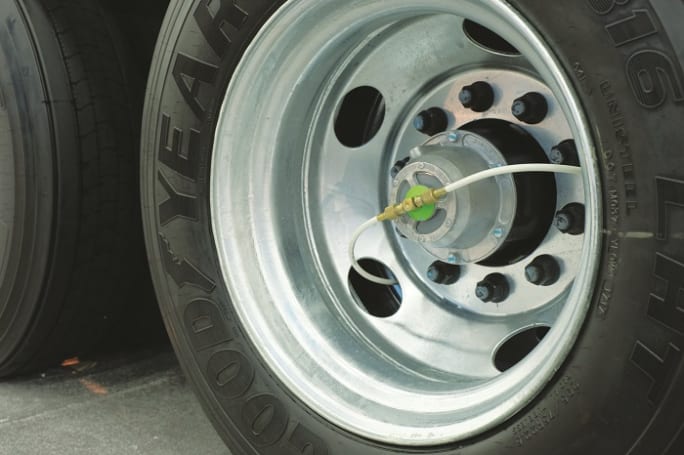
Galvanized wheels don’t look as good as aluminum, but they’re cheaper and they last longer than powder-coated steel wheels.
Stockton says on the whole, trucks are pretty well made these days, and stuff that we once worried about is no longer an issue – drivelines, transmissions and axles, for example. Most of the problems are going to come from engines and aftertreatment systems and their associated electronics and sensors. “You can’t delete those from the spec, so you need to learn everything you can about them to minimize the problems.”
One possible solution is adding an auxiliary HVAC system to sleeper trucks. This will lower idle time and reduce soot buildup in the DPF, says Chris Marks, director of maintenance at Ryder.
“You need to pay special attention to things that affect the exhaust aftertreatment system, like fuel economy, speed, loads and duty cycles,” he says. “If you get it wrong, not only does it affect the vehicle’s reliability, it can really drive up maintenance costs. When ordering add-ons like auxiliary power units or power take-offs, we always have it done at the factory to avoid installation issues with third parties and the problems they can lead to later in the vehicle’s life.”
There's No Such Thing as a General-Purpose Truck
One of the big things that has changed with trucks in general today is that there is no longer any such thing as a general-purpose truck. You’ll pay a big price over time if you try to run an over-the-road truck in a P&D operation or vice versa. Today’s spec has to be duty-cycle dependent, factoring in annual miles, application and everything else, says Marks.
“If you get the spec wrong from the start, the cost will be substantial,” he says. “And it’s very expensive to try to fix it after the fact. You have to get it right from the start, or the maintenance budget will be eaten up.”
So, when considering the cost of spec’ing possibly premium components or long-life or maintenance free, keep in mind that maintenance costs today are at a dollar a minute in a well-run shop. That should be good incentive to think twice about scrimping on your spec.
Related: Spec'ing for Resale
More Maintenance

Color Match Smarter: Tools That Restore & Perform
For fleet managers and collision repair professionals keeping heavy-duty trucks on the road, getting the color right the first time isn't just about appearance — it's about efficiency, turnaround time, and bottom-line results. Discover how today's digital color tools are transforming the repair process from guesswork to precision.
Read More →
Wrong Repair Prompts Recall of Freightliner, Western Star 4x2 Trucks
DTNA is recalling more than 2,400 trucks that received an incompatible software fix instead of the hardware repair required to address brake valve corrosion.
Read More →
Truck Drivers Need More Than Another Alert
Fleets have more visibility into truck health, safety events, and driver activity than ever. The next challenge is turning all that information into useful guidance for the person who has to decide what to do next.
Read More →
The Maintenance Checks Trucking Fleets Should Prioritize Before Fall Freight Picks Up
Making it through August isn’t the same as being ready for the next several months of operation. Find out what systems may have suffered from summer heat and need to be checked out before fall.
Read More →
What Three Fleets Are Doing Differently When Buying Truck Parts in 2026
With freight improving but costs still climbing, fleet maintenance executives explain how they're balancing price, quality, and supplier relationships.
Read More →
Paccar Recalls 2027 Trucks Built This Summer for Possible Electrical Problem
The nearly 6,000 Kenworth and Peterbilt trucks in the recall could potentially lose engine power, among other things.
Read More →
Will API PC-12 Oil Change Trucking Fleet Maintenance?
The new API PC-12 heavy-duty engine oil category reflects the changing demands of modern diesel engines. But fleets like Foodliner are looking to getting their own data before making decisions on adopting the new oils and questions such as extending oil drain intervals.
Read More →
Brake Safety Week to Focus on Drums and Rotors
Commercial vehicle inspectors are focusing on truck brakes during CVSA's Brake Safety Week, August 23-29.
Read More →Possible Battery-Cable Fires Prompt Recall of 15,000+ International MV and HV Trucks
On the recalled vehicles, manufacturing variations can cause the battery interconnect cable to contact the auxiliary stud and hold down the bracket.
Read More →
Rush, MCT Team Up to Grow Refrigeration Service Network
The joint venture will operate MCT's network of Carrier Transicold dealerships and mobile service locations, with the companies promising greater service capacity and uptime for refrigerated fleets.
Read More →