




5 Things Trucking Fleets Need to Know About COVID-19 and Workers’ Comp
Workers’ compensation is rapidly evolving, as states rewrite their policies to include a subset of employees not previously eligible for coverage.

Photo: Eblis via iStock
As drivers continue to stay on the road during the COVID-19 pandemic or get back to work as states slowly reopen, workers’ compensation claims related to coronavirus are inevitable.
Workers’ compensation is rapidly evolving, as states rewrite their policies to include a subset of employees not previously eligible for coverage. As no two states are the same, neither is the language defining who is eligible for workers’ compensation in these unprecedented times.
Here are five things trucking fleets need to know about COVID-19 and workers’ compensation:
1. Workers’ compensation policy changes are fluid.
Like what we know about the virus, workers’ compensation policies are changing every day, as states, propose, enact, and even retract language and definitions concerning who is eligible.

Lori Ilgenfritz is account principal with Gallagher Bassett’s Transportation Practice.
Photo: Gallagher Bassett
The majority of states have specifically named healthcare workers and first responders, and many have also included “essential workers” or “others” in their pending or enacted policies. Other states have broadened the language even further to include workers employed by a “life-sustaining business” and employees “at risk of exposure as part of their job.”
As time goes on, states may edit their workers’ compensation policies to define more specific occupations, and perhaps include truck drivers. The majority, however, will proceed as is. If and when claims are denied, the vague language opens the door for the state courts to determine whether or not the claimant is eligible. Until case law is established, this will be the process for the foreseeable future.
2. It’s important to respond immediately to COVID-19 claims.
Due to the quick pace of workers’ compensation policy revisions, it is of the utmost importance for fleets to report a COVID-19 claim to the claims handler immediately.
It’s important to note, when a fleet reports a COVID-19 claim, the employer is not admitting compensability or acceptance of the claim. Rather, a timely investigation increases the opportunity for more accurate details from the claimant, employer and medical professionals, to determine the compensability of the claim.
3. What considerations affect compensability.
The workers’ compensation claims handler is trained to ask specific questions related to COVID-19 exposure, to help determine compensability. Many factors are taken into account, including:
The jurisdiction of the filed claim, whether it is where the trucker works (payroll state), lives, or where the exposure occurred. The employer typically has established protocol for assigning jurisdiction. The employee may select a different jurisdiction for benefits depending on the facts of the injury/illness.
Type of job, whether it’s essential or nonessential as determined by state policies.
Degree of exposure from work duties.
Confirmed or unconfirmed testing. Some states require employees to meet criteria such as testing positive or a diagnosis by a physician.
Type of treatment, such as whether symptoms were confirmed, if the employee underwent a precautionary quarantine, or was treated at the hospital.
Knowledge of how coronavirus was contracted, and if roommates, family members or coworkers were infected.
Recent travel.
When symptoms first occurred.
Contract tracing notification.
4. Other options beyond workers’ compensation.
If the trucker’s COVID-19 claim is denied, he/she may still be eligible for healthcare benefits, but again, each employer will differ in the scope and reimbursement of such benefits.
Additionally, through Dec. 31, employees may be eligible for the Families First Coronavirus Response Act. This federal act provides small and midsize employers refundable tax credits that reimburse them, dollar-for-dollar, for the cost of providing up to two weeks of paid sick leave and up to 12 weeks of expanded family and medical leave to employees for leave related to COVID-19.
All employers – not just trucking fleets – with under 500 employees must comply with this new policy. However, businesses under 50 employees can file for an exemption if complying would affect the fleet’s ability to stay in business.
5. Preventive measures are important.
The number one way to avoid workers’ compensation claims is by keeping truckers safe. Provide personal protective equipment such as masks, hand wipes, and sanitizer, and educate employees on other safety measures regarding hand washing and social distancing. It’s important to continue doing so, even as states begin to reopen. Fleet leadership need to practice what they preach, with their own safety measures in the office and during training.
Fleets couldn’t predict the magnitude of the pandemic’s toll on the transportation industry, and while workers’ compensation policy revisions are under way at a quick pace, it is important to stay up-to-date on the details and process, and act immediately when a coronavirus claim is filed. But most importantly, fleets can help prevent claims through safety supplies, education, communication and leadership.
Lori Ilgenfritz is account principal with Gallagher Bassett’s Transportation Practice, provider of risk and claims management services. This article was authored and edited according to HDT editorial standards and style to provide useful information to our readers.
More Safety & Compliance

FMCSA Pauses Biennial-Update Enforcement Amid Motus Transition
Carriers whose updates were due on or after June 1 have more time, while FMCSA works to stabilize its new registration system and warns of phishing sites impersonating its new carrier registration system, Motus.
Read More →
ZF Expands Commercial Vehicle Push in North America
ZF is expanding its North American commercial-vehicle presence with new transmission applications, electrification, trailer technology and autonomous-driving systems.
Read More →
Truck Drivers Need More Than Another Alert
Fleets have more visibility into truck health, safety events, and driver activity than ever. The next challenge is turning all that information into useful guidance for the person who has to decide what to do next.
Read More →
Tesla Wants a Self-Driving Semi. Are Cameras Enough?
Could Tesla’s camera-only autonomous driving technology work on an 80,000-pound Semi? In this commentary, HDT's Deborah Lockridge takes a look at Tesla, Cybercab, and how autonomous trucks see the road.
Read More →
What DOT’s Automated Vehicle Strategy Means for Trucking
The U.S. Department of Transportation issued a new automated-vehicle strategy that outlines plans for driverless-truck regulations, cross-state freight corridors, and federal safety standards.
Read More →
NYC Expands Speed, Pedestrian Safety Tech Across Fleet
New York City is expanding intelligent speed assistance and pedestrian-alert systems across its municipal fleet, moving the technologies from pilot programs into vehicle procurement and retrofit requirements.
Read More →
FMCSA Removes 110 Truck Driver Training Schools from Certified ELDT List
Federal regulators also are targeting more than 160 additional training providers and launching a nationwide audit of third-party CDL skills testers as part of a broader crackdown on trucking fraud.
Read More →
Beyond DOT Compliance: What Makes a Trucking Fleet Truly Safe?
A trucking fleet can follow every rule and still make unsafe decisions. The real test comes when safety conflicts with freight, productivity, or cost.
Read More →
Hours of Service Pilot Programs: FMCSA Readies for 2027 Rollout
Two pilot programs could eventually reshape hours-of-service rules, giving truck drivers options to pause their 14-hour clock or use longer split sleeper rest periods.
Read More →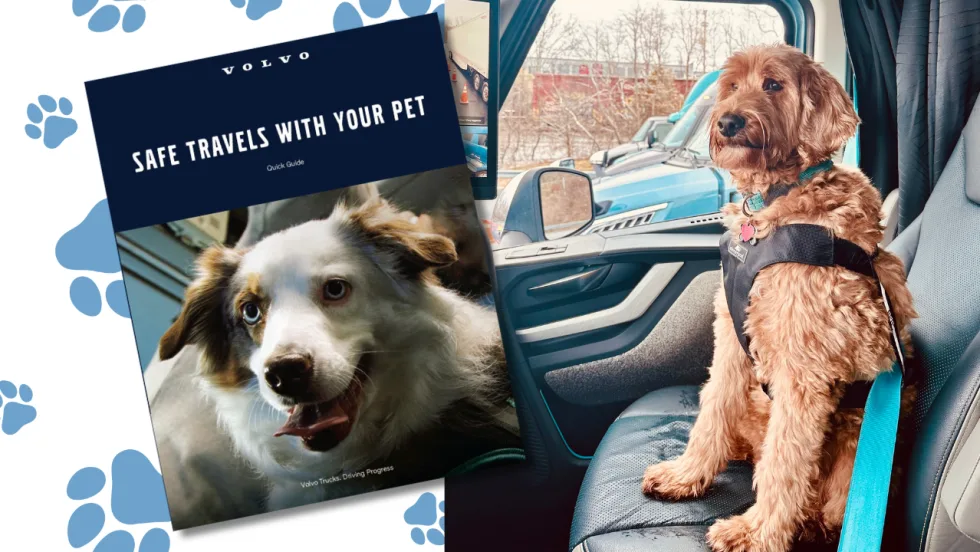
New Guide Offers Pet Safety Tips for Truck Drivers
Hundreds of thousands of pets travel in truck cabs. A new safety guide from Volvo Trucks and the Center for Pet Safety offers practical advice for truck drivers who bring dogs and cats along for the ride.
Read More →