




5 Steps to Fleet Fuel-Purchasing Savings
Fuel is always one of the highest operating costs for motor carriers, so fleets are constantly looking for additional fuel savings. Here are five tips to help save in the fuel-purchasing process.
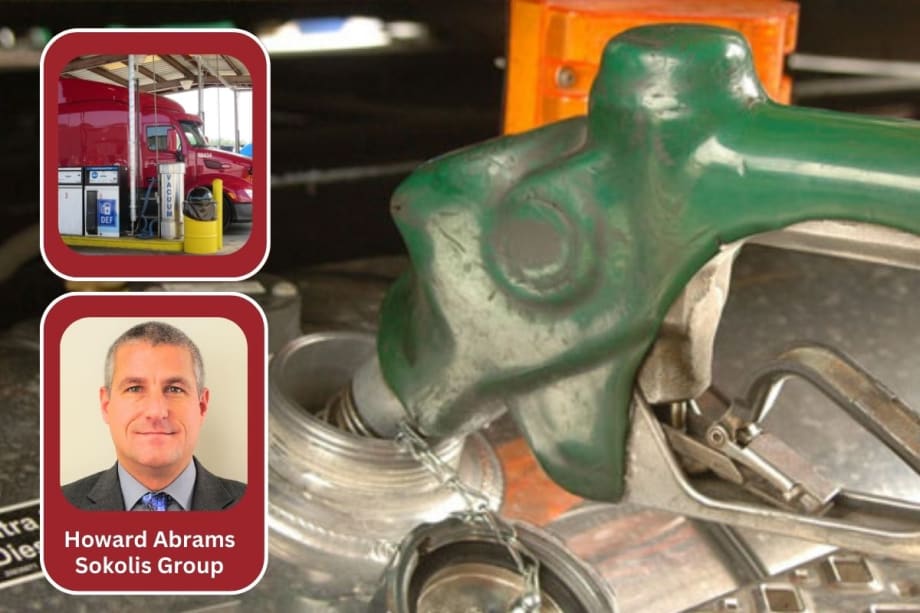
Howard Abrams, president of Sokolis Group, a nationwide fuel management and fuel consulting company, provides tips on how fleets can save on fuel.
Jim Parl/Deborah Lockridge/Sokolis Group
Diesel fuel prices have fallen by roughly a third compared to where they were early last summer, so fleets may not be as focused on finding opportunities for additional savings or may not know where to look.
Yet historically, according to the American Transportation Research Institute, fuel costs made up between 19% and 28% of fleets’ average marginal costs from 2018-2022.
The average cost of operating a truck in 2022 surpassed $2 per mile for the first time in the history of ATRI’s Operational Costs report. While much of this increase was due to high fuel costs, it wasn’t the only one, as multiple other cost centers increased by double-digit percentages as well, resulting in average operating costs that increased by 21% percent in 2022 over the previous year. Even when you take fuel out of the equation, the cost of trucking increased by 12%.
So any savings fleets can find on their fuel spend can only help the bottom line, especially when we’re on the down side of the freight cycle.
What Drives the Cost of Diesel Fuel?
To understand how to save money on fuel, it’s important to be aware of the main components of diesel prices.
The price starts with the cost of crude oil. Then refining costs, transportation costs, taxes, and profit margins are added on. Some of these components may not be negotiable and represent most of the price per gallon. However, a supplier’s profit margin may be negotiable and should be reviewed on a regular basis.
The profit margin can vary depending on many factors, such as volume being purchased, geographic location, and overall market conditions. When wholesale fuel prices fall rapidly, it is not uncommon to see suppliers’ profit margins go up if they do not pass along all the savings in the price charged to their customers.
To ensure that you are being charged fair prices for diesel fuel and to explore opportunities for better pricing, consider the following steps:
1. Know Your Fuel-Buying History
Make sure you know the volume of fuel you are purchasing and where those purchases are taking place. This information is critical to have before you can take the next steps. If you cannot easily gather this information, explore implementing a system that can track fuel purchases, monitor prices, and provide data for analysis.
2. Request Quotes
Once you understand your historical fuel purchases, request quotes from multiple fuel suppliers in your area. They will need to know how much fuel you anticipate buying based on your historical trends along with any anticipated changes in your fleet’s operations.
Be sure to ask for a detailed breakdown of the fuel prices, including any taxes, transportation costs, or other additional charges. This will help you understand the components that contribute to the overall price so you can compare prices and identify any significant discrepancies between the quotes.
3. Review Your Current Contract
If you have a current contract with a fuel supplier, review the terms and conditions to ensure they are fair and competitive compared to the quotes you received. If necessary, engage in negotiations to secure more favorable pricing or terms.
If you are looking to enter into a new agreement, knowing the cost of the various components will put you in a better position to negotiate favorable terms.
4. Seek Professional Advice
If you are not comfortable or don’t have the time to do the analysis, request quotes, and negotiate pricing, you can seek professional advice by consulting with fuel procurement specialists who can analyze your current fuel purchasing practices and contracts. They can provide insights regarding your current pricing while also making recommendations to optimize your fuel procurement strategy.
5. Audit Your Fuel Bills
A well-negotiated deal means nothing if the billing is incorrect. Billing errors are not uncommon and may not be a just one-off mistake. If terms are set up incorrectly, a repetitive error could become very costly.
That’s why an important step is to implement a process to audit and validate the accuracy of your fuel invoices. This should involve cross-checking prices with agreed-upon rates, verifying the gallons were delivered, and ensuring compliance with contractual terms for any other line items and taxes.
By being proactive, comparing prices, negotiating contracts, and implementing an auditing process, you can work towards securing better pricing and ensuring the accuracy of the charges for diesel fuel. These steps will help you achieve greater savings on your fuel purchases even while prices are lower.
It will also help protect you when fuel prices inevitably go back up.
Howard Abrams is the president of Sokolis Group, a nationwide fuel management and fuel consulting company. He has more than 30 years of experience with fleet fuel, operations, and finance. He can be reached at HAbrams@SokolisGroup.com or 267-482-6165. This article was authored and edited according to Heavy Duty Trucking’s editorial standards and style to provide useful information to our readers. Opinions expressed may not reflect those of HDT.
More Fuel Smarts

How Volvo Updated Its D13 for EPA 2027 [Watch]
Volvo’s updated D13 promises lower emissions without sacrificing performance or fuel economy. Take a closer look at what changed inside the engine in this HDT Spotlight video.
Read More →
Diesel Price Spike Shortens Payback for Natural Gas Trucks, Report Says
Energy Vision estimates fleets could recover the higher purchase price of an RNG-fueled Class 8 tractor in 1.3 to 2.8 years under current fuel-price scenarios.
Read More →
Calstart Becomes Catalyst Mobility, Reflecting Broader Focus
Calstart is now Catalyst Mobility, reflecting the nonprofit’s growing national role in clean transportation, including zero-emission trucks, infrastructure and incentive programs.
Read More →

Record Diesel Prices Squeeze Trucking Fleets
Average U.S. diesel prices have climbed to nearly $6 a gallon, surpassing the 2022 record as tight refinery capacity and Middle East disruptions keep fuel costs elevated.
Read More →
How Fuel Delivery Shapes Engine Performance
Fuel delivery depends on more than what happens at the injector. For fleet, maintenance and technical professionals, looking at the full path from pump to injector can provide useful context for understanding engine performance.
Read More →
East Coast Port Launches $45M Electric Truck Push
The Port Authority of New York and New Jersey announced millions in incentives for zero-emission drayage trucks, yard tractors, and new charging hubs near the port.
Read More →
California Bill Could Shed Light on Electric Truck Prices
Why do battery-electric Class 8 trucks remain so expensive? A California bill headed to Gov. Gavin Newsom would give fleets and state agencies more visibility into what manufacturers charge.
Read More →
Detroit Opens Orders for EPA 2027 Engines
Detroit isn’t starting from scratch to meet EPA 2027 diesel emissions standards. Its Gen 6 DD13 and DD15 engines keep much of today’s platform while updating the fuel and aftertreatment systems.
Read More →
Zero-Emission Truck Corridor Planned for West Coast
California, Oregon, Washington, British Columbia and Baja California are coordinating plans for truck charging and hydrogen fueling from Canada to Mexico.
Read More →
A Closer Look at Kenworth’s Electric T880E Vocational Truck [Video]
Learn more about Kenworth's T880E battery-electric vocational truck at the Paccar Technical Center, including its range, applications, upfitting considerations, and PTO options, in this HDT Spotlight video.
Read More →