





Related: How Fruehaufs and Whites Once Hauled Unique Steel Houses
Mack Museum Displays Fancy Fruehauf Van
The 32-foot insulated van, built in 1950 like its companion Mack LFT tractor, “has all the interior and floor required to make it a refrigerated trailer by adding a cooling unit,” an informational placard says.
November 22, 2017
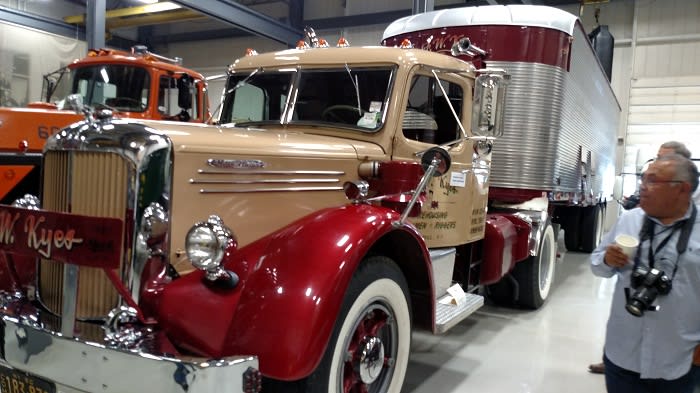
Mack LTF leads a Fruehauf insulated van at the Mack Trucks Historical Museum in Allentown, Pa. Both vehicles were built in 1950. Glossy paint, chrome trim and whitewall tires make the old Mack look better than new. Photos: Tom Berg
3 min to read
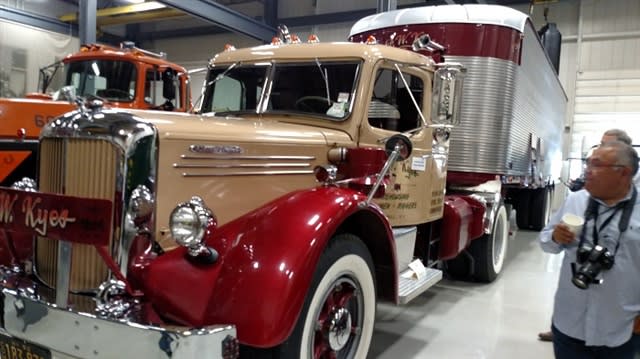
Mack LTF leads a Fruehauf insulated van at the Mack Trucks Historical Museum in Allentown, Pa. Both vehicles were built in 1950. Glossy paint, chrome trim and whitewall tires make the old Mack look better than new.Photos: Tom Berg
Mack Trucks’ museum in Allentown, Pennsylvania, houses more than Mack trucks. For instance, on a tour of the place last September, I found this 67-year-old tractor-trailer rig, and it was a wowzer (if that’s a word).
The trailer's a 1950 Fruehauf insulated van with fluted stainless steel sides and nicely painted sills, undercarriage and running gear. Its maroon color matched the fenders and chassis on the tractor, a ’50 Mack LFT conventional.
Both belonged to F. W. Kyes, a fleet that ran out of Summerhill, New York, and had been loaned to the museum by a descendant of the owning family. Both had been lovingly restored and, it appears, enhanced to better than new. The Fruehauf’s sides had been shined to a mirror finish, though with some dents here and there, and everything else was spotless.
The tractor sported chrome trim that was certainly not original, but who knows, it might have been added along the way. I don’t recall ever seeing fender-mounted auxiliary mirrors in the ‘50s, but then I didn’t grow up in New York. And those whitewall tires will roll right over the proverbial top. Anyway, this rig looked show-stopping, and probably is when it’s parked at truck beauty shows. It’s also photographer-stopping, as you can see.
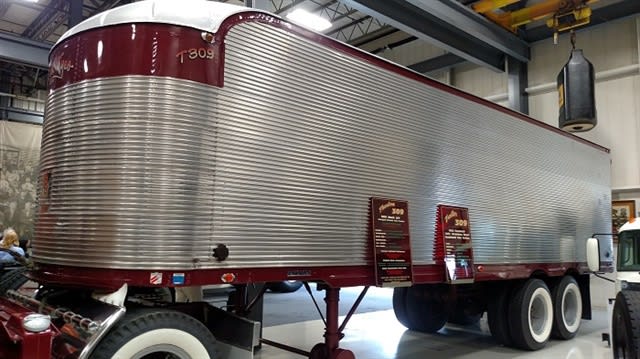
Like most vans of the era, this one has a rounded nose. Though it might help lower wind resistance, the curved nose’s primary purpose was to allow sharp turns without bumping the tractor’s cab when two units were close-coupled.
Informational placards listed specifications of both vehicles. One says that the 32-foot insulated van “has all the interior and floor required to make it a refrigerated trailer by adding a cooling unit.” Do that and it might almost be usable today as a city delivery pup. Almost, because its antiquated air brakes wouldn’t be compatible with a modern tractor’s system, unless of course you also used the old Mack to pull it.
The museum does have a lot of other Mack tractors and trucks on display, and they’re changed regularly. There are also long shelves of memorabilia and drawers of engineering drawings and corporate files. There’s enough to keep a visitor engaged for many hours, or many days if one were researching an article or book.
The museum's also got an original Mack bus, one of the company’s first products, built for sight-seeing duties in New York City, close to Brooklyn where two brothers, Gus and Jack Mack, established the company in 1900. And, did you know that the firm was originally called International Motor Co.?
My visit was with a troupe of other reporters who were in Allentown for the introduction of Mack’s new Anthem model, which has been covered in TruckingInfo.com and HDT. If you’re ever in A-town, the Mack Trucks Historical Museum, faithfully staffed by volunteers who are retired Mack employees, is worth a stop. So are other automotive museums in the area. Find ‘em on line, and plan to spend at least a couple of days enjoying yourself.
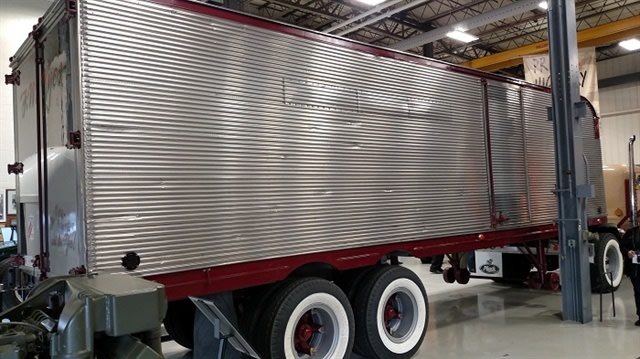
Fluted stainless steel sides are highly polished, with only some minor dents marring the mirror finish. The trailer, too, has whitewall tires. Museum’s tight confines made for sharply cropped views.
Subscribe to Our Newsletter
More Blog Posts

Pulsing Back-of-Trailer Lamps Aim to Prevent Crashes
Can the addition of a pulsing brake lamp on the back of a trailer prevent rear-end collisions? FMCSA seems to think so, if its exemptions are any indication.
Read More →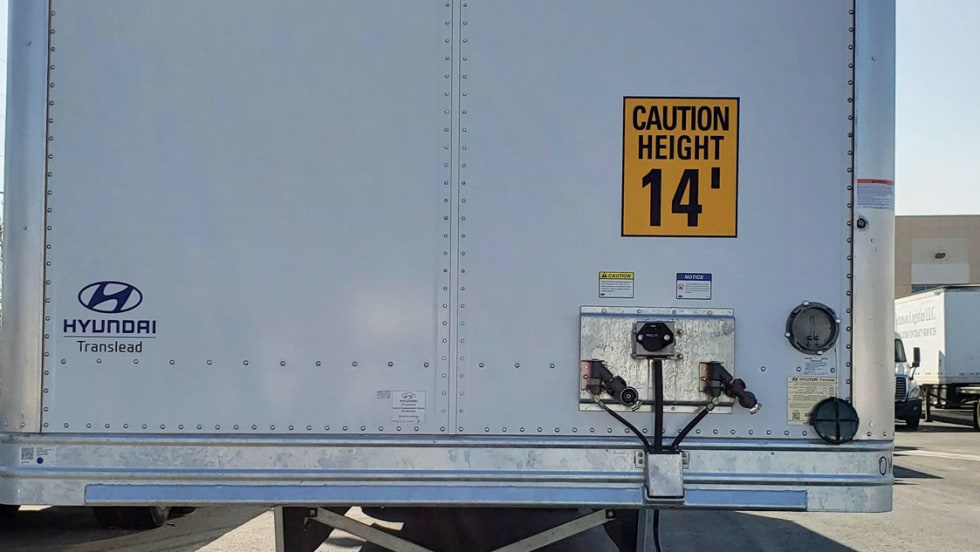
Designing a 14-Foot Trailer
Trailers are 13 feet, 6 inches high, right? Not for Hub Group, which developed a special 14-foot-high trailer spec for a dedicated customer based in California. Learn more in the Trailer Talk blog.
Read More →
CARB Comes for Reefer Trailers
A new round of emissions control regulations decreed by the California Air Resource Board will begin affecting refrigerated trailer and TRU design and operations next year.
Read More →
5 Ways Data Analysis Maximizes the Value of Trailer Telematics
Are you getting the most out of your trailer telematics investment?
Read More →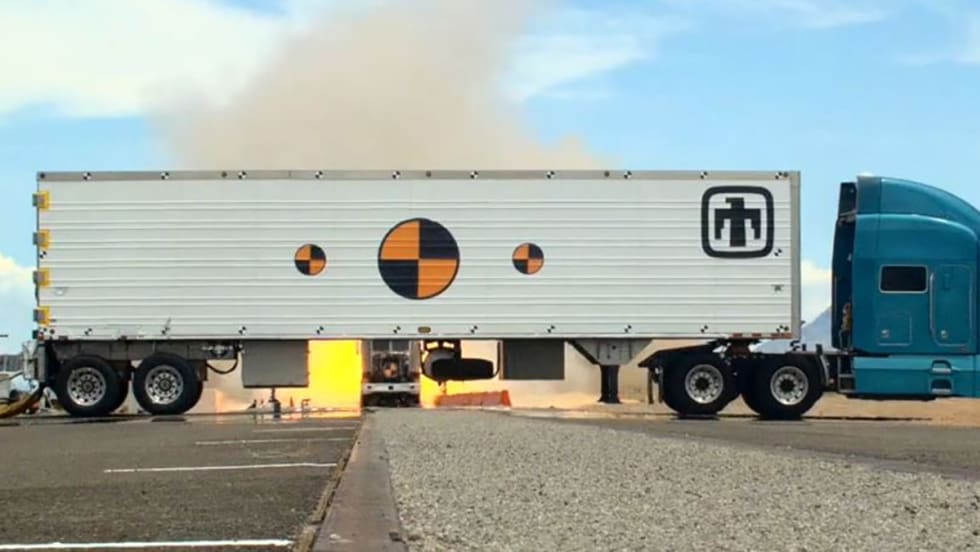
Can You Guess What's in That Trailer?
You don’t always know what’s in the trailers that pass you on the road. But some of those trailers are carrying something a little more dangerous that frozen food or new bedding…like, maybe, a nuclear weapon. But this isn’t an ordinary trailer; this is a trailer specifically made to not only carry this type of payload, but protect it at all costs.
Read More →
How Trailers Are Harnessing 'Free' Energy
Can trailers play a more active role in sustainable transport beyond aerodynamic add-ons or low-rolling-resistance tires? Some companies think so.
Read More →
Wrapping a Trailer for COVID’s Everyday Heroes
“We don’t only deliver freight. We deliver awareness.” That’s what Jim Barrett, president and CEO of Road Scholar Transport, likes to say about the Dunmore, Pennsylvania-based carrier’s “awareness fleet.” Its latest trailer wrap honors the everyday heroes of the pandemic.
Read More →
How a Tanker Fleet is Using Unorthodox Trailer Lighting to Fight Rear-End Collisions
Groendyke Transport watched the number of rear-end collisions with its trailers rise steadily until it tried an unorthodox and then unapproved method of alerting following drivers that its trucks were applying brakes and slowing down.
Read More →
The Role Trailers are Playing in COVID-19 Funerals
In places such as New York City and Detroit, overwhelmed hospitals and mortuaries are using refrigerated trailers to store the bodies of people killed by COVID-19.
Read More →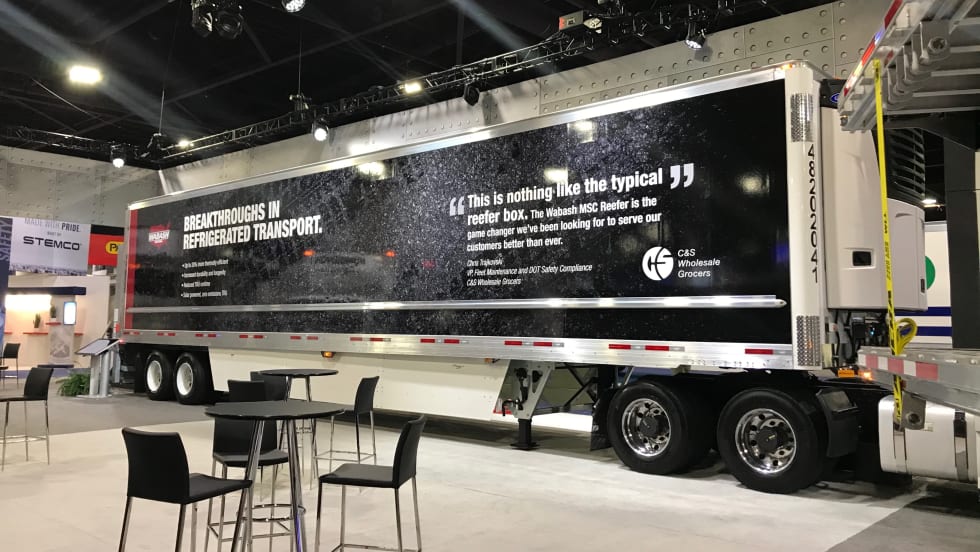
Reefer Trailer Aims to Help Reach Zero Emissions
Wabash National is partnering with C&S Wholesale Grocers to test a new type of zero-emissions refrigerated trailer.
Read More →